


Knowing how to protect your skin from the sun is one of the most important health decisions you can make. In the United States, skin cancer is the most commonly diagnosed cancer, and the primary cause in the vast majority of cases is prolonged exposure to ultraviolet radiation from the sun.
The good news is that sun damage is largely preventable when you follow consistent, science-backed strategies every single day.
Whether you spend most of your time indoors, commute by car, or work outdoors for hours at a stretch, UV rays reach your skin in ways that are easy to overlook. This guide walks through everything you need to know about effective sun protection, from choosing the right sunscreen to understanding how UV exposure connects to your overall health and wellness.
Understanding UV Radiation and Why It Matters
The sun emits two types of ultraviolet radiation that reach Earth’s surface and affect human skin: UVA and UVB. UVB rays are the primary culprit behind sunburn and play a significant role in the development of skin cancer. UVA rays penetrate more deeply into the skin, contributing to premature aging, wrinkles, and long-term DNA damage at the cellular level.
What many people do not realize is that UVA rays are present year-round, even on overcast days and through car or office windows. UVB intensity is highest from late spring through early fall, particularly between 10 a.m. and 4 p.m. in the US, but neither type of radiation takes a day off. This is why sun protection needs to be a daily habit rather than a summer ritual.
The UV Index, a scale from 1 to 11+, is published daily by the National Weather Service and tells you how strong UV radiation will be at solar noon in your area. When the UV Index hits 3 or above, protective measures are recommended.
In many southern US states, the index regularly exceeds 8 or even 10 during summer months, placing those regions at very high to extreme risk.
How to Choose the Right Sunscreen
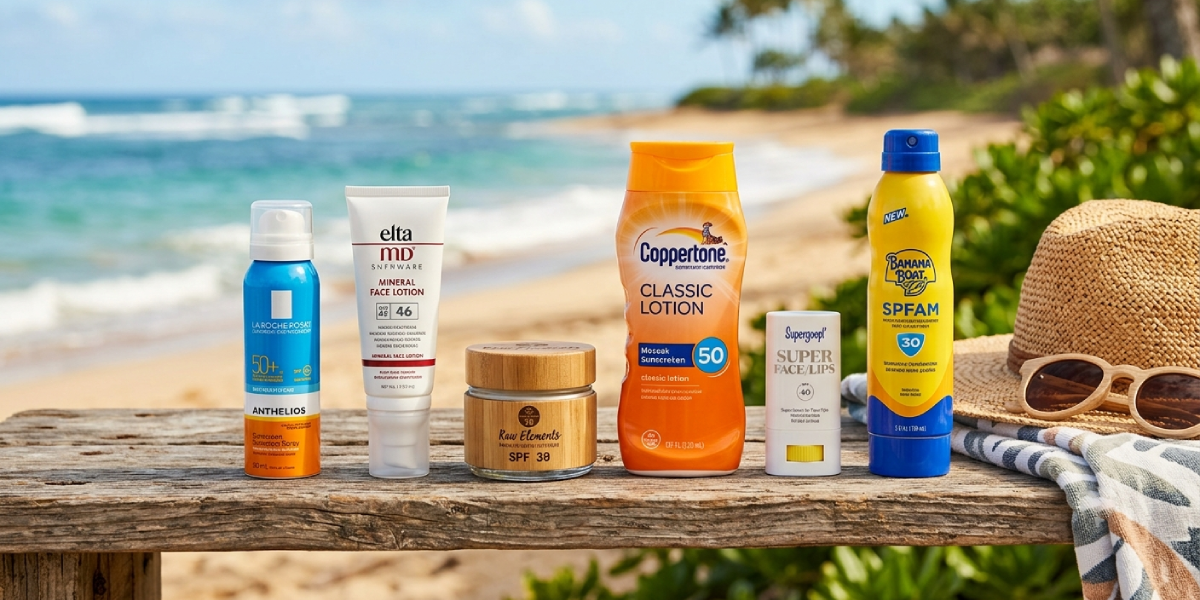
Sunscreen is the cornerstone of effective sun protection, but not all products are created equal. Understanding labels and formulations will help you get the most out of every application.
SPF: What the Numbers Actually Mean
SPF, or Sun Protection Factor, measures how well a sunscreen filters UVB rays. An SPF 30 blocks roughly 97 percent of UVB radiation, while SPF 50 blocks about 98 percent. The difference between SPF 50 and SPF 100 is comparatively small in real-world conditions, but dermatologists at major institutions consistently recommend a minimum of SPF 30 for daily use and SPF 50 or higher for extended outdoor time.
Broad-Spectrum Coverage
Always look for the words “broad spectrum” on the label. This indicates that the product protects against both UVA and UVB rays. Without broad-spectrum protection, you may avoid sunburn but still sustain the deeper, invisible damage that leads to premature aging and elevated cancer risk over time.
Mineral vs. Chemical Sunscreens
Mineral sunscreens use zinc oxide or titanium dioxide to physically reflect UV rays off the skin’s surface. They begin working immediately upon application and are generally well tolerated by sensitive skin. Chemical sunscreens absorb UV energy and convert it to heat, requiring about 20 minutes after application before they are fully effective.
Both types can be effective when applied correctly; the best sunscreen is ultimately the one you will use consistently.
Water Resistance and Reapplication
No sunscreen is completely waterproof. The FDA allows labels to claim water resistance for 40 or 80 minutes of swimming or sweating. Regardless of the formula, you should reapply sunscreen every two hours when outdoors, and immediately after towel drying.
Most people apply far less than the recommended amount, which is about one ounce, roughly a shot glass full, to cover the entire body of an average adult.
Sun-Protective Clothing and Accessories
Sunscreen is essential, but it works best as part of a layered approach to sun protection. Clothing provides a physical barrier that does not need reapplication and never runs out.
UPF-Rated Clothing
Ultraviolet Protection Factor, or UPF, is the clothing equivalent of SPF. A shirt rated UPF 50 blocks 98 percent of UV radiation from passing through the fabric. Standard cotton T-shirts provide only about UPF 5 to 8 when dry and even less when wet. Tightly woven, darker-colored, and synthetic fabrics typically offer significantly better protection.
Many outdoor brands now offer full lines of UPF 50+ activewear that is lightweight enough for warm conditions.
Hats and Sunglasses
A wide-brimmed hat with at least a three-inch brim provides meaningful shade for your face, ears, and the back of your neck, all of which are commonly missed spots during sunscreen application. Baseball caps, while popular, leave the ears and neck exposed.
Sunglasses are equally important. UV exposure to the eyes increases the risk of cataracts and macular degeneration. Look for sunglasses labeled as blocking 99 to 100 percent of UVA and UVB rays. Larger, wraparound frames offer the most complete coverage.
Seeking Shade and Adjusting Outdoor Timing
One of the most effective and underutilized tools for sun protection requires no product at all: shade. When you are outdoors during peak UV hours, positioning yourself under a tree, umbrella, or covered structure can cut UV exposure significantly.
However, shade is not a complete solution on its own. UV rays scatter off sand, water, concrete, and snow, meaning you can still receive substantial exposure even while sitting under an umbrella at the beach.
Adjusting the timing of your outdoor activities is particularly effective for those who exercise outside. Early morning or late afternoon workouts not only reduce UV exposure but can also make physical activity more comfortable during hot summer months.
If you are building a fitness routine and want guidance on outdoor exercises that suit different schedules and climates, a structured plan can help you stay active while minimizing unnecessary sun exposure.
Sun Protection for Different Skin Types and Tones

A common misconception is that people with darker skin tones do not need sun protection. While higher levels of melanin do provide some degree of natural UV defense, no skin tone is immune to UV damage. Skin cancer in individuals with darker complexions is often diagnosed at a later, more serious stage precisely because the risk is underestimated and screening occurs less frequently.
People with very fair skin, red or blonde hair, blue or green eyes, or a family history of skin cancer are in the highest risk category and should be especially rigorous about sun protection. Those with a history of blistering sunburns, many moles, or weakened immune systems should consult a dermatologist for personalized guidance and regular skin checks.
Protecting Children and Teenagers from Sun Damage
Sun damage accumulates over a lifetime, and the habits formed in childhood have a lasting impact. Research consistently shows that a significant portion of lifetime UV exposure occurs during childhood and adolescence. Severe sunburns during early life are associated with a substantially higher risk of melanoma in adulthood.
The American Academy of Pediatrics advises keeping infants under six months out of direct sunlight entirely. For older children, SPF 30 or higher broad-spectrum sunscreen should be applied before any outdoor activity, with hats and UV-protective clothing added whenever possible.
Schools, summer camps, and sports programs play an important role in reinforcing these habits.
Sun Safety Indoors and During Commutes
Many people assume they are safe from UV exposure while indoors or driving. Glass blocks most UVB rays but allows a significant amount of UVA radiation to pass through. If you drive frequently, the left side of your face and arm typically receive more cumulative sun exposure over time.
Applying a facial moisturizer with broad-spectrum SPF every morning addresses this without adding extra steps to your routine.
Office workers who sit near windows can also benefit from daily SPF application. Window film with UV-blocking properties is available for home and car windows and can meaningfully reduce indoor UV exposure over time.
The Connection Between Sun Protection and Overall Wellness
Sun protection is not an isolated concern. It connects directly to your broader approach to health, including nutrition, hydration, and your body’s overall resilience. Certain foods rich in antioxidants, such as tomatoes, leafy greens, and berries, may help the skin manage oxidative stress caused by UV exposure.
Staying well hydrated supports healthy skin function. Maintaining a healthy body weight, which you can track using a BMI calculator, is part of a holistic approach to reducing your overall cancer risk, including skin cancer.
Annual skin checks with a board-certified dermatologist are recommended for most adults, and more frequently for those with elevated risk factors. The earlier any suspicious lesion or change in a mole is identified, the greater the likelihood of successful treatment.
Sun Protection Quick-Reference Guide
| Protection Method | Key Details | Best For |
|---|---|---|
| Sunscreen SPF 30+ | Broad-spectrum, reapply every 2 hours | Daily use on all exposed skin |
| UPF 50+ Clothing | Covers trunk, arms, and legs physically | Extended outdoor activities |
| Wide-Brimmed Hat | Minimum 3-inch brim for face and neck | All outdoor settings |
| UV-Blocking Sunglasses | 99-100% UVA/UVB block, wraparound preferred | Eye and periorbital skin protection |
| Shade Seeking | Pair with other methods; UV scatters | Peak hours 10 a.m. to 4 p.m. |
| Timing Adjustment | Exercise or go outdoors before 10 a.m. or after 4 p.m. | Active individuals, outdoor workers |
| Window Film | Blocks UVA through glass | Drivers and office workers |
Frequently Asked Questions
What SPF level is recommended for everyday sun protection in the US?
Dermatologists and organizations such as the American Academy of Dermatology recommend a minimum of SPF 30 for daily use. For prolonged outdoor activities, particularly during peak UV hours or in high-altitude and reflective environments like beaches and ski slopes, SPF 50 or higher is advisable. Consistent application and reapplication matter more than choosing the highest possible SPF number.
Does sunscreen need to be reapplied even on cloudy days?
Yes. Up to 80 percent of UV radiation can penetrate cloud cover and reach the skin. Overcast days create a false sense of security, and unprotected cumulative exposure on cloudy days contributes to long-term skin damage. Broad-spectrum sunscreen should be applied every morning regardless of weather conditions, and reapplied if you spend extended time outdoors.
Is it safe to use sunscreen on babies and young children?
The American Academy of Pediatrics advises keeping infants under six months away from direct sunlight and avoiding sunscreen on this age group. For children six months and older, mineral sunscreens containing zinc oxide or titanium dioxide are generally considered the best choice due to their gentle formulations and low likelihood of skin irritation. Always apply sunscreen 15 to 30 minutes before going outside.
Can dark skin tones skip sunscreen?
No. While darker skin tones contain more melanin, which provides some natural UV protection, they are not immune to UV damage or skin cancer. People with darker complexions can develop all forms of skin cancer, and diagnoses are often made at more advanced stages due to the misconception that sun protection is unnecessary. Daily broad-spectrum SPF 30 or higher is recommended for all skin tones.
What is the difference between UVA and UVB rays?
UVB rays primarily cause sunburn and are the main driver of skin cancer development. They are strongest during midday and summer months. UVA rays penetrate more deeply into the dermis, causing premature aging, wrinkles, and long-term DNA damage. UVA rays are present at consistent levels throughout the year and can pass through glass, making daily broad-spectrum sunscreen essential even for indoor time near windows.
How much sunscreen should I apply to my body?
Most adults need approximately one ounce of sunscreen, roughly the volume of a full shot glass, to cover the entire body. For the face alone, about a nickel-sized amount is typically used. Studies consistently show that people apply far less than this, which substantially reduces the effective SPF. Using a generous, even application and not forgetting commonly missed areas such as the ears, back of the neck, tops of the feet, and back of the hands is important.
Are spray sunscreens as effective as lotions?
Spray sunscreens can be effective but are more likely to be applied unevenly or in insufficient amounts. They should never be sprayed directly onto the face due to inhalation risk. If using a spray, apply generously, rub it in to ensure even coverage, and keep children away from any aerosol mist. Lotion formulas remain the gold standard for consistent, thorough coverage, particularly on the face and areas with irregular contours.
Does wearing sunscreen prevent the body from producing vitamin D?
Sunscreen does reduce the skin’s ability to synthesize vitamin D from UVB exposure, but the practical impact is often overstated. Very few people apply sunscreen so consistently and thickly that vitamin D production is completely blocked. Additionally, vitamin D can be obtained through dietary sources such as fatty fish, fortified dairy products, and eggs, as well as through supplements. The well-documented risks of UV exposure far outweigh the minor impact on vitamin D synthesis for most people.
What ingredients should I look for in a mineral sunscreen?
Effective mineral sunscreens use zinc oxide, titanium dioxide, or a combination of both as their active ingredients. Zinc oxide offers broader UV protection and is particularly effective against UVA rays. Look for formulas with a concentration of at least 15 to 20 percent zinc oxide for the most reliable broad-spectrum coverage. Mineral sunscreens are also a good choice for those with sensitive or acne-prone skin, as they tend to be less likely to cause irritation or clog pores.
How often should I see a dermatologist for a skin check?
Most dermatologists recommend a full-body skin examination once per year for the average adult. Those with a personal or family history of skin cancer, a large number of moles, a history of severe sunburns, or fair skin may be advised to schedule checks every six months. Between appointments, performing monthly self-examinations and watching for new or changing moles, spots, or lesions using the ABCDE criteria, which stands for asymmetry, border, color, diameter, and evolving, is an effective early detection strategy.