

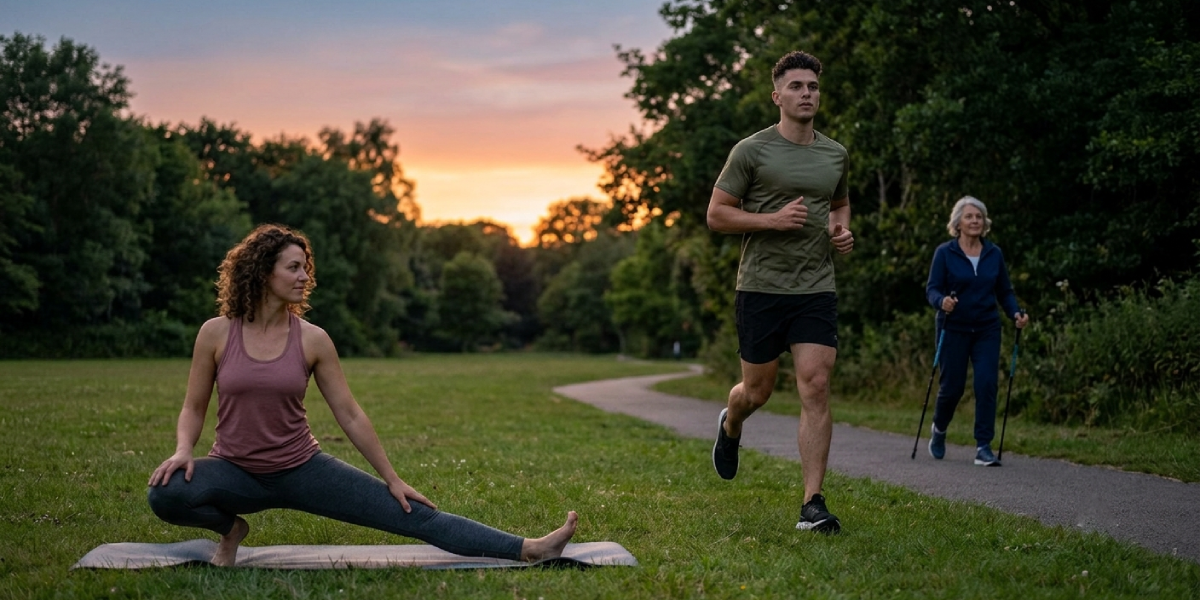
Evening exercise routines are one of the most practical ways to stay consistent with fitness when mornings feel rushed or midday schedules are packed. For millions of people, the hours after work are the only reliable window to move their bodies — and when structured thoughtfully, evening workouts can do more than burn calories.
They can help decompress the nervous system, ease mental tension from the day, and set the stage for deeper, more restorative sleep.
The key is choosing the right type of exercise and timing it correctly. Not every workout belongs at night. High-intensity training done too close to bedtime can spike cortisol and core body temperature, making it harder to fall asleep.
But a well-chosen evening routine — one that balances effort with recovery — can become one of the most productive habits in your week.
Why Evening Workouts Work for Many People
Research consistently shows that body temperature, muscle strength, and cardiovascular efficiency tend to peak in the late afternoon and early evening. This means that from a pure performance standpoint, many people are at their physical best between 4 p.m. and 7 p.m.
Reaction time is faster, perceived exertion is lower, and the body is better primed for both strength and endurance work compared to early morning.
There is also a psychological advantage. After a full day of work, many people find that physical movement provides a meaningful transition — a ritual that separates the demands of the workday from the rest of the evening. Rather than collapsing on the couch and carrying stress into the night, a structured workout acts as a pressure valve.
Understanding your own health goals matters here. Whether you are aiming for fat loss, stress reduction, better sleep, or improved endurance, the type of evening routine you choose should reflect those priorities — and it should be sustainable enough to repeat several times a week without exhausting you.
The Best Types of Evening Exercise Routines
Low-to-Moderate Intensity Cardio
A 30 to 45 minute brisk walk, light jog, or easy cycling session is one of the most effective evening workout formats. It elevates heart rate enough to trigger endorphin release without pushing core temperature into territory that disrupts sleep onset.
Walking outdoors, in particular, combines the physical benefits of movement with the mental benefits of natural light exposure and a change of environment.
Aim to finish moderate cardio at least 90 minutes before bed. This gives your body enough time to begin cooling down naturally, which signals the brain that sleep is approaching. Finishing a walk at 8:30 p.m. and winding down by 9:00 p.m. before a 10:30 p.m. bedtime is a format that works well for most adults.
Yoga and Mobility Work
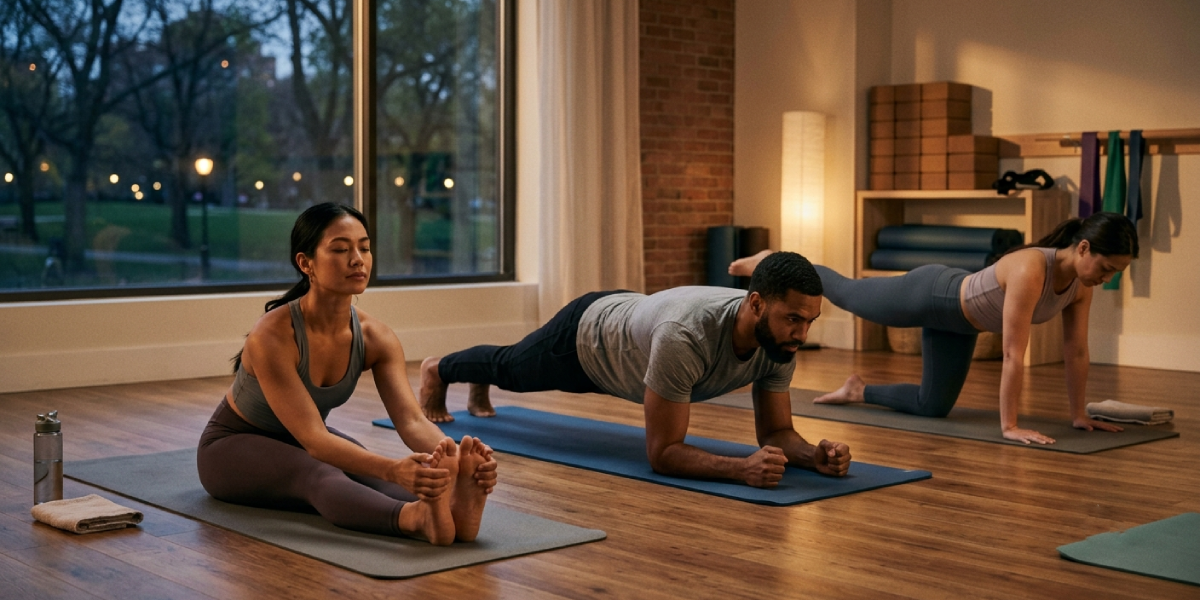
Evening yoga is one of the most well-researched practices for combining fitness maintenance with sleep preparation. Styles like Yin yoga, restorative yoga, and Hatha yoga focus on slow, sustained stretches that activate the parasympathetic nervous system — the branch responsible for rest and recovery.
Poses held for 2 to 5 minutes allow fascia and connective tissue to release tension that accumulates during a sedentary day.
A 20 to 40 minute yoga flow focused on the hips, hamstrings, lower back, and shoulders addresses the postural damage of desk work while simultaneously calming the mind. Deep diaphragmatic breathing integrated into the practice lowers heart rate and reduces cortisol, the body’s primary stress hormone, making it an excellent pre-sleep ritual.
Bodyweight Strength Training
Strength training in the evening does not have to be intense to be effective. A well-designed bodyweight circuit using movements like squats, push-ups, glute bridges, lunges, and planks can maintain and build muscle while staying well within a moderate intensity range.
The goal in an evening strength session should not be to push to failure — it should be to accumulate volume with controlled effort and deliberate form.
A 30 to 40 minute bodyweight session, followed by 10 minutes of static stretching, checks multiple boxes: it builds functional strength, promotes calorie burning through excess post-exercise oxygen consumption (EPOC), and the cooldown phase transitions the nervous system toward recovery mode.
Browse a full library of exercises to find movements that fit your current level and target the muscle groups you want to prioritize.
Swimming or Pool-Based Exercise
Water-based workouts are uniquely suited to the evening because water itself has a cooling effect on the body. Swimming laps, water jogging, or a structured aqua aerobics session provides excellent cardiovascular and muscular conditioning with minimal joint stress.
The hydrostatic pressure of water also supports circulation and reduces muscle soreness, making it a strong recovery tool for people who train hard earlier in the week.
Resistance Band and Dumbbell Circuits
For those exercising at home, resistance bands and a pair of dumbbells open up a wide range of structured evening circuits. A routine that alternates between upper body, lower body, and core exercises with short rest intervals keeps heart rate elevated while distributing fatigue across muscle groups.
This prevents any single area from becoming too taxed, which helps avoid the excessive muscle soreness that can sometimes interrupt sleep quality.
Keeping weights moderate and rep ranges in the 12 to 20 range supports endurance and muscle tone without the heavy neural demand of maximal strength work. Pair each circuit with a 5-minute mobility cooldown to begin the transition into rest.
How to Structure Your Evening Workout Week
Consistency matters more than any individual session. A sustainable evening exercise schedule for most adults looks something like this:
- Monday: 35-minute brisk walk or light jog
- Tuesday: 30-minute bodyweight strength circuit plus 10-minute stretch
- Wednesday: Active recovery — 20 minutes of gentle yoga or mobility work
- Thursday: 30-minute resistance band or dumbbell circuit
- Friday: 40-minute low-intensity cardio (cycling, swimming, or walking)
- Saturday: Longer yoga or Pilates session — 45 to 60 minutes
- Sunday: Full rest or a slow 20-minute walk
This structure delivers 5 to 6 active evenings per week while building in enough recovery to prevent overtraining and protect sleep quality. Adjust based on your existing fitness level and any physical limitations you may have.
Timing Your Evening Workout for Better Sleep

One of the most common concerns about evening exercise is its effect on sleep. The evidence is more nuanced than the old blanket advice to avoid all exercise after 6 p.m. Several studies, including research published in sports medicine journals, have found that moderate-intensity exercise completed more than 60 minutes before bedtime does not impair sleep in most healthy adults and may actually improve sleep quality and duration.
What does impair sleep is high-intensity exercise — sprints, heavy lifting to failure, high-intensity interval training (HIIT) — performed within 60 to 90 minutes of the time you plan to fall asleep. These sessions significantly elevate adrenaline, cortisol, and core temperature, all of which are antagonistic to sleep onset.
A practical rule: finish moderate workouts at least 60 minutes before bed, and high-intensity sessions at least 90 to 120 minutes before bed. If your goal is to exercise at 9 p.m. and sleep by 10:30 p.m., keep the effort moderate and prioritize a proper cooldown.
Nutrition Around Evening Workouts
What you eat before and after an evening workout significantly impacts both performance and sleep. Exercising on a full stomach is uncomfortable and diverts blood flow from muscles to digestion, so aim to finish a full meal at least 90 minutes before your workout.
If you need a small pre-workout snack — particularly before a longer or more intense session — a banana with a tablespoon of almond butter or a small bowl of oatmeal offers quick-digesting carbohydrates without heaviness.
Post-workout nutrition after evening sessions should be light and protein-rich to support muscle repair without overloading digestion before sleep. A small serving of Greek yogurt, cottage cheese, a protein shake, or eggs on toast are practical options.
Avoid large, heavy meals immediately after training, as they can delay sleep onset and reduce sleep quality during the first part of the night.
Monitoring Your Progress and Body Composition
As you build consistency with an evening exercise routine, tracking your progress helps maintain motivation and identify what is working. Body weight alone is an incomplete metric — muscle gain and fat loss can offset each other on the scale while your body composition improves significantly.
Using a BMI calculator as one reference point, alongside measurements, energy levels, sleep quality, and how your clothes fit, gives a more complete picture of your overall health trajectory.
Keep a simple training log. Note what you did, how you felt during and after, and your sleep quality that night. Over several weeks, patterns will emerge that help you fine-tune your timing, intensity, and workout selection for your specific physiology.
Creating a Pre- and Post-Workout Wind-Down Ritual
A structured ritual around your evening workout amplifies its benefits. Before training, spend 5 minutes warming up with dynamic movements — leg swings, arm circles, hip rotations — to prepare joints and raise muscle temperature.
After training, transition deliberately: 10 minutes of static stretching, followed by a warm shower (not hot — very hot showers immediately post-workout can further elevate core temperature), a light post-workout snack, and 20 to 30 minutes of low-stimulation activity such as reading or light conversation.
Avoid screens with bright blue light immediately after training, as they suppress melatonin production and counteract the calming effect of your cooldown. Use blue-light-blocking glasses or switch devices to night mode if screen use is unavoidable.
Common Mistakes to Avoid with Evening Exercise
- Training too hard too late: High-intensity sessions within 90 minutes of bedtime reliably disrupt sleep for most people.
- Skipping the cooldown: The transition from elevated heart rate to rest is as important as the workout itself.
- Eating a heavy meal right after: It slows recovery and reduces sleep quality.
- Being inconsistent with timing: Exercising at wildly different hours each night prevents your body from establishing a reliable pre-sleep rhythm.
- Ignoring recovery signals: If you are consistently sleeping poorly, feeling fatigued, or waking up sore, your evening routine may need to be scaled back in intensity or duration.
Frequently Asked Questions
Are evening exercise routines effective for weight loss?
Yes. Evening workouts burn calories and support fat loss just as effectively as morning sessions. Total weekly calorie expenditure and dietary habits matter far more than the time of day you exercise. Consistency with your evening routine will produce results over time.
What is the best exercise to do in the evening for sleep?
Yoga, gentle mobility work, and low-to-moderate intensity walking are among the best options for evening exercise if improving sleep is a priority. They calm the nervous system rather than overstimulate it, making sleep onset easier.
How late is too late to work out at night?
For most adults, finishing moderate exercise at least 60 minutes before bed is sufficient. High-intensity training should be completed at least 90 to 120 minutes before your target sleep time. Exercising right before bed — within 30 minutes — is generally not advisable unless it is very gentle stretching or breathing exercises.
Can I do HIIT in the evening?
HIIT can be done in the evening, but it should be completed at least 90 minutes before bedtime to allow cortisol and core temperature to return to baseline. People who are sensitive to sleep disruption may want to reserve HIIT for earlier in the day and use evenings for lower-intensity training.
How many days a week should I exercise in the evening?
Three to five evenings per week of intentional exercise is a sustainable and effective target for most adults. Build in at least one to two full rest days or active recovery days per week to allow your body to repair and adapt.
Do evening workouts affect cortisol levels?
Intense exercise raises cortisol temporarily regardless of the time of day. In the evening, this matters more because elevated cortisol at night competes with melatonin and disrupts sleep. Keeping evening workout intensity moderate helps prevent significant cortisol spikes that would interfere with rest.
Should I eat before an evening workout?
Yes, but keep it light if your meal and workout are close together. A small snack 30 to 60 minutes before training — such as a banana, a handful of nuts, or a small protein shake — provides fuel without causing digestive discomfort. If you had a full dinner, wait at least 90 minutes before exercising.
Is it okay to lift weights in the evening?
Absolutely. Resistance training in the evening is effective and appropriate. Keep sessions focused on moderate weights with controlled form rather than maximal effort, and follow your session with a proper cooldown and light meal to support muscle recovery overnight.
How do I stay motivated to exercise after a long workday?
Preparation is the biggest driver of evening workout consistency. Lay out your gear in the morning, schedule your workout like a meeting, start with just 10 minutes if motivation is low (most people continue once they begin), and vary your routine enough to prevent boredom. Tracking progress and having a clear fitness goal also sustains motivation over time.
What should I do if evening exercise disrupts my sleep?
If you consistently find that evening workouts interfere with sleep, shift your training to earlier in the evening, reduce intensity, extend your cooldown period, and avoid screens after your session. If disruption persists after making these adjustments, consider moving your most intense sessions to the morning or afternoon and using evenings only for yoga or gentle movement.