

If you have ever rolled out of bed and felt a tight, achy pull across your lower spine, you already understand why lower back exercises are one of the most searched fitness topics every year. Lower back pain affects most adults at some point, often from long hours sitting, poor lifting habits, or simply weak supporting muscles.
The good news is that a consistent, well-designed routine can reduce discomfort, improve posture, and build the kind of functional strength that protects your spine for years to come.
This guide walks through practical, evidence-informed lower back exercises that I have used personally and recommended to clients recovering from stiffness, desk-related tightness, and general deconditioning. None of these moves require fancy equipment, and most can be done on a yoga mat in a living room.
Why Lower Back Pain Happens and How Exercise Helps
The lower back, or lumbar spine, relies on a network of muscles including the erector spinae, multifidus, glutes, and deep core stabilizers like the transverse abdominis. When these muscles are weak or imbalanced, the spine loses support, and everyday movements like bending, twisting, or standing for long periods can trigger pain.
Strengthening these supporting muscles distributes load more evenly across the spine, reduces compressive stress on the discs, and improves mobility in the hips and thoracic spine, which often compensate when the lower back is overworked.
Gentle, progressive movement also encourages blood flow to the area, which can ease stiffness faster than complete rest.
How to Warm Up Safely Before Lower Back Exercises
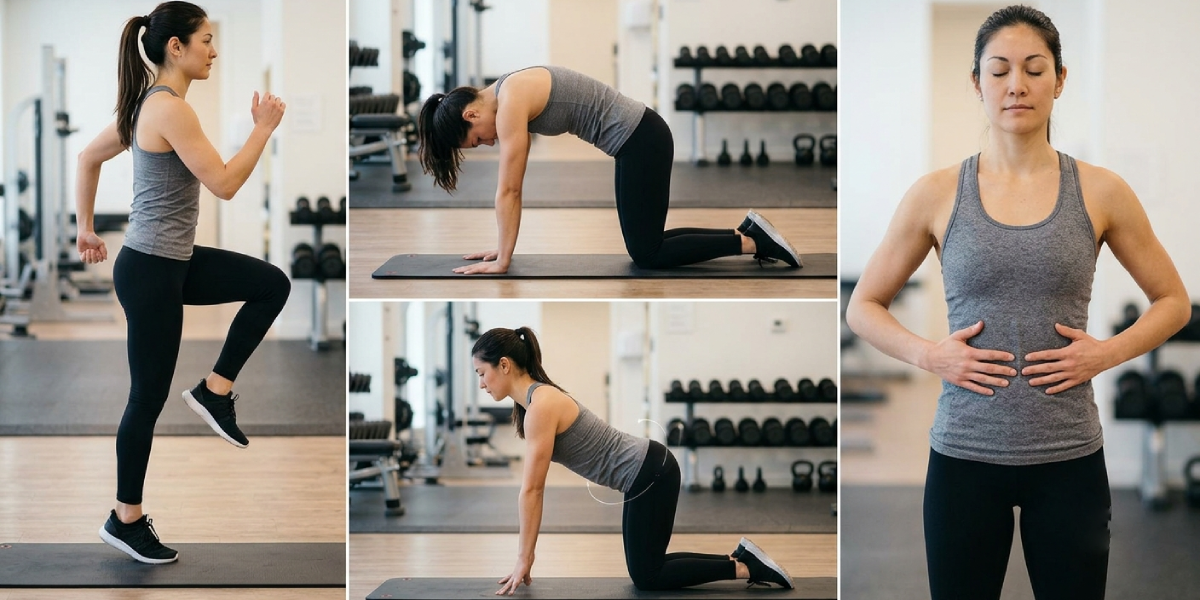
A short warm-up prepares the joints and muscles for work and lowers the risk of strain. Five to seven minutes of light movement is usually enough.
- Walk in place or march on the spot for two minutes to raise core temperature
- Perform slow cat-cow stretches for one minute to mobilize the spine
- Do ten gentle hip circles in each direction to loosen the pelvis
- Take five deep breaths while standing tall to activate the diaphragm and core
Once warmed up, you can move into the core routine below. For a broader library of movement guides, you can browse the full exercises section for complementary routines that pair well with lower back work.
The Best Lower Back Exercises to Reduce Pain and Build Strength
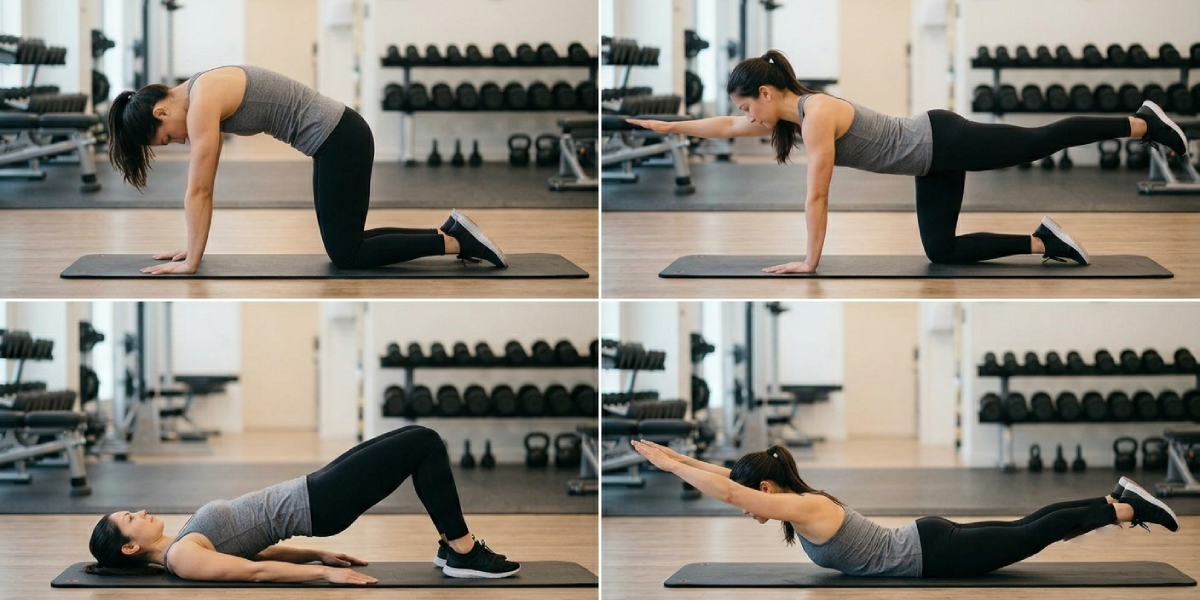
Each of the following lower back exercises targets a different aspect of spinal support, from gentle mobility to deeper strength. Start with two to three sets of eight to twelve repetitions, or hold static positions for twenty to thirty seconds, and progress gradually as your tolerance improves.
Pelvic Tilts
Lie on your back with knees bent and feet flat on the floor. Gently flatten your lower back into the mat by tightening your abdominal muscles, then release. This simple movement teaches core engagement and is often the first exercise recommended after a flare-up because it is low impact and easy to control.
Bird Dog
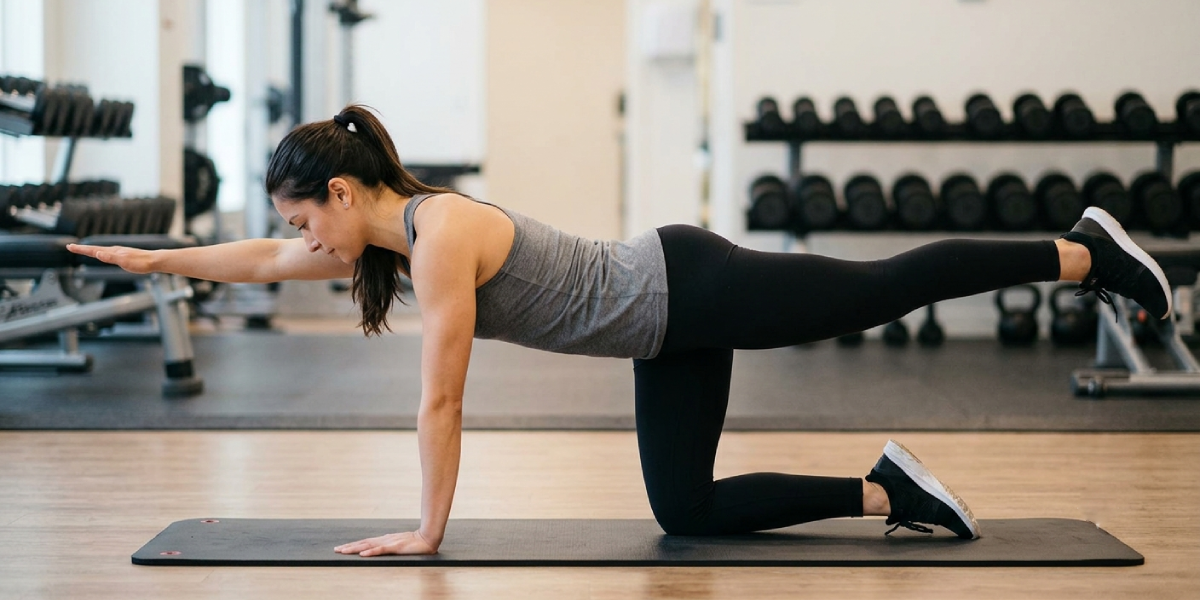
Start on hands and knees. Extend one arm forward and the opposite leg straight back while keeping your spine neutral and hips level. Hold briefly, then switch sides. Bird dog builds coordination between the core and glutes, which is essential for protecting the lower back during daily activities like lifting groceries or reaching overhead.
Cat-Cow Stretch
On hands and knees, alternate between arching your back upward (cat) and dropping your belly while lifting your chest (cow). This dynamic stretch improves spinal flexibility and is particularly useful first thing in the morning when stiffness tends to be at its peak.
Glute Bridges
Lie on your back with knees bent, feet hip-width apart. Press through your heels to lift your hips toward the ceiling, squeezing your glutes at the top. Glutes play a significant supporting role for the lumbar spine, and weak glutes are a common contributor to chronic lower back discomfort.
Modified Superman Hold
Lie face down with arms extended forward. Lift your chest and legs just a few inches off the floor, focusing on lengthening rather than arching aggressively. This strengthens the erector spinae muscles that run along the spine. Keep the lift small and controlled, especially if you are new to back-strengthening work.
Knee-to-Chest Stretch
Lying on your back, pull one knee toward your chest while keeping the other leg extended or bent on the floor. Hold, then switch legs. This stretch relieves tension in the lower back and glutes and is gentle enough to use even on days when your back feels sensitive.
Partial Crunches
With knees bent and feet flat, cross your arms over your chest and lift your shoulders slightly off the floor using your abdominal muscles, not your neck. Partial crunches build front-core strength without placing excessive strain on the spine the way full sit-ups can.
A Sample Weekly Routine
Consistency matters more than intensity when training the lower back. Here is a simple weekly structure you can follow and adjust based on how your body responds.
| Day | Focus | Exercises |
|---|---|---|
| Monday | Mobility and activation | Cat-Cow, Pelvic Tilts, Knee-to-Chest Stretch |
| Wednesday | Strength | Bird Dog, Glute Bridges, Modified Superman Hold |
| Friday | Combined routine | All seven exercises, two sets each |
| Weekend | Active recovery | Light walking, gentle stretching |
This schedule allows muscles to recover between strength sessions while still encouraging daily mobility, which is often more important than people expect for long-term spine health.
Safety Tips and When to Avoid These Exercises
Lower back exercises are generally safe when performed with proper form, but a few precautions are worth keeping in mind.
- Stop immediately if you feel sharp, shooting, or radiating pain down the legs
- Avoid these exercises during the first 24 to 48 hours after an acute injury
- Keep movements slow and controlled rather than fast or jerky
- Engage your core before lifting or extending limbs to protect the spine
- Seek medical guidance if pain persists beyond a few weeks or worsens with rest
People managing chronic conditions, recent surgery, or numbness in the limbs should consult a physician or physical therapist before starting any new routine.
Tracking Progress and Supporting Overall Health
Strengthening your lower back works best as part of a broader approach to wellness. Body weight, posture, and overall activity level all influence how much strain your spine carries day to day. If you are curious how your weight may be affecting your joints and back, the BMI calculator offers a quick way to check where you stand and set realistic, healthy goals.
Pairing your exercise routine with broader lifestyle habits, like better sleep, hydration, and balanced nutrition, can further support recovery. For more guidance on building those habits, the health resources section covers a wide range of topics that complement a back-strengthening program.
Frequently Asked Questions
How often should I do lower back exercises?
Most people benefit from three to four sessions per week, allowing at least one rest day between strength-focused workouts to let muscles recover.
Can lower back exercises help with chronic pain, not just occasional soreness?
Yes, gradual strengthening and mobility work is one of the most recommended approaches for managing chronic lower back pain, though severe or persistent cases should be evaluated by a healthcare provider first.
Is it safe to exercise during a lower back flare-up?
Gentle movements like pelvic tilts or knee-to-chest stretches are often tolerated even during mild flare-ups, but intense exercises should wait until acute pain subsides.
How long before I notice improvement?
Many people notice reduced stiffness within two to three weeks of consistent practice, while meaningful strength gains typically take six to eight weeks.
Do I need equipment for these exercises?
No, all of the exercises in this guide can be performed using just a mat and body weight, making them accessible at home or while traveling.
Should I stretch or strengthen first?
A brief stretch or mobility warm-up before strengthening exercises helps prepare the muscles and reduces the risk of strain during the workout.
Can these exercises help with posture as well as pain?
Yes, many lower back exercises also engage the core and glutes, which play a major role in maintaining upright, balanced posture throughout the day.
When should I see a doctor instead of self-treating?
If pain radiates down the legs, includes numbness or weakness, or does not improve after several weeks of consistent home exercise, it is time to consult a medical professional.
Are these exercises suitable for beginners?
Yes, the routine is designed to be beginner-friendly, starting with gentle mobility work before progressing to light strengthening movements.