

The calf raises exercise is one of the most underrated movements in any fitness routine. Whether you are a beginner stepping into the gym for the first time or a seasoned athlete looking to close a weak link in your lower body, building stronger calves pays off in ways that extend far beyond aesthetics.
From improved athletic performance to better balance and injury prevention, calf raises deliver real, functional benefits that you will feel every single day.
This comprehensive guide walks you through everything you need to know about the calf raises exercise, including proper form, the best variations, programming tips, and common mistakes to avoid. By the end, you will have a clear, practical plan to strengthen your lower legs and keep them healthy for years to come.
Understanding Your Calf Muscles
Before you perform a single rep, it helps to understand the anatomy behind the movement. Your calf is made up of two primary muscles that work together every time you push off the ground, climb stairs, or stand on your toes.
The Gastrocnemius
The gastrocnemius is the larger, more visible muscle at the back of the lower leg. It has two heads, giving the calf that distinctive diamond shape you often see on well-developed athletes. This muscle crosses both the knee and the ankle joint, which means it is most effectively targeted when the knee is straight.
It is a fast-twitch dominant muscle, meaning it responds well to heavier loads and explosive movements.
The Soleus
Sitting beneath the gastrocnemius, the soleus is a flatter, wider muscle. Because it only crosses the ankle joint and not the knee, it is best activated when the knee is bent. The soleus is primarily composed of slow-twitch muscle fibers, making it highly resistant to fatigue and essential for endurance activities like running and cycling.
Many people neglect the soleus, but training it is critical for complete lower leg development and ankle stability.
Why Calf Raises Exercise Belongs in Your Routine
Strong calves are not just about looking good in shorts. They serve critical functional roles throughout daily life and athletic training. Here is why you should prioritize this exercise in your program.
- Improved athletic performance: Explosive calf strength contributes to jumping height, sprinting speed, and agility. Athletes in basketball, volleyball, soccer, and track all benefit from powerful calves.
- Ankle and knee stability: Strong calves support the ankle joint and reduce the risk of sprains, stress fractures, and Achilles tendon injuries.
- Better posture and balance: The calf muscles play a vital role in maintaining upright posture and stabilizing the body during standing and walking.
- Reduced lower body fatigue: Well-conditioned calves help absorb impact during running and walking, reducing stress on the knees and hips.
- Circulation support: Calf contractions act as a pump that assists blood flow back to the heart, which is especially beneficial for people who sit or stand for long periods.
How to Do a Standard Standing Calf Raise with Perfect Form
The standing calf raise is the foundation of all calf training. Mastering this movement first ensures you get the most out of every variation that follows.
Step-by-Step Instructions
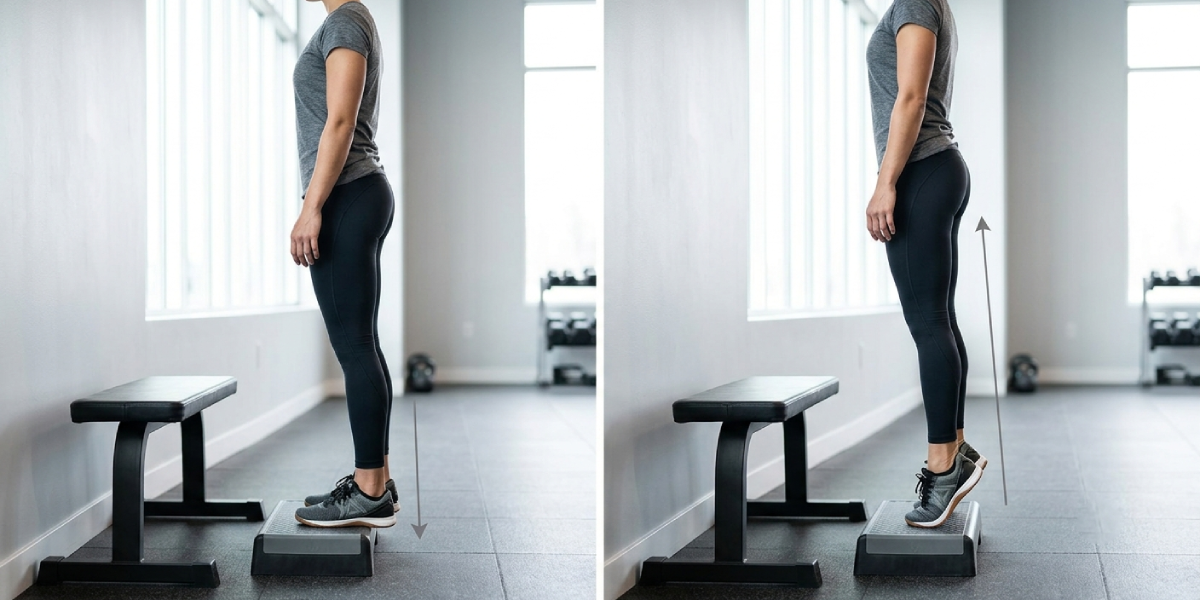
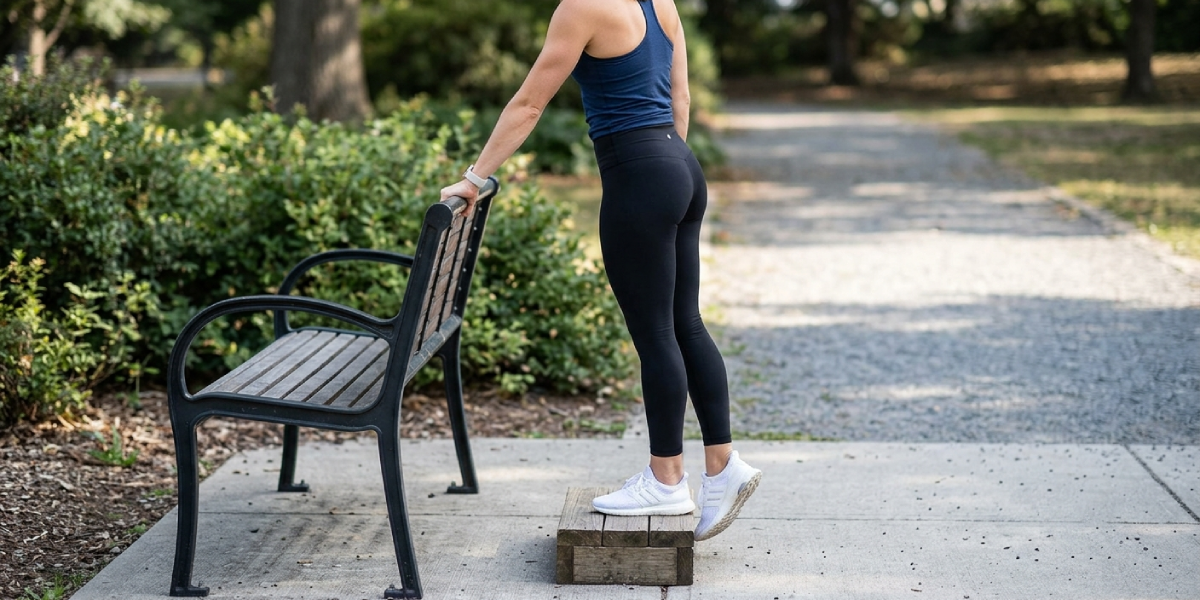
- Starting position: Stand upright with your feet hip-width apart. Position the balls of your feet on a slightly elevated surface, such as a step or a calf raise platform, so your heels can drop below the level of your toes. If you do not have a step, performing the movement on flat ground is still effective.
- Lower your heels: Allow your heels to drop as far toward the floor as your range of motion comfortably allows. This is the stretched position. Take a full second here to maximize the stretch through the Achilles tendon and the calf muscle.
- Rise onto your toes: Push through the balls of your feet and raise your heels as high as possible. At the top, pause for one to two seconds and actively squeeze your calf muscles as hard as you can.
- Control the descent: Slowly lower your heels back to the starting stretched position over two to three seconds. Avoid bouncing or using momentum to rush through the movement.
- Repeat: Perform the desired number of repetitions with controlled form throughout.
Key Form Cues to Remember
- Keep your core braced and your torso upright throughout the movement.
- Avoid letting your ankles roll inward or outward. Keep the movement straight and vertical.
- Do not rush. Slow, controlled reps with a full range of motion beat fast, sloppy reps every time.
- Think about pushing the floor away from you rather than just lifting your heels. This mental cue improves muscle activation.
The Best Calf Raise Variations for Complete Lower Leg Development
One of the great strengths of the calf raises exercise is how many effective variations exist. Each targets the calf muscles slightly differently and keeps your training fresh and progressive.
Seated Calf Raise
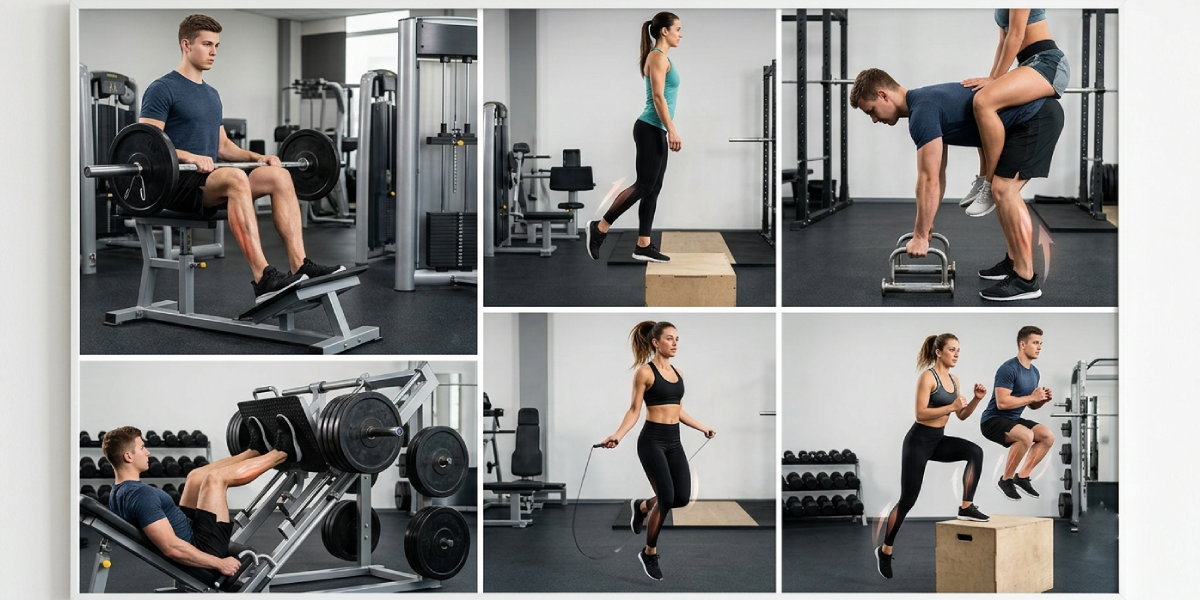
The seated calf raise is performed with the knees bent at approximately 90 degrees, which shifts the emphasis from the gastrocnemius to the soleus. You can use a seated calf raise machine at the gym or simply place a weight plate or dumbbell on your thighs while seated on a bench.
Because the soleus is so often undertrained, incorporating seated raises into your routine can lead to noticeable improvements in overall calf size and ankle endurance.
Single-Leg Calf Raise
Performing calf raises on one leg at a time dramatically increases the demand on each calf individually. This variation corrects muscle imbalances between legs and builds greater strength per side. It also adds a significant balance and stability challenge.
Use bodyweight only when starting out, then progress by holding a dumbbell in the hand on the same side as the working leg.
Donkey Calf Raise
The donkey calf raise involves bending forward at the hips with support in front of you while someone sits on your lower back, or by using a donkey calf raise machine. This position places the hips in flexion, which stretches the gastrocnemius more fully than the standard standing version.
Many experienced bodybuilders consider this one of the most effective calf movements ever developed for overall mass.
Leg Press Calf Raise
On the leg press machine, after completing leg press repetitions, you can perform calf raises by pressing the platform with just the balls of your feet. This allows you to use a heavier load safely and is a great option for those who find it difficult to balance during standing calf raises.
Jump Rope and Box Jumps
While not pure calf raises, these plyometric movements load the calves explosively and are excellent complements to your isolation work. They build the fast-twitch power that slow, grinding calf raises alone cannot fully develop.
How to Program Calf Raises into Your Workout Plan
Because the calves are highly fatigue-resistant muscles, especially the soleus, they generally require more volume and frequency than most other muscle groups to grow and strengthen effectively.
Recommended Sets and Reps
| Goal | Sets | Reps | Rest Between Sets |
|---|---|---|---|
| Muscle Size (Hypertrophy) | 3 to 5 | 10 to 15 | 60 to 90 seconds |
| Strength | 4 to 6 | 5 to 8 (weighted) | 2 to 3 minutes |
| Endurance | 2 to 4 | 20 to 30 | 30 to 60 seconds |
| General Fitness | 3 | 12 to 20 | 60 seconds |
How Often Should You Train Calves
Most fitness professionals recommend training calves two to four times per week. Because they recover relatively quickly, especially at moderate intensities, more frequent sessions tend to produce better results than one heavy session per week.
You can include calf raises at the end of a leg day, after a cardio session, or as a standalone finisher at the end of any workout.
If you want to track your progress more accurately over time, it is worth monitoring your overall body composition alongside your strength gains to get a clearer picture of how your training is paying off.
Common Calf Raise Mistakes and How to Fix Them
Even experienced gym-goers make errors that limit their calf development. Identifying and correcting these habits can make a significant difference in your results.
Using Too Much Momentum
Bouncing through reps by letting gravity do most of the work is extremely common. This short-circuits muscle tension and reduces the training stimulus. Fix it by slowing down the lowering phase to a count of three and pausing at the bottom of every rep for a full second before driving back up.
Skipping the Full Range of Motion
Partial reps that do not include a complete stretch at the bottom and a full squeeze at the top leave a significant amount of muscle activation on the table. Raising your heels only halfway up or never fully dropping the heel below the step means you are training only a fraction of the muscle length. Use a step or platform to ensure a complete range of motion.
Neglecting the Soleus
If you only ever do standing calf raises, you are primarily training the gastrocnemius. The soleus, which makes up a large portion of calf volume, responds to seated raises with the knees bent. Include at least one seated variation in every calf workout for balanced development.
Not Adding Progressive Overload
Doing the same number of reps with the same bodyweight week after week will eventually lead to a plateau. Just like any other muscle group, your calves need progressively greater challenges over time. Add weight incrementally, increase your rep count, slow down the tempo, or reduce your rest periods to keep progressing.
Calf Health, Stretching, and Recovery
Strong muscles also need to be flexible and well-recovered. Paying attention to calf health is especially important given how heavily these muscles are used in everyday walking, standing, and exercise.
After each training session, spend at least five minutes stretching the calves. A standing wall stretch, where you place your hands on a wall and press your heel into the floor with a straight leg, is ideal for the gastrocnemius. For the soleus, perform the same stretch but with a slight bend in the knee. Hold each stretch for 30 to 60 seconds per side.
Foam rolling the calves before and after training can also reduce muscle tightness and improve blood flow. Dehydration is a common cause of calf cramps, so maintaining adequate fluid and electrolyte intake, particularly if you train in a hot environment, is essential.
Paying attention to overall health habits like sleep, hydration, and nutrition will directly support your calf training outcomes.
Progressions for Beginners to Advanced Lifters
No matter where you are starting from, there is a calf raise progression that fits your current ability level.
- Beginner: Start with two sets of 15 bodyweight standing calf raises on flat ground, three times per week. Focus entirely on form and full range of motion before adding any load.
- Intermediate: Add a step for a deeper stretch, hold a pair of dumbbells for resistance, and introduce seated calf raises. Aim for three to four sets per session, two to three times per week.
- Advanced: Incorporate single-leg variations, weighted seated calf raises, and periodization strategies such as alternating heavy weeks with higher volume weeks. Train calves three to four times per week with varied rep ranges and tempos.
Frequently Asked Questions
How many calf raises should I do per day?
For general fitness and strength, performing three to four sets of 12 to 20 repetitions, two to four times per week, is a well-supported approach. Daily high-volume calf raises can work for some people but may increase the risk of overuse injury if recovery is inadequate. Listen to your body and allow at least one full rest day between intense sessions.
Can calf raises make your calves bigger?
Yes, with consistent progressive overload, proper nutrition, and adequate recovery, calf raises can increase calf muscle size. The gastrocnemius responds well to heavier weighted raises, while the soleus grows more with seated variations and higher rep sets. Genetics play a role in how easily calves grow, but nearly everyone can see meaningful improvements with dedicated training.
Are calf raises good for knee pain?
In many cases, strengthening the calves can reduce stress on the knee joint by improving lower leg stability. However, if you are currently experiencing knee pain, consult a physiotherapist or medical professional before beginning any new exercise program to determine the appropriate modifications for your specific situation.
Do calf raises help with running performance?
Absolutely. The calves are among the primary propulsive muscles in running. Stronger, more resilient calves improve push-off power, running economy, and resistance to fatigue-related injuries like shin splints and Achilles tendinopathy. Runners who incorporate calf raises into their strength training routines typically see improvements in pace, distance, and injury resilience.
What is the difference between standing and seated calf raises?
Standing calf raises, performed with a straight knee, primarily target the gastrocnemius muscle. Seated calf raises, done with the knee bent to approximately 90 degrees, shift the emphasis to the soleus muscle beneath. Both muscles are important, and a complete calf training program should include both variations for balanced development.
How long does it take to see results from calf raises?
Most people notice improved muscular endurance and some visible tone within four to six weeks of consistent training. Significant gains in muscle size and strength typically take three to six months of progressive, well-structured training. Results vary based on genetics, training frequency, nutrition, and overall recovery quality.
Can I do calf raises every day?
Because the calves are used so heavily in daily walking and standing, they are quite resilient and some people do train them daily. However, to maximize muscle growth and minimize overuse injuries, most experts recommend two to four targeted sessions per week with rest days in between. If you want to train them daily, keep the intensity low on recovery days.
Should I do calf raises with weights or bodyweight?
Bodyweight calf raises are a great starting point and remain effective if performed with slow tempo, full range of motion, and high volume. However, to build significant strength and size, adding external resistance through dumbbells, barbells, a machine, or a weighted vest is important. Progressive overload, regardless of the method, is the key principle for continued improvement.
Do calf raises improve balance and stability?
Yes, particularly single-leg calf raises, which directly challenge ankle stability and proprioception. Improved balance is one of the most practical benefits of regular calf training, especially for older adults looking to reduce fall risk, and for athletes who need precise foot and ankle control during sport-specific movements.