

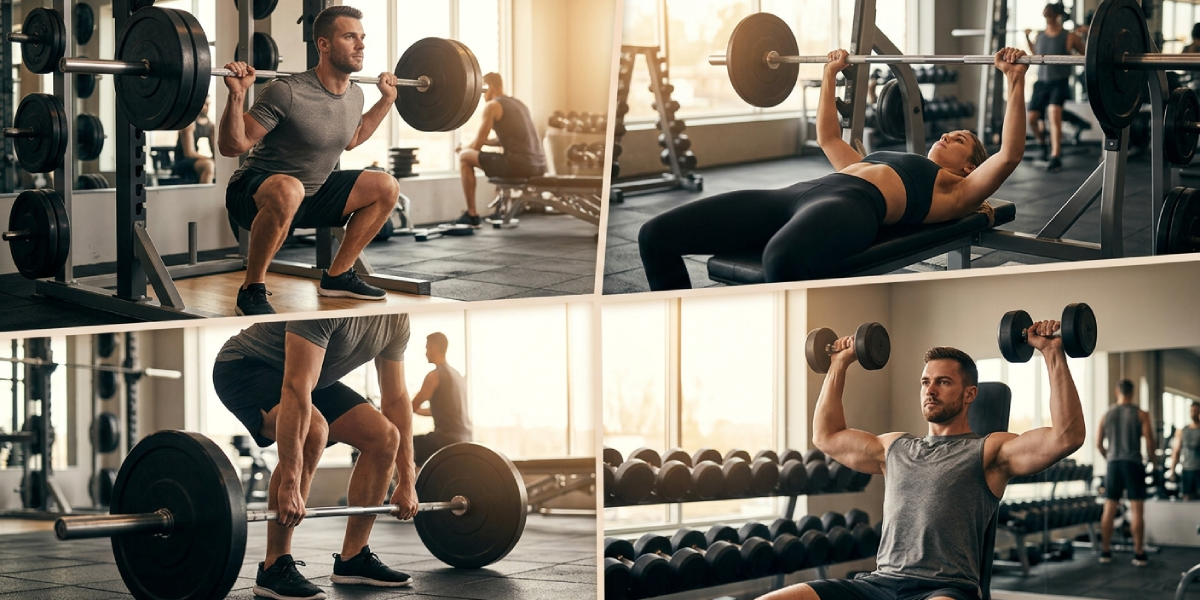
If you are searching for the best gym exercises for a complete full body workout, you have come to the right place. Whether you are a beginner stepping onto the gym floor for the first time or a seasoned lifter looking to refresh your routine, building a well-rounded program that trains every major muscle group is the foundation of lasting fitness.
This guide breaks down the most effective movements, explains why they work, and shows you how to structure them into a training plan that delivers real results.
Why a Full Body Workout Approach Delivers Superior Results
Training your entire body in each session, or across a balanced weekly split, ensures that no muscle group gets neglected. Research consistently shows that training a muscle group at least twice per week produces greater hypertrophy and strength gains compared to training it just once.
Full body routines naturally accommodate this principle because compound movements recruit multiple muscle groups simultaneously, giving each area more frequent stimulation without requiring you to live at the gym.
Beyond muscle growth, full body training improves cardiovascular conditioning, enhances coordination, and burns significantly more calories per session than isolated single-muscle workouts. When you squat, deadlift, or press, your heart rate climbs, your core braces, and dozens of stabilizer muscles activate in unison.
The metabolic demand is simply higher, which translates to better body composition over time.
Tracking your body composition alongside your training progress gives you a clearer picture of how your efforts are paying off. Using a reliable BMI calculator can serve as a useful starting benchmark to understand where you currently stand and to set realistic, measurable goals before you begin a new program.
The Non-Negotiable Compound Movements
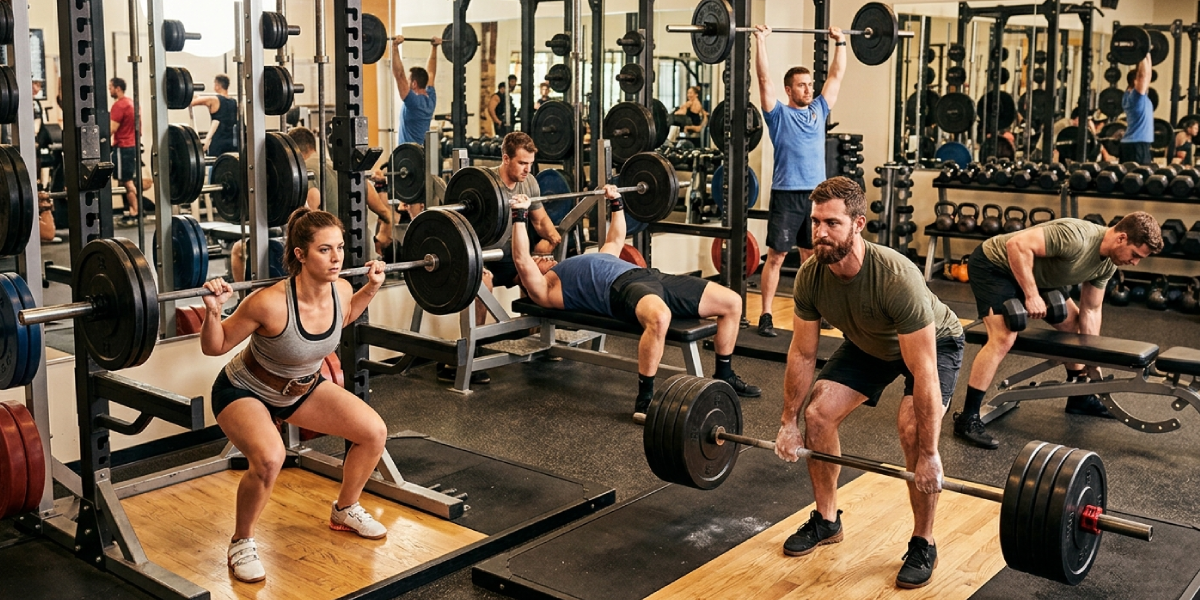
Compound exercises should form the backbone of any full body gym program. These multi-joint movements recruit the largest muscles in your body, stimulate the most hormonal response, and transfer directly to real-world strength and athletic performance.
The Barbell Back Squat
The back squat is widely regarded as the king of lower body exercises, and for good reason. It primarily targets the quadriceps, hamstrings, and glutes while demanding significant engagement from the core, spinal erectors, and upper back to maintain an upright, safe posture.
Performed with a barbell resting on the upper traps or rear deltoids, the squat trains the body through a deep range of motion that few other exercises can replicate.
Beginners should start with a goblet squat using a dumbbell or kettlebell to develop the motor pattern before progressing to a barbell. Aim for three to four sets of six to ten repetitions, prioritizing depth and a neutral spine over the weight on the bar.
The Conventional or Romanian Deadlift
The deadlift is arguably the most complete strength exercise in existence. It works the posterior chain from the calves through the hamstrings, glutes, and all the way up to the upper traps.
The conventional deadlift involves pulling a loaded barbell from the floor to hip height in one powerful movement, while the Romanian deadlift emphasizes the hamstrings and glutes by hinging at the hip with a slight knee bend rather than starting from the ground.
Both variations build extraordinary lower body and back strength, improve posture, and develop grip strength that carries over to virtually every other exercise. Three to four sets of four to eight repetitions work well for most trainees.
The Bench Press
For upper body pushing strength, the flat barbell or dumbbell bench press remains the gold standard. It primarily develops the pectorals, anterior deltoids, and triceps, while also engaging the serratus anterior and core for stability.
The dumbbell variation allows for a greater range of motion and challenges each side of the body independently, reducing the risk of strength imbalances.
Performing three to four sets of eight to twelve repetitions is well-suited for hypertrophy, while heavier sets of four to six reps build raw pressing strength more efficiently.
The Overhead Press
Often overlooked in favor of the bench press, the standing overhead press is one of the most functional upper body exercises available. It targets the deltoids, triceps, and upper pectorals while forcing the entire core and lower body to stabilize the load, making it a true full body movement.
Seated variations reduce the core demand but allow for heavier loads if shoulder stability is a concern.
The Barbell or Dumbbell Row
Every pressing movement needs a pulling counterpart to maintain shoulder health and posture. The bent-over barbell row and the single-arm dumbbell row are exceptional choices for building the latissimus dorsi, rhomboids, rear deltoids, and biceps.
A strong back is the foundation of good posture, injury prevention, and impressive pressing numbers. Three to four sets of eight to twelve repetitions per side will produce significant results over time.
Essential Lower Body Exercises Beyond the Squat
A comprehensive lower body program includes unilateral movements that address asymmetries and improve functional strength for walking, running, and everyday movement patterns.
Lunges and Split Squats
Bulgarian split squats, reverse lunges, and walking lunges train each leg independently, exposing and correcting strength differences that bilateral squats can mask. The Bulgarian split squat, performed with the rear foot elevated on a bench, is particularly effective for quadriceps and glute development while also stretching the hip flexors, which are chronically tight in most people who spend long hours seated.
Leg Press and Hack Squat
The leg press machine allows you to load the quadriceps, hamstrings, and glutes with very heavy weights in a supported position, making it an excellent supplementary movement for those building up to heavier barbell squats or managing lower back limitations.
Foot position on the platform adjusts the emphasis: a higher placement targets the hamstrings and glutes more, while a lower placement shifts the load to the quadriceps.
Hip Thrusts
No lower body program is complete without direct glute training. The barbell hip thrust, popularized over the past decade, isolates the gluteus maximus more effectively than any squat or deadlift variation. Strong glutes protect the lower back, improve athletic performance, and contribute significantly to overall lower body aesthetics.
Three sets of ten to fifteen repetitions with a controlled tempo at the top of the movement produces excellent results.
Upper Body Pulling and Pushing Exercises for Complete Development
Balanced upper body training requires equal attention to horizontal and vertical pushing and pulling patterns. Neglecting any of these planes leads to imbalances, poor posture, and elevated injury risk at the shoulder joint.
Pull-Ups and Lat Pulldowns
Pull-ups are one of the most demanding and rewarding upper body exercises, building the lats, biceps, rear deltoids, and core simultaneously. For those who cannot yet perform a full bodyweight pull-up, the lat pulldown machine provides an identical movement pattern with adjustable resistance.
Assisted pull-up machines or resistance band assistance are also effective bridges to unassisted reps.
Cable Rows and Face Pulls
The seated cable row and cable face pull are staples for posterior shoulder health and mid-back density. Face pulls, performed with a rope attachment at upper chest height, directly train the rear deltoids and external rotators of the shoulder, which are critically important for counteracting the internal rotation that bench pressing and desk work create.
Including two to three sets of fifteen to twenty repetitions of face pulls several times per week is a simple habit that dramatically improves shoulder longevity.
Dips and Close-Grip Bench Press
Triceps make up roughly two-thirds of the upper arm’s mass, making their direct development essential for both strength and arm size. Weighted dips and the close-grip bench press are the most effective mass builders for this muscle group, training the triceps through a long range of motion under substantial load.
Core Training That Actually Works
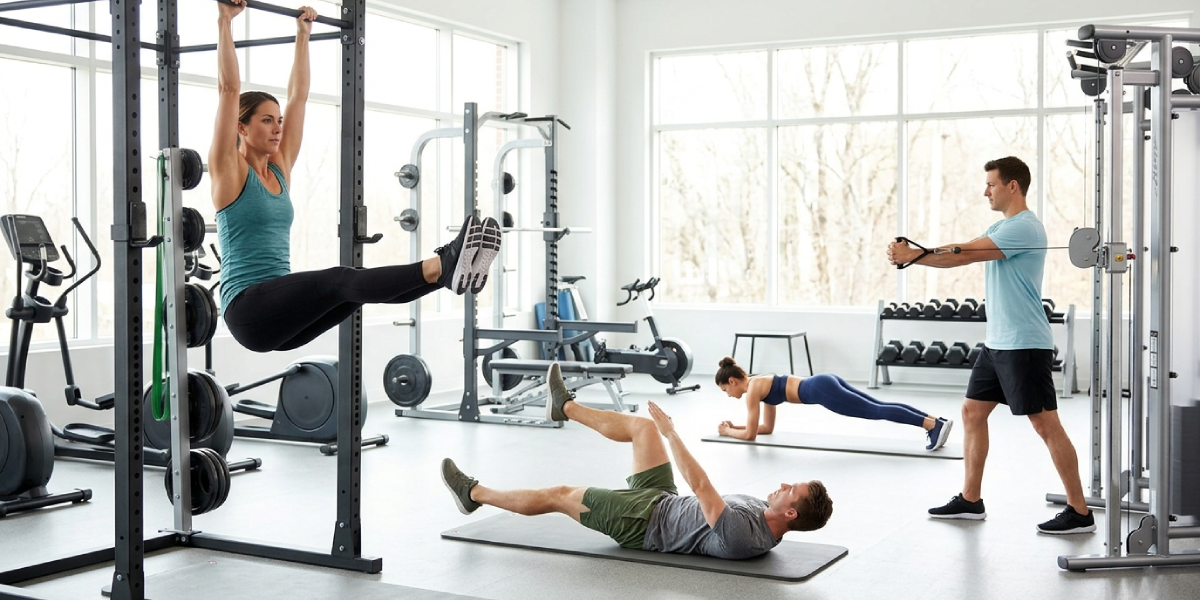
Your core is far more than your abdominal muscles. It encompasses the entire cylinder of musculature surrounding the lumbar spine, including the transverse abdominis, internal and external obliques, and multifidus. Effective core training focuses on anti-movement patterns, meaning the ability to resist unwanted spinal flexion, extension, and rotation under load.
- Plank variations: Front planks, side planks, and RKC planks build endurance in the deep stabilizers without compressing the spine.
- Dead bugs: This floor exercise teaches co-contraction of the abdominals and hip flexors while maintaining a neutral lumbar spine, directly translating to better form on all compound lifts.
- Pallof press: A cable or band exercise that trains anti-rotation strength, one of the most functional core qualities for sport and daily life.
- Hanging leg raises: When performed with strict form, these challenge the rectus abdominis and hip flexors under load through a full range of motion.
- Cable woodchops: A dynamic rotational exercise that mimics real-world movement patterns and builds functional oblique strength.
Sample Full Body Workout Routine
Below is a sample three-day full body program that incorporates the movements covered in this guide. This structure is appropriate for beginners through intermediate trainees.
| Day | Exercise | Sets | Reps |
|---|---|---|---|
| Day A | Barbell Back Squat | 4 | 6-8 |
| Day A | Bench Press | 3 | 8-10 |
| Day A | Bent-Over Row | 3 | 8-10 |
| Day A | Plank | 3 | 30-60 sec |
| Day B | Romanian Deadlift | 4 | 8-10 |
| Day B | Overhead Press | 3 | 8-10 |
| Day B | Pull-Ups or Lat Pulldown | 3 | 8-12 |
| Day B | Hip Thrust | 3 | 12-15 |
| Day C | Bulgarian Split Squat | 3 | 10-12 each |
| Day C | Dumbbell Bench Press | 3 | 10-12 |
| Day C | Cable Row | 3 | 10-12 |
| Day C | Face Pulls | 3 | 15-20 |
Rest for 60 to 90 seconds between sets on accessory exercises and two to three minutes between sets on heavy compound lifts. Train these three days on non-consecutive days, such as Monday, Wednesday, and Friday, to allow adequate recovery.
Progressive Overload: The Engine Behind Every Result
No matter how well-designed your exercise selection is, you will not make progress without progressive overload. This principle, foundational to all strength and physique training, refers to the systematic increase of training stress over time.
You can apply it by adding weight to the bar, performing more repetitions at the same weight, reducing rest periods, increasing training volume, or improving exercise technique and range of motion.
Track every workout in a notebook or an app. Record the weight, sets, and reps for each exercise. Aim to beat your previous performance in some meaningful way each session. This disciplined approach, compounded over months and years, is what separates those who see transformative results from those who spin their wheels.
The Role of Nutrition and Recovery
The best gym exercises for a complete full body workout will only deliver their full potential when supported by sound nutrition and adequate sleep. Muscle tissue is not built during training, it is built during recovery. Training is the stimulus, and nutrition plus rest are the raw materials and the construction time.
Aim to consume sufficient protein, with most evidence pointing to 1.6 to 2.2 grams per kilogram of body weight per day as the range that maximizes muscle protein synthesis in active individuals.
Carbohydrates fuel training performance and replenish muscle glycogen, while healthy fats support hormone production, including testosterone, which plays a central role in muscle growth and recovery.
Sleep is the single most powerful recovery tool available. During deep sleep, the body releases growth hormone, repairs micro-damaged muscle tissue, and consolidates motor patterns learned during training. Prioritizing seven to nine hours of quality sleep per night is as important as the workout itself. For further guidance on the relationship between diet, health, and exercise outcomes, exploring trusted health and wellness resources can provide valuable context and evidence-based strategies to support your gym efforts.
Warming Up and Cooling Down Properly
Beginning every session with a structured warm-up reduces injury risk and improves performance. A general warm-up of five to ten minutes of light cardio raises core body temperature and increases blood flow to working muscles.
This should be followed by dynamic mobility work targeting the joints and muscles you are about to train: hip circles, leg swings, thoracic rotations, shoulder dislocations with a band, and bodyweight squats are all excellent choices.
Finish each session with five to ten minutes of static stretching focused on the muscles trained. Holding each stretch for twenty to thirty seconds improves flexibility over time and signals the nervous system to down-regulate, helping to transition out of the high-arousal state that training creates.
For a deeper dive into structured exercise programming and technique guides, comprehensive resources are available to help you fine-tune every aspect of your training.
Common Mistakes to Avoid in a Full Body Workout
Even with the right exercise selection, certain habits undermine progress and increase injury risk. Avoiding these pitfalls will accelerate your results and keep you training consistently over the long term.
- Ego lifting: Using weights that are too heavy to control through a full range of motion compromises form and shifts load to joints and connective tissue rather than the target muscles.
- Skipping warm-up sets: Jumping straight to working weight on compound movements dramatically increases the risk of muscle strains and joint injuries.
- Neglecting posterior chain training: Most people emphasize the muscles they can see in the mirror, the chest, biceps, and quads, while undertraining the back, glutes, and hamstrings, which are critical for posture and injury prevention.
- Insufficient recovery time: Training the same muscle group intensely on back-to-back days without allowing 48 hours of recovery impairs adaptation and increases cumulative fatigue.
- Inconsistency: Sporadic training with no progressive structure produces sporadic, unpredictable results. Showing up consistently, even on low-energy days, is far more important than occasional heroic efforts.
Frequently Asked Questions
How many days per week should I do a full body workout?
Three days per week on non-consecutive days is the most widely recommended frequency for full body training. This allows each muscle group to be trained twice or more per week while providing sufficient recovery time between sessions. More advanced trainees may progress to four days using an upper-lower or push-pull-legs split.
How long should a full body gym workout last?
An effective full body workout typically lasts between 45 minutes and 75 minutes. Sessions longer than 90 minutes can lead to diminishing returns due to hormonal shifts and accumulating fatigue, particularly for natural trainees without pharmaceutical support.
Can beginners do a full body workout program?
Yes, full body programs are widely regarded as the optimal starting point for beginners. Training each movement pattern three times per week accelerates the development of neuromuscular coordination and technique, which are the primary drivers of progress in the first six to twelve months of training.
What is the most important exercise for a full body workout?
If forced to choose one, the deadlift is arguably the most complete exercise for total body strength. It trains the posterior chain, core, grip, and cardiovascular system simultaneously. However, the squat is a close second, and a complete program should include both along with upper body pushing and pulling movements.
Should I do cardio on the same day as my full body workout?
Light to moderate cardio can be performed after a strength session without significantly impairing strength adaptations, particularly if it is low-impact activity such as cycling or walking. Intense cardio before lifting, however, can pre-fatigue the muscles and degrade form and performance on compound movements. Keeping intense cardio and heavy lifting on separate days is preferable when possible.
How much rest should I take between sets?
For heavy compound lifts targeting maximum strength, rest for two to three minutes between sets to allow adequate phosphocreatine resynthesis. For accessory and isolation exercises aimed at hypertrophy, 60 to 90 seconds of rest is appropriate and maintains a higher metabolic demand. Rest intervals can be shortened progressively over time as fitness improves.
How do I know if I am progressing in my full body workout?
Progress is most reliably measured by tracking your weights, sets, and reps over time. If you are consistently lifting more weight, performing more repetitions, or completing the same workout with less perceived effort, you are progressing. Photographs, body measurements, and performance benchmarks such as a one-rep max test also provide useful objective data.
What should I eat before and after a full body workout?
A pre-workout meal containing carbohydrates and moderate protein, consumed one to two hours before training, provides optimal fuel for performance. A post-workout meal or shake with protein and carbohydrates consumed within one to two hours after training supports muscle recovery and glycogen replenishment. Total daily nutrition is more important than precise timing, but consistency with both pre- and post-workout nutrition yields better results over time.
Is it necessary to use a spotter for a full body workout?
A spotter is strongly recommended when performing barbell bench press and heavy squats, particularly when training close to your maximum load or to failure. For most other exercises, safety features such as power rack pins, dumbbell variations, or machine alternatives can provide a safe training environment without requiring a spotter.
Can a full body workout help with weight loss?
Yes, full body workouts are highly effective for fat loss because they maximize caloric expenditure per session and preserve muscle mass, which keeps resting metabolic rate elevated. Combining a well-designed full body resistance training program with a moderate caloric deficit and adequate protein intake is one of the most evidence-supported strategies for sustainable, long-term fat loss.