

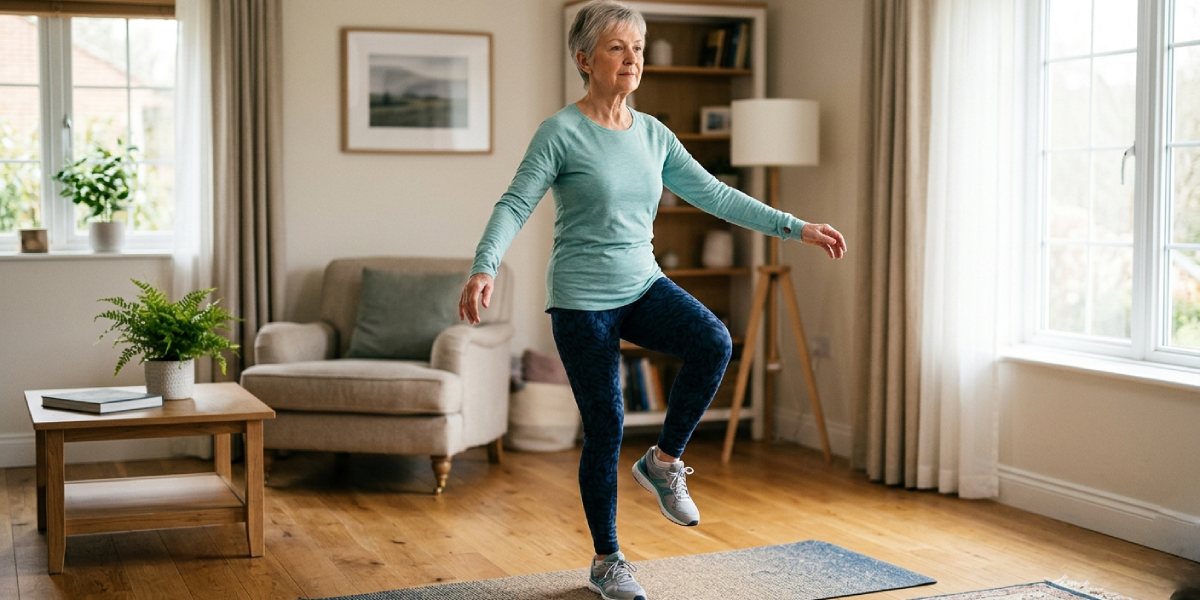
The best balance exercises to prevent falls are not just for older adults — they are essential for anyone who wants to move through life safely, confidently, and independently. Falls are one of the leading causes of injury-related hospital visits worldwide, yet most of them are preventable.
With the right training, you can dramatically improve your stability, strengthen the muscles that keep you upright, and reduce your risk of falling — starting with just a few minutes of focused practice each day.
Why Balance Training Matters More Than You Think
Balance is a complex skill. It draws on your vision, your inner ear, your joints, and your muscles all at once. When any one of these systems weakens — through age, inactivity, illness, or injury — your risk of losing balance and falling increases significantly. The encouraging news is that balance is highly trainable.
Unlike bone density or reaction speed, which decline steadily with age, your balance can genuinely improve at any stage of life with consistent, targeted effort.
Regular balance training also delivers benefits far beyond fall prevention. It strengthens the core, improves posture, sharpens proprioception (your body’s sense of where it is in space), and builds the kind of functional fitness that makes everyday activities — climbing stairs, carrying groceries, stepping off a curb — feel effortless rather than risky.
Who Should Be Doing Balance Exercises
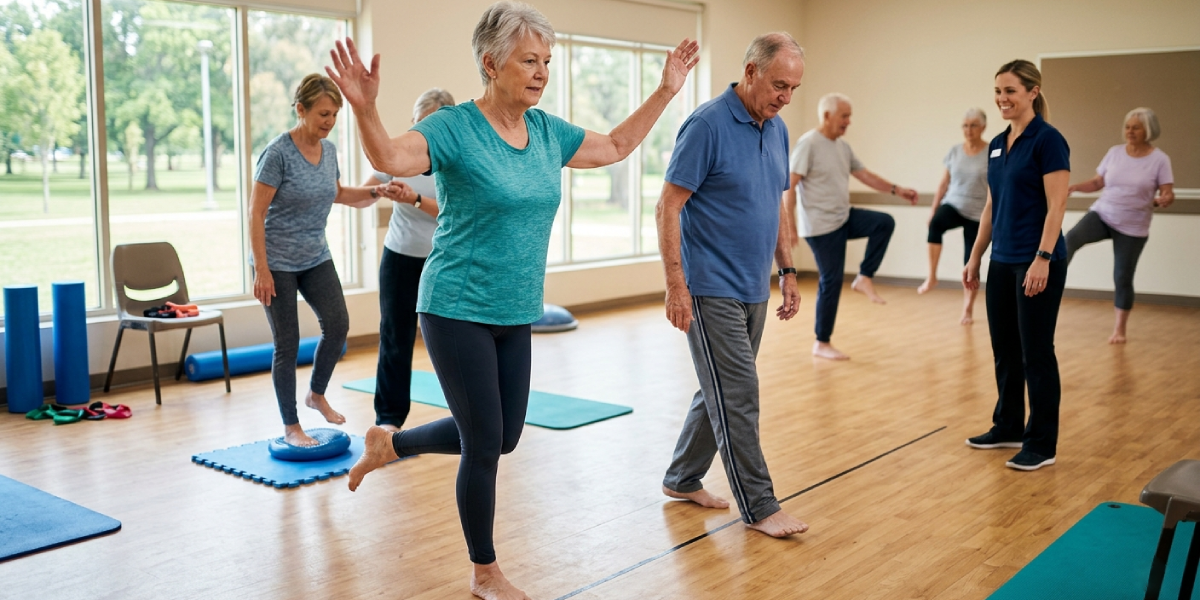
Balance training is valuable across every age group, but it becomes increasingly important from your 40s onward. Adults over 65 face the highest fall risk, with falls accounting for a significant proportion of fractures, head injuries, and loss of independence.
However, even younger adults benefit enormously — particularly those who are sedentary, recovering from injury, or returning to physical activity after a long break.
If you are managing a chronic condition such as diabetes, Parkinson’s disease, or osteoporosis, balance exercises become especially important and should be done in consultation with a healthcare professional or physical therapist. Always check with your doctor before beginning a new exercise program if you have existing health concerns.
The Best Balance Exercises to Prevent Falls
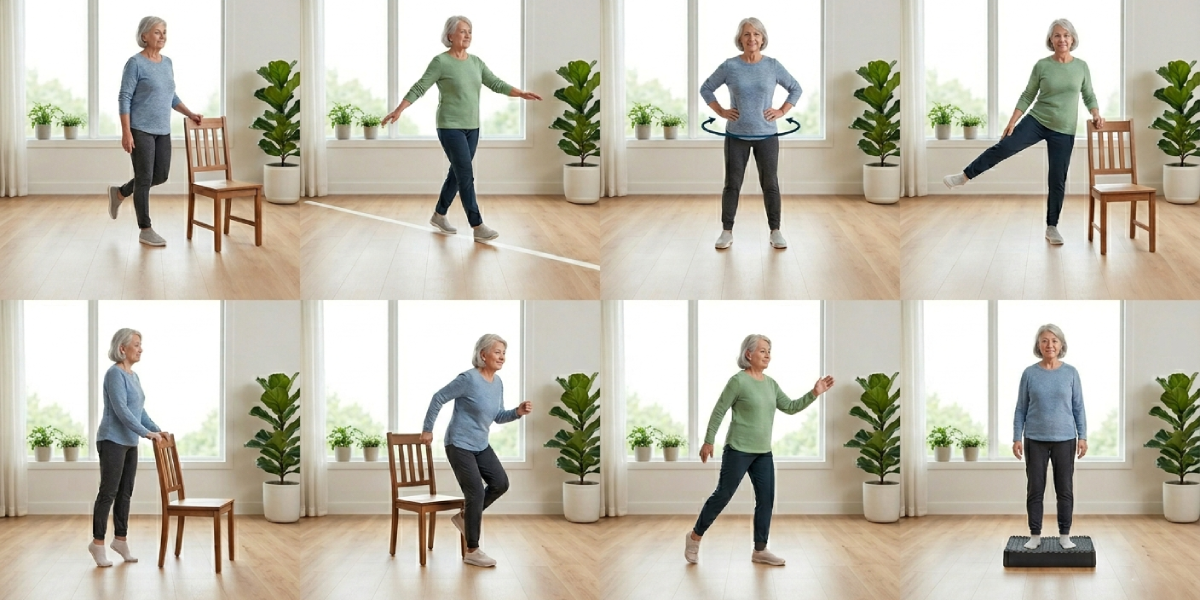
The following exercises are drawn from widely used clinical and fitness programs for balance improvement. They progress from beginner-friendly to more challenging, so you can start at the right level and advance over time. For a wider library of movement options, explore our full exercise guides and tutorials.
Single-Leg Stand
This is the foundational balance exercise and one of the most effective. Stand near a wall or sturdy chair for safety. Shift your weight onto one foot and slowly lift the other foot a few inches off the floor. Hold for 10 to 30 seconds, then switch sides.
As you improve, progress to doing this with eyes closed, which removes visual input and forces your other balance systems to work harder. Aim for three sets per side.
Heel-to-Toe Walk (Tandem Walk)
Walk in a straight line, placing the heel of each foot directly in front of the toes of the opposite foot — like walking a tightrope. Take 20 steps forward. This exercise challenges your lateral stability and improves the dynamic balance you need when walking on uneven surfaces. It is a staple in many fall-prevention programs used by physiotherapists.
Standing Hip Circles
Stand with feet hip-width apart and hands on your hips. Slowly rotate your hips in a large circle, keeping your feet flat on the floor. Complete five circles in each direction. This movement strengthens the hip abductors and activates the stabilizing muscles around the pelvis that are critical for walking balance.
Side-Leg Raises
Stand beside a chair for support. Keep one leg straight and slowly lift it out to the side, about 12 inches off the floor. Hold for two to three seconds, then lower. Perform 10 to 15 repetitions per side. Side-leg raises target the gluteus medius, a muscle that plays a central role in preventing the sideways sway that often leads to falls.
Calf Raises
Stand with feet flat on the floor, holding the back of a chair lightly for balance. Rise slowly onto your toes, hold for two seconds, and lower back down. Perform 15 to 20 repetitions. Strong calf muscles are essential for push-off during walking and for catching yourself when you stumble. This simple exercise delivers outsized balance benefits.
Sit-to-Stand Exercise
Sit in a firm chair with your feet flat on the floor. Without using your hands, lean slightly forward and slowly stand up, then lower yourself back down in a controlled way. This movement trains the same muscles and motor patterns used to recover from a near-fall. It also builds leg strength and improves the transition between different positions — a common moment when falls occur.
Tai Chi-Inspired Weight Shifts
Stand with feet shoulder-width apart. Slowly shift your weight to the right foot, lifting the left heel slightly, then shift back and lift the right heel. Continue this rocking motion for 60 seconds. Tai chi is one of the most researched balance interventions available, with multiple studies showing it significantly reduces fall rates in older adults. Even simplified weight-shifting movements capture many of its benefits.
Bosu Ball or Foam Pad Standing
Once basic balance exercises feel comfortable, standing on an unstable surface like a foam balance pad or BOSU ball takes training to the next level. Stand on the surface with feet hip-width apart for 30 to 60 seconds. The instability forces your ankle, knee, and hip stabilizers to work much harder. Begin with two feet, then progress to single-leg standing as your confidence grows.
How Often Should You Train Balance
Consistency matters more than intensity when it comes to balance training. Aim for at least three sessions per week, each lasting 15 to 20 minutes. Many people find it easy to weave balance exercises into daily routines — doing calf raises while washing dishes, practicing a single-leg stand while brushing teeth, or ending a walk with a few tandem steps. Small, frequent doses of balance work are highly effective.
Progress your exercises gradually. When an exercise becomes easy, increase the hold time, reduce support, or close your eyes to add challenge. Keeping a simple log of what you can achieve helps you track improvement and stay motivated.
Comparison: Balance Exercise Difficulty Levels
| Exercise | Difficulty Level | Primary Muscles | Key Benefit |
|---|---|---|---|
| Single-Leg Stand | Beginner | Core, ankles, glutes | Static balance foundation |
| Heel-to-Toe Walk | Beginner | Core, lower legs | Dynamic walking stability |
| Side-Leg Raises | Beginner | Gluteus medius, hip abductors | Lateral stability |
| Calf Raises | Beginner | Gastrocnemius, soleus | Ankle strength and push-off |
| Sit-to-Stand | Beginner to Intermediate | Quadriceps, glutes, core | Functional transition strength |
| Hip Circles | Intermediate | Hip stabilizers, core | Pelvic control during movement |
| Tai Chi Weight Shifts | Intermediate | Full lower body, core | Dynamic weight transfer |
| Foam Pad Standing | Advanced | Ankle stabilizers, full lower body | Reactive balance and proprioception |
Combining Balance Training with Overall Health
Balance training works best as part of a broader approach to health and fitness. Strength training, especially for the legs and core, provides the muscular foundation that balance exercises build on. Flexibility work keeps joints mobile and reduces the stiffness that can affect gait.
Aerobic exercise supports cardiovascular health, and good nutrition — particularly adequate calcium, vitamin D, and protein — keeps bones and muscles strong enough to withstand the demands of daily movement.
Your body weight also plays a role in fall risk and movement quality. Carrying excess weight can shift your center of gravity, strain joints, and make balance more difficult. If you are curious about where your weight falls relative to healthy ranges, our BMI calculator is a useful starting point for understanding your current baseline.
Making Your Environment Safer
While improving physical balance is the most powerful step you can take, it works best alongside simple environmental changes. Remove loose rugs and clutter from high-traffic areas. Ensure all staircases have solid handrails. Use non-slip mats in bathrooms.
Keep frequently used items at reachable heights to avoid awkward reaching and stretching. Good lighting throughout the home — especially at night — eliminates the visual uncertainty that contributes to trips and missteps.
Footwear matters enormously too. Shoes with thin, firm soles and a low heel give your feet the ground feedback they need to balance well. Avoid walking in socks on smooth floors, and replace worn-out footwear before the grip deteriorates.
When to Seek Professional Guidance
If you have experienced a recent fall, feel persistently unsteady on your feet, or are managing a health condition that affects your mobility, working with a physical therapist is strongly recommended. A qualified therapist can perform a fall risk assessment, identify specific weaknesses, and design a targeted program that addresses your individual needs safely.
Many healthcare systems also offer community fall-prevention programs that combine balance training with education and social support.
For broader guidance on staying well through movement and lifestyle choices, our health resources section covers a wide range of evidence-based topics to help you make informed decisions about your wellbeing.
Frequently Asked Questions
How long does it take to improve balance with exercise?
Most people notice meaningful improvements in balance within four to six weeks of consistent training, doing exercises three or more times per week. More significant gains in stability and confidence typically develop over three to six months. Balance is highly responsive to training, and progress can continue for as long as you keep practicing.
Can balance exercises help prevent falls in older adults?
Yes, significantly. Research consistently shows that structured balance training programs reduce fall rates in older adults by anywhere from 20 to 40 percent. Exercises that challenge stability, strengthen the legs, and improve proprioception are among the most evidence-backed interventions available for fall prevention in aging populations.
Is it safe to do balance exercises at home without equipment?
Absolutely. The most effective beginner balance exercises require no equipment at all. A sturdy chair for support during the learning phase is all you need. As you progress, inexpensive tools like foam balance pads can add challenge, but they are entirely optional. Always exercise near a wall or stable surface when starting out.
What is the best single exercise for fall prevention?
The single-leg stand is widely considered one of the most effective and accessible balance exercises for fall prevention. It directly trains the static balance control used when stepping, navigating obstacles, and changing direction. Practicing it regularly — including with eyes closed as you advance — has a strong track record in fall-prevention research.
Can yoga help with balance and fall prevention?
Yes. Yoga incorporates many of the same balance principles used in clinical fall-prevention programs — single-leg poses, weight shifting, core engagement, and body awareness. Styles like Hatha and Chair Yoga are particularly suitable for beginners and older adults. Yoga also improves flexibility and mental focus, both of which support better balance over time.
How does core strength relate to balance?
Your core acts as the central stabilizer for your entire body. When your core muscles are weak, your trunk sways more during movement, making it harder to recover from a stumble or adjust to uneven ground. Strengthening the core — including the deep stabilizing muscles, not just the superficial abdominals — is a foundational part of any effective balance training program.
Are balance exercises beneficial for people recovering from a stroke?
Yes, balance rehabilitation is a core component of stroke recovery programs. A stroke can impair the motor and sensory pathways involved in balance, making targeted exercises essential for regaining safe mobility. Stroke survivors should always work with a physiotherapist who can tailor the program to their specific deficits and progress at an appropriate pace.
What role does footwear play in preventing falls?
Footwear has a significant impact on fall risk. Shoes with thin, firm, non-slip soles and a low heel provide the best ground contact and stability feedback. High heels, loose slippers, and worn-out shoes with reduced grip all increase fall risk. Properly fitted footwear is one of the simplest and most effective environmental modifications for fall prevention.
Should people with osteoporosis do balance exercises?
Yes, and they are especially important for this group. Falls are the primary cause of fractures in people with osteoporosis, so improving balance directly reduces the most significant injury risk. However, exercises should be chosen carefully to avoid spinal flexion and high-impact movements. Working with a physical therapist who understands osteoporosis is strongly recommended to ensure safety.
How does vision affect balance, and what happens when it declines?
Vision provides roughly one-third of the input your brain uses to maintain balance. As vision deteriorates with age — particularly depth perception and low-light vision — balance becomes less reliable. Regular eye exams, wearing appropriate corrective lenses, and practicing balance exercises with eyes closed (to train the other balance systems) all help compensate for visual decline and reduce fall risk.