


Exercise is medicine — and the evidence behind this powerful idea has never been more compelling. Physical activity is one of the most effective tools available for preventing chronic disease, improving mental health, and extending quality of life.
Whether you are managing a health condition or simply trying to stay well, understanding how movement works as a preventive strategy can transform the way you approach your body and your future.
What Does “Exercise Is Medicine” Actually Mean?
The phrase “exercise is medicine” is not just a motivational slogan. It reflects a growing body of scientific consensus that physical activity directly influences biological pathways involved in disease development and progression. The American College of Sports Medicine (ACSM) launched an initiative under this very name to encourage healthcare providers to assess and prescribe physical activity as part of every patient interaction.
When you exercise, your body undergoes a cascade of physiological changes — your heart pumps more efficiently, your muscles pull glucose out of the bloodstream, inflammatory markers drop, and your brain releases neuroprotective chemicals. These are not side effects of exercise.
They are the primary mechanisms through which movement keeps chronic illness at bay.
The comparison to medicine is apt in another way: dosage matters. Too little exercise provides minimal benefit, while consistent moderate-to-vigorous activity produces measurable and lasting improvements in health outcomes.
This is why developing a regular exercise habit, grounded in evidence-based exercise practices, is one of the most important investments you can make in your long-term wellness.
The Chronic Disease Burden and the Role of Physical Inactivity
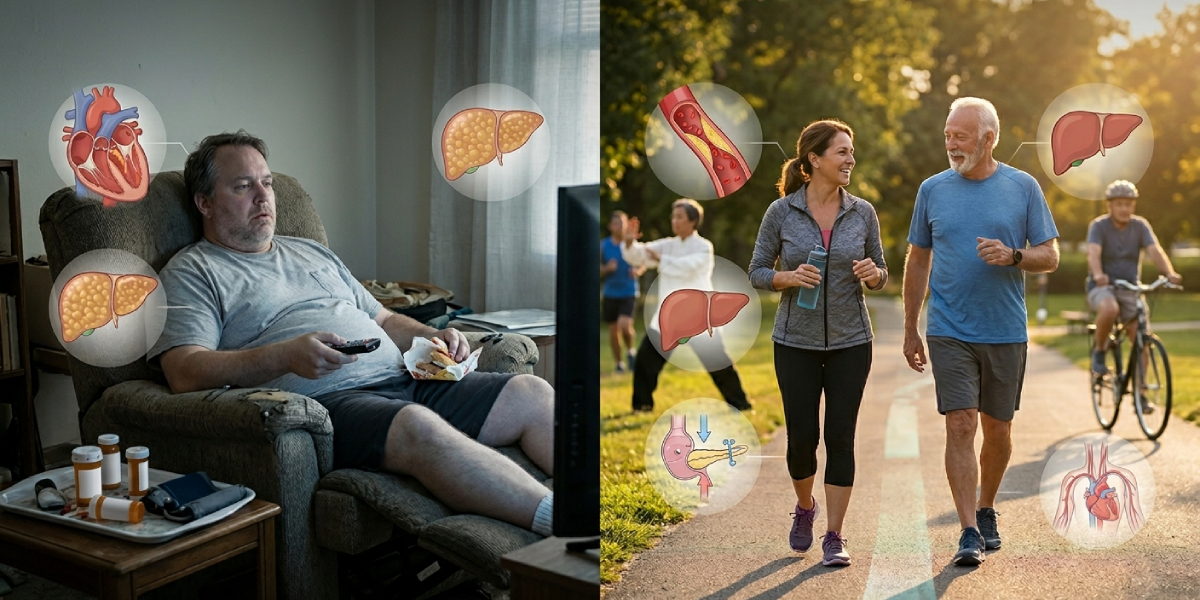
Chronic diseases — including heart disease, type 2 diabetes, certain cancers, obesity, and depression — account for the majority of global deaths and disability. The World Health Organization estimates that physical inactivity is the fourth leading risk factor for global mortality, responsible for approximately 3.2 million deaths annually.
The connection is not coincidental. Physical inactivity allows metabolic dysfunction to accumulate over time. Without regular movement, insulin sensitivity decreases, visceral fat accumulates around organs, blood pressure rises, and chronic low-grade inflammation becomes the body’s baseline state.
Each of these conditions is a stepping stone toward serious disease.
The encouraging truth is that most of these processes are reversible or preventable through exercise. You do not need to run marathons or lift heavy weights. Research consistently shows that even modest increases in daily movement produce significant protective effects, especially in previously sedentary individuals.
How Exercise Prevents Cardiovascular Disease

Heart disease remains the leading cause of death in most developed nations. Regular aerobic exercise is one of the most potent interventions known to reduce cardiovascular risk. It lowers resting blood pressure, improves cholesterol profiles by raising HDL (good cholesterol) and lowering LDL and triglycerides, reduces resting heart rate, and strengthens the myocardium — the heart muscle itself.
Exercise also improves endothelial function, which refers to the health of the inner lining of your blood vessels. Healthy endothelial cells produce nitric oxide, a molecule that dilates blood vessels and prevents the buildup of arterial plaque.
When the endothelium is compromised, plaque accumulates and the risk of heart attack and stroke rises sharply.
Studies show that individuals who engage in at least 150 minutes of moderate-intensity aerobic activity per week — the standard recommendation from most major health organizations — reduce their risk of cardiovascular disease by up to 35 percent compared to sedentary peers.
Even walking briskly for 30 minutes five days a week meets this threshold and delivers meaningful protection.
Physical Activity and Type 2 Diabetes Prevention
Type 2 diabetes is a metabolic disorder characterized by insulin resistance and chronically elevated blood sugar. It is largely preventable, and exercise is one of the primary tools for both prevention and management.
During exercise, muscles contract and absorb glucose from the bloodstream through a mechanism that bypasses the need for insulin. This immediate glucose-lowering effect is particularly valuable for people with insulin resistance.
Over time, regular exercise improves insulin sensitivity throughout the body, meaning the pancreas does not need to work as hard to regulate blood sugar.
The landmark Diabetes Prevention Program study found that lifestyle interventions including regular physical activity reduced the incidence of type 2 diabetes by 58 percent in high-risk individuals — a result that outperformed the drug metformin. This is one of the clearest demonstrations that exercise works as medicine in the truest sense.
Both aerobic exercise and resistance training are effective for blood sugar management. Combining the two yields the greatest benefit, making a mixed exercise program the gold standard for metabolic health.
Exercise and Cancer Prevention: What the Research Shows
The relationship between physical activity and cancer prevention is one of the most actively studied areas in exercise science. Current evidence supports a protective effect of regular exercise against several cancers, including colon, breast, endometrial, and bladder cancers.
The mechanisms are multiple. Exercise reduces circulating levels of insulin and insulin-like growth factor-1 (IGF-1), hormones that can promote tumor growth. It lowers estrogen levels in postmenopausal women, reducing breast cancer risk.
It speeds up gastrointestinal transit time, limiting the exposure of the colon lining to potential carcinogens. It also enhances immune surveillance — the body’s ability to detect and destroy abnormal cells before they develop into tumors.
Body weight is another important link. Excess adipose tissue, particularly visceral fat, produces inflammatory cytokines and hormones that create an environment favorable to cancer development. Regular exercise helps maintain a healthy body composition, which you can monitor over time using tools like a BMI calculator as one reference point among broader health metrics.
Mental Health Benefits of Exercise: A Clinically Meaningful Effect
The mental health benefits of exercise are not secondary perks — they are primary outcomes supported by decades of clinical research. Exercise has been shown to reduce symptoms of depression and anxiety, improve cognitive function, protect against neurodegenerative diseases including Alzheimer’s, and enhance overall psychological resilience.
The neurobiological basis is well understood. Aerobic exercise increases the production of brain-derived neurotrophic factor (BDNF), a protein that promotes the growth and survival of neurons. It boosts levels of serotonin, dopamine, and norepinephrine — the same neurotransmitters targeted by antidepressant medications.
It reduces activity in the amygdala, the brain’s fear and stress center, and strengthens the prefrontal cortex, which governs mood regulation and decision-making.
A meta-analysis published in JAMA Psychiatry found that exercise reduced the odds of depression by 26 percent compared to no exercise. For anxiety, similar magnitudes of benefit have been reported. These effects are dose-dependent and durable, particularly when exercise becomes a consistent lifestyle habit rather than an occasional activity.
Bone and Joint Health: Why Weight-Bearing Exercise Matters
Osteoporosis and osteoarthritis are leading causes of disability, particularly in older adults. Both are significantly influenced by physical activity habits across the lifespan.
Bone responds to mechanical load. Weight-bearing activities — such as walking, running, dancing, and resistance training — stimulate bone-forming cells called osteoblasts to increase bone density.
People who engage in regular weight-bearing exercise have significantly higher bone mineral density and lower fracture risk than sedentary individuals. This protection is most pronounced when exercise habits are established in youth but remains beneficial at any age.
For joint health, the picture is similarly encouraging. Moderate exercise strengthens the muscles and tendons surrounding joints, reduces joint stiffness, and supports cartilage nutrition through synovial fluid circulation. Contrary to a common misconception, regular moderate exercise does not accelerate joint wear.
In fact, it is one of the best non-pharmacological treatments for osteoarthritis pain and function.
How Much Exercise Do You Actually Need?
Global health guidelines converge on consistent recommendations for adults. The World Health Organization and most national health bodies recommend the following:
- At least 150 to 300 minutes of moderate-intensity aerobic activity per week, such as brisk walking, swimming, or cycling.
- Or 75 to 150 minutes of vigorous-intensity aerobic activity per week, such as running, aerobics, or fast cycling.
- Muscle-strengthening activities involving all major muscle groups on two or more days per week.
- Reduction of sedentary time, with a particular focus on breaking up prolonged sitting, which carries independent health risks even among otherwise active individuals.
For those who are just starting out, any increase in physical activity above current baseline is beneficial. The greatest relative gains in health come from transitioning from being completely sedentary to achieving even modest activity levels. The dose-response relationship is not linear — the first 60 minutes of weekly activity deliver proportionally larger gains than the jump from 200 to 260 minutes.
Practical Ways to Make Exercise a Daily Medicine
Knowing that exercise is medicine is only useful when that knowledge translates into action. The gap between intention and behavior is where many people struggle. Here are practical, research-informed strategies for making physical activity a reliable part of your life:
- Start with behavior, not motivation. Motivation is unreliable. Habit formation research shows that linking exercise to an existing routine — what behavioral scientists call “habit stacking” — dramatically increases adherence. Try walking after lunch or doing bodyweight exercises while your morning coffee brews.
- Choose activities you genuinely enjoy. Enjoyment is one of the strongest predictors of long-term exercise adherence. You are far more likely to sustain an activity you find intrinsically rewarding.
- Prioritize consistency over intensity. Showing up regularly at moderate intensity outperforms sporadic high-intensity efforts. A 20-minute daily walk is more therapeutic than one exhausting weekend session.
- Use social accountability. Exercising with a partner or group significantly improves adherence and makes sessions more enjoyable.
- Track your progress. Monitoring improvements in endurance, strength, or how you feel provides positive reinforcement and helps sustain motivation over time.
Exploring a variety of health-supporting lifestyle practices alongside exercise — including nutrition, sleep, and stress management — compounds the benefits of physical activity and creates a more resilient foundation for lifelong wellness.
Special Populations: Tailoring Exercise as Medicine
While the foundational principles apply broadly, exercise prescriptions benefit from individualization based on age, health status, and specific goals.
Older adults should prioritize balance training and lower-body strength work alongside aerobic activity to reduce fall risk, which is a leading cause of injury-related mortality in this population. Chair exercises, tai chi, and progressive resistance training are all appropriate starting points.
Individuals with chronic conditions such as heart disease, type 2 diabetes, or arthritis should seek guidance from a healthcare provider or certified exercise physiologist to design a program appropriate to their limitations and goals. The presence of a chronic condition is rarely a reason to avoid exercise — it is almost always a reason to engage in it thoughtfully.
Pregnant individuals can and should exercise during pregnancy, with appropriate modifications. Regular physical activity reduces the risk of gestational diabetes, excessive weight gain, and postpartum depression, and promotes faster recovery after delivery.
Children and adolescents need at least 60 minutes of moderate-to-vigorous physical activity daily. Building exercise habits early establishes lifelong patterns and promotes healthy skeletal development, cognitive function, and emotional regulation.
The Future of Exercise as Preventive Medicine
Healthcare systems around the world are increasingly recognizing physical activity as a clinical intervention rather than a lifestyle preference. Exercise referral schemes, where physicians formally prescribe structured activity programs, are expanding in countries including the United Kingdom, Australia, and several Scandinavian nations.
Research into the “exercome” — the complete set of molecular changes triggered by physical activity — is revealing new mechanisms by which exercise modulates gene expression, epigenetics, and immune function.
Wearable technology is enabling more precise activity monitoring and personalized feedback, helping individuals and clinicians alike understand the impact of movement in real time. As precision medicine advances, exercise prescriptions are likely to become as individualized and evidence-based as pharmaceutical prescriptions.
The core message, however, remains simple and timeless: the human body is designed to move, and when it moves regularly, it functions better, ages more gracefully, and resists disease more effectively. Exercise is not a supplement to good health care — it is one of the most fundamental acts of self-care available to every one of us.
Frequently Asked Questions
What is the “Exercise Is Medicine” initiative?
Exercise Is Medicine is a global health initiative launched by the American College of Sports Medicine (ACSM) in 2007. It encourages healthcare providers to assess physical activity at every patient visit and prescribe or refer patients to evidence-based exercise programs as a standard part of disease prevention and management.
How much exercise is needed to prevent chronic disease?
Major health guidelines recommend at least 150 to 300 minutes of moderate-intensity aerobic activity per week, plus two or more days of muscle-strengthening exercise targeting all major muscle groups. Even modest increases above current activity levels produce meaningful health benefits, particularly in sedentary individuals.
Can exercise replace medication for conditions like high blood pressure or diabetes?
For some individuals with mild to moderate hypertension or prediabetes, regular exercise combined with lifestyle changes can reduce or eliminate the need for medication. However, you should never stop or adjust prescription medications without consulting your healthcare provider. Exercise and medication often work best together, especially in more advanced cases.
What type of exercise is best for preventing heart disease?
Aerobic exercises such as brisk walking, cycling, swimming, and jogging are most strongly associated with cardiovascular protection. Resistance training also contributes by improving metabolic health and reducing blood pressure. A combination of both aerobic and strength training offers the most comprehensive cardiovascular benefit.
Is exercise safe for people who already have chronic conditions?
In most cases, yes. Exercise is not only safe for people with chronic conditions — it is one of the most effective management tools available. Individuals with heart disease, diabetes, arthritis, or cancer should work with a healthcare provider or certified exercise professional to develop an appropriately tailored program. The risks of inactivity almost always outweigh the risks of supervised, moderate exercise.
How quickly do you start seeing health benefits from exercise?
Some benefits appear within a single session. Blood sugar levels drop after one bout of exercise, and mood improvements can occur within minutes of moderate-intensity activity. Measurable improvements in blood pressure and insulin sensitivity typically appear within two to four weeks of consistent training. Structural changes like increased muscle mass and improved cardiovascular fitness develop over six to twelve weeks of regular activity.
Does walking count as medicine-level exercise?
Absolutely. Brisk walking is one of the most studied and consistently beneficial forms of exercise. Multiple large-scale studies have demonstrated that regular brisk walking reduces the risk of cardiovascular disease, type 2 diabetes, certain cancers, and depression. It is accessible, low-impact, and sustainable for people of all ages and fitness levels.
Can exercise improve mental health as effectively as antidepressants?
For mild to moderate depression and anxiety, research suggests that regular aerobic exercise produces antidepressant effects comparable to medication in many individuals. Exercise increases serotonin, dopamine, and BDNF levels, and reduces stress hormone activity. It is not a replacement for professional mental health treatment in severe cases, but it is a clinically validated adjunct or primary intervention for many people.
What happens to your body if you are sedentary for long periods?
Prolonged sedentary behavior — even in otherwise active people — is associated with increased risk of metabolic syndrome, cardiovascular disease, type 2 diabetes, and all-cause mortality. Sitting for long periods reduces lipoprotein lipase activity, allowing triglycerides to accumulate in the bloodstream. Breaking up sitting time with short bouts of movement every 30 to 60 minutes mitigates many of these effects.
How does exercise affect cancer risk?
Regular physical activity reduces the risk of several cancers, including colon, breast, endometrial, and bladder cancers. The protective mechanisms include reduced insulin and estrogen levels, improved immune surveillance, faster gastrointestinal transit, and maintenance of a healthy body composition. Current evidence suggests that achieving recommended activity levels reduces overall cancer risk by approximately 10 to 20 percent.