

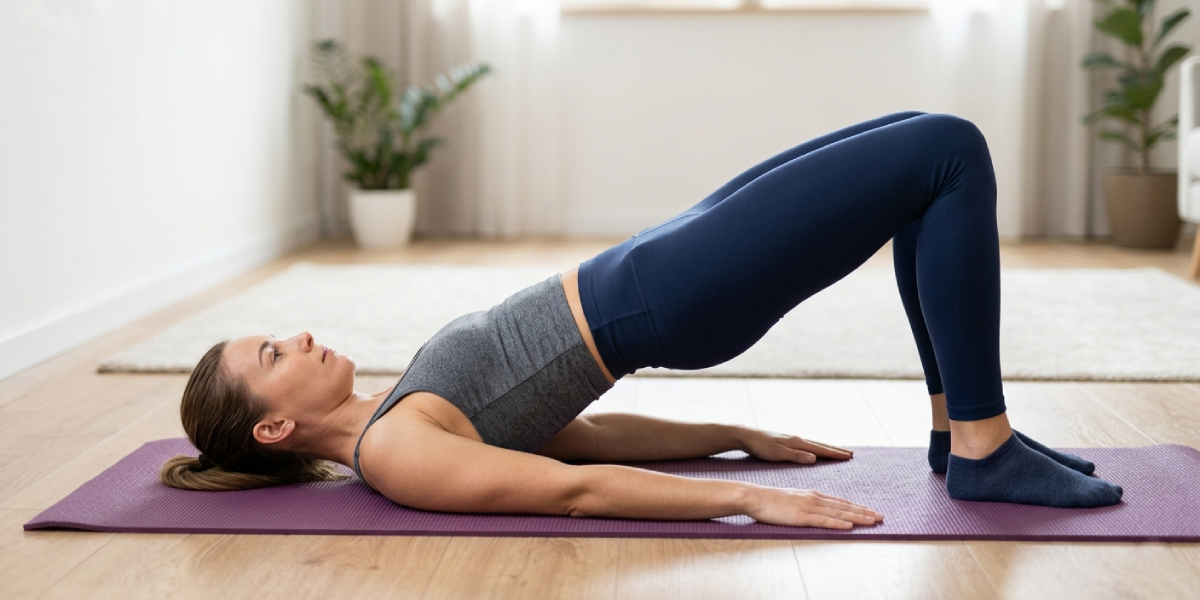
The glute bridge exercise stands out as one of the most effective bodyweight movements for strengthening and toning your glutes, hamstrings, and lower back. Whether you’re looking to enhance your athletic performance, improve your posture, or simply build a stronger backside, mastering this fundamental exercise should be a priority in your fitness routine.
This guide provides everything you need to know about executing the glute bridge exercise with proper form, understanding its benefits, and progressing safely toward your fitness goals.
Understanding the Glute Bridge Exercise Fundamentals
The glute bridge exercise is a lower body movement that primarily targets your gluteus maximus, the largest muscle in your buttocks. Unlike many other exercises that require expensive equipment or gym memberships, the glute bridge exercise can be performed anywhere with just your bodyweight and a flat surface.
This makes it an accessible option for everyone from beginners to advanced fitness enthusiasts.
The glute bridge exercise has gained popularity among fitness professionals, physical therapists, and personal trainers because of its effectiveness and low injury risk when performed correctly.
The movement pattern mimics functional activities you perform daily, such as standing up from a seated position, climbing stairs, and maintaining proper posture throughout the day.
Why the Glute Bridge Exercise Matters for Your Fitness
Your glutes are the powerhouse of your lower body. When these muscles are weak or inactive, it can lead to several compensation patterns that create problems in other areas. Many people spend hours sitting at desks, which causes their glutes to become underactive and weak, a condition sometimes called “dead butt syndrome.”
By incorporating the glute bridge exercise into your routine, you counteract the negative effects of prolonged sitting and develop stronger, more functional muscles.
Strong glutes improve your ability to perform everyday activities, enhance your athletic capabilities, and contribute to better spinal health. The glute bridge exercise is also frequently recommended by physiotherapists as part of rehabilitation programs for people recovering from injuries or managing chronic pain conditions.
Step-by-Step Instructions for Proper Glute Bridge Exercise Form
Starting Position for the Glute Bridge Exercise
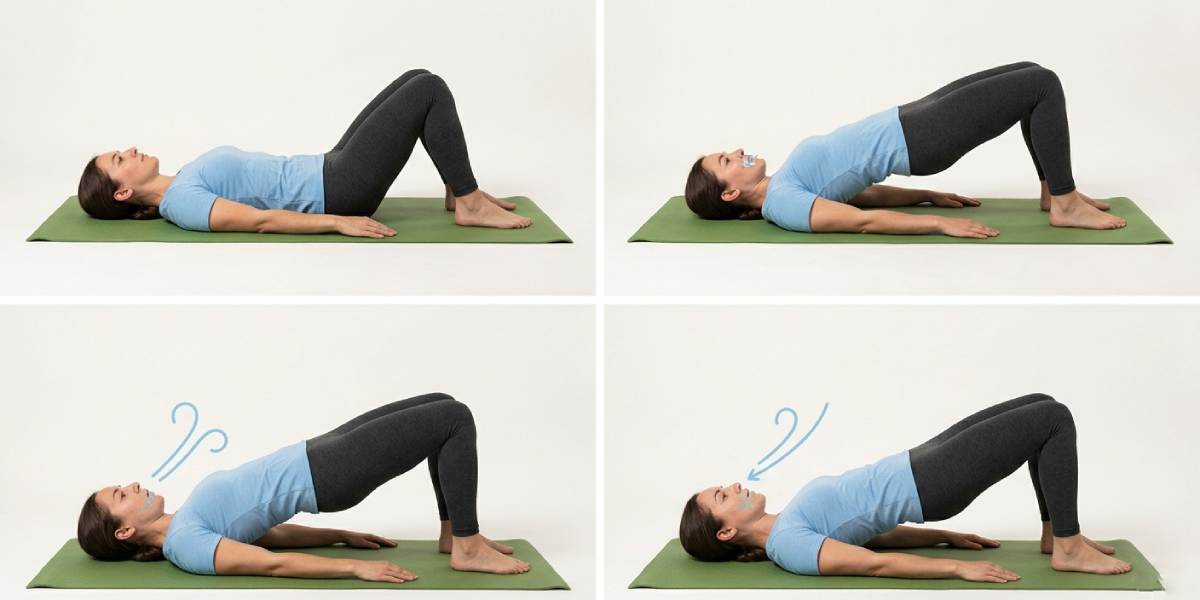
Begin by lying flat on your back on a comfortable surface such as a yoga mat, exercise mat, or carpeted floor. Your knees should be bent at approximately 90 degrees, and your feet should be placed flat on the ground about hip-width apart. Position your feet parallel to each other, roughly 12 inches away from your buttocks.
Your arms should rest naturally at your sides with your palms facing down, either on the ground or flat against your thighs. Your head and shoulders should remain relaxed and in contact with the floor throughout the movement.
Before you begin the glute bridge exercise, take a moment to engage your core by drawing your navel gently toward your spine. This provides stability and protects your lower back during the movement. Ensure your lower back maintains a neutral position without excessive arching or flattening against the floor.
Executing the Glute Bridge Exercise Movement
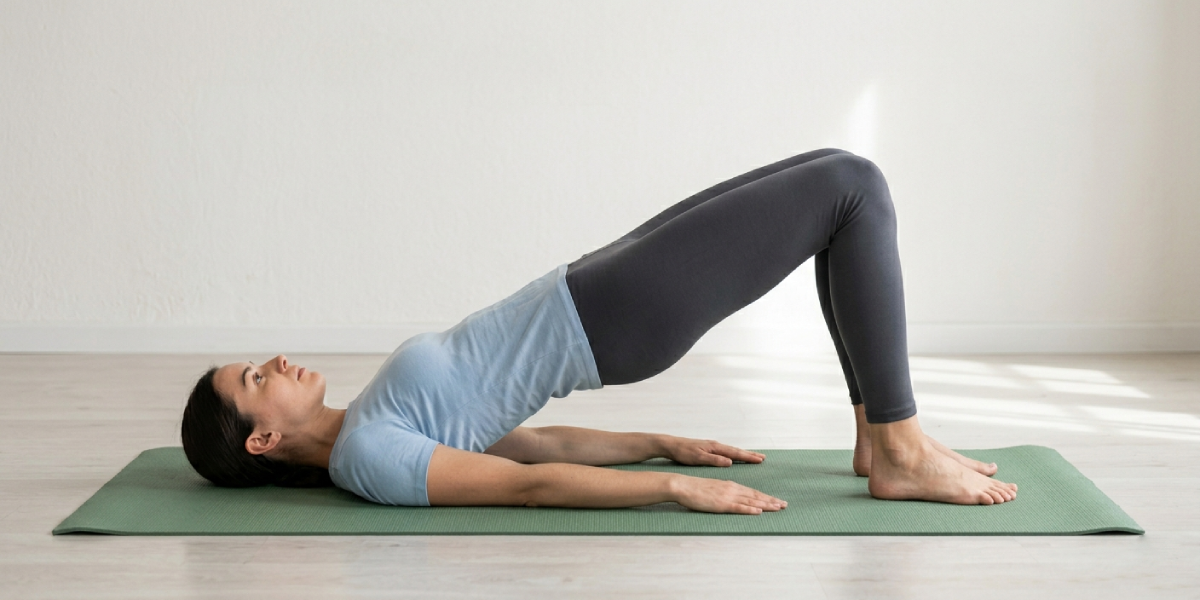
Begin by pressing through your heels as you lift your hips off the ground toward the ceiling. Your movement should be controlled and deliberate, taking approximately one to two seconds to complete the upward phase. As you push through your heels, consciously squeeze your glute muscles to maximize activation.
Your body should form a straight line from your knees through your hips to your shoulders at the top of the movement. This alignment is crucial for the proper execution of the glute bridge exercise.
Maintain this elevated position for one to two seconds, continuing to squeeze your glutes as hard as possible. This pause at the top of the movement enhances muscle activation and allows you to fully engage the target muscles.
After holding this contracted position, slowly lower your hips back toward the starting position with control, taking approximately two to three seconds for the descent. Your hips should come to rest just above the floor or make light contact before you initiate the next repetition.
Breathing Technique During the Glute Bridge Exercise
Proper breathing is an often-overlooked element of the glute bridge exercise. Exhale as you lift your hips upward and squeeze your glutes at the top of the movement. Inhale as you lower your hips back down to the starting position. Never hold your breath during the exercise, as this can elevate your blood pressure and reduce oxygen delivery to your working muscles.
Key Form Cues to Master the Glute Bridge Exercise
Maintaining Neutral Spine During Your Glute Bridge Exercise
One of the most important aspects of performing the glute bridge exercise correctly is maintaining a neutral spine throughout the entire movement. Your lower back should not excessively arch at the top of the movement, and it should not remain flattened against the floor throughout.
Excessive arching places unnecessary stress on your lumbar spine and reduces glute activation. To find the proper position, engage your core muscles and imagine creating a slight, natural curve in your lower back.
Foot Positioning and Weight Distribution
Your feet placement directly influences which muscles are activated during the glute bridge exercise. Press firmly through your heels, not your toes. If you feel your calves cramping or working excessively during the glute bridge exercise, you’re likely shifting too much weight toward your toes.
Driving through your heels ensures maximal glute activation and reduces unnecessary stress on your hip flexors and quadriceps.
Avoiding Common Mistakes in the Glute Bridge Exercise
Many people perform the glute bridge exercise incorrectly, which reduces its effectiveness and can potentially lead to discomfort. Avoid lifting your hips too high, as excessive extension at the hip can cause lower back strain. Your body should form a straight line from knees to shoulders without hyperextending.
Additionally, do not allow your knees to cave inward during the glute bridge exercise. Keep them aligned over your ankles and toes throughout the movement. Finally, avoid rushing through repetitions. Slow, controlled movements with a pause at the top position yield far better results than rapid, momentum-driven repetitions.
Progressive Variations of the Glute Bridge Exercise
Elevated Glute Bridge Exercise for Increased Difficulty
Once you’ve mastered the basic bodyweight glute bridge exercise, you can increase the challenge by elevating your upper back on a bench, sturdy chair, or couch. This variation, sometimes called a hip thrust or bench glute bridge exercise, increases the range of motion and demands greater force production from your glute muscles.
Start with your upper back against the elevated surface, feet on the floor, and perform the same lifting motion as the traditional glute bridge exercise. This progression allows continued strength development and muscle growth.
Single-Leg Glute Bridge Exercise for Unilateral Strength
The single-leg glute bridge exercise increases intensity and addresses any strength imbalances between your left and right sides. Perform the movement exactly as you would the standard glute bridge exercise, but lift one foot slightly off the ground while the other drives through the heel to lift your hips.
The single-leg variation demands greater stability and forces each glute to work harder. Start with a manageable number of repetitions and progressively increase as your strength improves.
Weighted Glute Bridge Exercise for Resistance
Adding external resistance increases the difficulty of the glute bridge exercise and stimulates greater muscle growth. You can hold a dumbbell, kettlebell, or weight plate across your hips while performing the movement. Alternatively, use a barbell placed across your hip crease if you have access to a gym setting.
Begin with a lighter weight to ensure proper form, then gradually increase resistance as you become stronger. The weighted glute bridge exercise is excellent for intermediate and advanced fitness enthusiasts seeking continued progress.
Benefits and Results from Regular Glute Bridge Exercise Performance
Muscle Strength and Development
The primary benefit of the glute bridge exercise is increased strength and muscular development in your glutes, hamstrings, and hip extensors. Consistent practice leads to visible muscle growth, improved muscle definition, and enhanced functional strength for daily activities.
Your glutes will become firmer, rounder, and more prominent when trained consistently with progressive overload.
Posture and Spinal Health Improvements
Weak glutes contribute to poor posture, anterior pelvic tilt, and lower back pain. By strengthening these muscles through the glute bridge exercise, you’ll notice improved posture, reduced back pain, and better overall spinal health. Strong glutes stabilize your pelvis and support proper alignment of your entire spine, which benefits your health far beyond aesthetics.
This is why physical therapists frequently recommend the glute bridge exercise for patients with chronic lower back pain or postural issues.
Athletic Performance Enhancement
Your glutes are crucial for explosive movements, jumping, sprinting, and maintaining stability during dynamic activities. Athletes from various sports benefit from stronger glutes developed through the glute bridge exercise and similar movements.
Enhanced glute strength translates to improved performance in activities requiring power, speed, and directional control. Whether you’re a runner, cyclist, or athlete in any sport requiring lower body power, the glute bridge exercise supports better performance.
Incorporating the Glute Bridge Exercise into Your Fitness Program
Frequency and Volume Recommendations
For best results, perform the glute bridge exercise two to four times per week as part of a comprehensive lower body training program. Beginners should start with two sessions weekly, allowing adequate recovery time between sessions.
Each session should include two to four sets of eight to fifteen repetitions. As you progress, increase the difficulty through variations, resistance, or increased volume rather than sacrificing form for more repetitions.
Rest and Recovery Considerations
Your muscles grow and strengthen during rest periods, not during the exercise itself. Allow at least one day of rest between glute bridge exercise sessions targeting the same muscle groups. If you perform glute bridge exercises on Monday, avoid intense glute training until Wednesday. This recovery period permits your muscles to repair and adapt to the training stimulus.
Integration with Other Exercises
The glute bridge exercise pairs well with other lower body movements and exercises from our complete exercise category to create a balanced training program. Combine the glute bridge exercise with squats, lunges, deadlifts, and leg presses for comprehensive lower body development.
You might perform the glute bridge exercise early in your workout as an activation movement before heavier compound exercises, or include it later in your session as a finishing movement. Both approaches work effectively depending on your training goals.
Nutritional Support for Glute Development
Protein Requirements for Muscle Growth
Performing the glute bridge exercise creates the stimulus for muscle growth, but proper nutrition provides the building blocks necessary for adaptation. Consume adequate protein to support muscle repair and growth, targeting approximately 0.7 to 1 gram of protein per pound of your body weight daily.
Quality protein sources include chicken, fish, eggs, dairy products, legumes, and plant-based options. Without sufficient protein, your muscles cannot fully recover and develop from the training stimulus provided by the glute bridge exercise.
Overall Caloric Balance for Body Composition Goals
Your overall caloric intake influences whether you’ll see visible results from your glute bridge exercise training. If your goal is building larger, more prominent glutes, you’ll benefit from a slight caloric surplus combined with consistent resistance training.
If your focus is reducing body fat while building muscle, maintain a modest caloric deficit with adequate protein intake. Many people find that consulting resources about general health and wellness topics helps them understand proper nutrition alongside exercise.
Additionally, you might evaluate your current fitness level using tools like our BMI calculator to establish baseline measurements.
Common Mistakes and How to Avoid Them
Excessive Hip Elevation
Lifting your hips too high causes excessive lumbar extension and reduces glute activation. Your body should form a straight line from knees to shoulders. If you find yourself hyperextending your lower back, consciously focus on stopping just before your hips rise above shoulder height.
Inadequate Glute Activation
Many people perform the glute bridge exercise without truly feeling their glutes working. Before lifting, consciously think about squeezing your glute muscles. Pause at the top of the movement and actively contract your glutes as hard as possible. This mind-muscle connection significantly improves results.
Inconsistent Training
The glute bridge exercise produces results only with consistent, progressive training. Sporadic workouts yield minimal progress. Commit to regular training sessions and gradually increase difficulty through variations or resistance to maintain progress.
Neglecting Recovery and Sleep
Muscle growth occurs during sleep and rest periods. Insufficient sleep impairs recovery and limits the results you’ll see from your glute bridge exercise training. Aim for seven to nine hours of quality sleep nightly to support muscle recovery and adaptation.
Troubleshooting Common Issues with the Glute Bridge Exercise
Lower Back Discomfort During Glute Bridge Exercise
If you experience lower back pain while performing the glute bridge exercise, check several factors. First, ensure you’re not hyperextending your lower back at the top of the movement. Second, verify that your core is properly engaged throughout the movement.
Third, confirm that you’re pressing through your heels rather than your toes. If discomfort persists, reduce your range of motion or lower the number of repetitions until proper form becomes comfortable.
Hip Flexor Tightness Affecting Performance
Tight hip flexors can limit your ability to fully extend at the hips during the glute bridge exercise, reducing glute activation. Regularly stretch your hip flexors outside of your workout to improve mobility. Perform static stretches holding for thirty seconds and repeat two to three times per leg.
Inability to Feel Glutes Activating
If you struggle to feel your glutes working, begin by lying on your back and simply squeezing your glute muscles without performing any movement. Hold for five to ten seconds and release. This mind-muscle connection training helps you recognize how to properly activate these muscles.
After several rounds of isolated glute squeezes, progress to the full glute bridge exercise movement.
Advanced Progressions Beyond Basic Variations
Resistance Band Glute Bridge Exercise
Loop a resistance band around your thighs just above your knees. As you perform the glute bridge exercise, maintain outward pressure against the band throughout the movement. This variation adds resistance while also improving glute activation patterns and addressing potential imbalances.
Pause Repetitions and Time Under Tension
Increase the time your muscles spend under tension by pausing for two to five seconds at the top of each glute bridge exercise repetition. Longer time under tension stimulates muscle growth and increases the challenge without requiring additional external resistance.
Drop Sets and Advanced Training Techniques
Once you’ve mastered the weighted glute bridge exercise, advanced lifters can implement techniques like drop sets. Perform a set with a challenging weight until near failure, then immediately reduce the weight and continue for additional repetitions. This technique maximizes muscle fiber recruitment and accelerates progress.
Frequently Asked Questions
How many repetitions should I perform for each set of the glute bridge exercise?
For most fitness goals, perform eight to fifteen repetitions per set of the glute bridge exercise. Beginners should start with the lower end of this range, while more experienced lifters can push toward the higher end. If your goal is building muscle endurance rather than strength, perform fifteen to twenty repetitions per set.
How often should I perform the glute bridge exercise per week?
Perform the glute bridge exercise two to four times weekly depending on your training program and recovery capacity. Most people benefit from two to three sessions per week as part of a balanced training routine. Allow at least one rest day between glute-focused sessions to permit proper recovery.
Can the glute bridge exercise replace squats and lunges in my workout routine?
While the glute bridge exercise is excellent for glute development, it should complement rather than completely replace squats and lunges. Squats and lunges provide additional benefits including increased quadriceps development, greater core engagement, and improved balance and stability. A comprehensive program includes multiple movement patterns.
What surfaces are best for performing the glute bridge exercise?
Perform the glute bridge exercise on a comfortable, supportive surface such as a yoga mat, exercise mat, or carpeted floor. Avoid hard surfaces like tile or concrete that provide no cushioning for your spine. A quality exercise mat costs only fifteen to thirty dollars and significantly improves comfort while protecting your back.
Will the glute bridge exercise alone give me bigger glutes?
The glute bridge exercise effectively develops glute muscles when performed consistently with progressive overload and proper nutrition. However, genetics, age, overall training volume, and nutrition also influence results. Combining the glute bridge exercise with other glute-focused movements, maintaining adequate protein intake, and ensuring proper recovery maximizes glute development.
Is the glute bridge exercise appropriate for people with lower back pain or injuries?
The glute bridge exercise is often recommended for people with lower back pain because it strengthens muscles supporting the spine. However, if you currently experience acute back pain or have a recent spine injury, consult with a healthcare provider before beginning any new exercise program. Start with a very limited range of motion and progress gradually under professional guidance.
Can I perform the glute bridge exercise if I’m pregnant?
The glute bridge exercise is generally safe during pregnancy when performed with proper modifications and medical clearance. Many pregnant individuals perform glute bridge exercises throughout their pregnancy to maintain strength. Consult your obstetrician or healthcare provider before beginning any new exercise routine during pregnancy.
How long before I see visible results from performing the glute bridge exercise?
Most people notice improved strength and muscle activation within two to three weeks of consistent glute bridge exercise training. Visible changes to muscle shape and definition typically appear within four to eight weeks, depending on factors including starting fitness level, nutrition, rest quality, and training consistency. Patient progression yields superior long-term results compared to rushing through training without proper form.