

Finding time to work out can feel impossible when your schedule is packed, but the best 10-minute exercise routines for busy people prove you do not need an hour at the gym to see real results. Ten focused minutes of movement, done consistently, can improve cardiovascular health, build strength, boost mood, and increase energy throughout the day.
Why Short Workouts Actually Work
Exercise science consistently supports the power of brief, high-effort sessions. The American College of Sports Medicine recognizes that short bouts of moderate to vigorous activity accumulate meaningful health benefits over time.
When intensity is high enough, a 10-minute workout can elevate heart rate, stimulate muscle fibers, and trigger the metabolic responses traditionally associated with longer sessions.
The key is structure. A well-designed 10-minute routine maximizes every second through compound movements that target multiple muscle groups simultaneously, minimal rest periods that keep your heart rate elevated, and exercises that require no equipment, making them accessible anywhere.
Busy professionals, parents, students, and anyone squeezed for time can benefit enormously from building these micro-sessions into their daily routine. Even two or three 10-minute bursts throughout the day can meet or exceed the weekly physical activity recommendations set by major health organizations.
What to Do Before You Start
Even a short workout benefits from 60 to 90 seconds of light preparation. A brief warm-up raises your core body temperature, increases blood flow to working muscles, and reduces injury risk. Try marching in place, gentle arm circles, and hip rotations before jumping into any of the routines below.
When you finish, spend a minute or two stretching the muscles you worked to support recovery and flexibility.
If you want to track how these workouts affect your overall fitness progress, tools like a BMI calculator can give you a useful baseline to measure changes in body composition over time alongside your exercise habits.
The 5 Best 10-Minute Exercise Routines for Busy People
1. The Bodyweight Blast
This routine uses only your bodyweight and works your entire body in one swift circuit. Perform each exercise for 45 seconds, rest for 15 seconds, then move immediately to the next.
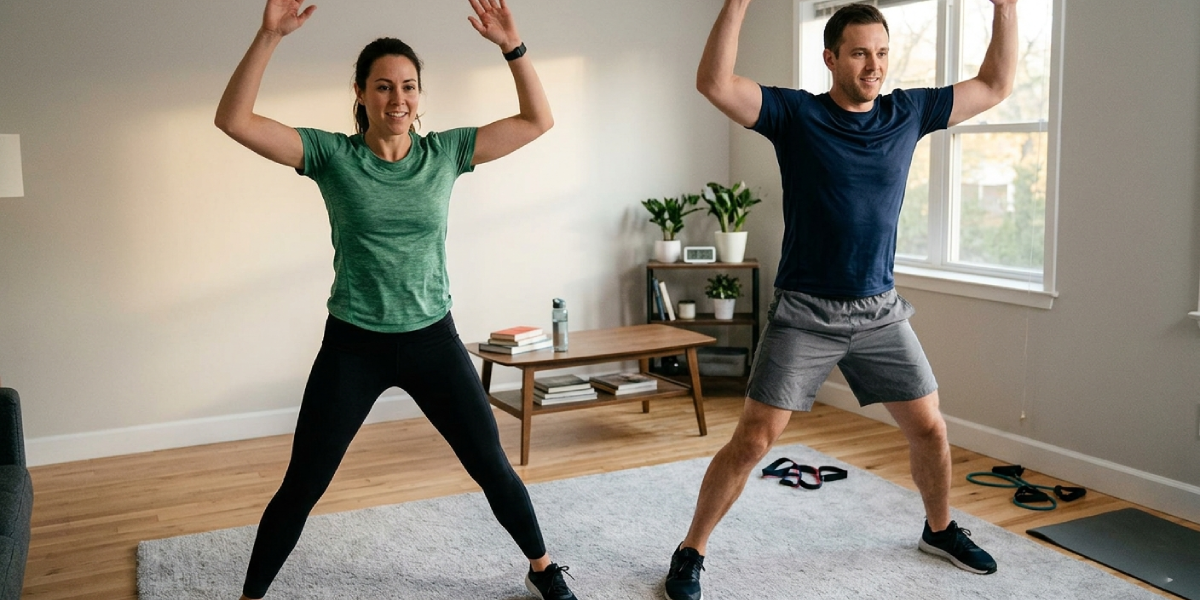
- Jumping jacks — a full-body warm-up that elevates heart rate fast
- Push-ups — targets chest, shoulders, triceps, and core
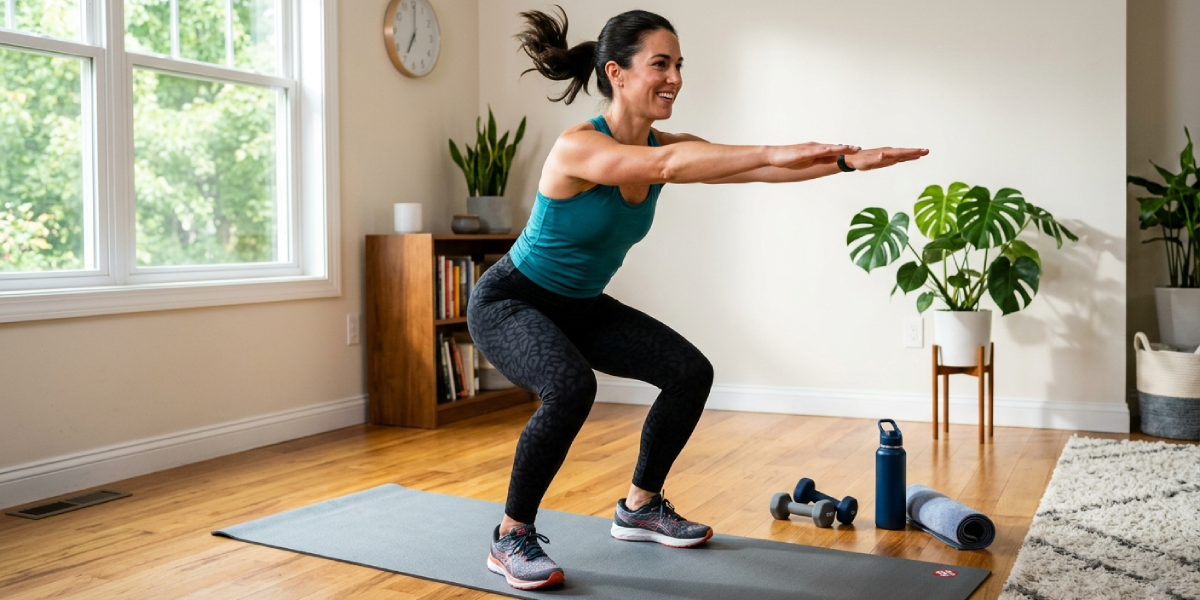
- Bodyweight squats — engages quads, hamstrings, and glutes
- Mountain climbers — drives core strength and cardiovascular output
- Reverse lunges — works lower body unilaterally to correct imbalances
- Plank hold — builds deep core stability and postural strength
- High knees — boosts heart rate and hip flexor activation
- Tricep dips (using a chair) — isolates the back of the upper arm
Complete the circuit once through for a full 10 minutes. No gym required, no equipment needed, and it can be done in a bedroom, hotel room, or even a large office.
2. The HIIT Express
High-Intensity Interval Training compresses maximum effort into short windows, making it one of the most time-efficient training methods available. Research published in journals such as the Journal of Physiology shows that HIIT can improve aerobic capacity, insulin sensitivity, and fat oxidation in remarkably short sessions.
For this 10-minute HIIT routine, alternate 20 seconds of all-out effort with 10 seconds of rest for a total of 10 rounds using two exercises:
- Burpees — the gold standard of full-body high-intensity movement
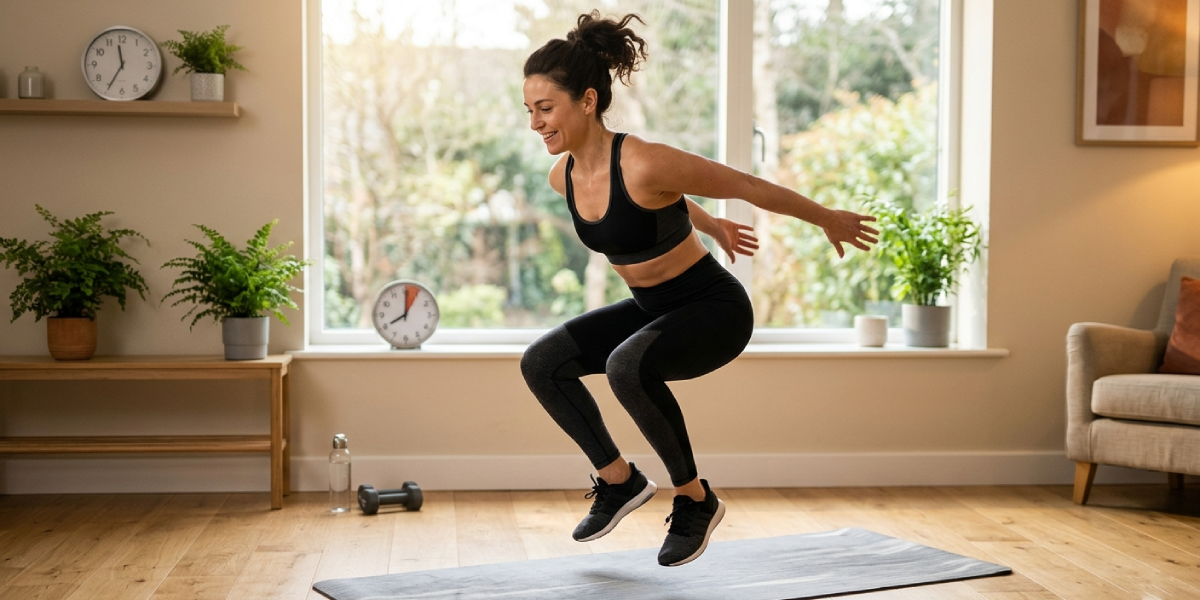
- Jump squats — explosive lower-body power with cardiovascular demand
Alternate between the two exercises every 20 seconds. This format, known as Tabata, delivers an intense metabolic stimulus and keeps your body burning calories even after the workout ends through a process called excess post-exercise oxygen consumption, or EPOC.
3. The Core Focused Circuit
A strong core supports every movement you make, from lifting grocery bags to sitting at a desk without back pain. This routine targets the entire midsection, including the rectus abdominis, obliques, transverse abdominis, and lower back.
- Dead bug — 45 seconds: slow, controlled opposite arm and leg extensions
- Bicycle crunches — 45 seconds: rotational movement for the obliques
- Plank with hip dips — 45 seconds: lateral oblique challenge from a forearm plank
- Superman hold — 45 seconds: strengthens the lower back extensors
- Leg raises — 45 seconds: targets the lower abdominal region
- Russian twists — 45 seconds: rotational core power
- Side plank (each side) — 30 seconds each: lateral core and hip stability
Rest only 10 seconds between exercises to keep the session within 10 minutes. Explore more targeted exercises for specific muscle groups to complement this core work with balanced full-body programming.
4. The Yoga and Mobility Flow
Not every 10-minute session needs to be intense. Mobility work, flexibility training, and yoga-based flows provide genuine physical and mental health benefits, particularly for people who spend long hours seated. This routine improves joint range of motion, reduces muscle tension, and lowers cortisol levels.
- Cat-cow stretch — 60 seconds: spinal mobility and breath connection
- Child’s pose — 60 seconds: lumbar decompression and hip opener
- Downward dog — 60 seconds: hamstring, calf, and shoulder stretch
- Low lunge with thoracic rotation — 45 seconds per side: hip flexor and mid-back mobility
- Pigeon pose — 60 seconds per side: deep hip external rotation stretch
- Seated forward fold — 60 seconds: posterior chain lengthening
- Supine spinal twist — 30 seconds per side: final spinal release
Done first thing in the morning or immediately after work, this flow can dramatically reduce stiffness, support injury prevention, and set a calm, focused tone for the hours ahead.
5. The Strength Primer
If building or maintaining muscle mass is your goal, this bodyweight strength-focused routine applies enough mechanical tension and time-under-tension to stimulate muscle protein synthesis even without added load. Slow, deliberate repetitions are the key.
- Slow push-ups — 3 seconds down, 1 second up, for 8 to 10 reps
- Wall sit hold — 45 seconds continuous
- Glute bridge — 12 reps with a 2-second squeeze at the top
- Tricep push-ups — elbows tucked, 10 reps
- Slow reverse lunges — 8 reps per leg, controlled descent
- Pike push-ups — shoulder-focused variation, 10 reps
Complete the circuit twice within the 10-minute window, resting only as long as needed to maintain form. Pair this with adequate protein intake to maximize muscle maintenance and recovery.
Choosing the Right Routine for Your Goals
| Goal | Best Routine | Key Benefit |
|---|---|---|
| Fat loss and cardio | HIIT Express | Maximum calorie burn in minimum time |
| Full-body fitness | Bodyweight Blast | Covers all major muscle groups |
| Core and posture | Core Focused Circuit | Reduces back pain and improves stability |
| Stress relief and flexibility | Yoga and Mobility Flow | Improves range of motion and mental calm |
| Muscle maintenance | Strength Primer | Stimulates muscle fibers with no equipment |
How to Build a Consistent Habit
The single biggest predictor of exercise success is not the quality of any one workout — it is consistency. For busy people, making the habit frictionless is everything. Here are practical strategies that actually work:
- Anchor it to an existing routine. Do your 10 minutes right after brushing your teeth in the morning, immediately before your lunch break, or the moment you close your laptop at the end of the workday.
- Remove all barriers in advance. Set out your workout clothes the night before. Have a saved routine on your phone. Make the decision zero-effort in the moment.
- Track your sessions. Even a simple checkmark on a calendar creates accountability and momentum over time.
- Accept imperfection. Missed a day? Do 10 minutes tomorrow. A consistent imperfect habit beats a perfect plan abandoned after two weeks.
- Rotate the routines. Switching between the five options above prevents boredom, reduces adaptation, and ensures balanced development across cardio, strength, and mobility.
Understanding the broader health benefits of regular exercise can also reinforce your motivation on the days when finding the energy feels difficult. Exercise protects cardiovascular health, supports mental wellbeing, improves sleep quality, and reduces the risk of chronic disease — benefits that apply even when the session is just 10 minutes long.
Making 10 Minutes Count: Tips for Maximizing Each Session
Short workouts reward intensity. Because you have limited time, the quality of your effort directly determines the quality of your results. Keep these principles in mind:
- Minimize rest. Every second of unnecessary rest reduces the session’s effectiveness. Keep transitions brisk.
- Prioritize form. Speed without control leads to injury. Move quickly, but never sacrifice mechanics.
- Focus your attention. Put your phone away. Use the 10 minutes with full mental presence.
- Push intensity appropriately. You should feel challenged. If the routine feels easy, increase pace, add a loaded backpack, or choose a harder exercise variation.
- Be consistent with timing. Doing your routine at the same time each day reinforces the habit neurologically and makes it easier to sustain long-term.
Frequently Asked Questions
Can a 10-minute workout really make a difference?
Yes, especially when performed consistently and at sufficient intensity. Research supports that short bouts of exercise accumulate meaningful cardiovascular, metabolic, and muscular benefits over time. Even a single daily 10-minute session is significantly better for your health than no exercise at all.
How many days per week should I do 10-minute workouts?
Aim for at least five days per week to meet general physical activity guidelines. If you can fit in two 10-minute sessions on some days, even better. Daily movement, even at low intensity, supports long-term health more effectively than sporadic intense sessions.
Are 10-minute workouts enough for weight loss?
They can contribute meaningfully to a calorie deficit when combined with a nutritious diet. High-intensity 10-minute sessions like HIIT are particularly effective because they elevate your metabolic rate for hours after the workout ends. For significant weight loss, pairing short workouts with dietary awareness delivers the best results.
Do I need any equipment for these routines?
No. All five routines in this article are designed to be performed with zero equipment. The only optional prop is a sturdy chair for tricep dips. This makes them accessible at home, at work, while traveling, or anywhere else with enough floor space to extend your arms.
What is the best time of day to do a 10-minute workout?
The best time is whichever time you will actually do it consistently. Morning sessions can boost energy and focus for the day. Midday workouts break up long sitting periods and reduce afternoon energy slumps. Evening sessions can relieve stress and transition you out of work mode. Experiment to find what suits your lifestyle best.
Can beginners do these workouts?
Absolutely. All five routines include modifications by nature of using bodyweight only. Beginners should start at a slower pace, focus on learning proper form for each movement, and increase intensity gradually as fitness improves. The yoga and mobility flow is an especially gentle entry point for those new to exercise.
How long before I see results from 10-minute workouts?
Most people notice improvements in energy, mood, and sleep quality within the first one to two weeks. Visible physical changes typically take four to eight weeks of consistent effort, depending on exercise intensity, nutrition, sleep, and starting fitness level. Patience and consistency are the most important factors.
Should I do the same routine every day or mix them up?
Rotating between routines is more beneficial than repeating the same session daily. Variety challenges different muscle groups, prevents movement adaptation, reduces boredom, and provides balanced development across cardio capacity, strength, core stability, and flexibility. A weekly rotation across all five routines in this article covers all major fitness components.
Is it safe to do high-intensity routines like HIIT every day?
For most healthy adults, daily HIIT is not recommended due to the high demand it places on the nervous system and muscles. Limit HIIT sessions to two or three times per week and alternate with lower-intensity options like the mobility flow or strength primer. Adequate recovery is as important as the workout itself.
How do I stay motivated to keep doing short workouts over time?
Habit-stacking with existing routines, tracking your sessions, varying your workouts, and keeping clear fitness goals in mind are all proven motivational strategies. Starting with realistic expectations and celebrating small wins — like completing 10 sessions in a row — also builds the psychological momentum that sustains long-term consistency.