

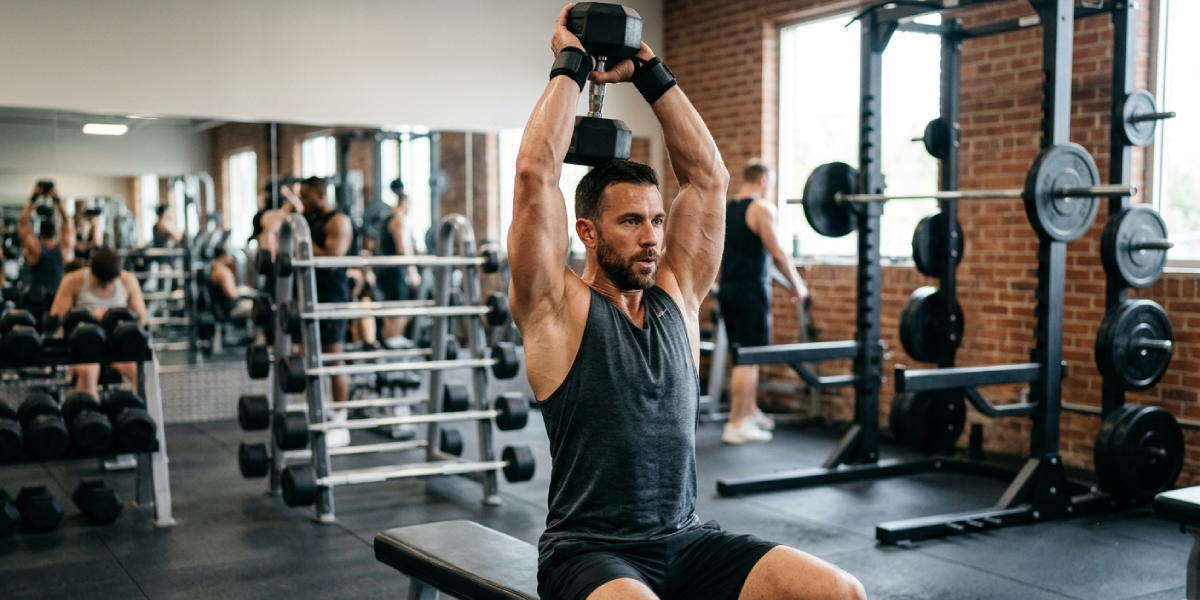
The best tricep exercises are the foundation of powerful, well-defined arms. Despite the bicep getting most of the attention, the triceps make up roughly two-thirds of your upper arm mass, making them the true key to impressive arm size and pushing strength.
Whether you are working out at a gym or training at home, adding the right tricep movements to your routine delivers results faster than almost any other upper-body strategy.
This guide breaks down the most effective tricep exercises backed by exercise science and real-world training experience. You will learn proper form, understand which part of the tricep each movement targets, and get a practical plan you can start using immediately.
Understanding the Tricep Muscle
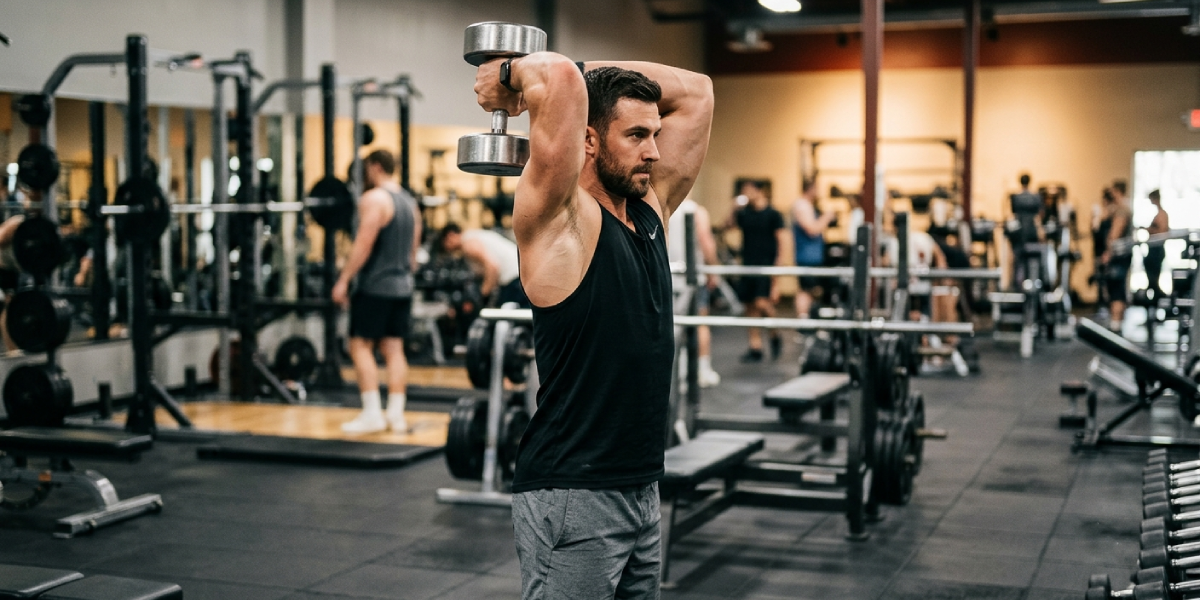
The triceps brachii is a three-headed muscle located on the back of the upper arm. Its three heads are the long head, the lateral head, and the medial head. The long head runs along the inner back of the arm and crosses the shoulder joint, making it active during overhead movements.
The lateral head sits on the outer side and is most visible when the arm is at the side. The medial head lies beneath the other two and contributes significantly to overall pressing strength.
Effective tricep training means targeting all three heads across your workout week. No single exercise isolates all three perfectly, which is why variety matters. A well-structured program combines compound pressing movements with targeted isolation work to fully stimulate the muscle from every angle.
The Best Tricep Exercises Ranked by Effectiveness
1. Close-Grip Bench Press
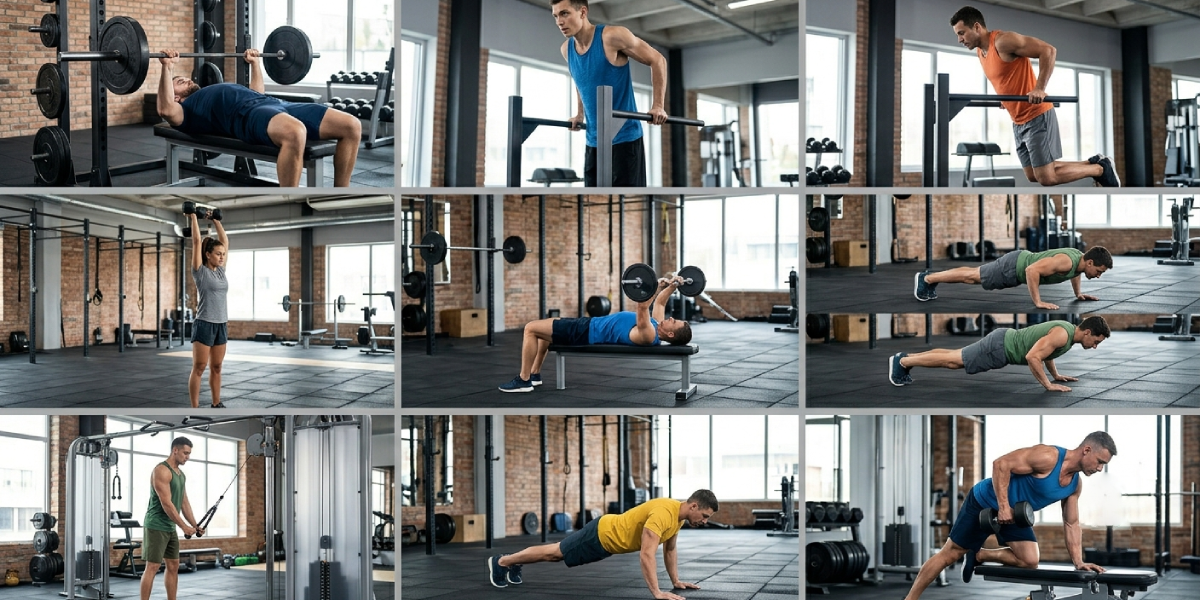
The close-grip bench press is one of the most powerful tricep exercises available. By narrowing your grip to shoulder width or slightly inside, you shift the load away from the chest and directly onto the triceps. This compound movement allows you to handle heavy loads, which is critical for building size and strength.
To perform it correctly, lie on a flat bench, grip the barbell with hands about shoulder-width apart, and lower the bar to your lower chest while keeping your elbows close to your body. Press back up to full extension without flaring your elbows wide. Aim for three to four sets of six to ten reps for strength and hypertrophy.
2. Overhead Tricep Extension
The overhead tricep extension is the best exercise for targeting the long head of the tricep. Because the arm is raised above the head, the long head is placed under a deep stretch, creating greater mechanical tension throughout the range of motion.
Research in exercise science consistently shows that training muscles in a lengthened position produces superior hypertrophy.
You can perform this movement with a dumbbell, EZ-bar, cable machine, or resistance band. Keep your elbows pointing forward and your upper arms stationary throughout the movement. Lower the weight behind your head slowly, then extend fully at the top. Three sets of ten to fifteen reps works well for building volume.
3. Tricep Dips
Tricep dips are a bodyweight staple that can be done on parallel bars, a bench, or even two sturdy chairs. They place the triceps under significant load through a large range of motion and also recruit the chest and front deltoids as secondary muscles.
For maximum tricep activation, keep your torso upright rather than leaning forward. A forward lean shifts emphasis onto the chest. Lower your body until your elbows reach about 90 degrees, then push back up to full elbow extension. Beginners can use a bench dip variation, while advanced trainees can add weight using a dip belt.
4. Skull Crushers (Lying Tricep Extension)
Skull crushers are a classic isolation exercise that directly targets all three heads of the tricep with minimal involvement from other muscle groups. The name comes from the path the bar travels toward your forehead if you lose control, though proper form keeps it safely above the face.
Lie on a flat bench with an EZ-bar or straight bar held at arm’s length above your chest. Keeping your upper arms perpendicular to the floor, bend your elbows and lower the bar toward your forehead or just behind your head. Extend back to the top without moving your shoulders. Three to four sets of eight to twelve reps is ideal.
5. Cable Pushdown
The cable pushdown is the most commonly used tricep isolation exercise in gyms worldwide, and for good reason. The cable provides constant tension throughout the entire range of motion, which free weights cannot replicate at every angle. You can use a straight bar, V-bar, or rope attachment depending on your comfort and goal.
Stand facing the cable machine with your elbows tucked at your sides. Push the attachment down until your elbows reach full extension, then slowly return to the starting position. The rope variation is particularly useful because it allows you to rotate your wrists slightly at the bottom, increasing the contraction of the lateral head.
6. Diamond Push-Ups
Diamond push-ups are one of the best bodyweight tricep exercises for building strength without any equipment. By placing your hands close together in a diamond shape directly under your chest, you dramatically increase tricep activation compared to a standard push-up.
Keep your core tight and your hips level throughout the movement. Lower your chest toward your hands while keeping your elbows tracking slightly back rather than flaring to the sides. This is an excellent finisher at the end of a workout or a go-to option for home training days. Explore more effective exercise routines on our site to build a complete home workout plan.
7. Single-Arm Dumbbell Kickback
The dumbbell kickback isolates the tricep in a unique way by extending the arm behind the body while the torso is hinged forward. At the top of the movement, when the arm is fully extended and parallel to the floor, the tricep reaches peak contraction.
This makes it an excellent finishing exercise for chasing the pump and burning out the muscle at the end of a session.
Hinge forward at the hips with a flat back, hold the dumbbell with one hand, and keep your upper arm parallel to the floor. Extend your forearm back until your arm is fully straight, pause, then return slowly. Use lighter weights and focus on the squeeze at full extension rather than swinging heavy loads.
Tricep Exercise Comparison Table
| Exercise | Primary Target | Equipment Needed | Difficulty Level | Best For |
|---|---|---|---|---|
| Close-Grip Bench Press | All three heads | Barbell, bench | Intermediate | Strength and mass |
| Overhead Tricep Extension | Long head | Dumbbell or cable | Beginner | Long head hypertrophy |
| Tricep Dips | All three heads | Parallel bars or bench | Beginner to advanced | Bodyweight strength |
| Skull Crushers | All three heads | EZ-bar or barbell | Intermediate | Isolation and size |
| Cable Pushdown | Lateral head | Cable machine | Beginner | Constant tension isolation |
| Diamond Push-Up | Medial and lateral head | None | Beginner | Home training |
| Dumbbell Kickback | Lateral head | Dumbbell | Beginner | Peak contraction finisher |
How to Structure a Tricep Workout
Knowing the best tricep exercises is only half the equation. Programming them intelligently is what drives results over time. Most people benefit from training their triceps two to three times per week, allowing at least 48 hours of recovery between sessions.
Since the triceps are also heavily recruited during chest pressing days and shoulder pressing days, it is important not to isolate them on consecutive days.
A practical approach is to finish chest or shoulder workouts with one or two targeted tricep exercises. On a dedicated arm day, you can run through three to four exercises with greater volume. A sample session might look like this:
- Close-Grip Bench Press: 4 sets of 6 to 8 reps
- Overhead Tricep Extension: 3 sets of 10 to 12 reps
- Cable Pushdown with rope: 3 sets of 12 to 15 reps
- Diamond Push-Ups: 2 sets to failure as a burnout
Progressive overload is the engine of muscle growth. Track your weights and reps each session and aim to gradually increase the load or volume over time. This principle applies whether you are a beginner or an experienced lifter.
Common Mistakes to Avoid
Even experienced gym-goers make avoidable errors when training the triceps. One of the most common is allowing the elbows to flare out during pushdowns and overhead extensions. When the elbows drift to the sides, the load is distributed across the chest and shoulders rather than staying concentrated on the triceps.
Another frequent mistake is using momentum and swinging the weight. This reduces time under tension on the tricep and increases injury risk in the elbow joint. Always use a controlled tempo, especially on the eccentric phase where you lower the weight. Slow, deliberate reps build more muscle than fast, sloppy ones.
Neglecting the long head is also a limiting factor for many people. If your routine only includes pushdowns, you are missing the largest portion of the muscle. Always include at least one overhead movement to ensure complete development.
Nutrition and Recovery for Tricep Growth
Muscle growth does not happen in the gym. It happens during recovery when the body repairs the micro-tears caused by training. Adequate protein intake is essential, with most research supporting a daily target of 0.7 to 1 gram of protein per pound of bodyweight for those focused on muscle building.
Sleep quality is equally important. Growth hormone, which plays a central role in tissue repair, is released primarily during deep sleep. Consistently getting seven to nine hours of quality sleep can meaningfully accelerate your results. Staying hydrated and maintaining a slight caloric surplus if you are focused on building mass are additional factors that support progress.
Understanding how your overall health supports your training is critical to long-term success. Learn more about how health and lifestyle habits contribute to fitness outcomes and why recovery is just as important as training itself.
Tracking Your Progress
Measuring your results keeps you motivated and ensures you are moving in the right direction. Taking weekly photos, logging your workout weights, and periodically measuring arm circumference all give you objective data on your progress.
Many people also use a BMI calculator as one of several tools to monitor their overall body composition as they build muscle and reduce body fat simultaneously.
Remember that visible changes in the triceps take time. For most people, noticeable differences in arm shape and size begin to appear after eight to twelve weeks of consistent, progressive training. Stay patient and trust the process.
Frequently Asked Questions
What is the single best tricep exercise for building mass?
The close-grip bench press is widely considered the most effective tricep exercise for building mass because it allows you to move the most weight through a full range of motion, stimulating all three heads with significant mechanical load.
How many times per week should I train my triceps?
Two to three times per week is the optimal frequency for most people. This includes both direct tricep work and indirect stimulation from chest and shoulder pressing exercises. Always allow at least 48 hours between direct tricep sessions for adequate recovery.
Can I build triceps without weights or equipment?
Yes. Diamond push-ups, bench dips, and bodyweight tricep dips are all highly effective exercises that require no gym equipment. While adding resistance allows for greater progressive overload over time, bodyweight training is a solid foundation, especially for beginners.
Why do my elbows hurt when doing tricep exercises?
Elbow pain during tricep training is often caused by using too much weight, flaring the elbows, or skipping a proper warm-up. Reduce the load, focus on keeping your elbows tucked, and warm up the joint with light cable pushdowns before your working sets. Persistent pain should be evaluated by a healthcare professional.
Should I train triceps on the same day as chest?
Yes, this is a common and effective approach. Since the chest press already recruits the triceps heavily, training them afterward while they are already warmed up is efficient. Just be mindful not to pre-exhaust your triceps if heavy bench pressing is a priority that day.
What is the difference between the tricep pushdown and the overhead extension?
The pushdown targets primarily the lateral head with the arm at the side, while the overhead extension places the long head in a stretched position, creating greater tension on the largest portion of the tricep muscle. Both belong in a complete program for different reasons.
How long does it take to see results from tricep training?
Most people begin to notice functional strength improvements within two to four weeks. Visible changes in arm shape and size typically become apparent after eight to twelve weeks of consistent, progressive training combined with adequate protein intake and recovery.
Are cables or free weights better for the triceps?
Both have distinct advantages. Free weights like barbells and dumbbells allow for heavier loads and more natural movement patterns. Cables provide constant tension throughout the entire range of motion, which is difficult to replicate with free weights. The most effective programs use both.
What rep range is best for tricep hypertrophy?
A range of eight to fifteen reps per set is generally most effective for muscle hypertrophy. Heavier compound movements like the close-grip bench press can be performed in the six to ten rep range, while isolation exercises like pushdowns and kickbacks are often more productive in the twelve to fifteen rep range.
Should beginners do isolation or compound tricep exercises first?
Beginners should prioritize compound movements like close-grip bench press and dips because they build general pushing strength and motor patterns more effectively. Isolation exercises such as pushdowns and skull crushers are better used as supplementary work once basic strength foundations are in place.