

If hip flexor exercises are not part of your regular routine, tight hips may be quietly undermining your posture, athletic performance, and daily comfort. The hip flexors are a group of muscles that connect your lower spine and pelvis to your thighs, and they are among the most overworked yet undertrained muscle groups in the human body.
Whether you spend long hours at a desk or push hard in the gym, these muscles shorten and stiffen over time, leading to a cascade of problems including lower back pain, hip impingement, and reduced stride length.
The good news is that targeted movement can reverse much of this tightness. This guide walks you through the most effective exercises and stretches to loosen, strengthen, and restore your hip flexors, backed by what exercise science and practical experience both confirm works.
Understanding Your Hip Flexors
The hip flexors are not a single muscle but a collection of muscles working together. The primary players include the iliopsoas, which is a combination of the iliacus and psoas major, the rectus femoris, and the tensor fasciae latae. These muscles fire every time you lift your knee, step forward, or bend at the waist.
Prolonged sitting is the most common culprit behind chronic hip flexor tightness. When you sit, the hip flexors are held in a shortened position for hours at a time. Over weeks and months, the muscle fibers adapt to this shortened length, making it harder to fully extend the hip during walking, running, or standing.
This tightness pulls the pelvis into an anterior tilt, which compresses the lumbar spine and weakens the glutes, creating a chain of postural dysfunction. Understanding this is the first step. The next is doing something about it with targeted exercises that both stretch and strengthen the hip complex.
The Best Hip Flexor Stretches for Tightness Relief
1. Kneeling Hip Flexor Stretch (Low Lunge)
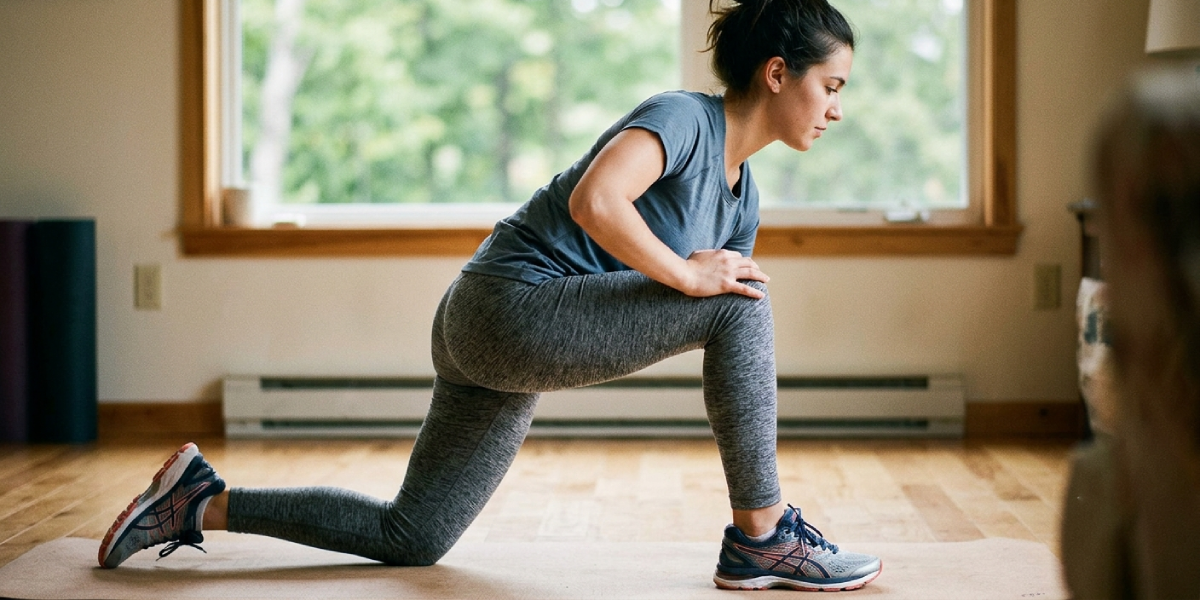
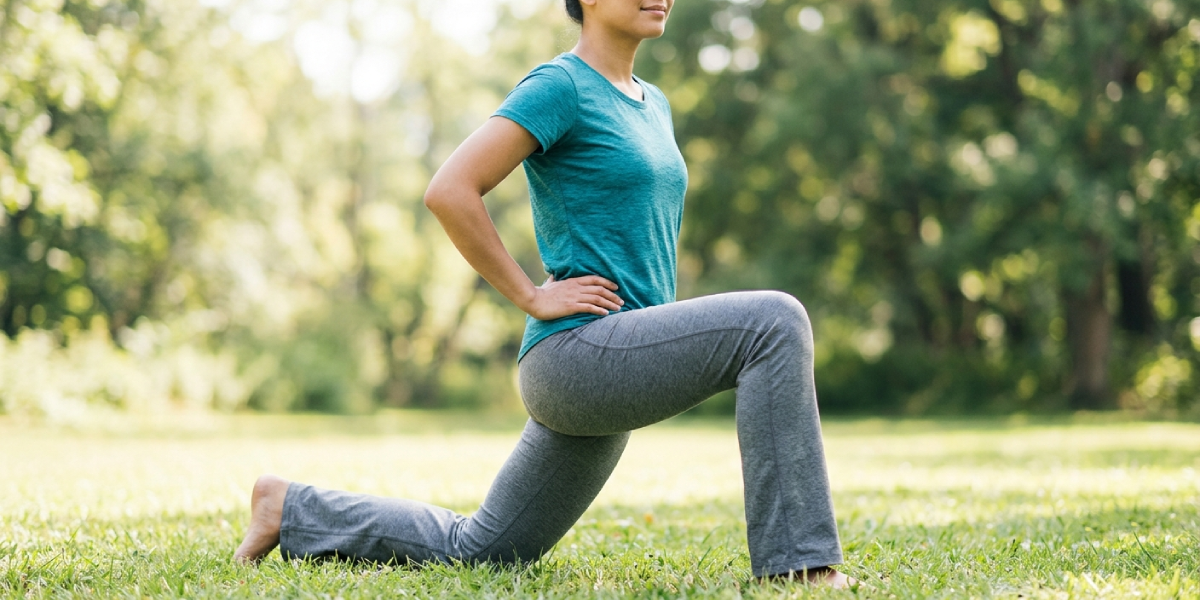
The kneeling hip flexor stretch, also called the low lunge or half-kneeling stretch, is one of the most effective ways to lengthen the iliopsoas. Begin by kneeling on one knee with the opposite foot flat on the floor in front of you, forming a 90-degree angle at both knees.
Keeping your torso upright, gently push your hips forward until you feel a stretch across the front of the rear hip. Hold for 30 to 60 seconds, then switch sides.
To deepen the stretch, raise the arm on the same side as the kneeling knee overhead and lean slightly away. This adds a lateral component that targets the hip flexor along its full length. Perform two to three sets per side daily for best results.
2. Pigeon Pose Stretch
Borrowed from yoga, the pigeon pose provides a deep, sustained stretch for the hip flexors and external rotators. Start in a push-up position, then bring one knee forward and place it behind the same-side wrist, with the shin angled across the mat.
Lower the opposite leg straight back. Sink your hips toward the floor and fold your torso forward over the bent leg. Hold for 45 to 90 seconds per side.
This stretch is particularly effective for people with very tight hips who have not responded as well to simpler stretches. It requires some flexibility to enter safely, so beginners may want to support the hip with a folded blanket or yoga block.
3. Supine Hip Flexor Stretch (Thomas Stretch)
The Thomas stretch, named after orthopedic surgeon Hugh Owen Thomas, is a clinical gold standard for assessing and addressing hip flexor tightness. Lie on your back at the edge of a table or firm bed. Pull one knee to your chest while letting the opposite leg hang freely off the edge.
If the hanging leg rises or the lower back arches significantly, the hip flexor on that side is tight. Hold the position for 30 seconds per side.
This is particularly useful because it isolates the hip flexor without placing stress on the knees or lower back, making it safe for most fitness levels.
4. Standing Quad and Hip Flexor Stretch
Stand near a wall for balance. Bend one knee and pull the ankle toward the glutes, keeping your knees together and your hips level. Gently push the hip of the bent leg forward to increase the hip flexor stretch component. Hold 30 seconds per side. This move doubles as a quadriceps stretch since the rectus femoris crosses both the knee and the hip.
Hip Flexor Strengthening Exercises
Stretching alone addresses tightness temporarily, but strengthening the hip flexors through their full range of motion creates lasting change. Weak hip flexors also compensate by becoming tight, so building strength is essential for sustainable relief.
5. Straight Leg Raises
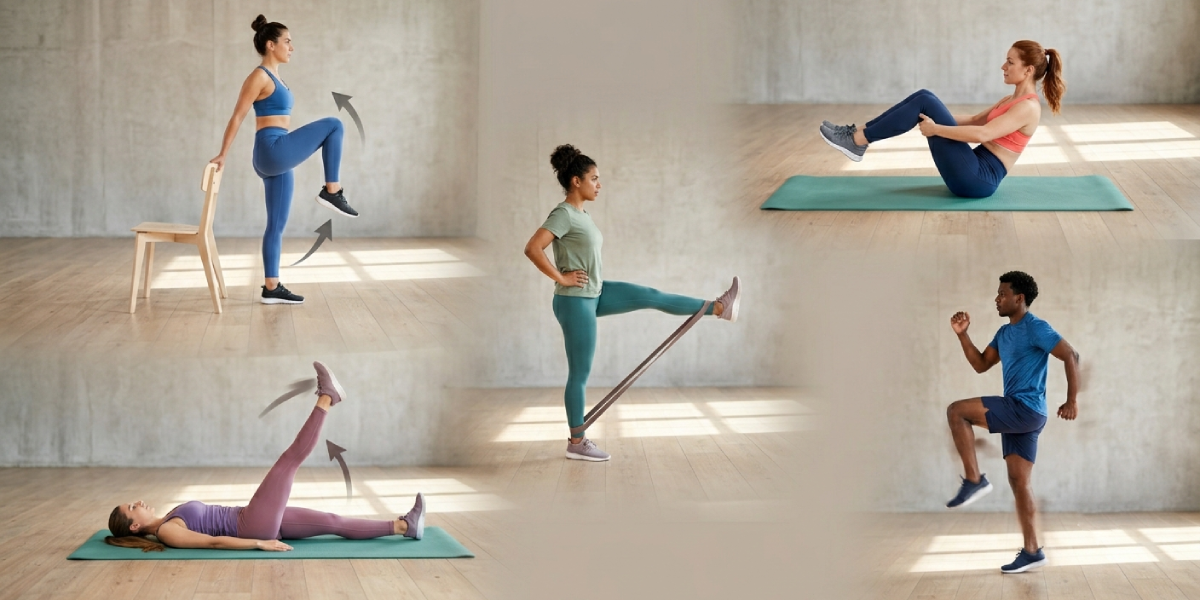
Lie flat on your back with one leg bent and the other straight. Keeping the straight leg firm, raise it to about 45 degrees, hold for one to two seconds, then slowly lower it. Perform three sets of 12 to 15 repetitions per side. This exercise directly loads the hip flexors at a safe range of motion and is frequently used in physical therapy settings for hip rehabilitation.
6. Standing Marches
Stand tall and alternate lifting your knees to hip height in a controlled marching motion. Drive the knee up with intention and lower it slowly. You can hold a wall for balance or perform this exercise while walking in place. Marches activate the iliopsoas dynamically, training it to contract through a functional range of motion rather than just passively lengthening.
For added resistance, loop a light exercise band around both ankles. This small addition significantly increases the challenge on the hip flexors while also engaging the hip abductors for balanced hip health.
7. Mountain Climbers (Controlled)
Start in a high push-up position. Drive one knee toward your chest, then alternate legs in a controlled, deliberate pace rather than the fast version used in cardio circuits. This slow mountain climber activates the hip flexors concentrically while also building core stability, which is critical for proper hip mechanics.
8. Dead Bug Exercise
Lie on your back with arms extended toward the ceiling and knees bent at 90 degrees in the air. Slowly lower one arm overhead while extending the opposite leg toward the floor, then return and repeat on the other side. The dead bug trains the hip flexors to work in coordination with the deep core, addressing one of the root causes of hip tightness, which is poor lumbo-pelvic control.
Mobility Drills for Daily Hip Flexor Health
9. Hip Flexor Foam Rolling
Foam rolling the hip flexors breaks up fascial adhesions and increases tissue extensibility before stretching. Lie face down with a foam roller positioned just below the hip crease. Slowly roll from the hip toward the upper thigh, pausing on tender spots for 20 to 30 seconds. Spend two to three minutes per side before your other hip flexor work.
10. 90/90 Hip Switch
Sit on the floor with both legs bent at 90-degree angles in front of you, one leg internally rotated and one externally rotated. Slowly rotate your hips to switch which leg is in front. This dynamic mobility drill opens both the internal and external rotators of the hip, creating balanced flexibility that supports hip flexor health from multiple angles.
Hip Flexor Exercise Comparison Table
| Exercise | Type | Difficulty | Primary Benefit | Recommended Sets/Duration |
|---|---|---|---|---|
| Kneeling Hip Flexor Stretch | Stretch | Beginner | Iliopsoas lengthening | 2-3 sets, 30-60 sec/side |
| Pigeon Pose | Stretch | Intermediate | Deep hip opening | 2 sets, 45-90 sec/side |
| Thomas Stretch | Stretch | Beginner | Isolated hip flexor release | 2 sets, 30 sec/side |
| Straight Leg Raises | Strength | Beginner | Hip flexor activation | 3 sets, 12-15 reps/side |
| Standing Marches (banded) | Strength | Beginner-Intermediate | Functional strength | 3 sets, 20 reps/side |
| Dead Bug | Stability | Intermediate | Core and hip coordination | 3 sets, 8-10 reps/side |
| 90/90 Hip Switch | Mobility | Beginner | Rotational hip mobility | 2 sets, 10 switches |
| Foam Rolling | Recovery | Beginner | Tissue quality | 2-3 min/side |
How to Structure Your Hip Flexor Routine
Consistency matters more than intensity when addressing hip flexor tightness. A practical approach is to spend five to ten minutes on hip flexor work each morning before you start your day, since this is when the muscles are typically at their tightest after hours of sleep.
A simple daily sequence might include two minutes of foam rolling, a kneeling hip flexor stretch on each side, and a set of standing marches.
On training days, add the strengthening exercises, such as straight leg raises, dead bugs, and controlled mountain climbers, as part of your warm-up or cool-down. Progress gradually by increasing hold times or adding resistance bands as the exercises become easier.
Maintaining overall health habits such as adequate hydration, quality sleep, and anti-inflammatory nutrition also supports muscle recovery and tissue flexibility. Hip flexor tightness rarely exists in isolation; it is often connected to broader lifestyle patterns.
When to See a Professional
Most cases of hip flexor tightness respond well to consistent self-care. However, if you experience sharp pain during any of these exercises, pain that radiates into the groin or inner thigh, swelling around the hip joint, or tightness that significantly worsens over time, consult a qualified physiotherapist or sports medicine physician.
These signs may indicate hip labral tears, iliopsoas tendinopathy, or other structural conditions that require clinical evaluation.
Tracking your body composition over time using tools like a BMI calculator can also be a helpful part of the picture, as excess body weight places additional load on the hip flexors and can exacerbate tightness.
Frequently Asked Questions
How long does it take to loosen tight hip flexors?
Most people notice meaningful improvement in hip flexor tightness within two to four weeks of consistent daily stretching and strengthening. Significant, lasting change typically takes six to twelve weeks of dedicated work, depending on how long the tightness has been present and how frequently you practice.
Can tight hip flexors cause lower back pain?
Yes. When the hip flexors are tight, they pull the pelvis into an anterior tilt, which increases the curve of the lumbar spine and places excess compression on the lower back. Releasing and strengthening the hip flexors is often a key component of lower back pain management.
Should I stretch my hip flexors every day?
Daily gentle stretching is generally safe and beneficial for most people. Holding each stretch for 30 to 60 seconds and performing two to three repetitions per side daily is a practical and effective approach. Avoid aggressive ballistic stretching, particularly if the area is already irritated.
What are the signs of tight hip flexors?
Common signs include difficulty standing fully upright, a forward tilt of the pelvis, lower back pain, stiffness in the front of the hip after sitting for extended periods, reduced stride length when walking or running, and a pulling sensation when extending the leg behind the body.
Are hip flexor exercises safe during pregnancy?
Many hip flexor stretches, such as the kneeling lunge stretch and standing quad stretch, are generally safe during pregnancy with modifications. However, exercises performed while lying flat on the back, such as the Thomas stretch and straight leg raises, should be avoided after the first trimester. Always consult your healthcare provider before beginning any new exercise program during pregnancy.
What is the fastest way to relieve hip flexor tightness?
Combining foam rolling with sustained hip flexor stretching produces the quickest short-term relief. Begin with two to three minutes of foam rolling the hip flexor region, then immediately move into a kneeling hip flexor stretch, holding each side for 60 seconds. This combination takes advantage of the temporary increase in tissue extensibility that follows myofascial release.
Can weak glutes cause hip flexor tightness?
Yes, and this is a very common pattern. When the glutes are weak, the hip flexors compensate by becoming overactive to maintain pelvic stability. This reciprocal inhibition cycle means that glute strengthening exercises such as bridges, clamshells, and hip thrusts are often essential companions to hip flexor work.
Do hip flexor exercises help with posture?
Absolutely. The hip flexors play a central role in pelvic and spinal positioning. Releasing tight hip flexors and strengthening them through their full range of motion reduces anterior pelvic tilt, which in turn improves the alignment of the lumbar spine, ribcage, and shoulders. Consistent hip flexor work is one of the most effective postural interventions available without equipment.
Is it normal to feel soreness after hip flexor stretching?
Mild muscle fatigue or a gentle pulling sensation during and after stretching is normal, especially when beginning a new routine. However, sharp, stabbing, or joint-level pain is not normal and suggests the stretch is either too aggressive or that there is an underlying issue that needs professional attention.
Can sitting too much permanently damage the hip flexors?
Prolonged sitting does not cause permanent damage in most cases, but it does lead to adaptive shortening where the muscle fibers physically become shorter and stiffer over time. This process is reversible with consistent stretching and movement, though the longer the tightness has been present, the more time and effort it takes to correct.