

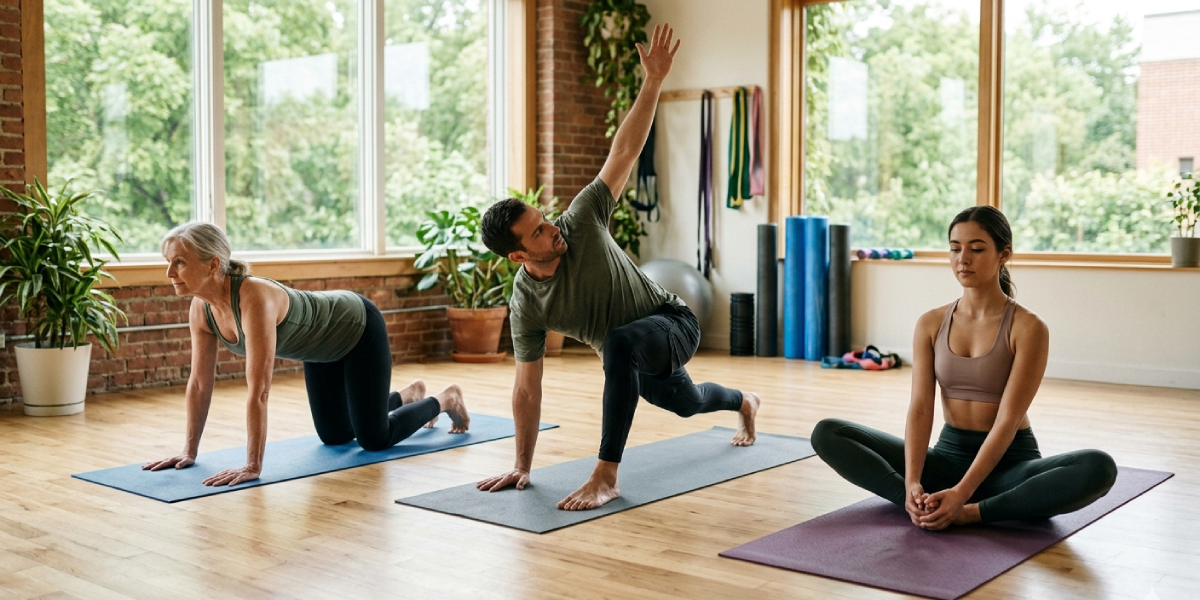
If you are looking for the best exercises to improve flexibility and mobility, you are already ahead of most people. Whether you spend long hours at a desk, push hard in the gym, or simply want to move through daily life without stiffness and pain, building a consistent flexibility and mobility practice is one of the most effective investments you can make in your long-term health.
This guide covers proven, expert-backed exercises that deliver real results, explained in practical terms so you can start applying them right away.
Why Flexibility and Mobility Are Not the Same Thing
Before diving into the exercises, it is worth understanding the difference between flexibility and mobility, because training for one without the other leaves a gap in your movement quality.
Flexibility refers to the passive range of motion in your muscles and connective tissues. It is how far a muscle can stretch when an external force, such as gravity or your own hands, is applied. Mobility, on the other hand, is your ability to actively control movement through a full range of motion. It combines flexibility with strength, coordination, and neuromuscular control.
Think of it this way: a person who can touch their toes when bending forward has flexibility. A person who can squat deep with their chest upright, knees tracking properly, and heels flat on the floor has mobility. The goal of a well-rounded routine is to develop both. The exercises below are chosen because they address the full spectrum, and many target both qualities simultaneously.
The Role of Consistency and Warm-Up
No single stretching session will transform your range of motion overnight. Lasting change in flexibility and mobility comes from consistent, progressive practice over weeks and months. The tissues involved, including muscles, fascia, tendons, and joint capsules, adapt gradually. Practicing five to ten minutes daily will produce better results than one long session per week.
Always warm your body up before deep stretching. A brisk five-minute walk, light jogging in place, or dynamic arm and leg circles elevates tissue temperature, making muscles more pliable and reducing the risk of strain. Save static stretching, where you hold a position for 30 to 60 seconds, for after your workout or as a standalone cool-down session.
Best Exercises to Improve Flexibility and Mobility
1. Hip 90/90 Stretch
The hips are the mobility center of the body. Tight, restricted hips affect how you walk, run, squat, and even sit. The 90/90 stretch addresses both hip internal and external rotation in one position, making it one of the most time-efficient hip mobility exercises available.
Sit on the floor and position both legs so each knee forms a 90-degree angle, one leg in front and one behind. Sit tall with both sitting bones reaching toward the floor. Gently lean your torso over your front shin, keeping your back straight. Hold for 30 to 60 seconds, then switch sides.
With practice, you can add a forward fold over the front leg to deepen the hip flexor and adductor stretch. Aim for two to three sets per side daily.
2. World’s Greatest Stretch
Its name is ambitious, but this multi-joint movement earns it. The World’s Greatest Stretch targets the hips, thoracic spine, hamstrings, hip flexors, and shoulders in a single flowing sequence, making it ideal as both a warm-up and a standalone mobility drill.
Start in a high plank position. Step your right foot forward to the outside of your right hand. Drop your right elbow toward the floor, then rotate and reach your right arm toward the ceiling, following it with your eyes. Return to plank and repeat on the left side.
Perform five to eight repetitions per side, moving slowly and deliberately. This exercise is a cornerstone of programs designed to improve functional exercise performance because it trains the body as an integrated unit rather than isolating single muscles.
3. Cat-Cow Spinal Mobility Drill
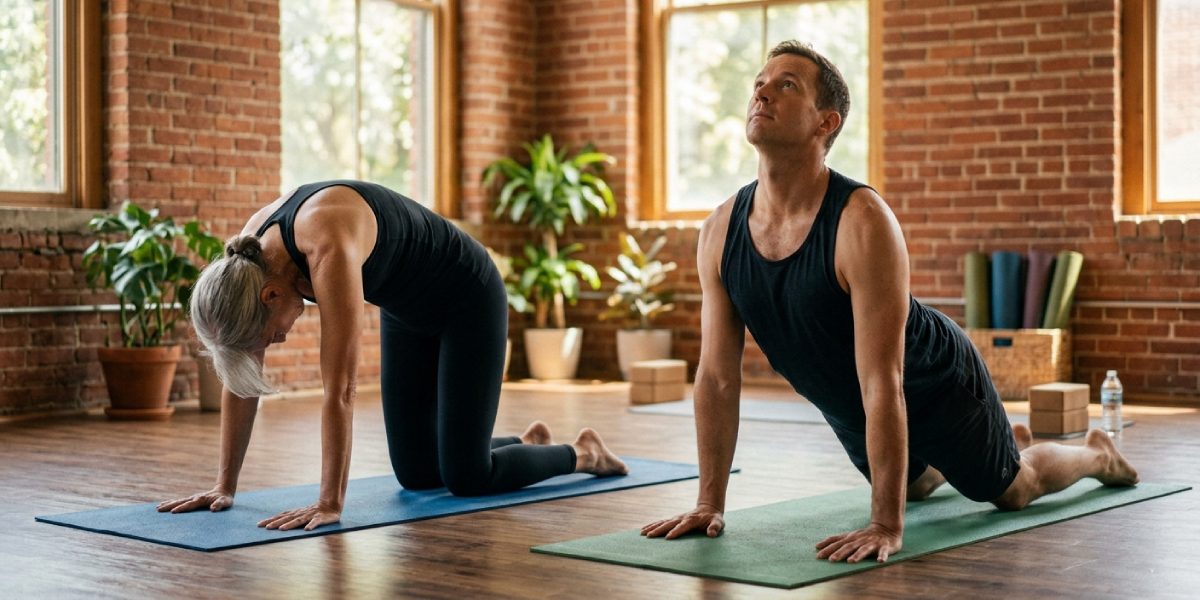
Many people neglect spinal mobility until back pain forces the issue. The cat-cow drill gently moves the entire spine through flexion and extension, lubricating the intervertebral discs and improving the range of motion between each vertebral segment.
Begin on all fours with your wrists under your shoulders and knees under your hips. On an inhale, drop your belly toward the floor, lift your tailbone and chest, and gaze gently upward (cow position). On an exhale, round your spine toward the ceiling, tuck your tailbone under, and drop your head (cat position).
Move slowly and breathe deeply through ten to fifteen repetitions. This exercise is especially valuable for people with sedentary lifestyles and is a foundational movement in physical therapy protocols for lower back health.
4. Deep Squat Hold
The deep squat is arguably the most important mobility position for the human body. Sitting in a full squat with feet flat, hips below knees, and torso upright requires and develops ankle dorsiflexion, hip flexion, hip external rotation, and thoracic extension all at once.
Stand with feet slightly wider than hip-width and toes turned out 15 to 30 degrees. Lower yourself into a full squat, clasping your hands in front of you and using your elbows to gently press your knees outward. Hold the position for 30 seconds to two minutes.
If your heels lift, place a folded towel or small plate under them until your ankle mobility improves. Practicing this position daily can produce significant improvements within four to six weeks.
5. Thoracic Spine Rotation
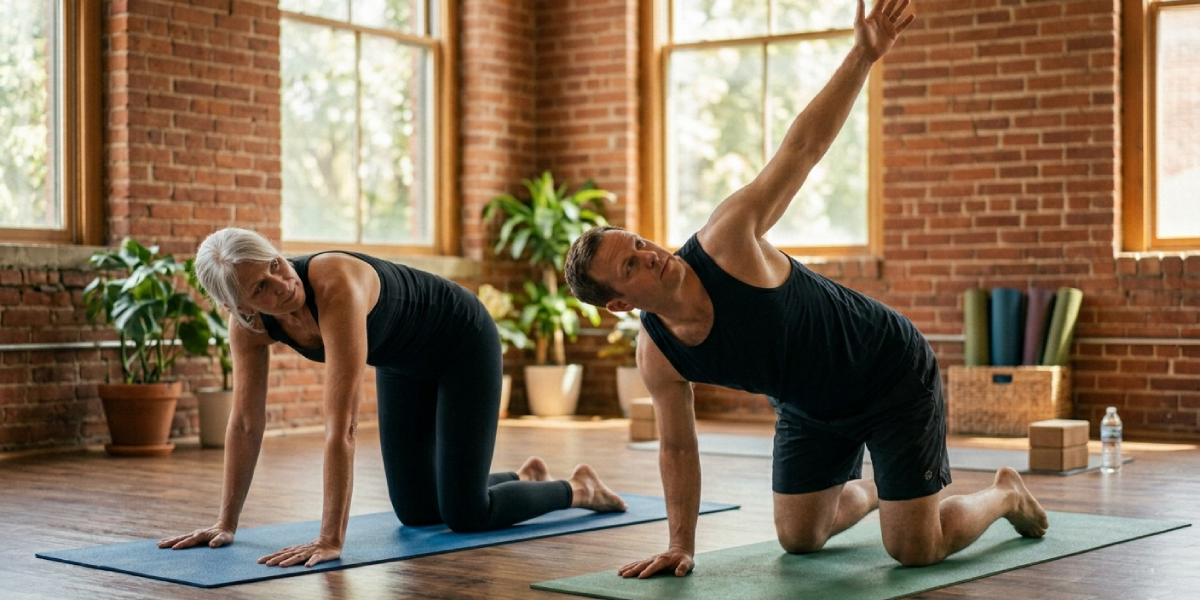
The thoracic spine, the mid and upper back, is designed for rotation, yet most people move through life with severely limited T-spine mobility. This restriction forces the lower back and neck to compensate, contributing to chronic pain and postural problems.
Sit cross-legged or kneel on the floor. Place one hand behind your head and keep the other resting on your knee. Rotate your upper body to one side as far as you comfortably can, leading with your elbow. Hold briefly, return to center, and repeat on the other side. Perform ten slow repetitions per side.
For a more targeted approach, the book opening stretch, performed lying on your side, is equally effective and allows gravity to assist the rotation.
6. Standing Hamstring Stretch
The hamstrings are among the most commonly tight muscle groups, particularly in people who sit for long periods. Tight hamstrings pull on the pelvis, flatten the lumbar curve, and contribute to lower back discomfort. Regular hamstring stretching improves posterior chain flexibility and directly supports better posture.
Stand facing a bench, step, or sturdy chair. Place one heel on the elevated surface with your leg extended and toes pointing up. Keeping your back straight, hinge forward at the hip until you feel a gentle stretch along the back of the thigh. Hold for 30 to 45 seconds and repeat on the other side.
Avoid rounding your lower back to reach further, as this reduces the stretch on the hamstrings and stresses the spine.
7. Pigeon Pose
Borrowed from yoga, pigeon pose is one of the most effective stretches for the glutes, piriformis, and hip external rotators. These muscles are frequently tight in athletes, runners, and desk workers, and their restriction contributes to hip impingement, IT band issues, and sciatic-like discomfort.
From a plank position, bring your right knee forward and place it behind your right wrist, angling your shin toward the left side of the mat. Extend your left leg straight behind you. Lower your hips toward the floor and either stay upright or fold your torso over your front leg for a deeper stretch.
Hold for 60 to 90 seconds per side. Use a folded blanket under the hip of your bent leg if your hips do not comfortably reach the floor.
8. Ankle Circles and Dorsiflexion Drills
Ankle mobility is the unsung hero of lower body movement. Restricted ankle dorsiflexion, the ability to bring your shin toward your foot, forces compensations at the knee, hip, and lower back during squatting, lunging, and running. Improving ankle mobility has a positive ripple effect throughout the entire kinetic chain.
Sit on the floor or stand with one foot slightly elevated. Draw large, slow circles with your foot, 10 repetitions in each direction. For dorsiflexion specifically, kneel with one foot forward and drive your knee forward past your toes while keeping your heel flat on the floor.
Perform ten to fifteen controlled repetitions per side. This drill is a direct intervention for one of the most overlooked restrictions in lower body mobility.
9. Doorway Chest and Shoulder Stretch
Hours of forward-leaning posture at a computer tighten the chest, anterior shoulders, and pectoral minor, pulling the shoulders into a rounded position. This restriction limits shoulder range of motion, affects breathing mechanics, and contributes to neck tension. A simple doorway stretch counteracts these effects with no equipment required.
Stand in a doorway and place both forearms on the door frame with elbows at shoulder height. Step one foot forward and gently lean your body through the doorway until you feel a stretch across your chest and the front of your shoulders.
Hold for 30 seconds, then adjust your arms higher or lower to stretch different portions of the pectoral fibers. Repeat two to three times.
10. Supine Spinal Twist
The supine spinal twist is a restorative mobility exercise that releases tension in the lower back, hips, and outer thighs simultaneously. It is an excellent way to end a workout or decompress the spine before bed.
Lie on your back and draw one knee toward your chest. Guide it across your body toward the opposite side while extending that arm out to your side and turning your gaze in the opposite direction. Keep both shoulders anchored to the floor. Hold for 45 to 60 seconds per side.
This gentle rotation creates traction between the vertebrae and restores rotation to a spine that has been held in one position throughout the day.
Structuring Your Flexibility and Mobility Routine
Knowing which exercises to do is only half the equation. How you organize them matters equally. Below is a practical framework for integrating these movements into your weekly schedule.
| Session Type | Recommended Exercises | Duration | Frequency |
|---|---|---|---|
| Morning Mobility Routine | Cat-Cow, World’s Greatest Stretch, 90/90 Stretch, Thoracic Rotation | 10 to 15 minutes | Daily |
| Post-Workout Flexibility | Pigeon Pose, Hamstring Stretch, Doorway Chest Stretch, Supine Twist | 10 to 20 minutes | After every session |
| Dedicated Mobility Day | All ten exercises in sequence with longer holds | 30 to 45 minutes | 1 to 2 times per week |
| Desk Break Reset | Deep Squat Hold, Ankle Circles, Thoracic Rotation | 3 to 5 minutes | Every 60 to 90 minutes |
Flexibility, Mobility, and Overall Health
The benefits of improved flexibility and mobility extend well beyond physical performance. Research consistently shows that maintaining good range of motion reduces injury risk, improves posture, supports joint health, and enhances the quality of everyday movement.
There is also a compelling connection between mobility training and mental well-being. The slow, mindful nature of stretching activates the parasympathetic nervous system, reducing cortisol and promoting a state of calm focus.
If you are also tracking other aspects of your wellness, including weight management and cardiovascular health, it is helpful to assess your body composition alongside your movement quality. Tools like a BMI calculator can provide a useful baseline snapshot of your health metrics as you begin or progress through your flexibility journey.
Physical fitness is multidimensional, and mobility is one of its most foundational pillars.
Understanding how flexibility and mobility training fits within a comprehensive approach to overall health and wellness helps you build habits that reinforce each other. Better mobility supports safer, more effective workouts. More effective workouts improve strength and body composition.
Improved body composition reduces load on joints and makes movement easier. The cycle is genuinely virtuous when you start it.
Common Mistakes to Avoid
- Bouncing during stretches: Ballistic movements activate the stretch reflex, causing muscles to contract rather than lengthen. Move slowly and hold positions steadily.
- Stretching cold muscles: Always warm up for at least five minutes before deep static stretching to avoid tissue damage.
- Holding your breath: Breath is your partner in stretching. Exhale as you ease deeper into a stretch and breathe steadily throughout each hold.
- Expecting immediate results: Tissue adaptation takes time. Consistency over four to eight weeks is when most people notice meaningful change.
- Ignoring pain signals: A strong stretch sensation is appropriate; sharp, stabbing, or joint pain is not. Stop and reassess if you feel acute pain.
- Only stretching one side: Always work both sides of the body equally, even if one side is visibly tighter, to maintain symmetry and avoid compensations.
When to Seek Professional Guidance
While the exercises in this article are safe for most healthy adults, certain conditions require professional oversight. If you have a history of joint replacements, hypermobility disorders such as Ehlers-Danlos syndrome, recent musculoskeletal injuries, or chronic pain conditions, consult with a physical therapist or sports medicine physician before starting a new mobility program.
A trained professional can identify your specific restrictions, rule out structural issues, and design a program precisely calibrated to your needs.
Similarly, if you have been sedentary for an extended period or are over the age of 60, starting gradually and progressing conservatively will produce better long-term outcomes than pushing aggressively from the outset.
Frequently Asked Questions
How long does it take to improve flexibility and mobility?
Most people notice meaningful improvements in their range of motion within four to eight weeks of consistent daily practice. Significant, lasting changes in tissue structure typically take three to six months of regular training. Genetics, age, starting point, and consistency all influence the rate of progress.
Should I stretch every day?
Yes, daily stretching is generally beneficial and safe for most people. Short daily sessions of ten to fifteen minutes tend to produce better results than infrequent longer sessions. The key is to keep intensity moderate, especially on days after intense workouts, and to prioritize proper warm-up before deep stretching.
Is yoga a good way to improve flexibility and mobility?
Yoga is an excellent modality for both flexibility and mobility. Styles such as Hatha, Yin, and Vinyasa yoga systematically move the body through a wide range of positions that develop passive flexibility, active mobility, and body awareness simultaneously. It also incorporates breathing techniques that enhance relaxation and stretch depth.
What is the difference between static and dynamic stretching?
Static stretching involves holding a stretch position for a set period, typically 30 to 60 seconds, and is most effective when performed after exercise or as a standalone session. Dynamic stretching involves controlled, rhythmic movements through a range of motion and is ideal as a warm-up before physical activity. Both have important roles in a complete flexibility program.
Can tight muscles cause pain even if I am not exercising?
Yes. Chronically tight muscles pull on joints, alter posture, compress nerves, and restrict blood flow, all of which can generate pain even at rest. Common examples include tight hip flexors contributing to lower back pain, tight pectorals causing shoulder discomfort, and tight hamstrings producing tension headaches through postural compensation.
How does age affect flexibility and what can I do about it?
Flexibility naturally declines with age due to changes in collagen structure, reduced water content in connective tissues, and decreased activity levels. However, regular stretching and mobility work can substantially offset this decline. Adults over 50 who train consistently often outperform sedentary younger adults in functional range of motion. Starting at any age produces measurable benefits.
Are there any supplements that support flexibility and joint mobility?
Certain supplements have evidence supporting joint and connective tissue health. Collagen peptides, taken with vitamin C to support synthesis, have shown benefits in some studies for tendon and ligament health. Omega-3 fatty acids help manage inflammation that can restrict mobility. Magnesium supports muscle relaxation. Always consult a healthcare provider before beginning any supplement regimen, as individual needs vary significantly.
Can I improve flexibility without holding long static stretches?
Yes. Mobility drills, controlled articular rotations, yoga flows, and activities like dance, Pilates, and martial arts all improve range of motion without prolonged static holds. Research also supports proprioceptive neuromuscular facilitation, or PNF stretching, which uses muscle contraction and release cycles to achieve greater range of motion more quickly than static stretching alone.
Is it normal to feel sore after stretching?
Mild muscle soreness after an intensive stretching session can occur, particularly when working on areas that have been tight for a long time. This is similar to the delayed onset muscle soreness experienced after strength training and typically resolves within 24 to 48 hours. Sharp or joint pain during or after stretching, however, is not normal and warrants professional evaluation.
How does hydration affect flexibility?
Hydration has a direct impact on tissue pliability. Muscles and fascia are largely composed of water, and even mild dehydration reduces their elasticity and increases injury risk. Drinking adequate water throughout the day, typically around two to three liters for most active adults, supports optimal tissue health and can noticeably improve the quality of your stretching sessions.