


Understanding what is exercise is the first step toward building a healthier, more active life. Exercise is any planned, structured, repetitive physical activity performed with the goal of improving or maintaining physical fitness, health, or athletic performance.
From a brisk morning walk to a challenging strength training session, virtually any movement that raises your heart rate and engages your muscles counts. This guide breaks down everything you need to know, including the main types of exercise, the science-backed benefits, and how to start a routine that actually sticks.
Defining Exercise: More Than Just Movement
Exercise is often confused with general physical activity, but there is an important distinction. Physical activity refers to any bodily movement produced by skeletal muscles that results in energy expenditure, such as climbing stairs or walking to the mailbox. Exercise, on the other hand, is a subcategory of physical activity that is deliberate and goal-oriented.
Health and fitness professionals generally categorize exercise along several dimensions: intensity (how hard you work), duration (how long you work), and frequency (how often you work). These three variables interact to determine the overall training load your body experiences, which in turn drives adaptation and improvement over time.
Whether you are looking to lose weight, build strength, improve cardiovascular endurance, reduce stress, or simply feel better day to day, there is a form of exercise suited to your goals. Exploring the full range of exercise types and routines can help you find movements that fit your lifestyle and abilities.
The Main Types of Exercise

Exercise is broadly divided into several categories. Most well-rounded fitness programs include elements from more than one category, because each type delivers distinct physiological benefits that the others cannot fully replicate.
Aerobic Exercise
Aerobic exercise, also called cardiovascular or cardio exercise, involves sustained rhythmic activity that relies on oxygen to produce energy. Examples include running, cycling, swimming, rowing, dancing, and brisk walking. Aerobic training strengthens the heart and lungs, improves circulation, boosts mood through endorphin release, and burns a significant number of calories.
The American Heart Association recommends at least 150 minutes of moderate-intensity aerobic activity per week for healthy adults.
Anaerobic Exercise
Anaerobic exercise involves short, intense bursts of activity where the body’s demand for oxygen exceeds the available supply. Sprinting, heavy weightlifting, and high-intensity interval training (HIIT) are classic examples. This type of training builds muscular strength and power, increases metabolic rate, and is highly effective for body composition changes in shorter workout windows.
Strength and Resistance Training
Resistance training uses external load, such as free weights, resistance bands, machines, or bodyweight, to challenge and overload the muscles. Over time, this stimulus causes muscle fibers to repair and grow stronger, a process known as muscle hypertrophy.
Beyond aesthetics, strength training is critical for preserving bone density, improving posture, reducing injury risk, and supporting metabolic health as you age. Major health bodies recommend resistance training targeting all major muscle groups at least twice per week.
Flexibility and Mobility Training
Flexibility training, including static stretching, dynamic stretching, and yoga, improves the range of motion around joints and reduces muscle stiffness. Mobility work goes one step further by training active control through that range of motion.
Together, these practices reduce injury risk, alleviate chronic tension, support athletic performance, and promote recovery between harder training sessions.
Balance and Stability Training
Balance and stability exercises challenge the body’s ability to maintain control during movement or while stationary. Tai chi, Pilates, single-leg exercises, and stability ball drills all fall into this category. Balance training is especially important for older adults, where it plays a documented role in fall prevention, but it is beneficial at every age for improving coordination and functional movement quality.
The Science-Backed Benefits of Regular Exercise
The health benefits of regular exercise are among the most thoroughly researched topics in medicine. Consistent physical activity positively affects virtually every system in the human body. Understanding these benefits, which connect directly to your long-term health outcomes, can be a powerful motivator for staying committed to a routine.
Cardiovascular Health
Regular aerobic exercise lowers resting heart rate, reduces blood pressure, improves cholesterol profiles by raising HDL (good) cholesterol and lowering LDL (bad) cholesterol, and decreases the risk of heart disease and stroke. The heart is a muscle, and like all muscles, it becomes more efficient with consistent training.
Weight Management and Metabolic Health
Exercise increases total daily energy expenditure and, through muscle building, raises the resting metabolic rate, meaning you burn more calories even at rest. Combined with a balanced diet, regular physical activity is the most sustainable strategy for achieving and maintaining a healthy body weight. Tracking your body mass index using a tool like the BMI calculator can give you a useful starting reference point for your health journey.
Mental Health and Cognitive Function
Exercise is one of the most effective natural interventions for mental well-being. Aerobic activity stimulates the release of endorphins, dopamine, and serotonin, neurotransmitters associated with mood regulation and feelings of well-being. Research consistently shows that regular exercise reduces symptoms of depression and anxiety, improves sleep quality, and enhances cognitive function including memory, focus, and executive function.
The neurological benefits of movement are a compelling reason to prioritize exercise regardless of fitness goals.
Musculoskeletal Health
Weight-bearing and resistance exercises stimulate bone remodeling, increasing bone density and reducing the risk of osteoporosis. Strengthening the muscles around joints also provides stability and protection, lowering the likelihood of injuries such as ligament sprains and stress fractures.
For people already dealing with conditions like arthritis, appropriately dosed exercise has been shown to reduce pain and improve function rather than exacerbate symptoms.
Immune System Support
Moderate, regular exercise has an immunomodulatory effect, meaning it helps regulate and strengthen immune responses. Active individuals tend to experience fewer colds and upper respiratory infections. The mechanism involves improved circulation of immune cells, reduced chronic inflammation, and better regulation of stress hormones that can suppress immune function when chronically elevated.
Longevity and Disease Prevention
Perhaps most compellingly, regular physical activity is strongly associated with a longer life and a reduced risk of chronic diseases including type 2 diabetes, certain cancers, metabolic syndrome, and neurodegenerative conditions such as Alzheimer’s disease. The evidence is consistent across decades of population research: people who exercise regularly live longer and experience fewer years of disease-related disability.
How Much Exercise Do You Actually Need?
Current guidelines from the World Health Organization and major health authorities recommend the following for adults:
- Aerobic activity: 150 to 300 minutes per week of moderate-intensity activity, or 75 to 150 minutes per week of vigorous-intensity activity, or an equivalent combination of both.
- Muscle-strengthening activity: At least two days per week targeting all major muscle groups.
- Reduce sedentary time: Limiting prolonged sitting by breaking it up with light movement throughout the day provides additional health benefits beyond structured exercise sessions.
For older adults, incorporating balance and fall-prevention training at least three days per week is also recommended. Children and adolescents have higher recommendations, with 60 minutes of moderate to vigorous activity per day as the target.
How to Get Started with Exercise
Starting an exercise routine can feel overwhelming, but the barrier is much lower than most people think. The goal at the beginning is simply to move more than you currently do and to build habits that are sustainable over the long term.
Start with Your Current Fitness Level
Beginners should start conservatively. A 20 to 30 minute walk three to four times per week is a genuinely effective starting point for someone who has been sedentary. As fitness improves, intensity and duration can be gradually increased following the principle of progressive overload.
Choose Activities You Enjoy
Adherence is the single most important factor in long-term exercise success. The best workout is the one you will actually do consistently. Experiment with different activities, whether it is swimming, group fitness classes, hiking, cycling, or home workouts, until you find something that feels rewarding rather than punishing.
Build a Balanced Weekly Routine
A well-rounded exercise program combines cardio, strength training, and flexibility work across the week. A simple framework for beginners might include two strength training sessions, two to three cardio sessions of varying intensity, and one dedicated stretching or yoga session per week, with at least one full rest day.
Prioritize Consistency Over Perfection
Missing a session or having a low-energy workout is normal and not a setback. What matters is the pattern over weeks and months, not the performance on any single day. Setting realistic, specific goals, tracking your progress, and celebrating incremental improvements are all strategies that support long-term consistency.
Consult a Professional When Needed
If you have an existing health condition, have been inactive for an extended period, or are over 45 and planning to begin vigorous exercise, it is advisable to consult your physician before starting. A certified personal trainer can also help design a program tailored to your specific goals, fitness level, and any physical limitations.
Exercise and Nutrition: A Powerful Partnership
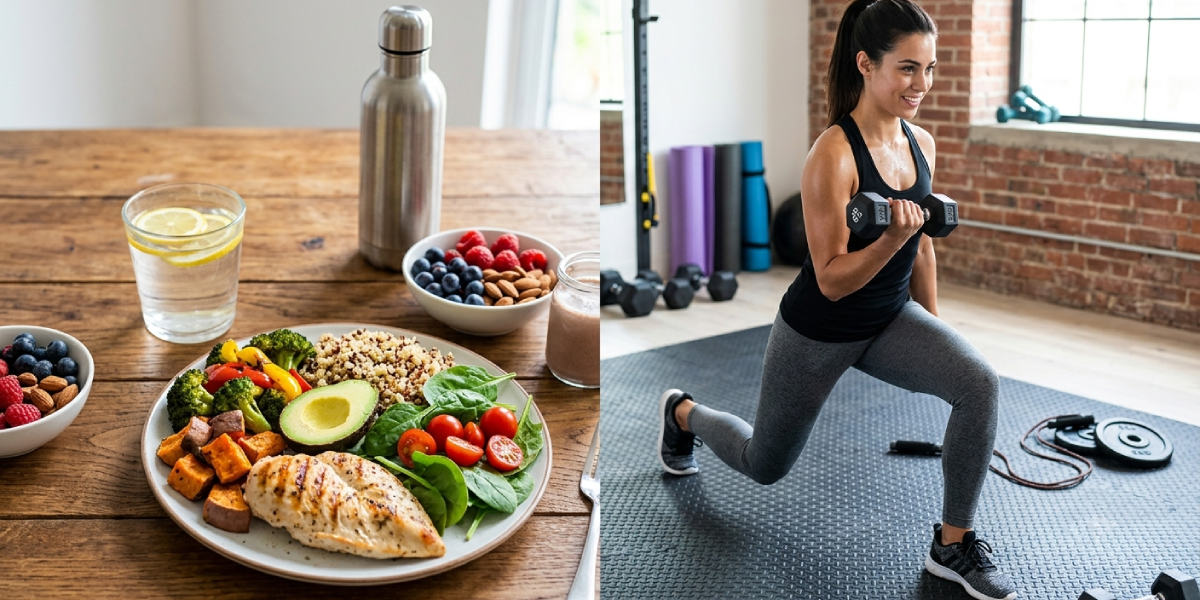
Exercise and nutrition are complementary pillars of health. While exercise creates the stimulus for physical adaptation, nutrition provides the raw materials, calories, protein, carbohydrates, healthy fats, vitamins, and minerals needed for that adaptation to occur.
Adequate protein intake supports muscle repair and growth following resistance training. Carbohydrates serve as the primary fuel source for moderate to high intensity exercise. Hydration is critical before, during, and after physical activity to maintain performance and support recovery.
Neither exercise nor nutrition alone is as powerful as the two combined. Making thoughtful improvements to both simultaneously tends to produce the most meaningful and lasting results.
Common Myths About Exercise
Misinformation about exercise is widespread, and it often discourages people from getting started or sticking with a routine. A few important myths are worth addressing directly.
Myth: You need to exercise for a long time to see results. Research on HIIT and even moderate-length sessions shows that consistency over time matters far more than session duration. Twenty to thirty minutes of quality exercise four to five days a week produces measurable improvements.
Myth: Strength training makes women bulky. Due to hormonal differences, women do not have the testosterone levels required to build the muscle mass seen in male bodybuilders without years of very deliberate effort. Strength training for women produces a toned, strong physique and significant health benefits without unwanted bulk.
Myth: If you are not sore, the workout was not effective. Muscle soreness indicates that the body experienced an unfamiliar stimulus. Once adapted to a routine, soreness diminishes even while fitness continues to improve. Soreness is not a reliable indicator of workout quality.
Frequently Asked Questions
What is the definition of exercise?
Exercise is structured, intentional physical activity performed repeatedly with the goal of improving or maintaining physical fitness, health, or athletic performance. It differs from incidental physical activity in that it is planned and goal-directed.
What are the main types of exercise?
The main types of exercise include aerobic (cardiovascular) exercise, anaerobic exercise, resistance or strength training, flexibility and mobility training, and balance and stability training. Most complete fitness programs incorporate elements from multiple categories.
How often should I exercise each week?
Major health guidelines recommend at least 150 minutes of moderate-intensity aerobic activity per week, plus muscle-strengthening activities on at least two days per week. Beginners can start with shorter, less frequent sessions and build up gradually over time.
What are the health benefits of regular exercise?
Regular exercise improves cardiovascular health, supports healthy weight management, strengthens muscles and bones, enhances mood and mental health, boosts immune function, improves sleep quality, sharpens cognitive function, and significantly reduces the risk of chronic diseases including type 2 diabetes, heart disease, and certain cancers.
Is it safe to exercise every day?
Daily movement is generally safe and beneficial, but daily high-intensity or heavy resistance training without adequate rest can lead to overtraining and injury. A balanced approach includes active recovery days with lighter movement such as walking or stretching between more demanding sessions.
What is the best type of exercise for beginners?
Walking is one of the most accessible and effective starting points for beginners. It requires no equipment, has a very low injury risk, and delivers meaningful cardiovascular and metabolic benefits. Bodyweight resistance exercises, such as squats, push-ups, and lunges, are also excellent beginner-friendly options.
Can exercise help with stress and anxiety?
Yes. Exercise is one of the most well-documented natural interventions for reducing stress and anxiety. Physical activity stimulates the release of endorphins and other mood-regulating neurotransmitters, reduces circulating stress hormones like cortisol, and improves sleep quality, all of which contribute to better emotional regulation.
How long does it take to see results from exercise?
Many people notice improved energy, mood, and sleep quality within the first one to two weeks of starting a consistent exercise routine. Visible changes in body composition typically begin to appear after four to eight weeks of regular training combined with appropriate nutrition. Cardiovascular and strength improvements are measurable within four to six weeks.
Do I need gym equipment to exercise effectively?
No. Effective exercise can be performed with little to no equipment. Bodyweight exercises, outdoor cardio activities such as walking, running, or cycling, and resistance band workouts can all deliver substantial fitness and health benefits without a gym membership or expensive equipment.
What should I eat before and after exercise?
Before exercise, a light meal or snack containing carbohydrates and a moderate amount of protein, consumed one to two hours beforehand, provides energy for the session. After exercise, prioritizing protein supports muscle repair and recovery, ideally within 30 to 60 minutes post-workout. Hydration with water before, during, and after exercise is equally important.