

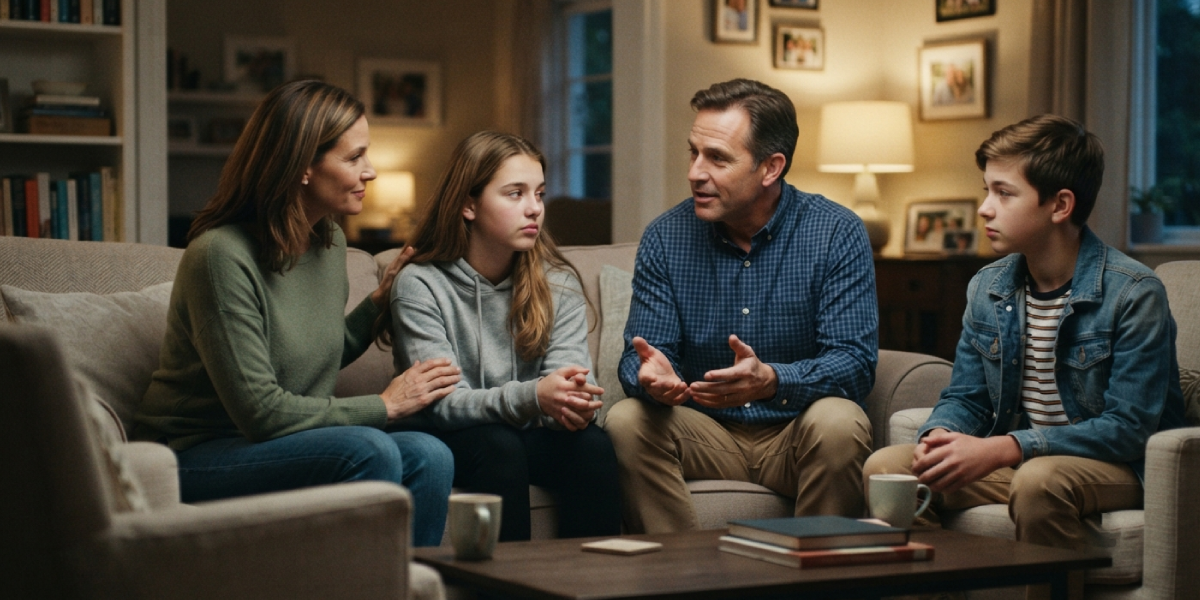
Learning how to talk to your kids about sex doesn’t have to feel awkward or overwhelming. With the right approach, age-appropriate language, and a little preparation, these conversations can strengthen trust between you and your child while keeping them safer and better informed.
If you’ve been putting off “the talk” because you’re not sure where to start, you’re not alone. Most parents feel some version of dread before this conversation. The good news is that talking to kids about sex works best as an ongoing series of small, honest conversations rather than one big, dramatic sit-down.
This guide walks through what actually works, based on guidance from pediatricians, child development specialists, and parents who have been through it themselves.
Why This Conversation Matters More Than You Think
Kids are exposed to sexual content earlier than most parents expect, whether through friends, social media, television, or simple curiosity about their own bodies. If parents stay silent, children fill in the gaps with misinformation from peers or the internet, which is rarely accurate and sometimes harmful.
Pediatric and family health organizations consistently find that children who receive honest, age-appropriate information from their parents tend to delay sexual activity, make safer choices when they do become sexually active, and develop healthier attitudes about their bodies and relationships. In other words, talking early and often is protective, not risky.
Start Earlier Than You Think You Should
One of the most common mistakes parents make is waiting until puberty hits to say anything at all. In reality, these conversations should start in early childhood, just in simpler forms.
Ages 2 to 5: Body Basics and Boundaries
At this stage, the goal isn’t to talk about sex itself. It’s to teach correct anatomical terms, body autonomy, and the difference between appropriate and inappropriate touch. Use real words like penis and vulva instead of nicknames. This isn’t about being explicit; it’s about giving children accurate language so they can describe their bodies clearly to a trusted adult if something feels wrong.
Ages 6 to 9: Where Babies Come From
By now, many kids are curious about how babies are made. Keep answers simple, factual, and matched to what they actually asked. A child asking “where do babies come from” usually wants a short, honest answer, not a biology lecture. You can always add more detail later if they ask follow-up questions.
Ages 10 to 12: Puberty and Changing Bodies
This is often the window right before or during the start of puberty, and it’s a critical time to talk about physical changes before they happen rather than after. Covering topics like periods, voice changes, body hair, and emotional shifts ahead of time helps reduce anxiety and embarrassment.
Because these years involve so many physical changes, it can help to also explore broader health topics together, such as nutrition, sleep, and hygiene, so puberty feels like one part of overall wellbeing rather than an isolated, scary event.
Ages 13 and Up: Consent, Relationships, and Safety
Teenagers need direct, non-judgmental conversations about consent, contraception, sexually transmitted infections, healthy relationships, and the emotional side of sex. This is also the age where conversations about online safety, sexting, and pornography exposure become essential.
How to Actually Start the Conversation

Many parents get stuck not on what to say, but on how to start saying it. Here are approaches that tend to work well in real households.
- Use everyday moments as openers, like a pregnancy storyline on TV or a question that comes up naturally during a car ride.
- Ask what they already know before explaining anything. This helps you correct misinformation without over-explaining things they already understand.
- Keep your tone calm and matter-of-fact. Kids pick up on discomfort, and if you seem embarrassed, they will assume the topic is shameful.
- Answer the question that was actually asked. Avoid turning a simple question into a long lecture.
- Make it an ongoing dialogue, not a single event. One conversation is rarely enough.
What to Cover at Each Stage
Below is a general framework many pediatricians and family counselors recommend. Every child develops differently, so use this as a flexible guide rather than a strict schedule.
| Age Range | Core Topics | Conversation Goal |
|---|---|---|
| 2 to 5 | Correct body terms, privacy, consent basics | Build comfort and safety awareness |
| 6 to 9 | Where babies come from, basic reproduction | Provide simple, accurate facts |
| 10 to 12 | Puberty, hygiene, emotional changes | Normalize physical development |
| 13 to 15 | Consent, relationships, contraception basics | Encourage safe, respectful decision-making |
| 16 and up | STIs, healthy relationships, online safety | Support informed, independent choices |
Common Mistakes Parents Make
Even well-meaning parents can stumble into habits that make these talks less effective. Watch out for the following:
- Waiting for one perfect moment. There usually isn’t one. Smaller, frequent talks work better than a single big speech.
- Using fear as the main message. Scare tactics tend to shut down communication rather than encourage safe behavior.
- Avoiding the topic of pleasure entirely. Teens who only hear about risks, with no acknowledgment of why people want intimacy, often tune the conversation out.
- Assuming school covers it. Sex education curricula vary widely, and many schools cover only the biological basics.
- Reacting with shock or anger to questions. This teaches kids to stop asking you and start asking less reliable sources instead.
Talking About Consent at Every Age

Consent isn’t a single conversation reserved for the teenage years. It starts with teaching toddlers that they can say no to tickling or hugs they don’t want, and that other people’s “no” should be respected too. By the time kids reach adolescence, consent conversations can expand into more direct discussions about mutual respect, communication in relationships, and recognizing pressure or coercion.
Addressing Body Image and Physical Changes
Puberty brings rapid physical changes that can affect a child’s confidence and self-image. Helping kids understand that bodies develop at different rates, and that there’s a wide range of what’s considered normal, supports healthier body image long term.
Encouraging movement and activity in a fun, low-pressure way, such as through age-appropriate exercise routines, can also help kids feel strong and capable in their changing bodies rather than self-conscious about them.
Using Technology and Resources Wisely
You don’t have to have every answer memorized. Pediatricians, school counselors, and reputable health organizations like the American Academy of Pediatrics and Planned Parenthood publish age-specific guidance that can help you prepare for harder questions.
It’s also worth proactively discussing what kids might encounter online, including pornography and inaccurate information on social media, before they stumble across it unsupervised.
Keeping the Door Open as Kids Get Older
As children grow into teenagers, they may become less willing to bring up these topics directly. Letting them know, clearly and without pressure, that you are available to talk whenever they have questions keeps the door open even during quieter periods.
Many parents find that the most meaningful conversations happen unprompted, often late at night or during a car ride, simply because the child knows judgment-free listening is available.
Frequently Asked Questions
At what age should I start talking to my child about sex?
Start with simple body-safety conversations as early as age 2 or 3, then build in more detail as your child grows and asks questions.
What if my child asks a question I don’t know how to answer?
It’s completely fine to say you need a moment to think and circle back. Honesty about not knowing is better than guessing or avoiding the question.
Should I wait for my child to ask questions, or bring it up myself?
Both. Answer questions when they come up, but also initiate conversations proactively so your child isn’t only learning from peers or media.
How do I talk about puberty without embarrassing my child?
Keep the tone casual and factual, normalize the changes as a natural part of growing up, and avoid making a big production out of the conversation.
Is it appropriate to discuss consent with young children?
Yes. Age-appropriate consent lessons, like respecting personal space and understanding “no,” can start in toddlerhood and build over time.
How do I address pornography if my teen has seen it?
Stay calm, avoid shaming language, and use it as an opportunity to discuss realistic expectations about bodies, relationships, and consent.
What if my teenager refuses to talk about this with me?
Keep offers open without pressuring them, share that you’re available anytime, and consider involving a trusted pediatrician or counselor if needed.
Do schools cover sex education well enough on their own?
Coverage varies significantly by school and region, so it’s best to treat school programs as a supplement to, not a replacement for, conversations at home.
How often should these conversations happen?
Regularly and naturally, rather than as a single scheduled talk. Many small conversations over time are more effective than one comprehensive discussion.