

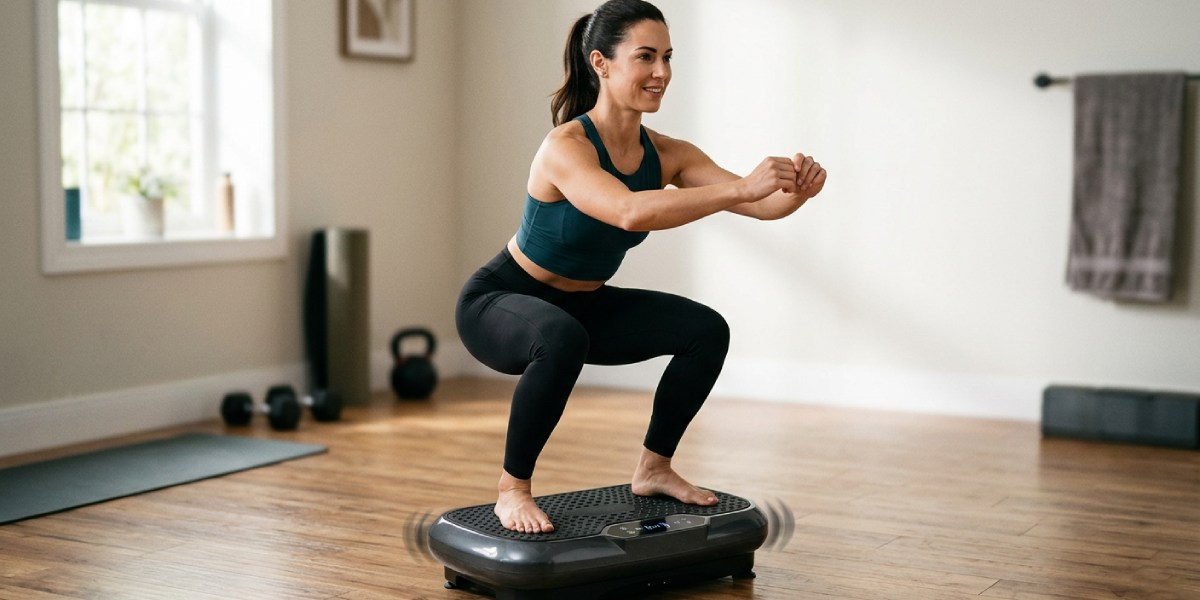
Using a vibration plate exercise machine correctly can make a significant difference in your fitness outcomes. Whether you are brand new to whole-body vibration training or looking to upgrade your current routine, understanding the right techniques, settings, and exercise combinations will help you get more from every session.
This guide walks you through everything you need to know, from how the technology works to the best exercises and safety considerations to keep in mind.
What Is a Vibration Plate Exercise Machine?
A vibration plate exercise machine is a fitness device that generates rapid mechanical vibrations through a platform on which you stand, sit, or perform exercises. These vibrations travel through your body and stimulate your muscles to contract and relax multiple times per second.
Most machines oscillate at frequencies between 20 and 50 hertz, meaning your muscles may contract up to 50 times every second, far more than what is achieved through conventional movement alone.
There are two main types of vibration plates. Oscillating plates pivot up and down on a central axis, mimicking a walking motion. Lineal or tri-planar plates vibrate in multiple directions simultaneously, delivering a more intense stimulus. Each type has its own advantages, and the right choice depends on your fitness goals and any existing health considerations.
How Whole-Body Vibration Training Works
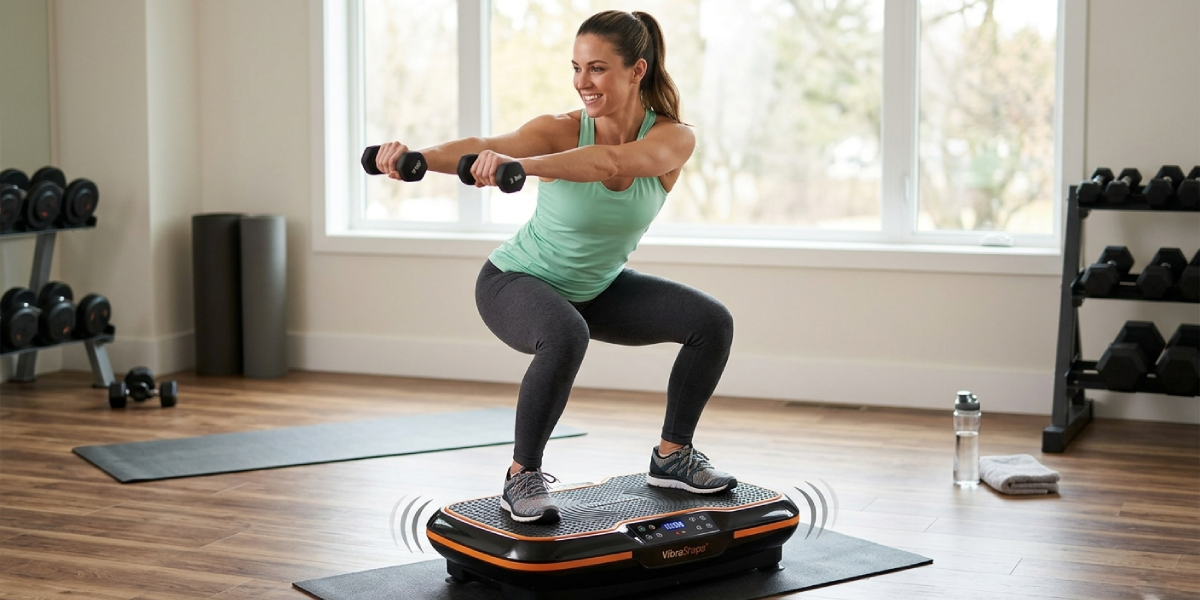
When you stand or exercise on a vibration plate, your body responds to the unstable surface by activating stabilizing muscles that are often underused during standard gym workouts. This involuntary muscle recruitment is sometimes referred to as the tonic vibration reflex.
Your nervous system perceives the constant shifts in balance and sends rapid signals to muscle fibers to keep you upright and stable.
Over time, this increased neuromuscular activation can contribute to improvements in muscle strength, balance, flexibility, and circulation. Research has explored the potential benefits of whole-body vibration for bone density, lymphatic function, and recovery from exercise, though results vary depending on training frequency, machine settings, and individual health status.
When used as part of a well-rounded exercise program, vibration plate training can be a valuable complementary tool.
Setting Up Your Vibration Plate for the First Time
Before stepping onto the platform, take time to read the manufacturer’s guidelines for your specific machine. Vibration plates differ in their amplitude, frequency ranges, and weight limits. Starting with the correct settings protects you from overexertion and allows your body to adapt gradually.
Choosing the Right Frequency
Frequency refers to how many times the plate vibrates per second, measured in hertz. Lower frequencies, generally between 20 and 30 hertz, are suitable for beginners, warm-up routines, and recovery. Higher frequencies, from 30 to 50 hertz, are better suited for strength training and more advanced users. Start at the lowest setting and progressively increase over several weeks as your body adapts to the stimulus.
Understanding Amplitude Settings
Amplitude describes the distance the plate moves with each vibration. Low amplitude settings produce a more subtle vibration ideal for rehabilitation and light toning work. High amplitude settings create a more pronounced movement that places greater demand on your muscles. For most beginners, low to medium amplitude combined with a moderate frequency is the safest and most effective starting point.
Session Length for Beginners
Limit initial sessions to five to ten minutes of active exercise time, excluding warm-up and cool-down. Whole-body vibration is more intense than it appears, and longer sessions before your body adapts can lead to muscle soreness or fatigue. As your conditioning improves over two to four weeks, you can extend sessions to fifteen or twenty minutes.
The Best Exercises to Perform on a Vibration Plate
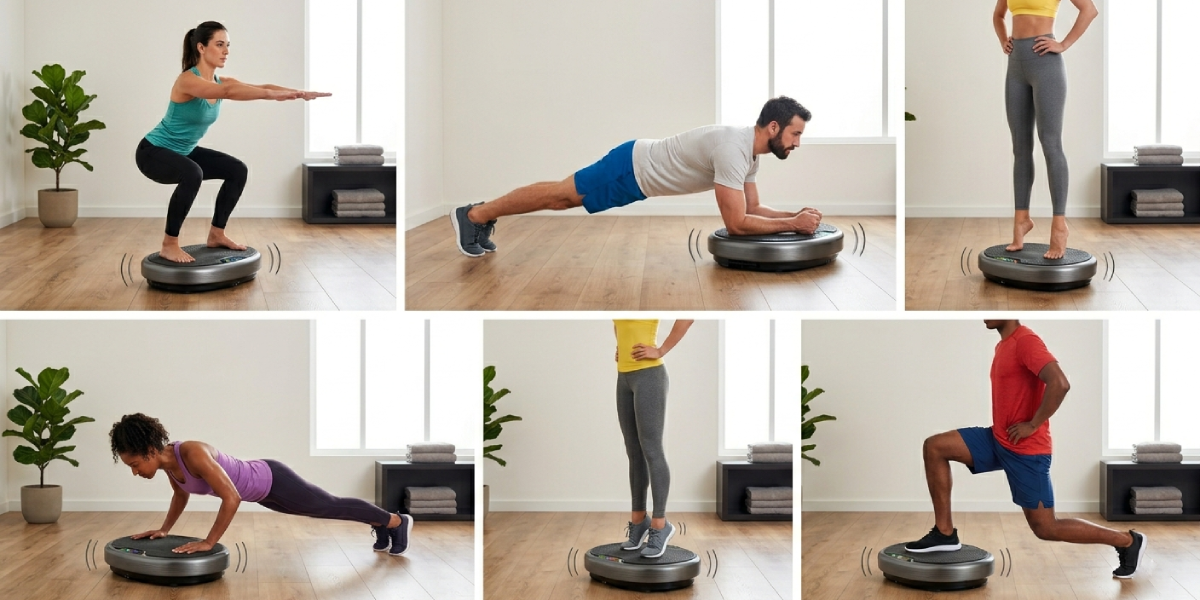
The vibration plate is most effective when you perform exercises that place your muscles under load while the platform vibrates beneath you. Static holds and dynamic movements both produce results, and combining them gives you a well-rounded workout.
Squats and Squat Holds
Standing with your feet shoulder-width apart and bending into a partial squat position is one of the most popular and effective vibration plate exercises. The vibration intensifies the engagement of your quadriceps, glutes, and core muscles compared to a standard bodyweight squat. Hold the position for 30 to 60 seconds, then rest, and repeat for two to three sets.
Plank Variations
Placing your forearms or hands on the platform while holding a plank position dramatically increases core activation. The vibrating surface forces your stabilizers to work continuously to maintain alignment. Begin with a 20-second hold and build up to 45 to 60 seconds as your core strength develops.
Push-Ups
Performing push-ups with your hands on the vibrating platform challenges your chest, shoulders, triceps, and stabilizing muscles simultaneously. The instability of the surface means each repetition requires greater control, making push-ups on a vibration plate considerably more demanding than standard push-ups on the floor.
Calf Raises
Standing upright and rising onto the balls of your feet while the plate vibrates targets the calves and helps improve ankle stability. This is also an excellent exercise for improving circulation in the lower legs. Perform 15 to 20 repetitions for two to three sets.
Lunges
With one foot on the plate and one foot on the floor behind you, a split-squat or lunge position creates a powerful unilateral training stimulus. This challenges your balance while isolating one leg at a time, helping to address muscular imbalances between sides.
Using the Plate for Stretching and Recovery
Vibration plates are not exclusively for strength work. Sitting or lying beside the machine and resting a muscle group on the platform can assist with post-workout recovery by increasing local blood flow and reducing muscle tension. Gentle stretches performed while standing on a low-frequency setting can also improve flexibility over time, making the vibration plate a useful tool for health and recovery as well as performance.
Structuring an Effective Vibration Plate Workout
A well-organized session includes a warm-up phase, a main exercise block, and a cool-down. Below is a sample beginner structure to help you get started.
| Phase | Activity | Duration | Frequency Setting |
|---|---|---|---|
| Warm-Up | Standing on plate, light movement | 2 to 3 minutes | 20 to 25 Hz |
| Main Block | Squats, planks, calf raises, push-ups | 10 to 15 minutes | 25 to 35 Hz |
| Cool-Down | Gentle stretching on plate | 3 to 5 minutes | 20 Hz |
As your fitness level improves, you can increase the frequency, amplitude, session length, or exercise difficulty. Tracking your progress helps you identify when it is time to advance your training. For additional structure and variety, exploring a broader range of exercise techniques alongside your vibration plate sessions will produce more comprehensive results.
How Often Should You Use a Vibration Plate?
For most people, two to four sessions per week is an appropriate training frequency for vibration plate exercise. Daily use is generally not recommended, particularly for strength-focused sessions, as your muscles need time to recover and adapt between workouts. Recovery-focused sessions at low frequency, such as gentle stretching or lymphatic stimulation, can be performed more frequently without the same recovery demands.
Consistency matters more than frequency. Regular sessions over several weeks and months produce measurable improvements in muscle tone, balance, and overall conditioning. Sporadic use is unlikely to produce meaningful results regardless of the intensity of individual sessions.
Combining Vibration Plate Training with Your Existing Program
Vibration plate exercise works best when incorporated as a complement to a broader fitness routine rather than as a standalone solution. Pair it with cardiovascular training, resistance exercises, and sound nutritional habits for the best outcomes. If you are monitoring your body composition or caloric needs as part of a fitness plan, using a tool like the BMI calculator can help you understand where you are starting from and track changes over time.
Athletes often use vibration plate training as part of their warm-up to prime the neuromuscular system before heavier lifts. Others incorporate it into their cool-down or active recovery days. Understanding how it fits into your overall plan is key to getting the most from the equipment.
Important Safety Considerations
While vibration plate machines are generally safe for healthy adults, there are important precautions to observe. Individuals who are pregnant, have implanted medical devices such as pacemakers, suffer from acute inflammation or thrombosis, have recently had surgery, or experience severe osteoporosis should consult a healthcare provider before using a vibration plate. The same applies to anyone with joint replacements or cardiovascular conditions.
Always stand on the plate with slightly bent knees rather than locking your joints. Rigid, locked knees transmit vibration directly to your joints rather than allowing your muscles to absorb it, which increases injury risk.
Wear supportive footwear during standing exercises, and avoid prolonged static positions at very high frequencies without adequate training experience.
Common Mistakes to Avoid
- Starting at too high a frequency: Jumping to the highest setting from day one overwhelms your system and significantly increases muscle soreness. Always progress gradually.
- Staying in one position the entire session: Variety in exercises and body positions produces better overall results than standing still for extended periods.
- Using the plate as a passive treatment: While passive standing does produce some benefit, actively engaging muscles through exercises dramatically increases the training effect.
- Neglecting hydration: Vibration training increases circulation and can contribute to increased fluid needs. Drink water before, during, and after your session.
- Skipping warm-up: Transitioning immediately into high-frequency exercises without a warm-up increases injury risk and reduces performance.
What Results Can You Realistically Expect?
Realistic expectations depend on how consistently you train, the quality of your overall lifestyle, and your starting fitness level. Most users report noticeable improvements in muscle tone and balance within four to eight weeks of consistent training. Improvements in flexibility and circulation tend to be felt more quickly, sometimes within the first few sessions.
Vibration plate training is not a weight loss tool on its own. While it does contribute to caloric expenditure and muscle activation, meaningful changes in body composition require a combination of structured exercise, appropriate nutrition, and adequate recovery. Used as part of a comprehensive approach, a vibration plate exercise machine can be a productive and enjoyable addition to your fitness routine.
Frequently Asked Questions
How long should a beginner use a vibration plate per session?
Beginners should limit active exercise time to five to ten minutes per session when first starting out. This allows the neuromuscular system to adapt without causing excessive fatigue or soreness. After two to four weeks of consistent training, you can gradually extend sessions to fifteen or twenty minutes as tolerated.
Can I use a vibration plate every day?
Using a vibration plate for strength-focused exercise every day is not recommended, as your muscles need recovery time between sessions. Two to four sessions per week is appropriate for most people. Low-intensity recovery sessions, such as gentle stretching at a low frequency setting, can be performed more frequently without the same recovery demands.
What frequency setting should I use on a vibration plate?
Beginners should start at the lowest available frequency, typically between 20 and 25 hertz, and progress slowly over several weeks. Moderate training is generally performed between 25 and 35 hertz, while advanced users may work up to 40 to 50 hertz. Recovery and stretching sessions are best performed at lower settings around 20 hertz.
Is a vibration plate good for weight loss?
A vibration plate can contribute to a weight loss program by increasing muscle activation and caloric expenditure, but it is not an effective standalone weight loss tool. Meaningful fat loss requires a combination of consistent exercise, appropriate nutrition, and a sustainable caloric balance. Vibration training works best as one component of a broader health and fitness strategy.
Can you do a full workout on a vibration plate?
Yes, you can perform a full workout using a vibration plate by combining exercises such as squats, planks, push-ups, lunges, and calf raises. Including both static holds and dynamic movements ensures you target multiple muscle groups. Adding a warm-up and cool-down produces a complete and balanced training session.
Who should not use a vibration plate exercise machine?
Individuals who are pregnant, have pacemakers or other implanted medical devices, suffer from acute inflammation, deep vein thrombosis, or cardiovascular disease, have recently undergone surgery, or have severe osteoporosis should consult a doctor before using a vibration plate. Those with joint replacements or neurological conditions should also seek medical guidance first.
Do you need to wear shoes on a vibration plate?
Wearing supportive athletic footwear is recommended during standing and lower-body exercises on a vibration plate. Shoes help absorb some of the vibration and protect the joints of your feet and ankles. Bare feet or socks may be more appropriate when using the plate for upper-body exercises where your hands are on the platform, but check your machine’s guidelines for specific advice.
How does vibration plate training compare to regular exercise?
Vibration plate training is not a replacement for conventional exercise but a valuable complement to it. Traditional resistance and cardiovascular training remain the gold standard for building strength and improving cardiovascular fitness. Vibration training adds neuromuscular stimulation, accelerated recovery support, and enhanced balance training that can improve the overall quality of your fitness program when combined intelligently with standard exercise methods.
Can vibration plates help with muscle recovery?
Yes, using a vibration plate at a low frequency setting after a workout can help promote blood circulation to fatigued muscles, which may support the recovery process. Gentle stretching performed on the plate during a cool-down phase can also help reduce muscle tension and improve flexibility following a training session.
How do I know if my vibration plate session is effective?
An effective session should produce mild muscle fatigue and engagement, similar to what you would feel after a moderate conventional workout. If you are performing exercises in good form with appropriate frequency and amplitude settings, you should feel your target muscles working throughout each exercise. Tracking your performance, exercise duration, and frequency settings over time will help you monitor progress and know when to advance your training.