

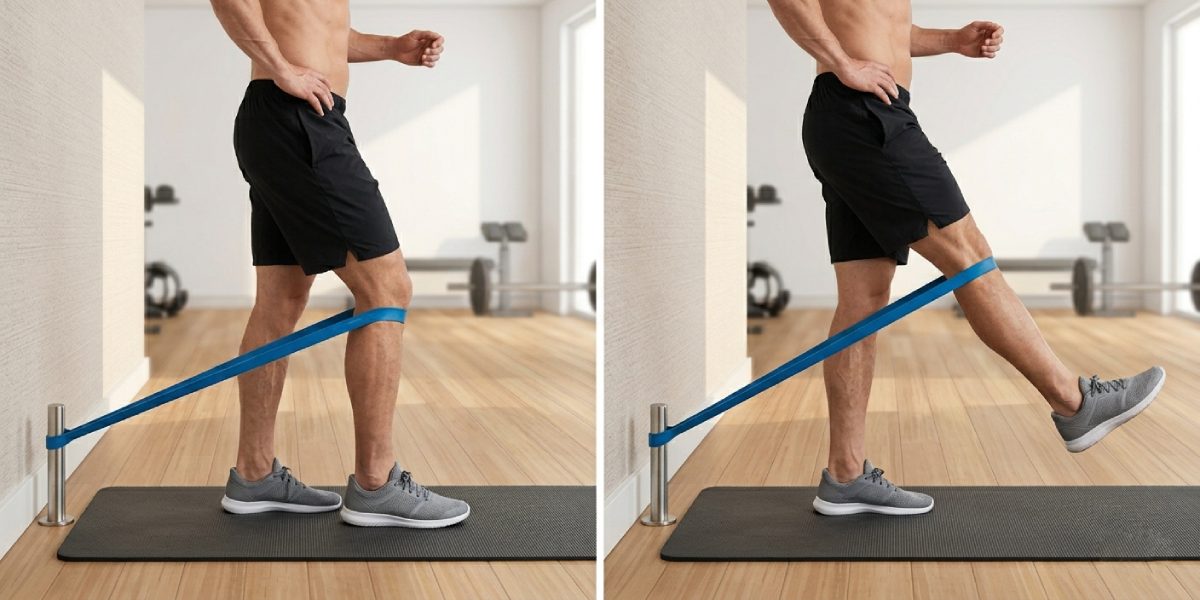
The TKE exercise, short for Terminal Knee Extension, is one of the most effective and underused movements for building knee strength and stability. Whether you are recovering from a knee injury, returning to sport, or simply looking to improve lower body function, understanding the TKE and how to perform it correctly can make a meaningful difference in your results.
What Is the TKE Exercise?
Terminal Knee Extension is a resistance-based exercise that targets the final degrees of knee extension, specifically the last 20 to 30 degrees before the leg is fully straightened. The movement is performed using a resistance band anchored at knee height, with the band pulling the knee forward while the user actively pushes back by contracting the quadriceps to extend the knee.
The name itself tells you what the exercise does. “Terminal” refers to the end range of motion, and “knee extension” describes the joint action being trained. Unlike a full leg extension on a machine, the TKE isolates the precise range where many people experience weakness, instability, or difficulty following injury or surgery.
This exercise is a staple in physical therapy settings and sports rehabilitation programs. It is commonly prescribed after ACL reconstruction, meniscus repair, and other knee procedures because it allows the quadriceps to be activated safely through a short, controlled arc of motion rather than a full range that may stress healing tissue.
Primary Muscles Worked by the TKE Exercise
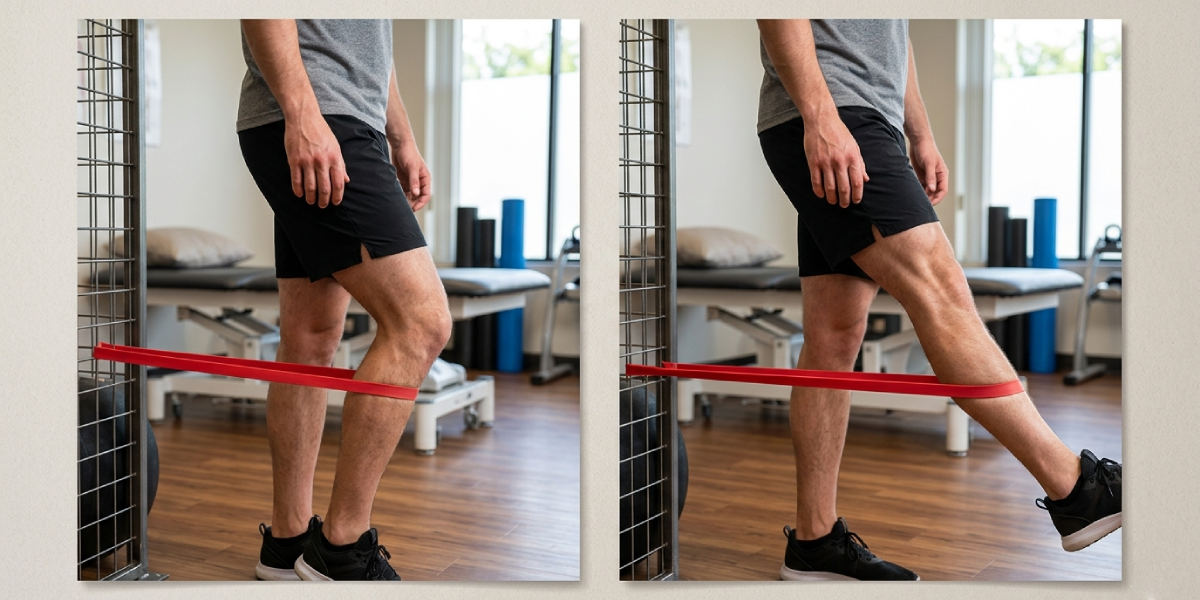
The TKE exercise primarily targets the quadriceps muscle group, with particular emphasis on the VMO, or vastus medialis oblique. The VMO is the teardrop-shaped muscle on the inner side of the knee, and it plays a crucial role in stabilizing the kneecap and supporting the joint during movement.
Secondary muscles involved include the gluteus maximus, hamstrings for eccentric stabilization, and the calf muscles. When performed in a single-leg stance, the hip abductors and core muscles also work to maintain balance, making the TKE a deceptively comprehensive lower body exercise for such a simple movement.
How to Perform the TKE Exercise Correctly
Proper form is essential to get the full benefit of the TKE and avoid placing unnecessary stress on the knee joint. Follow these steps to perform the movement safely and effectively.
Standard Band TKE Setup
- Anchor a resistance band to a stable object at approximately knee height, such as a squat rack, door anchor, or cable machine post.
- Step into the loop of the band and position it behind the knee of the working leg, just above the joint.
- Stand facing the anchor point, about one to two feet away, so the band creates light tension at the start position.
- Place feet shoulder-width apart with a slight bend in both knees.
- Begin with the working knee slightly bent, approximately 20 to 30 degrees of flexion.
- Contract the quadriceps firmly to straighten the knee, pushing back against the resistance of the band until the leg is fully extended but not hyperextended.
- Hold the fully extended position for one to two seconds, squeezing the VMO actively.
- Slowly allow the knee to return to the starting bent position under control.
Single-Leg TKE Variation
Once you are comfortable with the bilateral version, progressing to a single-leg TKE significantly increases the demand on the stabilizing muscles. Perform the same steps as above but lift the non-working leg slightly off the ground. This variation challenges balance, hip stability, and overall neuromuscular control, making it ideal for athletes and those in the later stages of rehabilitation.
Common Form Errors to Avoid
- Locking the knee forcefully: Full extension is the goal, but snapping or hyperextending the joint places excessive stress on the posterior capsule and ligaments. Aim for full extension with muscular control rather than joint force.
- Leaning the torso forward: Keep the chest tall and the spine neutral throughout the movement to ensure the quadriceps do the work rather than compensating muscles.
- Allowing the knee to cave inward: The knee should track directly over the second toe. Inward collapse suggests weakness in the hip abductors and reduces the effectiveness of the exercise while increasing injury risk.
- Rushing through repetitions: The TKE is most effective when performed slowly with deliberate muscular contraction. A two-second hold at full extension and a controlled return phase maximize VMO activation.
Why the TKE Exercise Helps With Knee Strength
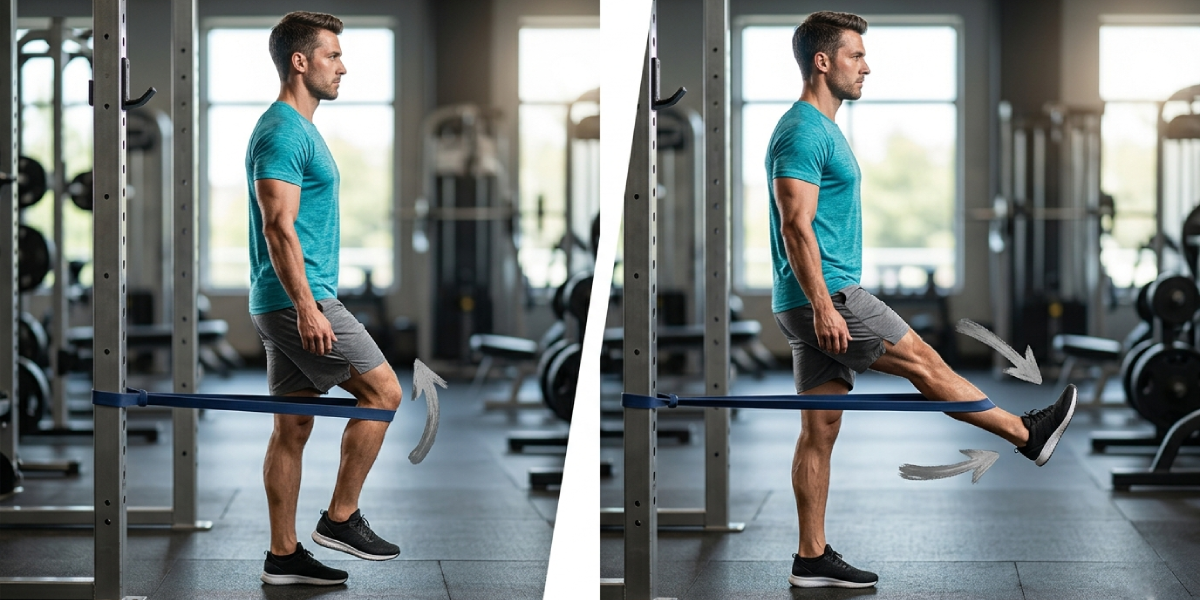
The TKE is effective for knee strengthening for several important reasons that go beyond simply working the quadriceps.
Activating the VMO in Its Shortened Position
The vastus medialis oblique is notoriously difficult to activate effectively during many common exercises. Squats, lunges, and leg presses work the quadriceps broadly, but the VMO tends to be recruited most strongly in the final degrees of extension.
The TKE exercise is specifically designed to target this end range, making it one of the few movements that consistently and reliably trains the VMO in the position where it matters most for knee stability.
Restoring Neuromuscular Control After Injury
Following a knee injury or surgery, the nervous system can struggle to activate the quadriceps effectively even before pain becomes a factor. This is known as arthrogenic muscle inhibition, a reflex response in which joint swelling and pain signals suppress motor neuron activity to the surrounding muscles.
The TKE exercise, performed with low load and high focus on muscle contraction, helps re-establish that neuromuscular connection in a safe and controlled way. For people returning to regular exercise programs, this is often the first significant step toward regaining functional strength.
Reducing Patellofemoral Stress
Full range knee exercises like deep squats and leg press place the greatest compressive force on the kneecap and the cartilage beneath it in the mid-range of knee flexion. The TKE operates in the terminal range of extension, where patellofemoral contact pressure is actually at its lowest.
This makes it an excellent choice for people who experience pain under or around the kneecap during more loaded exercises, as it allows meaningful quad strengthening without aggravating the joint surface.
Improving Dynamic Knee Stability
Strength in the terminal extension range directly translates to better knee stability during functional activities such as walking, stair climbing, deceleration, and landing from a jump.
When the quadriceps can generate force efficiently in the last degrees of knee extension, the joint is far less vulnerable to giving way or experiencing the buckling sensations that many people with knee problems describe. Improving this aspect of strength has real-world carryover to everyday health and physical function.
TKE Exercise vs. Other Knee Strengthening Exercises
| Exercise | Primary Target | Range of Motion | Patellofemoral Stress | Best For |
|---|---|---|---|---|
| TKE Exercise | VMO, terminal quads | Last 20 to 30 degrees | Low | Rehab, VMO activation, early return to training |
| Leg Extension Machine | Full quadriceps | Full range | Moderate to high | General quad hypertrophy |
| Squats | Quads, glutes, hamstrings | Full range | Moderate (depth dependent) | Overall lower body strength |
| Straight Leg Raise | Hip flexors, quads | None (isometric) | Very low | Early post-surgery, minimal loading |
| Step-Ups | Quads, glutes | Moderate | Moderate | Functional strength, balance |
Who Should Do the TKE Exercise?
The TKE exercise is appropriate for a wide range of people, including those recovering from ACL or PCL injury, meniscal tears, patellofemoral pain syndrome, or total knee replacement. It is also beneficial for older adults seeking to maintain quad strength and joint stability, athletes during the off-season or in-season maintenance phases, and anyone who experiences quad inhibition or weakness during heavier compound movements.
Because it is low-impact and uses band resistance that can be easily adjusted, the TKE is accessible to nearly all fitness levels. However, anyone with an acute knee injury, recent surgery, or significant swelling should consult a physiotherapist or qualified health professional before beginning any knee rehabilitation exercise program, including the TKE.
If you want to track your overall health progress while working on knee strength, using a tool like the BMI calculator can provide useful context for your fitness and health goals.
How to Program the TKE Exercise Into Your Routine
For rehabilitation purposes, the TKE is often performed daily or up to twice daily, with sets of 15 to 20 repetitions at a light to moderate resistance level. The emphasis should always be on quality of contraction rather than load.
For general training and maintenance, two to three sets of 12 to 15 repetitions, two to three times per week, is sufficient to maintain and improve VMO strength and knee stability. The TKE works well as a warm-up exercise before squats, lunges, or other lower body work to pre-activate the VMO, or as a finishing exercise at the end of a leg session to flush the quad with targeted work in the terminal range.
Progress the exercise by increasing band resistance, adding a brief hold at full extension, transitioning to single-leg stance, or incorporating the movement on an unstable surface such as a balance board to increase proprioceptive challenge.
Frequently Asked Questions
What does TKE stand for in exercise?
TKE stands for Terminal Knee Extension. It refers to a resistance band exercise that trains the final 20 to 30 degrees of knee straightening, targeting the quadriceps and specifically the VMO muscle near the inner knee.
Is the TKE exercise safe after ACL surgery?
Yes, the TKE is one of the most commonly prescribed exercises following ACL reconstruction because it works the quadriceps through a limited and safe arc of motion. However, specific timing and parameters should always be guided by your surgeon and physiotherapist based on your individual recovery protocol.
How many times per week should I do TKE exercises?
For rehabilitation, daily performance is common and generally safe given the low load and limited range. For general strength maintenance, two to three sessions per week is typically sufficient. Listen to your body and reduce frequency if you experience increased swelling or discomfort.
Can I do TKE exercises without a resistance band?
The resistance band is what makes the TKE effective, as it provides the forward pull that the quadriceps must overcome to extend the knee. Without a band, you can perform a standing terminal knee extension isometrically by pressing the back of the knee against a wall or bolster, but this version is less versatile and harder to progressively load.
What resistance band should I use for TKE exercises?
A light to medium resistance band is appropriate for most beginners and those in early rehabilitation. The band should create enough tension that you feel the quad working but not so much that you cannot achieve full extension or maintain proper form. As strength improves, progress to a heavier band.
Does the TKE exercise help with knee pain?
Many people with anterior knee pain, patellofemoral syndrome, or general quad weakness find that consistent TKE training reduces discomfort over time by improving VMO strength and kneecap tracking. That said, knee pain has many causes, and persistent or worsening pain should always be evaluated by a medical professional.
What is the difference between a TKE and a leg extension machine?
A leg extension machine trains the full range of knee motion under constant load and places significant stress on the kneecap in the mid-range position. The TKE only trains the last 20 to 30 degrees of extension, produces much lower patellofemoral stress, and is performed in a standing functional position, making it more suitable for rehabilitation and joint-friendly training.
Can the TKE exercise help with knee hyperextension issues?
Yes, the TKE can help people who hyperextend their knees by teaching them to use active muscular contraction to control the end range of extension rather than relying on passive joint structures. When performed correctly with a focus on controlled extension rather than snapping into the lockout position, it improves neuromuscular awareness around the joint.
Should I feel soreness after TKE exercises?
Mild muscle soreness in the quadriceps, particularly in the VMO area on the inner thigh just above the knee, is normal when beginning TKE training. This is a sign the target muscle is being activated. Joint soreness, swelling, or pain during the movement, however, is not normal and indicates you should reduce resistance, review your form, or consult a physiotherapist.
Is the TKE exercise only for people with knee injuries?
Not at all. While the TKE has deep roots in knee rehabilitation, it is a valuable exercise for anyone who wants to improve VMO strength, kneecap stability, or terminal quad strength. Athletes, older adults, and recreational exercisers can all benefit from including TKE movements in their lower body training programs.