

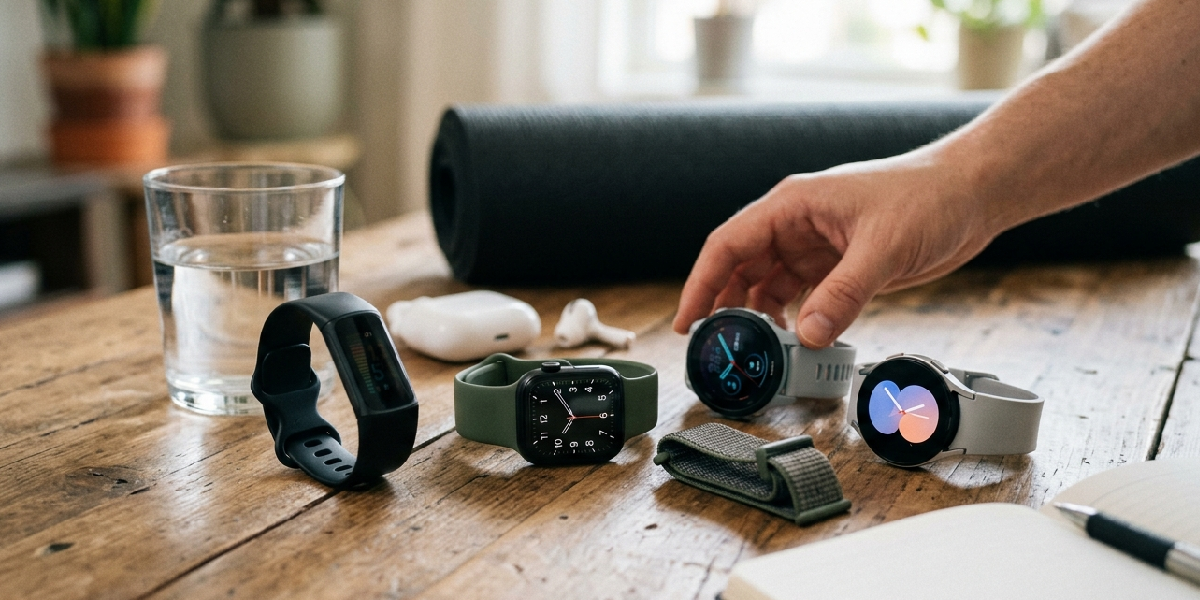
If you have been searching for the most popular fitness trackers this season, you are in the right place. The wearable tech market has evolved dramatically, and choosing the right device in 2026 requires understanding not just specs on paper, but how each tracker performs in real, everyday life.
Whether you are a casual walker tracking your daily steps, a dedicated runner chasing personal bests, or someone focused on sleep and recovery, the right fitness tracker can be a genuine game-changer for your overall health journey.
This guide reviews the standout fitness trackers available this season, drawing on real-world testing data, expert consensus, and verified specifications to help you make a confident, informed decision.
What Makes a Great Fitness Tracker in 2026?

Before diving into individual devices, it is worth understanding what separates an excellent fitness tracker from a mediocre one. The core metrics have expanded well beyond step counting. Today’s leading devices monitor heart rate variability (HRV), blood oxygen saturation (SpO2), skin temperature, sleep stages, stress levels, and even menstrual health.
The best trackers contextualize that raw data into actionable insights, helping you understand not just what your body is doing but why.
Battery life remains a critical differentiator. A device that needs daily charging can disrupt sleep tracking and produce gaps in your health data. Water resistance, comfort for all-day wear, companion app quality, and whether the device requires an ongoing subscription are all factors that should weigh into your decision alongside the headline features.
The Most Popular Fitness Trackers Reviewed This Season
1. Fitbit Charge 6 — Best Overall Fitness Tracker
The Fitbit Charge 6 continues to earn its reputation as the go-to fitness tracker for most people. Priced at around $100 to $130, it sits in the sweet spot between affordability and functionality. The device features built-in GPS so you can accurately track runs, walks, and bike rides without carrying your phone.
It also includes an ECG app, continuous heart rate monitoring, and Google app integrations including Google Maps and Google Wallet.
What makes the Charge 6 stand out is its balance of comfort and capability. The slim band is easy to wear around the clock, and the AMOLED display gives you a clean view of your stats without feeling clunky. Sleep tracking is a particular strength, offering detailed breakdowns of sleep stages alongside a Sleep Score that lets you gauge overnight quality at a glance.
One honest caveat: Fitbit locks some of its deeper health insights behind a Fitbit Premium subscription. If you want advanced readiness scores, daily readiness insights, and premium sleep analysis, you will need to budget for that ongoing cost.
Still, even without Premium, the Charge 6 delivers impressive value and remains one of the most well-rounded trackers on the market.
| Feature | Detail |
|---|---|
| Price | ~$100–$130 |
| Battery Life | Up to 7 days |
| Built-in GPS | Yes |
| Water Resistance | 50 meters |
| Subscription Required | Optional (Premium) |
2. Garmin Vivoactive 6 — Best for Fitness Enthusiasts
If you want a device that takes your fitness data seriously, the Garmin Vivoactive 6 is among the most compelling options available right now. Priced at $299, it offers a genuinely smartwatch-level experience wrapped in a fitness-first package.
With over 80 built-in sports modes, it handles everything from running and cycling to yoga, strength training, and open-water swimming.
The Vivoactive 6 tracks heart rate variability, SpO2, stress levels, and women’s health metrics in real time. Garmin’s Body Battery feature synthesizes your HRV, sleep quality, and activity history into a single energy score that tells you how ready your body is to perform.
This is especially useful for those following structured training and exercise programs, as it helps prevent overtraining and supports smart recovery decisions.
Garmin’s GPS accuracy is best-in-class among fitness trackers, and the companion Garmin Connect app is one of the richest platforms in the wearable space. Crucially, Garmin does not require a subscription to access its full suite of health data, which is a significant advantage over competitors.
Battery life reaches up to 11 days in smartwatch mode, making it a reliable companion for extended trips or training blocks.
| Feature | Detail |
|---|---|
| Price | $299 |
| Battery Life | Up to 11 days |
| Sports Modes | 80+ |
| Built-in GPS | Yes |
| Subscription Required | No |
3. Oura Ring 4 — Best for Sleep and Recovery Tracking
The Oura Ring 4 occupies a unique position among the most popular fitness trackers this season. Rather than a wristband or watch, it is a discreet titanium ring worn on your finger, giving it a significant advantage in tracking accuracy for certain metrics, particularly sleep stages and nighttime heart rate.
For many users, the ring form factor is simply more comfortable to sleep in than a wristband.
The Oura Ring 4 monitors temperature deviation, HRV, resting heart rate, SpO2, and sleep cycles throughout the night, then synthesizes this data into three key daily scores: Sleep, Activity, and Readiness. The Readiness Score is genuinely useful, telling you whether today is a day to push hard or dial it back.
It also supports cycle insights and is FDA-cleared for period prediction in its health app.
Battery life is an impressive five to eight days, and the IP68 water resistance makes it fully compatible with swimming. The main tradeoff is the Oura membership, which currently costs around $5.99 per month to access the full range of app insights.
Without the membership, the device provides limited value, so factor that into your total cost of ownership. The ring itself starts at $349.
4. Whoop 5.0 — Best for Serious Athletes and Recovery Optimization
The Whoop 5.0, launched in mid-2025, is built from the ground up for athletes who want the deepest possible dive into recovery, strain, and readiness data. Unlike every other device on this list, it has no screen at all. All data is accessed exclusively through its smartphone app.
This minimalist approach is intentional: Whoop wants you engaging with your data thoughtfully, not glancing at it reactively during workouts.
The hardware itself delivers impressive capabilities including ECG, SpO2, skin temperature, and blood pressure trend monitoring. Its Strain and Recovery scores have a strong following among elite athletes, coaches, and fitness professionals.
The AI-powered Whoop Coach feature functions like a personalized wellness advisor, answering questions based on your actual biometric trends rather than generic guidance.
Battery life on the Whoop 5.0 reaches up to 14 days, and you can charge it on your wrist using the portable battery pack without interrupting tracking. The critical consideration with Whoop is its subscription model: using the device at all requires an active membership, which is priced at over $200 annually.
This makes it a significant ongoing commitment, but for dedicated athletes who want the data depth Whoop provides, many consider it worthwhile. Subscriptions are HSA and FSA-reimbursable in the United States.
5. Samsung Galaxy Ring — Best Smart Ring Alternative
Released in mid-2024 and still a strong seller heading into this season, the Samsung Galaxy Ring represents a mature entry in the smart ring category. Made from titanium, it is available in Titanium Black, Titanium Silver, and Titanium Gold finishes and weighs between 2.3 and 3.0 grams depending on size.
At $399.99, it is a premium purchase, but it integrates seamlessly with the Samsung Health ecosystem.
The Galaxy Ring tracks sleep stages, heart rate, activity, and cycle wellness. Its Energy Score provides a daily readiness metric comparable to Oura’s Readiness Score. Unlike both Whoop and Oura, the Samsung Galaxy Ring currently requires no ongoing subscription, which is a notable advantage for cost-conscious users.
Battery life is typically five to nine days depending on ring size and usage.
6. Amazfit Band 7 — Best Budget Fitness Tracker
For those who want solid, reliable health tracking without spending more than $50, the Amazfit Band 7 is the standout choice. At around $49, it delivers an AMOLED display, 18-day battery life, 24/7 heart rate monitoring, SpO2 tracking, over 120 sports modes, and built-in sleep analysis.
It weighs just one ounce, making it one of the most comfortable all-day wearables available at any price.
Accuracy is reasonable for the price point, and the Zepp app provides a clean interface for reviewing your data. While the Amazfit Band 7 does not match the analytical depth of a Garmin or Whoop, it covers all the fundamental tracking bases effectively.
It is an excellent choice for beginners, teenagers, or anyone who wants to try fitness tracking before committing to a premium device.
7. Xiaomi Smart Band 10 — Best Value for Budget-Conscious Buyers
The Xiaomi Smart Band 10, released in 2025, has quickly established itself as a budget category standout. At approximately $52.99, it features a larger, brighter, and faster-refreshing AMOLED display than its predecessor, giving it a premium feel that belies its price.
The Band 10 reliably tracks steps, 24/7 heart rate, sleep duration, and SpO2, and includes a wide range of sports modes.
Xiaomi’s Vitality Score offers a gamified weekly activity metric that rewards consistent movement, making it particularly engaging for users who are just building fitness habits. While it lacks built-in GPS, it connects reliably to your phone’s GPS for outdoor tracking sessions. Battery life is impressive at up to 21 days in basic mode.
How to Choose the Right Fitness Tracker for Your Goals
Choosing from among the most popular fitness trackers comes down to matching a device’s strengths with your personal priorities. Here is a practical framework to guide your decision:
- For all-around everyday tracking: The Fitbit Charge 6 or Garmin Vivoactive 6 both offer excellent coverage across activity, sleep, and health metrics with strong companion apps.
- For sleep and recovery focus: The Oura Ring 4 or Samsung Galaxy Ring both excel at passive, around-the-clock monitoring in comfortable form factors.
- For serious athletic training: The Garmin Vivoactive 6 for its GPS depth and training tools, or the Whoop 5.0 if recovery coaching and strain analytics are your priority.
- For budget-friendly entry: The Amazfit Band 7 or Xiaomi Smart Band 10 both deliver surprising capability at under $55.
- For discretion and minimal on-wrist bulk: Smart rings like the Oura Ring 4 or Samsung Galaxy Ring are ideal if you dislike wearing watches.
It is also worth considering whether your target tracker integrates well with your existing health data. Most devices sync with Apple Health or Google Health Connect, allowing you to consolidate data across platforms.
If you are already embedded in the Apple or Samsung ecosystem, the Apple Watch SE 3 and Samsung Galaxy Watch series are also worth considering as dual-purpose trackers and smartwatches. You can also use your tracker data alongside a BMI calculator to get a clearer picture of your body composition and fitness baseline.
Understanding Key Fitness Tracker Metrics
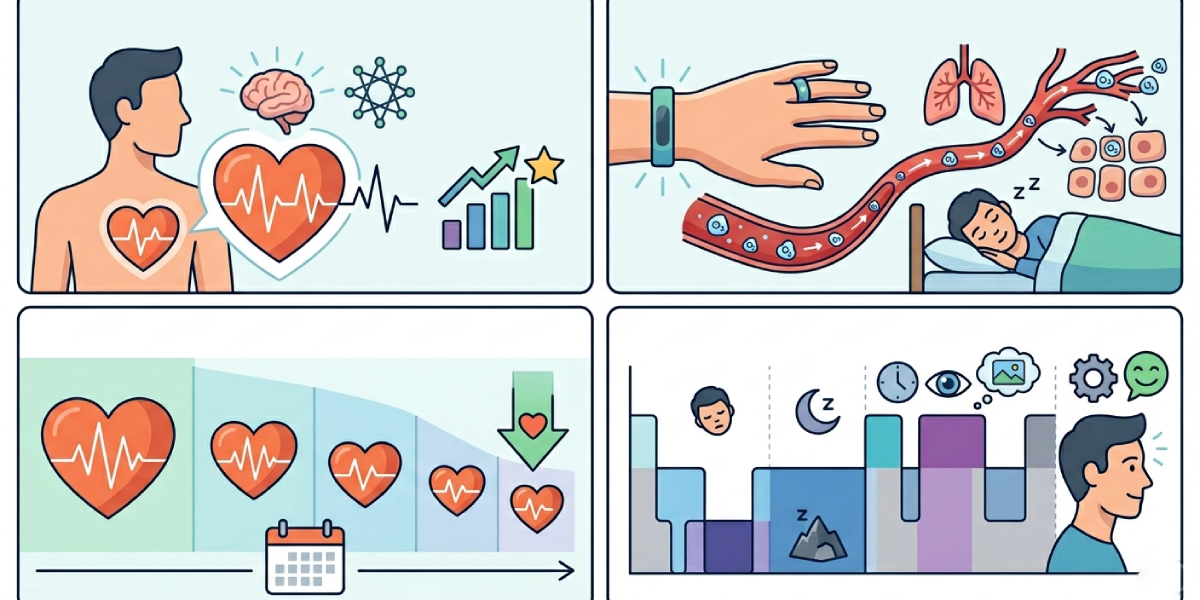
Getting the most from your fitness tracker means understanding what the data actually tells you. Heart rate variability, or HRV, is one of the most meaningful metrics available. It measures the variation in time between heartbeats and serves as a reliable proxy for your nervous system’s recovery state.
A higher HRV generally indicates better recovery and readiness to train. SpO2, or blood oxygen saturation, monitors how efficiently your blood is carrying oxygen, which can flag sleep disturbances like apnea events or altitude-related changes during outdoor activity.
Resting heart rate is a simpler but highly valuable long-term metric. As cardiovascular fitness improves, resting heart rate typically decreases. Tracking this trend over weeks and months through your fitness tracker app provides objective evidence of progress that the scale alone cannot capture.
Sleep staging divides your overnight rest into light, deep, and REM phases, each of which serves distinct physiological recovery functions. Consistently missing deep or REM sleep can affect cognitive function, athletic recovery, and mood regulation.
Fitness Tracker Subscriptions: What You Are Actually Paying For
Several of the most popular fitness trackers operate on a hardware-plus-subscription model, and it is worth understanding what the subscription unlocks before committing. Fitbit Premium adds advanced sleep analysis, a daily readiness score, and curated workout programs.
Oura’s membership unlocks the full Readiness Score, personalized health insights, and hormonal wellness features. Whoop’s subscription is mandatory to use the device at all, and covers the full analytics platform, Whoop Coach, and hardware warranty support.
Garmin stands apart by providing full access to all health metrics and training analytics through its free Garmin Connect app. The Samsung Galaxy Ring similarly requires no subscription for its core features.
For users who prefer a one-time purchase with no ongoing fees, Garmin and Samsung represent the most cost-efficient options over a multi-year ownership period.
Frequently Asked Questions
What is the best fitness tracker overall in 2026?
The Fitbit Charge 6 is widely regarded as the best all-around fitness tracker for most people this season. It offers built-in GPS, ECG, continuous heart rate and sleep tracking, Google app integration, and a comfortable slim design at a relatively affordable price point of around $100 to $130.
Do fitness trackers accurately measure sleep?
Modern fitness trackers use heart rate, HRV, and movement sensors to estimate sleep stages, and accuracy has improved considerably in recent generations. Devices like the Oura Ring 4 and Whoop 5.0 are particularly well-regarded for sleep tracking. While no consumer wearable matches clinical polysomnography, the data is consistent and useful enough for identifying trends and improving sleep habits over time.
Is the Garmin Vivoactive 6 worth the price?
For fitness-focused users, yes. At $299, the Garmin Vivoactive 6 provides over 80 sports modes, best-in-class GPS accuracy, a rich training analytics platform through Garmin Connect, and no mandatory subscription. Its Body Battery feature and HRV stress tracking make it a well-rounded option for anyone serious about optimizing performance and recovery.
What fitness tracker is best for sleep tracking?
The Oura Ring 4 is the top recommendation for sleep-focused users. Its finger-based sensors deliver highly accurate nighttime heart rate and HRV readings, and its Sleep Score system provides detailed breakdowns of sleep stages. The Samsung Galaxy Ring is also an excellent option for sleep tracking without requiring a subscription.
Which fitness trackers do not require a subscription?
The Garmin Vivoactive 6, Samsung Galaxy Ring, Amazfit Band 7, and Xiaomi Smart Band 10 all provide full access to their core features without requiring a monthly or annual subscription. Fitbit and Oura offer premium subscription tiers for deeper insights but are usable without them at a basic level. Whoop is the only major tracker that requires a subscription to access any data at all.
How long do fitness tracker batteries typically last?
Battery life varies significantly by device. Budget trackers like the Amazfit Band 7 last up to 18 days, while the Xiaomi Smart Band 10 can reach 21 days. The Garmin Vivoactive 6 lasts up to 11 days, and the Fitbit Charge 6 provides about 7 days. The Whoop 5.0 delivers up to 14 days. Smart rings like the Oura Ring 4 and Samsung Galaxy Ring typically last five to nine days depending on usage.
Are smart rings better than wristband fitness trackers?
Smart rings and wristband trackers each have distinct strengths. Smart rings like the Oura Ring 4 and Samsung Galaxy Ring are more comfortable for sleep tracking and less obtrusive during daily activities. Wristband trackers and smartwatches, however, typically offer superior workout tracking features, built-in GPS, real-time workout displays, and broader smart notification support. The best choice depends on whether sleep and recovery tracking or active workout tracking is your primary goal.
Can fitness trackers help with weight management?
Yes, in meaningful ways. Fitness trackers give you an objective view of your daily calorie expenditure through step counts, active minutes, and exercise tracking. When combined with mindful eating habits, this data helps you identify whether your activity levels align with your goals. Many trackers also integrate with nutrition apps for a more complete picture. For context, pairing your tracker data with a BMI calculator and working within established health guidelines gives you a more comprehensive foundation for sustainable weight management.
What should I look for when buying a fitness tracker for running?
For running, built-in GPS is non-negotiable if you want accurate pace, distance, and route data without carrying your phone. The Garmin Vivoactive 6 is the top recommendation for runners, offering multi-band GPS, running dynamics metrics, and a rich platform for analyzing your training load over time. The Fitbit Charge 6 is a solid option at a lower price point. For advanced runners and triathletes, stepping up to a dedicated Garmin Forerunner model is worth considering.
Are fitness trackers worth it for beginners?
Absolutely. For beginners, even a basic fitness tracker provides the accountability and visibility needed to build lasting habits. Seeing your step count, active minutes, and sleep data in real time creates a feedback loop that motivates consistent movement. Budget options like the Amazfit Band 7 or Xiaomi Smart Band 10 are ideal entry points, delivering reliable tracking at under $55 before you decide whether to invest in a premium device.