

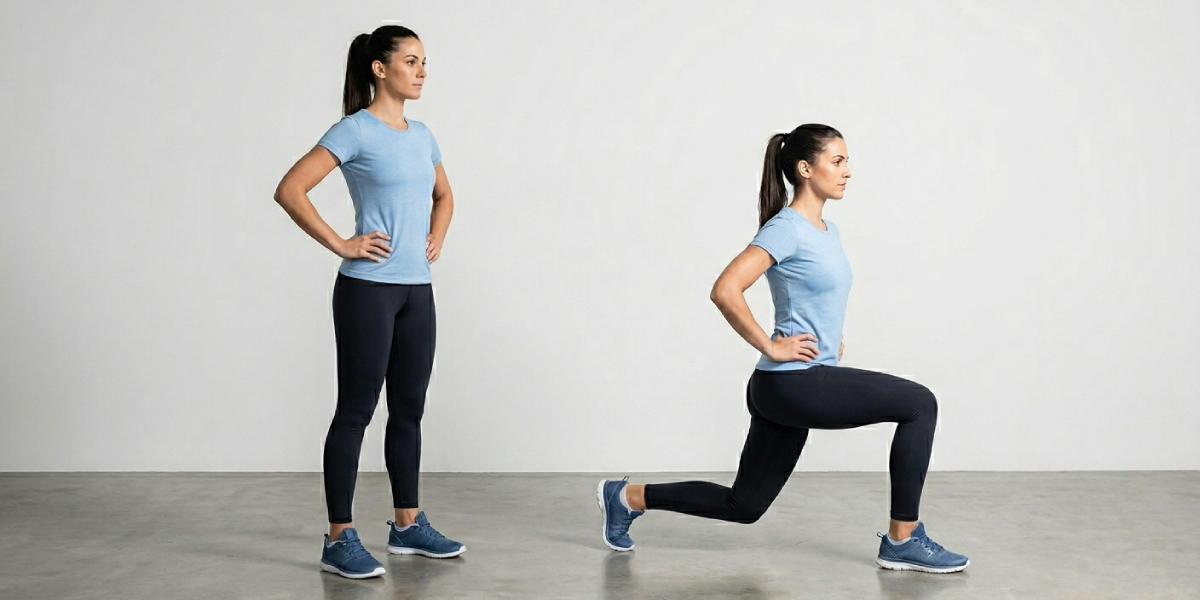
The lunges exercise is one of the most effective lower-body movements you can add to your fitness routine. Whether you are a beginner stepping into the gym for the first time or a seasoned athlete looking to sharpen your performance, lunges deliver measurable results across strength, stability, and functional movement.
In this guide, you will learn exactly how to perform lunges correctly, avoid the most common mistakes, and progress safely through variations that keep your training fresh and effective.
Why the Lunges Exercise Deserves a Place in Your Routine
The lunge is a unilateral movement, meaning it trains one leg at a time. This is enormously valuable because it forces each leg to do equal work, correcting the strength imbalances that bilateral exercises like squats can mask over time.
Beyond aesthetics, lunges closely mimic everyday activities such as walking, climbing stairs, and getting up from the floor, making them a genuinely functional exercise for people of all ages and fitness levels.
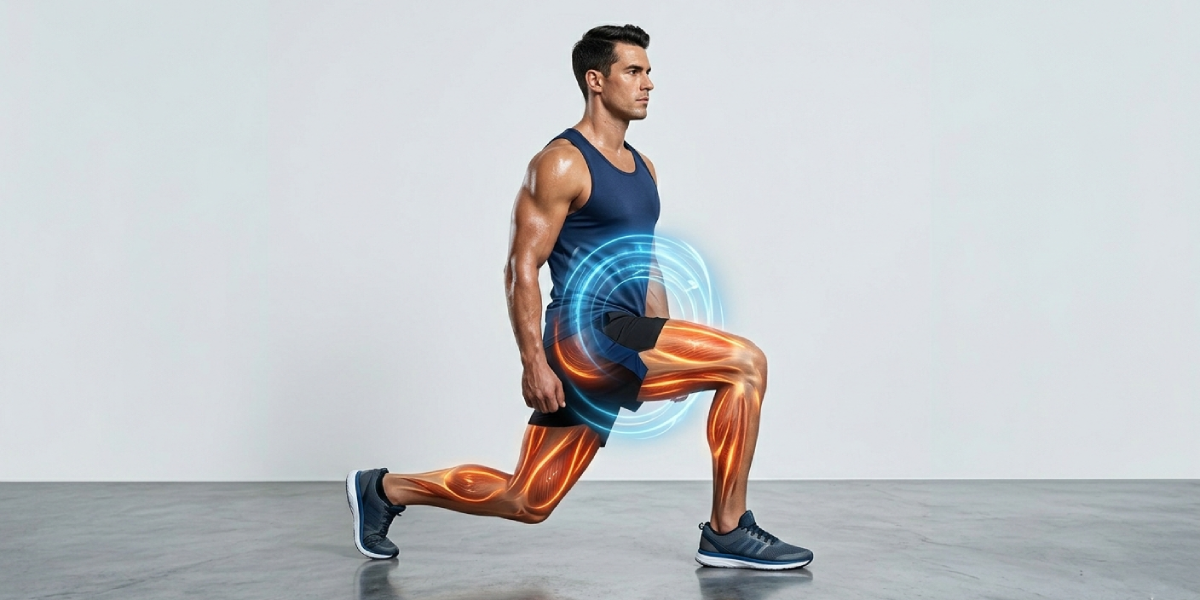
When performed with proper form, lunges simultaneously engage the quadriceps, hamstrings, glutes, hip flexors, and calves. They also recruit stabilizing muscles throughout the core and ankle, which is why consistent lunge training has been shown to improve overall balance and coordination.
For anyone tracking their fitness progress and monitoring body composition goals, lunges are a high-yield exercise that burns calories, builds lean muscle, and supports a healthier body weight.
Muscles Worked During Lunges
Understanding what muscles the lunges exercise targets helps you train with intention and connect movement to outcome. Here is a breakdown of the primary and secondary muscles involved:
- Quadriceps (front of the thigh): The primary driver during the descent and ascent phase of the lunge. These muscles control knee extension and absorb the force of each step.
- Gluteus Maximus (buttocks): Engaged heavily during the push-off phase, especially when the torso is kept upright and the step length is slightly longer.
- Hamstrings (back of the thigh): Work eccentrically to control knee flexion as you lower down, and concentrically to assist in returning to the starting position.
- Hip Flexors: The rear leg’s hip flexor is stretched during the lunge, making the movement an excellent passive stretch for people who sit for long hours.
- Calves and Tibialis Anterior: These muscles stabilize the ankle throughout the movement, especially during walking or reverse lunges.
- Core Muscles: The transverse abdominis and obliques engage to keep the torso stable and prevent lateral wobbling as you shift weight from one leg to the other.
How to Perform the Standard Forward Lunge with Proper Form
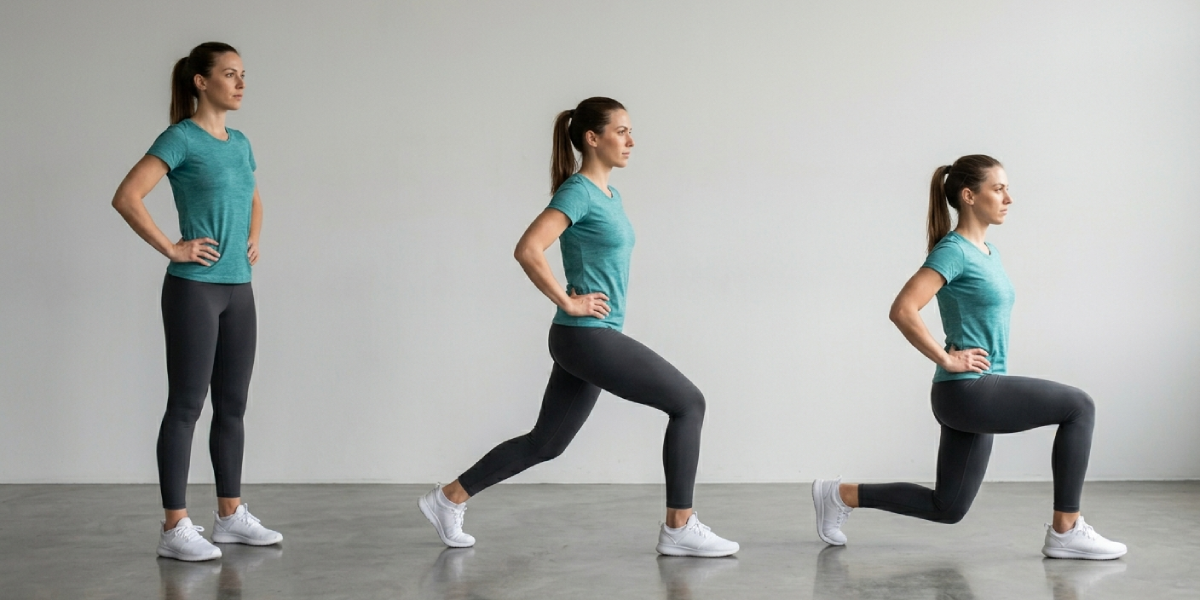
Before adding weight or experimenting with variations, mastering the bodyweight forward lunge is essential. Poor form at the foundation leads to knee pain, hip discomfort, and reduced effectiveness over time. Follow these step-by-step instructions carefully.
Starting Position
Stand tall with your feet hip-width apart, arms relaxed at your sides or hands on your hips. Engage your core gently by drawing your navel toward your spine. Keep your chest lifted and your shoulders stacked over your hips. Your gaze should be forward, not down at the floor.
The Descent
Take a controlled step forward with your right foot, placing it about two to three feet in front of you. As your front foot lands, begin to lower your hips straight down toward the floor. Your right knee should track directly over your right foot but should not extend past your toes. Your left knee should descend toward the floor without slamming into it. Aim to get your back knee to within an inch or two of the ground while maintaining an upright torso.
The Bottom Position
At the lowest point of the movement, both knees should form approximately 90-degree angles. Your front shin should be roughly vertical or slightly forward-angled depending on your step length and hip mobility. Your weight should be distributed primarily through your front heel and midfoot, not your toes. Hold this position for a brief moment before returning upward.
The Ascent
Drive through your front heel and mid-foot to push yourself back to the starting position. Avoid using momentum or leaning aggressively forward. Your back leg assists the movement but the front leg should do the majority of the work. Return to standing with control, then repeat on the opposite side.
Common Lunge Mistakes and How to Fix Them
Even experienced exercisers fall into habitual form errors that reduce the effectiveness of lunges and increase injury risk. Here are the most frequent mistakes and their corrections:
| Mistake | Why It Happens | How to Fix It |
|---|---|---|
| Front knee collapsing inward | Weak glute medius or poor ankle mobility | Consciously push the knee outward in line with the second toe; add glute activation warm-ups |
| Torso leaning too far forward | Tight hip flexors or weak core | Focus on keeping chest tall; add hip flexor stretching to your warm-up |
| Front heel lifting off the ground | Poor ankle dorsiflexion or step too short | Take a slightly longer step; work on ankle mobility drills |
| Back knee hitting the floor hard | Rushing through the descent | Slow down; use a 3-second lowering phase to build control |
| Step width too narrow | Trying to maintain balance by keeping feet close | Step outward slightly so feet are hip-width apart laterally |
Lunge Variations to Build Progressive Strength and Balance
Once the bodyweight forward lunge feels natural and controlled, exploring variations ensures continued adaptation and prevents training plateaus. Each variation challenges the muscles and the balance system in a slightly different way.
Reverse Lunge
Instead of stepping forward, you step backward with one foot and lower your back knee toward the floor. The reverse lunge places less shear force on the front knee, making it an excellent option for people with knee sensitivity. It also demands more control from the standing leg, which heightens the balance challenge. Start both feet together, step one foot back, lower the back knee, then return. Alternate sides with each repetition.
Walking Lunge
The walking lunge is a dynamic version where you continue stepping forward in a straight line rather than returning to the starting position between reps. This variation more closely mimics athletic movement patterns and is a staple in sports conditioning programs. Walking lunges also provide a greater cardiovascular demand and can be performed over a distance rather than a set number of reps.
Lateral Lunge
The lateral or side lunge involves stepping out to one side and shifting your body weight over the bent leg while the opposite leg remains straight. This movement targets the inner thighs (adductors) and the outer glutes to a much greater degree than forward or reverse lunges, making it a critical addition to a well-rounded lower-body program. It also trains the frontal plane of movement, which is often neglected in traditional training.
Curtsy Lunge
In the curtsy lunge, you cross your stepping foot behind and to the outside of your standing leg, similar to a curtsy gesture. This diagonal movement places significant emphasis on the gluteus medius and minimus, muscles responsible for hip stability and alignment. The curtsy lunge is particularly beneficial for reducing knee valgus (inward collapse) over time by strengthening the hip stabilizers.
Weighted Lunge
Once bodyweight lunges become manageable, adding resistance accelerates strength development. Dumbbells held at your sides, a barbell placed across your upper back, or a kettlebell held in a goblet position are all effective loading options. Start with light weight to ensure your form remains intact under load before progressively increasing resistance over weeks and months.
How to Incorporate Lunges Into Your Workout Program
Lunges are versatile enough to serve multiple roles within a training program. As part of a comprehensive exercise plan, they can function as a primary strength movement, an accessory exercise, or even a warm-up and activation tool depending on the load and volume used.
For strength and muscle building, performing 3 to 4 sets of 8 to 12 repetitions per leg with a moderately heavy load is a widely recommended approach. Rest 60 to 90 seconds between sets. For endurance and conditioning, higher repetition ranges of 15 to 20 per leg with lighter resistance and shorter rest periods are effective.
If balance and coordination are your primary goals, unweighted or lightly loaded single-leg variations performed slowly and with a pause at the bottom position are most beneficial.
Lunges pair well with complementary exercises. Combining them with Romanian deadlifts targets the posterior chain while lunges handle the quadriceps, creating a balanced lower-body session. Adding upper-body movements during lunges, such as a bicep curl or shoulder press at the bottom of each rep, increases overall workout efficiency and cardiovascular demand.
Lunge Safety Tips and Injury Prevention
Lunges are generally safe for most people, but attention to certain details significantly reduces the risk of discomfort or injury. Always warm up before performing lunges with 5 to 10 minutes of light cardio followed by dynamic mobility work targeting the hips, knees, and ankles. Hip circles, leg swings, and ankle rotations are excellent choices.
If you experience sharp knee pain during lunges, stop and assess your form. Often, front knee pain is caused by the knee tracking inward or extending too far past the toes. Rear knee discomfort is usually associated with a hard impact from descending too quickly.
Individuals with existing knee injuries or hip conditions should consult a qualified health professional before beginning a lunge-focused program. Addressing your overall health and well-being holistically, including flexibility, recovery, and nutrition, supports better results and reduces injury risk over time.
Equally important is managing training volume sensibly. Lunges create significant eccentric demand on the quadriceps, which means excessive volume in early training phases often leads to delayed onset muscle soreness (DOMS) that can last several days. Begin with two sessions per week and gradually increase frequency as your muscles adapt.
Lunge Progressions for Beginners, Intermediate, and Advanced Trainees
One of the most practical qualities of the lunges exercise is its adaptability across fitness levels. A thoughtful progression ensures that you are always working at an appropriate challenge level without risking injury or developing bad movement habits.
Beginners should start with stationary split squats, which resemble a lunge but without the stepping component. This allows you to focus purely on balance and joint alignment before introducing movement. After two to three weeks of consistent practice, transition to the bodyweight reverse lunge, then the forward lunge, and finally the walking lunge over the course of six to eight weeks.
Intermediate trainees can begin adding load in the form of dumbbells or a kettlebell while also introducing lateral and curtsy lunge variations. At this stage, the emphasis should shift toward controlling the tempo of each repetition, particularly the eccentric or lowering phase, to maximize muscle development.
Advanced trainees can challenge themselves with deficit lunges, performed by standing on a low platform to increase the range of motion; Bulgarian split squats with an elevated rear foot; and barbell-loaded walking lunges over longer distances.
These movements require significant hip mobility, core strength, and neuromuscular coordination and should be approached progressively with careful attention to technique.
Frequently Asked Questions
How many lunges should I do per day to see results?
For most people, performing 3 sets of 10 to 15 repetitions per leg, two to three times per week, is sufficient to build noticeable strength and muscle within four to six weeks. Daily lunges without adequate recovery can impede progress, so rest days between sessions are important.
Are lunges better than squats for leg development?
Both exercises are valuable and complement each other well. Squats allow heavier bilateral loading for overall quad and glute mass, while lunges address muscle imbalances between legs and train balance to a much greater degree. Including both in your program delivers the best results.
Do lunges help reduce thigh fat?
Lunges build muscle in the thighs, which increases metabolic rate and contributes to overall fat loss when combined with a caloric deficit and consistent cardio. Spot reduction, or losing fat only in one body area, is not physiologically possible. Lunges are part of a comprehensive approach to body composition improvement.
Can lunges cause knee pain and how can I prevent it?
Lunges can contribute to knee pain when performed with poor form, particularly when the front knee caves inward or extends excessively past the toes. Preventing knee pain involves maintaining proper alignment, stepping an adequate distance, and building strength in the glutes and hip stabilizers. People with pre-existing knee conditions should seek guidance from a physiotherapist.
What is the difference between a lunge and a split squat?
A split squat is a stationary version of the lunge where both feet remain in a fixed position throughout the set. A lunge involves a stepping movement, either forward, backward, or to the side, which adds a dynamic balance component. Split squats are generally easier for beginners to control and are a useful progression before full lunges.
How do lunges improve balance?
Because lunges require you to support your full body weight on one leg at a time, they continuously challenge the proprioceptive system, which is the body’s ability to sense its position in space. Over time, repeated lunge training strengthens the stabilizing muscles of the ankle, knee, and hip, resulting in measurably better balance and coordination.
Should I do lunges with or without weights as a beginner?
Beginners should always start with bodyweight lunges to establish proper movement mechanics before adding external load. Most people benefit from at least four to six weeks of unweighted practice before introducing dumbbells or other resistance. Rushing into weighted lunges before the movement pattern is grooved increases the risk of injury and reinforces poor form under load.
How are reverse lunges different from forward lunges?
In a reverse lunge, you step the foot backward rather than forward. This subtle change redistributes the load slightly more toward the glutes and hamstrings, reduces compressive force on the front knee, and demands more stability from the standing leg. Reverse lunges are often recommended for individuals with knee discomfort or those looking to emphasize posterior chain development.
Can lunges help improve athletic performance?
Yes, lunges are widely used in athletic conditioning programs across sports including running, football, basketball, and tennis. They improve unilateral leg strength, hip flexibility, and dynamic balance, all of which directly translate to faster acceleration, better deceleration control, and improved agility. Many strength coaches consider lunges a foundational movement for sport-specific preparation.
How long does it take to see results from doing lunges regularly?
Most people notice improvements in leg strength and endurance within two to three weeks of consistent training. Visible changes in muscle tone and size typically become apparent after six to eight weeks of progressive lunge training combined with adequate protein intake and overall nutritional support. Balance improvements often appear even sooner, within the first few sessions.