

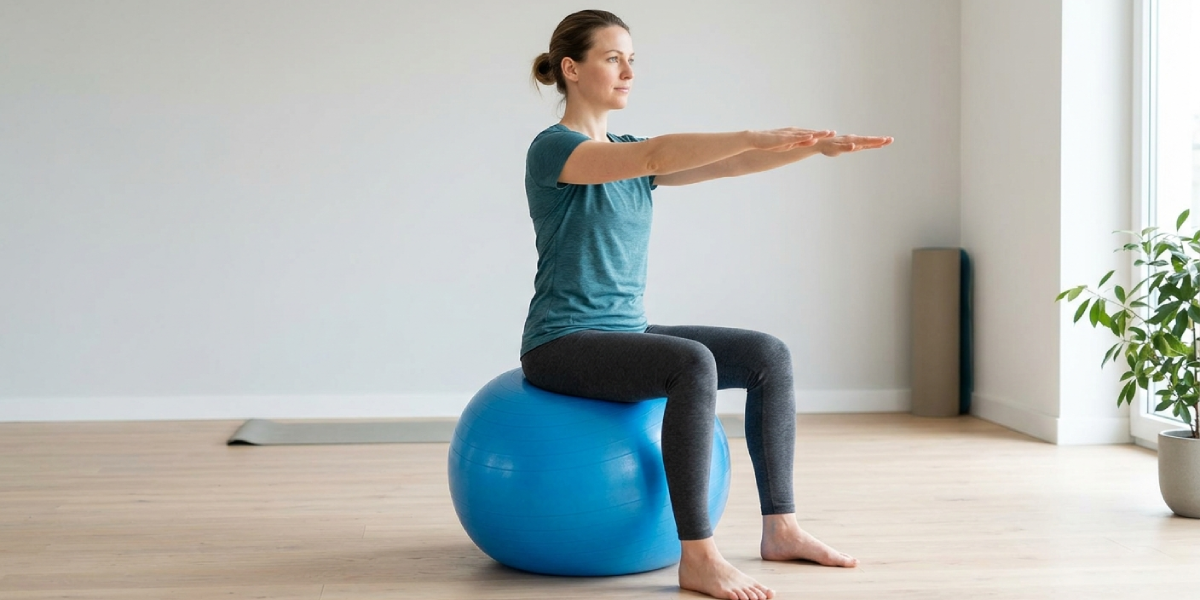
An exercise ball for core stability and balance has become one of the most versatile tools in fitness training. Whether you’re a beginner looking to strengthen your midsection or an athlete seeking advanced balance challenges, the stability ball offers endless possibilities for building a stronger, more stable core.
This comprehensive guide walks you through everything you need to know about integrating this powerful tool into your fitness routine.
Understanding the Exercise Ball and Its Core Benefits
The exercise ball, sometimes called a stability ball or Swiss ball, is an inflatable sphere designed to improve balance, strength, and coordination. Unlike traditional workout equipment that provides a stable surface, the unstable nature of the exercise ball forces your core muscles to work continuously to maintain proper positioning.
This constant engagement activates deep stabilizer muscles that often go underworked during conventional exercises.
When you sit or perform movements on an exercise ball, your body must recruit stabilizer muscles in your abdomen, lower back, and hip region. These muscles work synergistically to keep you balanced and stable. Over time, this leads to improved posture, reduced back pain, and enhanced athletic performance.
The benefits extend beyond the core to include improved proprioception, which is your body’s ability to sense its position in space.
Choosing the Right Size and Type of Exercise Ball
Determining Your Proper Ball Size
Exercise balls come in various sizes, typically ranging from 45 to 85 centimeters in diameter. Your height and the intended use determine which size works best for you. If you’re under 5 feet tall, a 45-centimeter ball is appropriate. Those between 5 feet and 5 feet 7 inches should choose a 55-centimeter ball.
Anyone between 5 feet 8 inches and 6 feet 2 inches benefits from a 65-centimeter ball, while taller individuals need a 75 or 85-centimeter option.
When you sit on the correctly sized ball with your feet flat on the floor, your hip and knee joints should form a 90-degree angle. If your knees point upward or your hips sink too low, you need a different size. Proper sizing ensures effective muscle engagement and prevents injury during training.
Quality and Material Considerations
Invest in burst-resistant exercise balls made from high-quality PVC or vinyl materials. These balls are designed to deflate slowly if punctured rather than exploding suddenly, providing safety during use. Look for balls with anti-slip surfaces that prevent your body from sliding during movements. The durability of your exercise ball directly impacts your safety and the longevity of your investment.
Fundamental Exercise Ball Exercises for Core Stability
The Basic Ball Hold
Start with the foundational exercise that teaches proper ball positioning and engagement. Sit on the exercise ball with your feet hip-width apart and flat on the floor. Your knees should be at 90 degrees, and your back should be straight.
Engage your core by drawing your navel toward your spine without holding your breath. Hold this position for 30 seconds while maintaining steady breathing. This simple exercise activates your deep core stabilizers and teaches you proper sitting posture on the ball.
Ball Marching
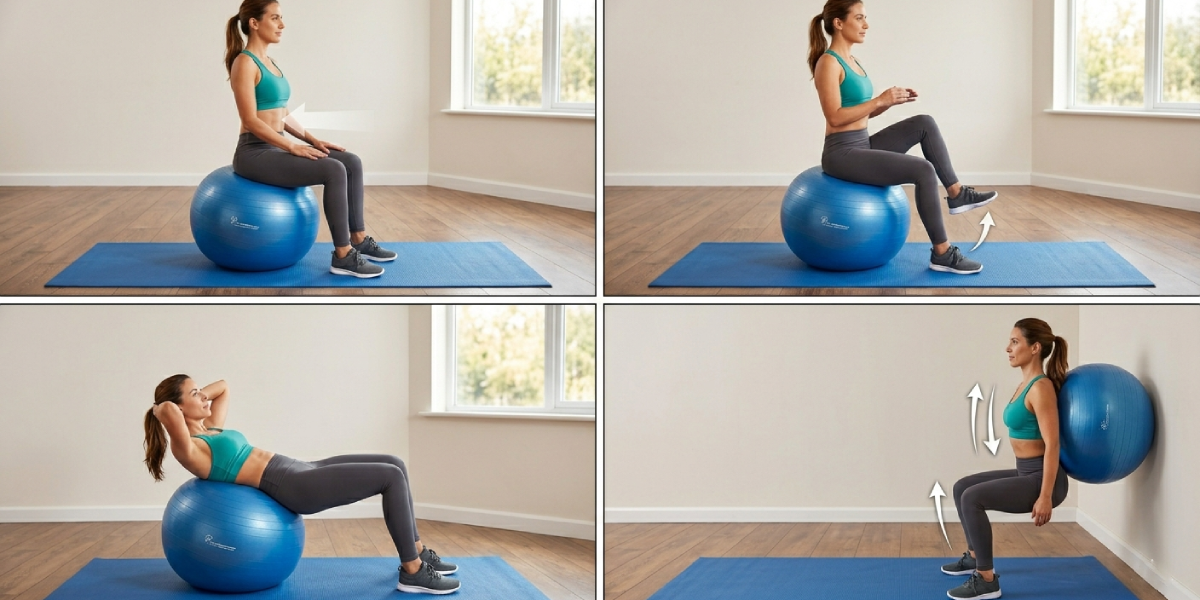
While seated on the ball in proper position, lift one foot slightly off the ground while keeping your other foot planted. Alternate feet in a controlled marching motion while maintaining your upright posture. This movement challenges your balance and forces your core to work harder to prevent the ball from rolling.
Perform 20 to 30 marches alternating legs. As you progress, lift your feet higher or increase your speed while maintaining control.
Ball Crunches
Position yourself on the ball so your lower back is supported by the curved surface. Your feet should be on the floor, hip-width apart. Place your hands gently behind your head without pulling on your neck. Engage your core and crunch upward by bringing your ribcage toward your pelvis.
The ball’s unstable surface increases the challenge compared to floor crunches because your lower back and glutes must work harder to maintain stability. Perform three sets of 12 to 15 repetitions.
Wall Ball Squats
Place the ball between your lower back and a wall. Position your feet about two feet away from the wall, with your feet hip-width apart. Lower yourself into a squat position by bending your knees to approximately 90 degrees. The ball rolls up your back as you descend, supporting your lower back while your core engages to maintain stability.
Push through your heels to return to standing. This exercise simultaneously strengthens your legs while improving core stability. Complete three sets of 12 to 15 repetitions.
Advanced Exercise Ball Techniques for Enhanced Balance
Single-Leg Balance Holds
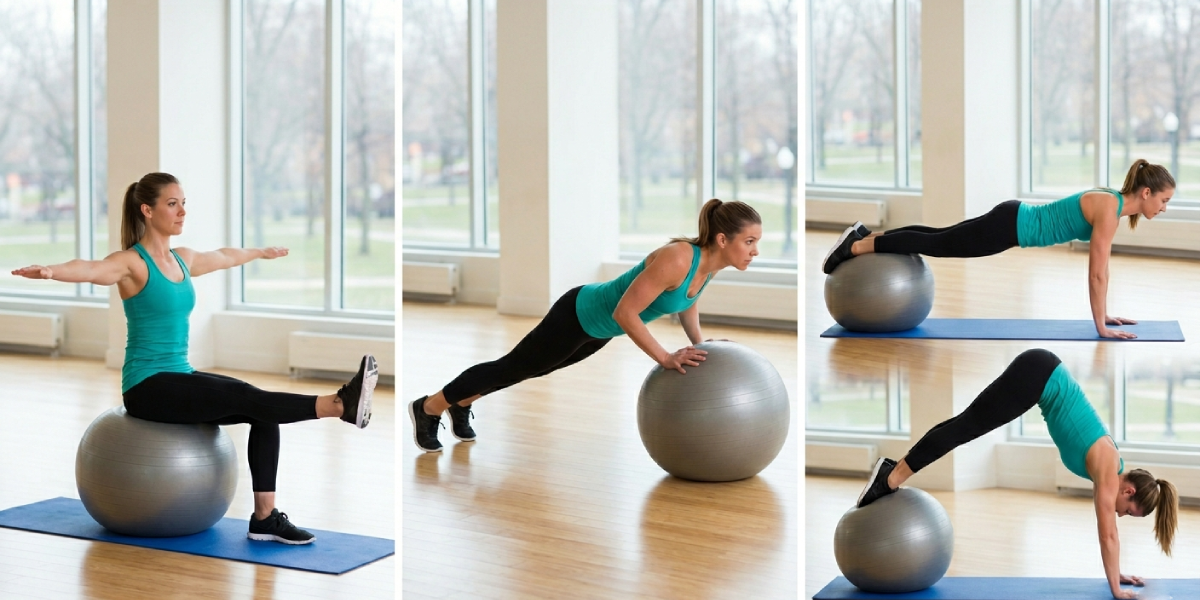
Advance your balance training by sitting on the ball and lifting one leg while keeping the other foot firmly planted on the ground. The elevated leg should be extended parallel to the floor or slightly above. Your upper body remains upright and centered on the ball.
This position dramatically increases the stability demands on your core because you’ve eliminated half of your base of support. Hold this position for 20 to 30 seconds on each leg, rest, and repeat for three sets.
Ball Push-Ups
Place your hands on top of the exercise ball and walk your feet out until your body forms a straight line from head to heels. Your hands should be directly under your shoulders. Lower yourself toward the ball by bending your elbows until your chest nearly touches the ball.
Push back to the starting position. The instability of the ball forces your core to work intensely while your upper body performs the pushing movement. Beginners might start with hands on the ball and feet on the ground, progressing to feet on the ball and hands on the ground as they build strength.
Ball Pike Exercise
Begin in a plank position with your shins resting on the exercise ball and your hands on the floor directly under your shoulders. Your body should form a straight line. Engage your core and pike your hips upward by rolling the ball toward your hands with your feet while keeping your arms straight.
Return to the starting plank position in a controlled manner. This advanced movement requires tremendous core stability and is excellent for building strength in your rectus abdominis and transverse abdominis muscles.
Progressive Training Programs Using Exercise Balls
Beginner Program for Core Foundation Building
If you’re new to exercise ball training, start with a simple routine performed two to three times per week. Begin each session with a five-minute warm-up consisting of arm circles and gentle stretching. Perform the basic ball hold for 30 seconds, rest for 30 seconds, and repeat four times.
Follow this with ball marching for one minute, rest for one minute, and repeat three times. Finish with wall ball squats for three sets of 10 to 12 repetitions. Cool down with gentle stretching, holding each stretch for 20 to 30 seconds.
Intermediate Program for Progression
Once you’ve built a solid foundation over two to three weeks, progress to an intermediate routine. This program adds complexity and duration while introducing new exercises. Perform ball crunches for three sets of 15 repetitions, single-leg balance holds for 30 seconds per leg, and ball push-ups for three sets of 8 to 10 repetitions.
Include the wall ball squats from your previous program and add marching in place while seated on the ball for increased balance challenge. Train three times per week with rest days between sessions.
Advanced Program for Maximum Challenge
Experienced exercisers can incorporate more complex movements and longer hold times. Combine ball pike exercises with push-up variations, perform plank holds with feet on the ball for extended periods, and add single-leg squats against the wall.
Practice balance exercises with eyes closed to increase proprioceptive demand. Advanced athletes often incorporate the exercise ball into full-body workouts, using it for back extensions, hamstring curls, and various core challenges.
Proper Form and Common Mistakes to Avoid
Maintaining Neutral Spine Alignment
The most critical aspect of exercise ball training is maintaining proper spinal alignment throughout all movements. Your spine should maintain its natural curves, neither excessively arched nor flattened. When sitting on the ball, imagine a string pulling the crown of your head toward the ceiling while your feet press firmly into the floor.
This neutral position protects your spine and maximizes muscle engagement. Watch for common mistakes like rounding your lower back, hunching your shoulders, or tilting your pelvis forward.
Avoiding Over-Inflation and Under-Inflation
An improperly inflated ball affects your training effectiveness and safety. An over-inflated ball becomes too firm and unstable, making it difficult to control. An under-inflated ball loses its structural integrity and becomes difficult to balance on. Check your ball’s inflation regularly using a pressure gauge.
Most balls should be inflated to approximately 0.6 to 0.9 bar pressure, depending on the manufacturer’s specifications. A ball inflated to proper pressure will compress slightly under your body weight but maintain structural support.
Progressing Too Quickly
One of the biggest mistakes people make is advancing to complex exercises before building sufficient foundational stability. Spend at least two weeks performing basic exercises before attempting intermediate movements.
This progression allows your nervous system to adapt to the instability and your muscles to develop the necessary strength. Advancing too quickly increases injury risk and may result in poor form that reduces exercise effectiveness.
Incorporating Exercise Balls Into Your Overall Fitness Routine
Combining with Cardio Training
Exercise ball work complements cardiovascular training perfectly. Many people perform 20 to 30 minutes of running, cycling, or rowing, then finish their workout with 10 to 15 minutes of core stability training using the exercise ball. This combination builds both aerobic capacity and muscular endurance.
Alternatively, you can perform brief ball exercises between cardio intervals, using the stabilizer work as active recovery.
Pairing with Strength Training
The exercise ball integrates seamlessly with traditional strength training. Many people perform their main strength exercises using free weights or machines, then finish with ball-based core work. For example, you might complete your leg day with squats and lunges, then perform wall ball squats and single-leg balance holds using the exercise ball to further challenge your stabilizers. This approach builds both absolute strength and functional stability.
Daily Life Applications
Beyond structured workouts, consider replacing your office chair with an exercise ball during portions of your workday. Even sitting on the ball for an hour engages your core muscles and improves posture. This gentle, continuous engagement builds core strength without requiring dedicated workout time.
Many people find that regular ball sitting reduces back pain and increases energy levels throughout the day. Learn more about optimizing your daily health practices to support your fitness goals.
Safety Considerations and Injury Prevention
Pre-Exercise Assessment
Before beginning any exercise ball program, assess your current fitness level and any existing injuries. If you have a history of back pain, consult your healthcare provider before starting. Begin conservatively with shorter duration holds and fewer repetitions, gradually increasing volume as your body adapts.
This cautious approach allows you to identify any movement patterns that cause discomfort before they develop into injuries.
Working on Proper Surfaces
Always use your exercise ball on clean, non-slippery surfaces. Avoid working on wet floors, carpeting with low grip, or uneven terrain. A yoga mat provides an excellent surface that offers grip while protecting your knees if you’re performing exercises on the floor.
Ensure adequate space around your work area so you won’t hit obstacles if the ball rolls unexpectedly. Clear any sharp objects or potential hazards that could puncture your ball.
Knowing When to Stop
Sharp pain, dizziness, or difficulty breathing are signs to stop exercising immediately. Muscle soreness the day after exercise is normal, but sharp pain during exercise is not. If you experience pain, discontinue that particular movement and consult a fitness professional or healthcare provider.
Progress gradually enough that you never need to sacrifice form for the sake of completing a set. Quality of movement always trumps quantity of repetitions.
Achieving Balance and Stability Through Consistent Practice
Building core stability and balance through exercise ball training is a progressive journey that requires consistent practice. Most people notice improved posture and reduced back pain within two to three weeks of regular training. However, significant strength gains typically appear after four to six weeks of consistent effort.
Your nervous system continuously adapts to the instability challenge, requiring progressive increases in difficulty to maintain improvement.
The beauty of exercise ball training lies in its adaptability to any fitness level or goal. Whether you’re recovering from injury, training for athletic performance, or simply seeking better daily health, the exercise ball offers effective solutions.
Many fitness professionals recommend pairing your structured exercise program with proper nutrition and lifestyle practices to achieve optimal results.
Remember that consistency matters more than intensity. Performing ball exercises three times per week with proper form yields better results than sporadic, high-intensity sessions where form breaks down.
Track your progress by noting how long you can hold positions, how many repetitions you complete with good form, and how your overall stability and posture improve in daily life. These tangible improvements serve as motivation to continue your training.
Frequently Asked Questions
What size exercise ball should I use for sitting at my desk?
Choose a ball size where your hips and knees form a 90-degree angle when seated. Most office workers between 5 feet 4 inches and 6 feet tall use a 65-centimeter ball. This size provides enough surface area for safe sitting while maintaining proper ergonomic positioning throughout your workday.
How often should I perform exercise ball workouts?
Most fitness professionals recommend using the exercise ball three to five times per week for dedicated workouts. If you’re sitting on the ball at your desk, you’re engaging your core throughout the day. For structured exercise sessions, allow at least one rest day between intense core workouts to permit muscle recovery and adaptation.
Can exercise balls help with lower back pain?
Yes, many people experience reduced lower back pain after consistent exercise ball training. The ball provides support for your lower back during wall ball squats and crunches while engaging your core stabilizers, which reduces strain on your spine. However, if you currently have acute lower back pain, consult your healthcare provider before beginning any exercise program.
Are exercise balls safe for people with balance problems?
Exercise balls can help improve balance, but people with significant balance disorders should start with modifications like performing exercises against a wall or with hand support nearby. Begin with basic movements and progress slowly. Always work in a safe environment where falling wouldn’t cause injury, and consider working with a qualified trainer.
How do I know if my exercise ball is properly inflated?
A properly inflated ball should compress slightly under your body weight while maintaining structural support. When you sit on it, you should sink about 1 to 2 inches into the surface. Use a pressure gauge to check inflation, aiming for approximately 0.6 to 0.9 bar depending on your ball’s specifications and your body weight.
Can I use an exercise ball for rehabilitation after surgery?
Exercise balls can be valuable for rehabilitation, but timing and exercise selection are critical. Work with your physical therapist or healthcare provider to determine when it’s appropriate to introduce ball training and which exercises to perform. Starting with very gentle, supported exercises ensures you don’t aggravate your surgical area.
What exercises should I avoid if I have a herniated disc?
People with herniated discs should avoid exercises that involve spinal flexion or rotation. Ball crunches that heavily flex your lower spine might aggravate your condition, while wall ball squats and gentle marching are often tolerated well. Consult your healthcare provider or physical therapist to determine which ball exercises are appropriate for your specific condition.
How do exercise balls compare to other core training equipment?
Exercise balls offer unique benefits compared to fixed equipment because their instability requires constant stabilizer engagement. Compared to floor exercises, the ball increases the difficulty and engagement of stabilizer muscles. Many experts recommend incorporating various training methods, including balls, free weights, machines, and bodyweight exercises, to develop comprehensive core strength.
Can I use an exercise ball if I’m overweight?
Yes, exercise balls accommodate various body weights, and many manufacturers produce stronger balls designed for heavier individuals. Check the weight capacity listed by the manufacturer. Start with basic exercises like ball marching and wall ball squats using proper form and support. As you build strength and confidence, progress to more advanced movements. Consider consulting a fitness professional to ensure you’re performing exercises correctly for your current fitness level. Check your BMI and discuss your fitness goals with a healthcare provider.
How long before I see results from exercise ball training?
Most people notice improved posture and reduced back pain within two to three weeks of consistent training. Visible strength improvements typically appear within four to six weeks. Long-term consistency, proper nutrition, and adequate sleep accelerate results. Remember that building functional core stability and balance is a progressive process that continues improving for months and years with dedicated practice.