

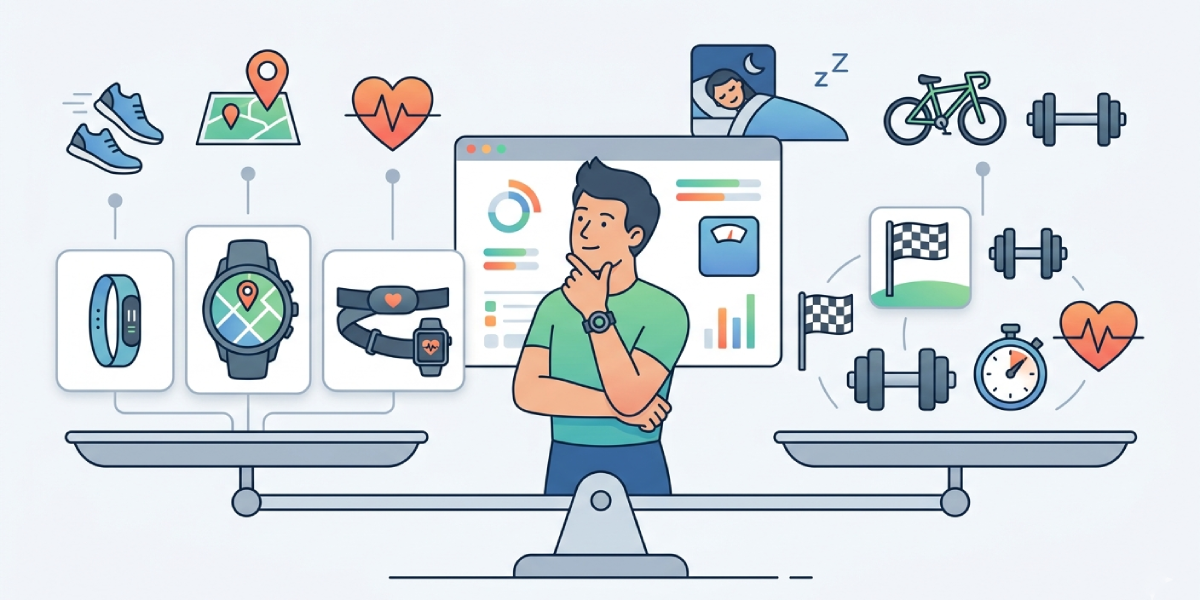
Knowing how to choose the right fitness tracker can be the difference between hitting your health goals and leaving an expensive gadget collecting dust in a drawer.
With dozens of options flooding the market, from budget-friendly clip-ons to premium smartwatches, picking the one that actually fits your lifestyle requires more than just checking the price tag.
This guide breaks down everything you need to know before buying, drawing on real-world use cases, established health-monitoring principles, and the features that matter most depending on what you are actually trying to achieve.
Why Fitness Trackers Are Worth the Investment
Fitness trackers work because they make the invisible visible. When you can see your step count, resting heart rate, sleep stages, and calorie burn in one place, you naturally make better decisions.
Research consistently shows that self-monitoring is one of the most effective behavioral strategies for sustaining physical activity and weight management over time.
Beyond accountability, a good tracker serves as an early warning system. Sudden changes in resting heart rate, heart rate variability, or sleep quality can signal overtraining, illness, or elevated stress before you consciously feel it.
That kind of data is especially valuable if you are training for a race, managing a chronic condition, or simply trying to build healthier habits.
The key is choosing a device that aligns with your specific goals rather than one loaded with features you will never use.
Define Your Fitness Goals Before You Shop
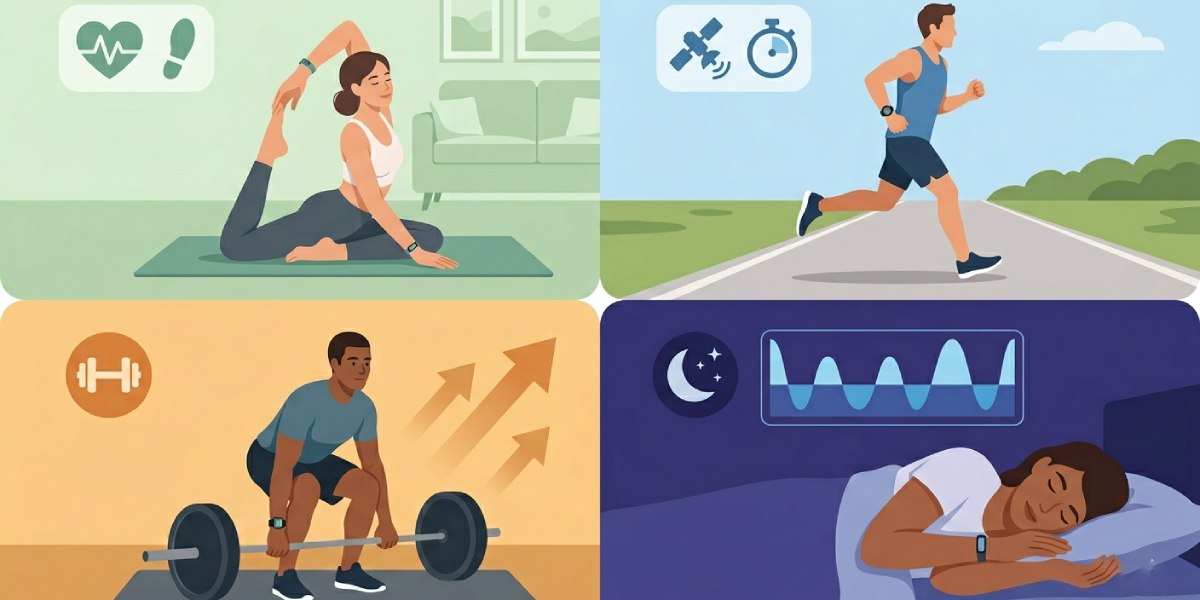
The single most important step when figuring out how to choose the right fitness tracker is to define what success looks like for you. A marathon runner, a yoga practitioner, and someone recovering from knee surgery have very different monitoring needs, and no single device excels at everything.
General Wellness and Daily Activity
If your primary goal is to move more, sleep better, and reduce stress, you do not need an advanced multisport watch. A slim, comfortable band that tracks steps, heart rate, sleep, and basic activity is more than enough. Look for devices with a simple app, long battery life, and a design you will actually want to wear every day. Comfort and consistency matter more than feature count here.
Weight Loss and Calorie Management
For weight management, accurate calorie tracking becomes important. Look for trackers that combine heart rate monitoring with movement data for more precise energy expenditure estimates. Devices that integrate with food logging apps or nutrition platforms give you a complete picture of calories in versus calories out.
Some trackers also estimate metabolic rate, which can help you set realistic deficit targets when used alongside other tools like a BMI calculator to assess where you are starting from.
Endurance Sports and Cardiovascular Training
Runners, cyclists, and swimmers need a different level of precision. Built-in GPS is non-negotiable if you want accurate pace and distance data without carrying your phone. VO2 max estimation, training load analysis, and recovery time recommendations are features that serious athletes will actually use on a weekly basis.
Optical heart rate accuracy also becomes more critical because training zones guide workout intensity.
Strength Training and Gym Workouts
Traditional step-based trackers were built for cardio and often undercount gym work. If resistance training is your focus, look for devices that automatically recognize exercise types, track sets and reps, or at least allow manual workout logging with heart rate data.
Some advanced models use wrist-based movement algorithms specifically tuned for lifting patterns.
Sleep Optimization and Recovery
Sleep tracking has improved dramatically in recent years. Modern trackers can estimate time spent in light, deep, and REM sleep using a combination of heart rate, heart rate variability, and accelerometer data.
Devices that offer a daily readiness or recovery score are particularly useful because they translate complex physiological data into a simple actionable number, telling you whether to push hard or take it easy.
The Key Features to Evaluate
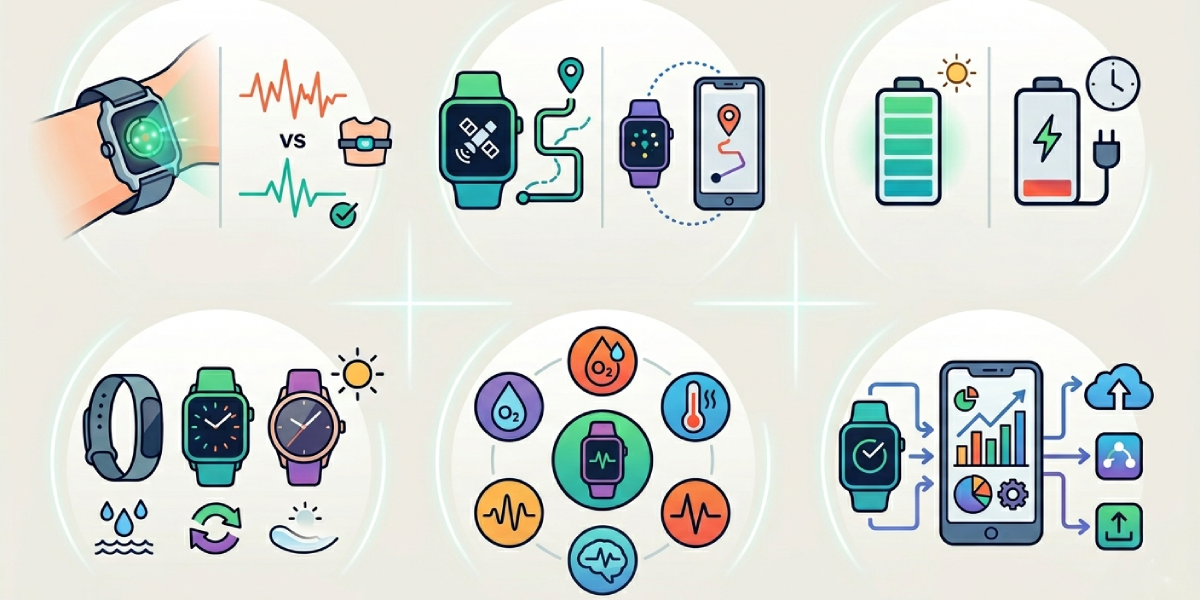
Once you have your goal in mind, use the following criteria to compare devices objectively.
Heart Rate Monitoring Accuracy
Optical heart rate sensors on the wrist are convenient but not all are created equal. Budget trackers often struggle during high-intensity intervals or activities with a lot of wrist movement.
If heart rate accuracy matters to your training, look for independent review data comparing each device against a chest strap under real workout conditions. Some premium devices now use larger sensor arrays or newer photoplethysmography (PPG) algorithms that close much of the accuracy gap.
GPS: Built-In vs. Connected
Built-in GPS drains battery but gives you accurate route mapping and pace data without your phone. Connected GPS uses your smartphone’s location, saving battery but requiring you to carry your phone. If you run, hike, or cycle regularly, built-in GPS is worth the premium.
If your workouts are mostly gym-based or you always have your phone anyway, connected GPS is a reasonable tradeoff.
Battery Life
Battery life is often underappreciated until you start charging your tracker every night and forget it on the charger on a morning you really needed it. Basic activity bands can last seven to fourteen days. Smartwatches with always-on displays typically need charging every one to two days.
GPS watches fall somewhere in between, with GPS mode significantly shortening the runtime. Think honestly about your charging habits before prioritizing display quality over endurance.
Display and Wearability
A tracker you do not wear gives you no data at all. Consider whether you prefer a discreet band, a sporty watch, or something fashionable enough to wear to work. AMOLED screens are vivid but drain more power. E-ink displays are always-on and easy to read in sunlight.
Comfort for 24-hour wear, waterproofing rating, and band material are all practical considerations that often get overlooked in specs-focused comparisons.
Health Sensors Beyond Heart Rate
Higher-end trackers now include sensors for blood oxygen saturation (SpO2), skin temperature, electrodermal activity for stress detection, and in some cases, ECG capabilities cleared by regulatory authorities. These features add genuine value if you are managing a health condition or want deeper physiological insight.
That said, more sensors also mean more battery drain and a more complex app experience.
App Ecosystem and Data Integration
The hardware is only half the equation. A tracker with a weak app or a closed ecosystem limits what you can do with your data. The best platforms offer detailed trend analysis, coaching insights, and integration with third-party apps covering nutrition, mindfulness, and broader health monitoring.
Check whether the app syncs with tools you already use and whether your historical data is exportable if you ever switch devices.
Comparing Fitness Tracker Categories
| Category | Best For | Battery Life | GPS | Price Range |
|---|---|---|---|---|
| Basic Activity Band | General wellness, beginners | 7–14 days | Connected only | Budget–Mid |
| Fitness Smartwatch | Everyday use, light sport | 1–5 days | Built-in | Mid–Premium |
| GPS Sport Watch | Runners, cyclists, triathletes | 5–30 days | Built-in, multi-band | Premium |
| Recovery-Focused Wearable | Sleep, HRV, readiness tracking | 4–7 days | None or limited | Mid–Premium |
| Clip-On or Clip Tracker | Step counting, minimalist users | Up to 6 months | None | Budget |
Budget Considerations: What You Actually Get at Each Price Point
The fitness tracker market spans a wide price range, and while premium devices offer more features, they are not always necessary to reach your goals.
At the budget end, you will find capable bands that cover step counting, basic sleep tracking, and continuous heart rate. These are excellent entry points for someone building a habit or testing whether tracking changes their behavior at all.
Mid-range devices typically add GPS, more accurate heart rate monitoring, SpO2, and a richer app experience. This is the sweet spot for most people who exercise three to five times per week across a mix of cardio and strength work.
Premium trackers justify their price through superior GPS accuracy, advanced training metrics, longer battery life in GPS mode, more durable builds, and deeper health monitoring features. If you train seriously or want a device that doubles as a functional smartwatch, this tier earns its cost over time.
Platform Compatibility and Long-Term Support
A tracker is only as good as the software running behind it. Before committing, confirm that the companion app is available for your smartphone operating system and that the manufacturer has a track record of long-term software support.
Fitness platforms that frequently update their algorithms, add new health metrics, and maintain compatibility with major operating systems are worth paying more for. A cheap device that becomes unsupported in eighteen months is not a good investment.
Special Considerations for Specific Populations
Older Adults and Beginners
For older adults or those new to fitness tracking, simplicity and readability matter most. Large displays, uncomplicated apps, and features focused on heart health, fall detection, and daily movement provide the most practical value.
Some devices also offer emergency SOS functions and irregular heart rhythm alerts that can provide genuine peace of mind.
People with Specific Health Goals
If you are working on a specific health target under medical guidance, choose a tracker that integrates with healthcare apps or allows data export to share with a provider.
Devices with ECG features, continuous blood glucose monitoring compatibility, or clinically validated blood pressure monitoring are increasingly available and relevant for those managing cardiovascular conditions or metabolic health. Always confirm with your healthcare provider which data is clinically useful and which is consumer-grade estimation.
Athletes Training at High Volume
High-volume training demands accurate load management. Look for devices that calculate training stress scores, track running dynamics such as cadence and ground contact time, and provide structured recovery recommendations based on your recent training history.
Pairing your tracker data with a structured exercise program gives you the full picture of whether your training load is appropriate or heading toward overtraining.
How to Evaluate Accuracy Claims
Manufacturers publish impressive accuracy statistics in controlled conditions. Real-world performance varies. The most reliable way to evaluate a device is to read independent reviews from sources that test against medical-grade equipment, look at user feedback from people doing the same type of activity you plan to, and if possible, test the return policy so you can verify performance before committing.
Heart rate accuracy during low-intensity steady-state activity is generally reliable across most brands. It is during high-intensity exercise, interval training, and activities with significant wrist movement that quality differences become apparent.
Making the Final Decision
After working through your goals, required features, and budget, narrow your list to two or three options and compare them on the criteria that matter most to you specifically. Prioritize comfort and wearability if you struggle to build habits. Prioritize GPS and training metrics if performance is your focus. Prioritize battery life and simplicity if you want something you can set and forget.
A fitness tracker is a tool, and like any tool, its value comes from how consistently and intelligently you use it. The right tracker is the one you actually wear, the one whose data you actually act on, and the one that keeps you engaged with your long-term health journey rather than just your next workout.
Frequently Asked Questions
What is the most important feature to look for in a fitness tracker?
The most important feature depends on your goal, but for most people, accurate 24-hour heart rate monitoring combined with comfortable, all-day wearability delivers the most practical value. Without consistent wear, no feature set matters.
Do I need built-in GPS in my fitness tracker?
You need built-in GPS if you run, cycle, hike, or do any outdoor activity where accurate distance and route data matters and you prefer not to carry your phone. For gym-based workouts or general daily activity tracking, connected GPS through your smartphone is sufficient.
How accurate are wrist-based heart rate monitors?
Wrist-based optical heart rate monitors are generally accurate within a few beats per minute during steady-state, low-to-moderate intensity activity. Accuracy declines during high-intensity intervals and exercises with a lot of wrist movement. Chest straps remain the gold standard for training zone precision.
Can a fitness tracker help me lose weight?
A fitness tracker supports weight loss by providing calorie expenditure estimates, encouraging daily movement, and creating accountability through visible data. It works best when combined with a structured nutrition plan. Using it alongside tools like a BMI assessment helps you set realistic baseline targets and track progress over time.
How long should a fitness tracker last before needing replacement?
A quality fitness tracker should last two to four years with normal use. Battery degradation over time and software support cycles are the most common reasons people upgrade. Choosing a brand with a strong software update history extends the useful life of the device.
Is sleep tracking on fitness trackers reliable?
Modern fitness trackers provide a reasonable estimate of sleep stages using heart rate and movement data, though they are not clinical-grade tools. They are reliable enough to identify consistent patterns, detect disruptions, and track improvements over time. For diagnosing sleep disorders, clinical polysomnography remains the appropriate standard.
What is heart rate variability and why does it matter for fitness tracking?
Heart rate variability (HRV) measures the variation in time between consecutive heartbeats. Higher HRV generally indicates good cardiovascular fitness and recovery status. Many trackers now measure overnight HRV to generate daily readiness or recovery scores, helping you decide whether to train hard or rest on a given day.
Are cheaper fitness trackers worth buying?
Budget fitness trackers are absolutely worth buying if your needs are basic, such as step counting, sleep tracking, and general heart rate monitoring. They offer diminishing returns compared to mid-range and premium devices for serious athletes or people who need advanced health metrics. Start with your actual goals and buy the level of capability that matches them.
Can fitness trackers detect heart problems?
Some fitness trackers include features like irregular heart rhythm alerts and ECG functions that have received regulatory clearance as medical aids for detecting signs of atrial fibrillation. These are genuinely useful screening tools but are not substitutes for formal cardiac evaluation. Always consult a healthcare provider if your tracker flags anything concerning.
How do I choose between a fitness band and a smartwatch?
Choose a fitness band if your priority is health and activity tracking with maximum battery life, minimal distraction from notifications, and an unobtrusive form factor. Choose a smartwatch if you want to combine fitness tracking with smart features like payments, music, app notifications, and navigation on your wrist and are comfortable charging more frequently.