

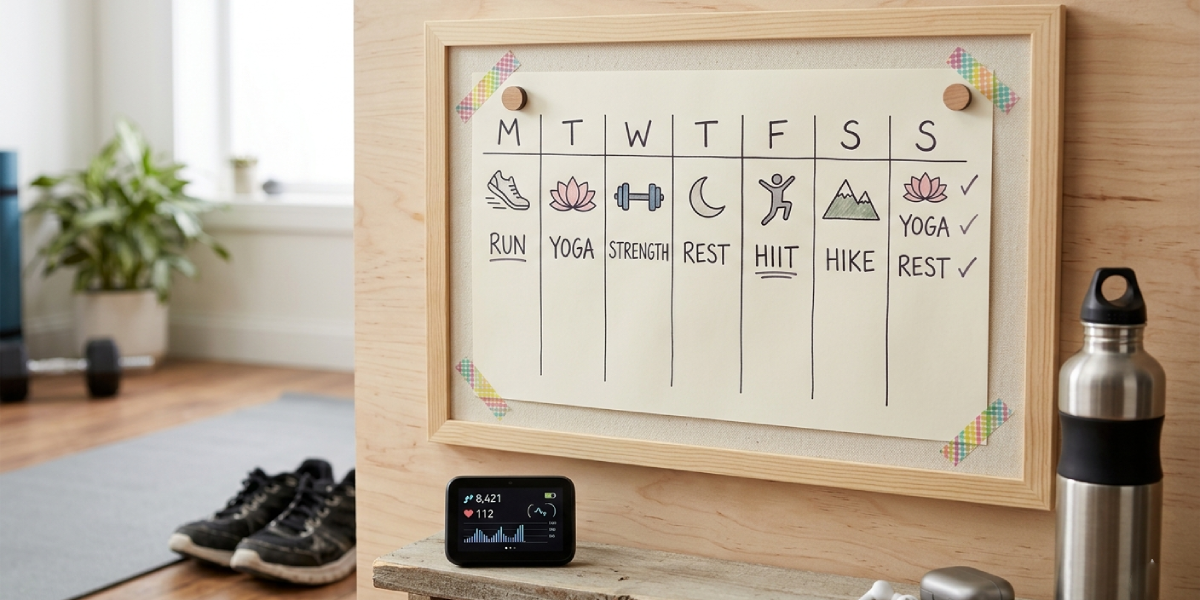
If you have ever wondered how often should you exercise per week to actually see results, you are not alone. This is one of the most common questions asked by beginners and experienced gym-goers alike. The honest answer is: it depends on your goals, your current fitness level, and how well your body recovers.
But that does not mean there is no clear guidance. Science, and decades of real-world training experience, give us a strong framework to work from.
This article breaks down exactly how many days per week you should be working out, what types of exercise to prioritize, and how to build a sustainable routine that produces lasting changes in your body and health.
What the Science Says About Weekly Exercise Frequency
The American College of Sports Medicine (ACSM) and the World Health Organization (WHO) both recommend that adults aim for at least 150 to 300 minutes of moderate-intensity aerobic activity per week, or 75 to 150 minutes of vigorous-intensity activity.
On top of that, muscle-strengthening activities should be performed on two or more days per week.
These are minimum thresholds. They are designed to support basic health and reduce the risk of chronic disease. If your goal is to lose body fat, build muscle, improve athletic performance, or significantly change your physique, you will likely need to train more strategically and consistently.
Research consistently shows that frequency matters, but so does volume and recovery. Training a muscle group or energy system too infrequently means you miss out on the compounding stimulus of repeated practice. Training too frequently without enough rest leads to overtraining, injury, and stalled progress.
The sweet spot for most people falls between three and five workout days per week.
How Often Should You Exercise Per Week Based on Your Goal
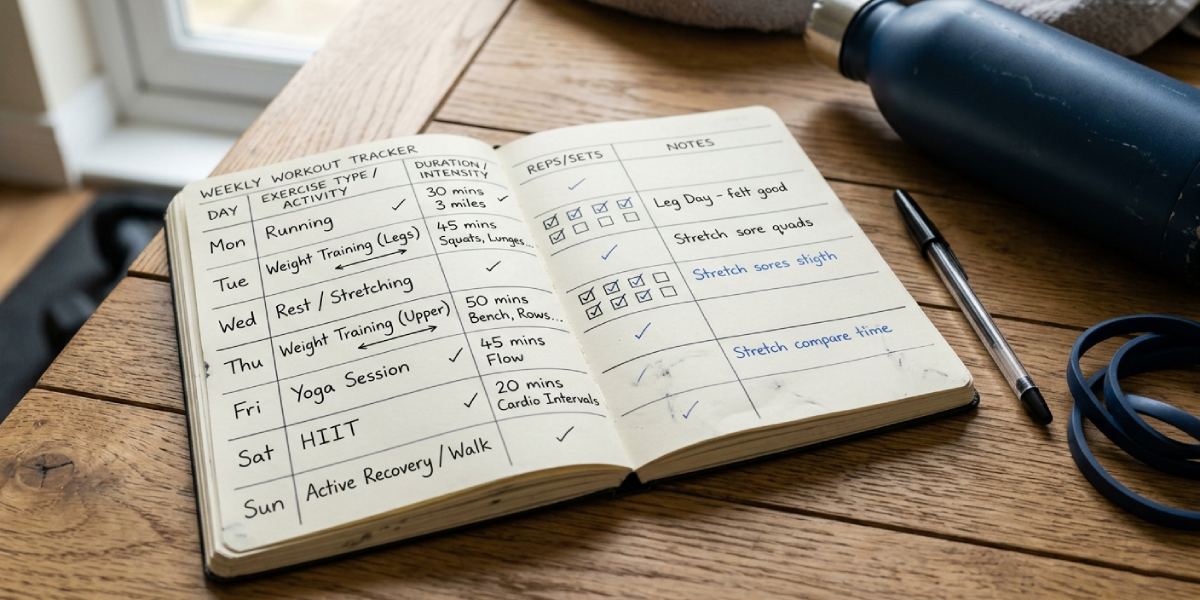
Not all fitness goals are created equal, and your ideal training frequency should reflect what you are actually working toward. Here is a goal-by-goal breakdown to help you plan smarter.
For General Health and Disease Prevention
If your primary aim is to stay healthy, maintain a healthy weight, and reduce your risk of conditions like heart disease, type 2 diabetes, and hypertension, then exercising three to four days per week is often sufficient. A combination of moderate cardio and two resistance training sessions per week can make a meaningful difference in long-term health outcomes.
Even short sessions count. A 30-minute brisk walk five days a week meets the WHO’s minimum aerobic guidelines. The key is consistency over intensity, especially when you are just starting out.
For Weight Loss and Fat Reduction
Fat loss comes down to a caloric deficit sustained over time, but exercise accelerates this process and preserves lean muscle mass during the cut. Most people aiming to lose body fat benefit from four to five workout days per week, combining cardio with strength training.
High-Intensity Interval Training (HIIT) has gained popularity because it burns a significant number of calories in a short time and elevates your metabolic rate for hours afterward. However, HIIT should not be done every day. Two to three HIIT sessions per week, paired with two strength training sessions, is a common and effective structure for fat loss.
Tracking your Body Mass Index can be a useful starting point for understanding where you currently stand and setting a realistic target for where you want to go. While BMI has limitations, it provides a general health benchmark that most healthcare professionals still reference.
For Muscle Building and Strength
If hypertrophy (muscle growth) or raw strength is your primary goal, resistance training frequency becomes especially important. Research on muscle protein synthesis suggests that training each muscle group at least twice per week produces significantly better results than training it only once per week.
A well-structured program for muscle building typically involves four to five strength training days per week, organized around either a push-pull-legs split, an upper-lower split, or a full-body approach. Beginners often respond well to three full-body sessions per week because their nervous systems adapt quickly and the frequency of stimulus drives rapid early gains.
Progressive overload, meaning gradually increasing the weight, reps, or difficulty of your exercise routines over time, is the fundamental driver of strength and muscle development. Frequency without progression will eventually plateau.
For Cardiovascular Fitness and Endurance
Athletes training for events like 5K runs, half marathons, or cycling races typically train five to six days per week, varying intensity levels. Even for non-competitive fitness enthusiasts who simply want better cardiovascular endurance, four to five cardio sessions per week at varying intensities tends to produce measurable improvements in VO2 max and stamina over eight to twelve weeks.
Zone 2 training, which involves sustained low-intensity cardio at roughly 60 to 70 percent of your maximum heart rate, has gained enormous attention from longevity researchers and performance coaches alike. Doing three to four Zone 2 sessions per week, each lasting 45 to 60 minutes, is associated with significant improvements in metabolic health and aerobic capacity.
The Role of Rest and Recovery in Your Weekly Schedule

One of the most overlooked aspects of an effective exercise routine is rest. Muscles do not grow during the workout; they grow during recovery. When you train, you create microscopic tears in muscle fibers. Rest allows those fibers to repair and grow back stronger.
Most fitness professionals recommend at least one to two full rest days per week, particularly for people doing high-intensity or high-volume training. Active recovery, such as light walking, yoga, or stretching, can be a productive alternative to complete rest on those days without impeding recovery.
Poor sleep, chronic stress, and inadequate nutrition can all undermine your recovery and make even a moderate workout schedule feel unsustainable. If you are consistently feeling fatigued, sore, or unmotivated, your body may be signaling that you need more recovery time, not more training sessions.
A Sample Weekly Exercise Schedule for Different Fitness Levels
To make this practical, here are sample weekly schedules tailored to different experience levels and goals.
Beginner: 3 Days Per Week
| Day | Activity | Duration |
|---|---|---|
| Monday | Full-body strength training | 45 minutes |
| Wednesday | Moderate cardio (brisk walking or cycling) | 30 minutes |
| Friday | Full-body strength training | 45 minutes |
| Tue/Thu/Sat/Sun | Rest or light walking | As needed |
Intermediate: 4 to 5 Days Per Week
| Day | Activity | Duration |
|---|---|---|
| Monday | Upper body strength | 50 minutes |
| Tuesday | HIIT cardio | 25 minutes |
| Wednesday | Lower body strength | 50 minutes |
| Thursday | Active recovery or yoga | 30 minutes |
| Friday | Full-body or push-pull session | 55 minutes |
| Saturday | Zone 2 cardio (jogging or cycling) | 45 minutes |
| Sunday | Full rest | — |
Advanced: 5 to 6 Days Per Week
Advanced athletes typically follow a structured split program. A push-pull-legs routine done twice per week (six training days) is popular among those pursuing serious muscle development. This structure ensures each muscle group receives two quality training stimuli per week while allowing adequate recovery between sessions targeting the same muscles.
Common Mistakes People Make With Exercise Frequency
Understanding how often you should exercise per week also means knowing what not to do. Here are some patterns that consistently derail progress.
- Training every single day without rest: Even elite athletes schedule deliberate recovery. Continuous training without rest leads to diminishing returns and increases injury risk significantly.
- Doing the same workout every session: Variety across workout types, intensities, and muscle groups keeps your body adapting and reduces overuse injuries.
- Starting too aggressively: Jumping from zero to six workout days per week in the first month is a recipe for burnout and injury. Build up gradually over weeks and months.
- Neglecting strength training in favor of cardio only: Cardio burns calories, but resistance training builds the lean muscle mass that raises your resting metabolic rate and reshapes your physique.
- Ignoring sleep and nutrition: Training frequency means very little if you are sleeping five hours a night and eating in a chaotic, unplanned way. Recovery starts outside the gym.
How to Know When You Should Increase Your Training Frequency
Progress in fitness is not linear, and there will come a point where your current routine stops producing results. This is a natural signal that your body has adapted and needs a new stimulus.
Signs that you may be ready to increase your workout frequency include feeling fully recovered between sessions, no longer feeling challenged by your current workouts, and plateauing in your strength or body composition despite several weeks of consistent effort.
When increasing frequency, do so gradually. Add one additional training day per week and monitor how your body responds over two to four weeks before making further adjustments. Sustainable progress is built on smart progression, not sudden jumps in volume.
The Importance of Tracking and Adjusting Over Time
One of the most underappreciated habits among people who achieve lasting fitness results is consistent tracking. This does not need to be complicated. A simple training log that notes what you did, how you felt, and how the weights or distances progressed is enough to reveal patterns over time.
Keeping an eye on your overall health and wellness metrics alongside your fitness data gives you a fuller picture of whether your current approach is working. Energy levels, sleep quality, body measurements, strength gains, and mood are all valid data points that inform smarter training decisions.
Revisit your weekly schedule every four to eight weeks and ask yourself whether your current frequency and intensity are still aligned with your goals. Fitness is not a static destination; it is an evolving practice that should be adjusted as your body, schedule, and goals change.
Final Thoughts on How Often You Should Exercise Per Week
The most honest and useful answer to how often you should exercise per week is this: as often as you can recover from, while still making consistent progress toward your goal. For most people, that falls between three and five days per week.
Beginners often thrive on three structured sessions. Intermediate exercisers benefit from four to five. Those pursuing advanced athletic or physique goals may train five to six days with careful programming.
What matters most is not the number of days on paper but the quality, intentionality, and consistency of those sessions over months and years. A person who trains three times per week every week for a year will outperform someone who trains six days per week for a month and burns out.
Build a routine you can sustain, and the results will follow.
Frequently Asked Questions
How often should you exercise per week as a complete beginner?
Beginners typically do well with three workout days per week, allowing a full recovery day between sessions. This gives your muscles and connective tissue enough time to adapt without overwhelming the body. Start with two to three full-body strength sessions or a mix of cardio and bodyweight exercises, and gradually add intensity and frequency over the first two to three months.
Is exercising 5 days a week too much?
For most intermediate to advanced exercisers, five days per week is entirely appropriate as long as sessions vary in intensity and muscle groups are given adequate recovery time. The key is smart programming. Five identical high-intensity sessions back to back without rest would likely lead to overtraining, but five well-structured sessions that alternate muscle groups and intensity levels are highly effective.
Can you see results from working out just 3 days a week?
Yes, absolutely. Three well-structured workout sessions per week is enough to produce significant results in strength, body composition, cardiovascular health, and overall fitness, especially for beginners and intermediate exercisers. What matters is that those three sessions include progressive overload, adequate intensity, and a focus on compound movements that train multiple muscle groups simultaneously.
How many rest days per week do you need?
Most people benefit from one to two full rest days per week, though active recovery such as light walking, mobility work, or gentle yoga on those days is also a good option. The right number of rest days depends on your training intensity, sleep quality, stress levels, and overall recovery capacity. Listening to your body is just as important as following a structured plan.
Is it better to work out every day or every other day?
For the majority of people, working out every other day provides a better balance of training stimulus and recovery than working out every single day. That said, daily movement is generally healthy, even if not every session is a hard workout. You can train daily if you alternate between intense sessions and lighter active recovery days, but consecutive hard training days without rest will eventually impair performance and recovery.
Does exercise frequency matter more than exercise intensity?
Both frequency and intensity are important, and they work together. Frequency determines how often your body receives a training stimulus, while intensity determines how strong that stimulus is. For muscle building, research suggests that training each muscle group at least twice per week is critical, regardless of how intense those sessions are. For fat loss and cardiovascular health, a mix of high-intensity and moderate-intensity sessions spread across multiple days tends to produce the best outcomes.
How soon will I see results from exercising regularly?
Most people begin to notice improvements in energy levels and mood within the first one to two weeks of consistent exercise. Visible changes in body composition typically appear within four to eight weeks, depending on diet, starting fitness level, and training frequency. Measurable strength gains often occur within six to ten weeks of a well-structured resistance training program. Patience and consistency are the two non-negotiable ingredients for lasting results.
What is the minimum amount of exercise needed to maintain fitness?
Research suggests that even two to three moderate-intensity sessions per week is enough to maintain most of the fitness gains you have already built, as long as those sessions include both cardio and resistance training elements. This is encouraging for busy weeks or travel periods when your regular routine is disrupted. Maintaining fitness requires far less volume than building it, which means even a scaled-back schedule can preserve your progress.
Should I exercise on days when I feel sore?
Mild muscle soreness, known as Delayed Onset Muscle Soreness (DOMS), does not necessarily mean you should skip the gym. If you are sore in your upper body, you can still train your lower body, and vice versa. Light movement and active recovery can actually help reduce soreness by increasing blood flow to the affected muscles. However, if you are experiencing sharp pain, joint discomfort, or extreme fatigue, rest is the right call and pushing through could lead to injury.