


Building a healthy diet that supports your fitness goals is one of the most impactful decisions you can make for your body and long-term performance. Whether you are training for strength, endurance, weight loss, or simply better health, what you put on your plate shapes how well your body moves, recovers, and adapts. Nutrition is not a one-size-fits-all formula, but the foundational principles are consistent, research-backed, and entirely achievable with the right guidance.
This article walks you through those principles in practical, real-world terms so you can start making changes today that will compound into meaningful results over time.
Why Nutrition Is the Foundation of Every Fitness Goal
Many people approach fitness by focusing almost entirely on their workout routines, then wonder why their results plateau. The truth is that exercise is the stimulus, but food is the raw material your body uses to respond to that stimulus. Without adequate nutrition, your muscles cannot grow, your energy systems cannot replenish, and your hormones cannot function optimally.
Decades of sports science research consistently show that athletes and active individuals who align their nutrition with their training objectives outperform those who rely on exercise alone. Whether your goal is to build lean muscle, drop body fat, improve endurance, or maintain general wellness, a well-structured diet accelerates your progress in every category. You can explore effective exercise strategies alongside your nutrition plan to maximize your results.
Understanding Your Caloric Needs
Before you can build a diet that works for your specific fitness goal, you need to understand your energy requirements. Your total daily energy expenditure (TDEE) is the number of calories your body burns in a given day, accounting for your basal metabolic rate and your activity level.
- For fat loss: Aim for a modest caloric deficit of 300 to 500 calories below your TDEE. Larger deficits can cause muscle loss and metabolic adaptation.
- For muscle gain: A moderate caloric surplus of 200 to 400 calories above TDEE provides the energy needed for muscle protein synthesis without excessive fat accumulation.
- For maintenance and performance: Eating at or near TDEE supports consistent energy, recovery, and overall health.
Use a BMI calculator as a starting reference point for understanding where your body currently stands in relation to healthy weight ranges. While BMI is not a complete picture of health, it helps contextualize your baseline before setting specific dietary targets.
Macronutrients: The Building Blocks of a Fitness-Focused Diet
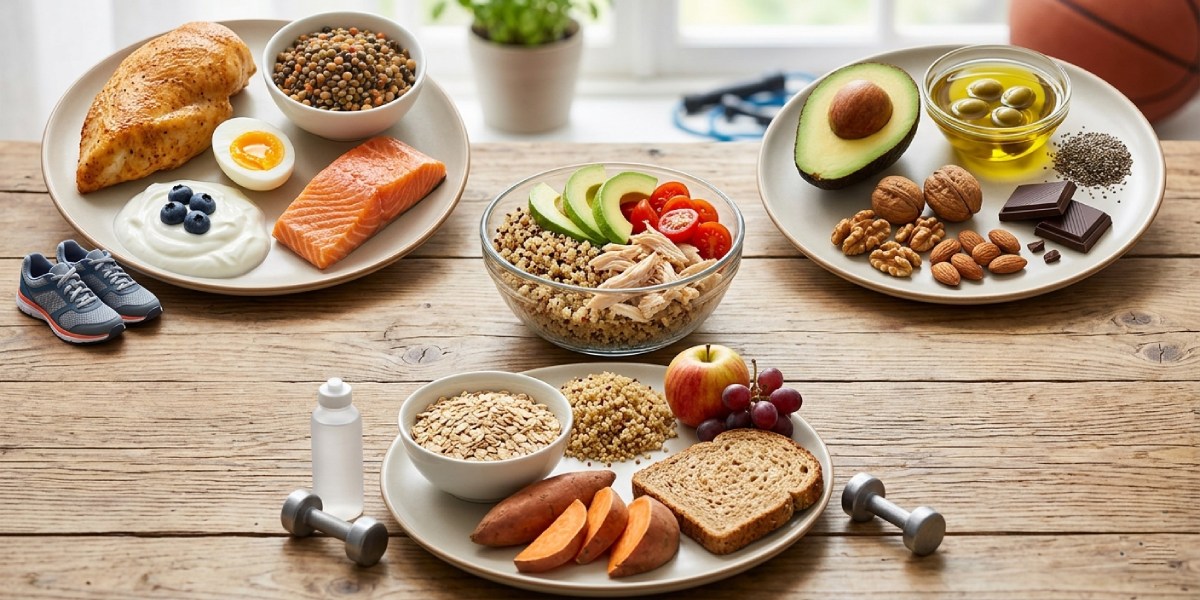
Macronutrients are the three primary categories of nutrients that supply energy: protein, carbohydrates, and fat. Each plays a distinct and critical role in supporting physical performance and recovery.
Protein: The Muscle Repair and Growth Driver
Protein is the cornerstone of any fitness-oriented diet. It provides the amino acids your muscles need to repair microtears caused by exercise and synthesize new muscle tissue. The general recommendation for active individuals ranges from 1.6 to 2.2 grams of protein per kilogram of body weight per day, with strength-focused athletes often benefiting from the higher end of that range.
High-quality protein sources include lean meats such as chicken breast and turkey, fish like salmon and tuna, eggs, Greek yogurt, legumes, tofu, and whey or plant-based protein powders. Distributing your protein intake evenly across three to five meals throughout the day optimizes muscle protein synthesis better than consuming it all in one sitting.
Carbohydrates: Your Primary Performance Fuel
Carbohydrates are the body’s preferred fuel source during moderate to high-intensity exercise. They are stored in the muscles and liver as glycogen, which is rapidly mobilized during workouts to sustain performance. A common misconception is that carbohydrates are the enemy of a healthy diet. In reality, the quality and timing of carbohydrates matter far more than simply avoiding them.
Prioritize complex carbohydrates such as oats, brown rice, sweet potatoes, quinoa, legumes, and whole grain bread. These foods provide sustained energy, dietary fiber, and micronutrients. Reserve faster-digesting carbohydrates like white rice or fruit for the period immediately before or after training when your body needs rapid glycogen replenishment.
Dietary Fat: Essential for Hormones and Recovery
Fat is often misunderstood, but it is indispensable for a healthy diet that supports your fitness goals. Dietary fat is critical for the production of hormones including testosterone and estrogen, both of which play significant roles in muscle development, recovery, and overall metabolic health. Fat also supports the absorption of fat-soluble vitamins A, D, E, and K.
Focus on healthy fat sources including avocados, olive oil, nuts and seeds, fatty fish, and eggs. Limit saturated fats from processed and fried foods, and largely avoid trans fats, which remain linked to cardiovascular risk despite being reduced in many food supplies.
Micronutrients That Most Active People Overlook
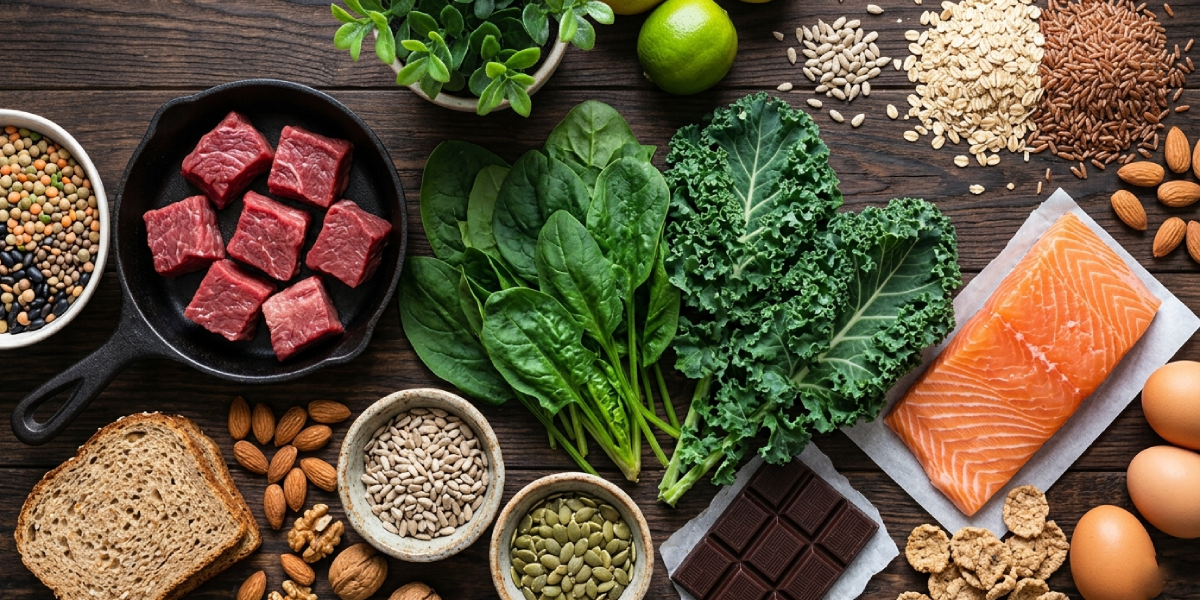
Vitamins and minerals are the unsung heroes of fitness nutrition. They do not provide calories, but they enable virtually every metabolic process that makes training effective. Deficiencies in key micronutrients can blunt your performance, impair recovery, and increase injury risk.
- Magnesium: Supports muscle contraction, energy production, and sleep quality. Found in leafy greens, nuts, seeds, and dark chocolate.
- Iron: Essential for oxygen transport in the blood. Particularly important for endurance athletes and women. Found in red meat, spinach, legumes, and fortified cereals.
- Vitamin D: Supports bone density, immune function, and muscle strength. Obtained primarily from sunlight and supplemented through fatty fish and fortified foods.
- Zinc: Plays a role in testosterone production and immune defense. Found in meat, shellfish, seeds, and legumes.
- B vitamins: Critical for energy metabolism. Found broadly in whole grains, animal products, and leafy greens.
Eating a colorful, varied diet rich in whole foods naturally covers most micronutrient needs. When gaps remain, targeted supplementation based on bloodwork is a reliable strategy.
Meal Timing and Pre- and Post-Workout Nutrition
When you eat can be nearly as important as what you eat, particularly for individuals with specific performance or body composition goals.
Pre-Workout Nutrition
Eating a balanced meal containing protein and complex carbohydrates two to three hours before training provides sustained energy without causing digestive discomfort. If you train in the morning or have limited time before a session, a smaller snack such as a banana with a tablespoon of almond butter or a small protein shake can serve effectively as a pre-workout fuel source.
Post-Workout Nutrition
The period immediately following exercise is often called the anabolic window. Research supports the importance of consuming protein and carbohydrates within 30 to 90 minutes after training to support muscle repair and glycogen replenishment. A meal containing 25 to 40 grams of protein alongside a serving of carbohydrates is a practical and evidence-backed target.
Hydration: The Most Underrated Performance Variable
Water is involved in virtually every physiological function, from temperature regulation to nutrient transport to joint lubrication. Even mild dehydration of two percent of body weight can measurably impair strength, endurance, and cognitive performance during exercise.
A general guideline for active individuals is to consume at least 35 to 45 milliliters of water per kilogram of body weight per day, increasing that amount on heavy training days or in hot environments. Monitor your urine color as a practical indicator: pale yellow signals adequate hydration, while dark yellow indicates a need for more fluid intake.
Electrolytes including sodium, potassium, and magnesium are lost through sweat and need to be replenished during and after prolonged or intense sessions. Sports drinks, coconut water, and electrolyte tablets are effective options for higher-intensity training lasting longer than 60 minutes.
Building a Practical Meal Plan Around Your Fitness Goals
A well-structured meal plan removes the daily decision fatigue that derails many people. It does not need to be rigid or complicated, but it should be consistent, flexible, and aligned with your training schedule.
| Meal | Timing | Focus | Example |
|---|---|---|---|
| Breakfast | Morning | Protein + complex carbs | Oats with Greek yogurt and berries |
| Pre-workout snack | 60–90 min before training | Fast carbs + light protein | Banana with peanut butter |
| Post-workout meal | Within 90 min after training | Protein + carbs | Grilled chicken with brown rice and vegetables |
| Lunch | Midday | Balanced macros | Quinoa bowl with salmon, greens, and avocado |
| Dinner | Evening | Protein + healthy fats + vegetables | Baked turkey with sweet potato and steamed broccoli |
| Evening snack | Optional | Slow-digesting protein | Cottage cheese or casein protein shake |
Common Nutrition Mistakes That Undermine Fitness Progress
Even motivated, hardworking individuals can hold themselves back with well-intentioned but counterproductive dietary habits. Awareness of these patterns helps you course-correct before they cost you months of progress.
- Eating too little protein: Inadequate protein leads to muscle loss during a caloric deficit and poor recovery during a surplus. Prioritize it at every meal.
- Underestimating calorie intake: Research consistently shows people underestimate how much they eat by 20 to 40 percent. Tracking food with an app for even two to four weeks builds lasting awareness of your actual intake.
- Eliminating entire food groups: Removing all carbohydrates or all fats from your diet is rarely necessary and often counterproductive. Balance and quality matter more than elimination.
- Relying heavily on supplements: Protein powders, pre-workouts, and vitamins are supplements, not foundations. A whole-food diet should always come first.
- Ignoring sleep: Sleep is when your body actually repairs and builds muscle. Poor sleep disrupts hunger hormones, increases cravings, and impairs recovery, regardless of how well you eat.
How to Sustain a Healthy Diet Long-Term
The most scientifically optimal diet means nothing if you cannot follow it consistently. Sustainability is the single most important variable in long-term nutrition success. This means finding foods you genuinely enjoy, building meals that fit your schedule and budget, and allowing room for social situations without guilt or derailment.
The 80/20 principle is widely endorsed by registered dietitians: eat nutrient-dense, whole foods approximately 80 percent of the time and allow flexibility for the remaining 20 percent. This approach maintains adherence without the psychological toll of rigid restriction.
Investing time in building sustainable health habits alongside your nutritional changes creates the behavioral foundation that keeps you consistent when motivation naturally fluctuates.
Frequently Asked Questions
How much protein do I need daily if I exercise regularly?
Most active individuals benefit from consuming between 1.6 and 2.2 grams of protein per kilogram of body weight per day. Those focused on building muscle or in a caloric deficit may aim for the higher end of this range to preserve lean tissue and support recovery.
Should I eat before or after a workout for best results?
Both matter. Eating a protein and carbohydrate-rich meal two to three hours before training fuels performance. Consuming protein and carbohydrates within 30 to 90 minutes after training supports muscle repair and glycogen replenishment. Prioritizing both pre- and post-workout nutrition delivers the best overall results.
Are carbohydrates bad for weight loss and fitness?
No. Carbohydrates are your body’s primary fuel source during exercise and are not inherently bad for weight loss. Total caloric intake and carbohydrate quality are what matter most. Whole food carbohydrates such as oats, brown rice, and sweet potatoes support both performance and body composition goals effectively.
How do I know how many calories I should be eating?
Start by calculating your total daily energy expenditure based on your age, weight, height, and activity level. From there, adjust by adding or removing 300 to 500 calories depending on whether your goal is to gain muscle or lose fat. Using a BMI calculator alongside a calorie tracking app gives you a practical starting point.
What are the best foods to eat for muscle building?
The most effective muscle-building foods are high in protein and provide a range of micronutrients. These include chicken breast, eggs, Greek yogurt, salmon, lean beef, legumes, tofu, and cottage cheese. Pairing these with quality carbohydrate sources and healthy fats creates the complete nutritional environment for muscle growth.
How important is hydration for fitness performance?
Hydration is critically important. Even a two percent reduction in body water can meaningfully reduce strength, endurance, and cognitive function during training. Active individuals should aim for at least 35 to 45 milliliters of water per kilogram of body weight daily, increasing intake during intense or prolonged sessions.
Do I need supplements to reach my fitness goals?
Supplements are not required for most people to achieve their fitness goals. A well-structured whole-food diet covers the majority of nutritional needs. Protein powder, creatine monohydrate, and vitamin D are among the most evidence-backed supplements for active individuals, but they should complement, not replace, a quality diet.
How long does it take to see results from changing my diet?
Most people notice early changes in energy levels and digestion within one to two weeks of improving their diet. Visible body composition changes typically require four to twelve weeks of consistent nutrition and training. Long-term and meaningful results such as significant muscle gain or fat loss generally develop over several months of sustained effort.
Can I build muscle and lose fat at the same time?
Yes, this process is known as body recomposition. It is most achievable for beginners, individuals returning to training after a break, and those who carry a higher percentage of body fat. It requires a high protein intake, a slight caloric deficit or maintenance level of calories, and a well-structured resistance training program.
What is the best diet for endurance athletes versus strength athletes?
Endurance athletes generally require a higher proportion of carbohydrates to sustain prolonged aerobic activity, along with adequate protein for muscle maintenance and recovery. Strength athletes prioritize protein for hypertrophy and may operate with a more moderate carbohydrate intake. Both groups benefit from healthy fats, micronutrient-rich whole foods, and consistent hydration strategies.