

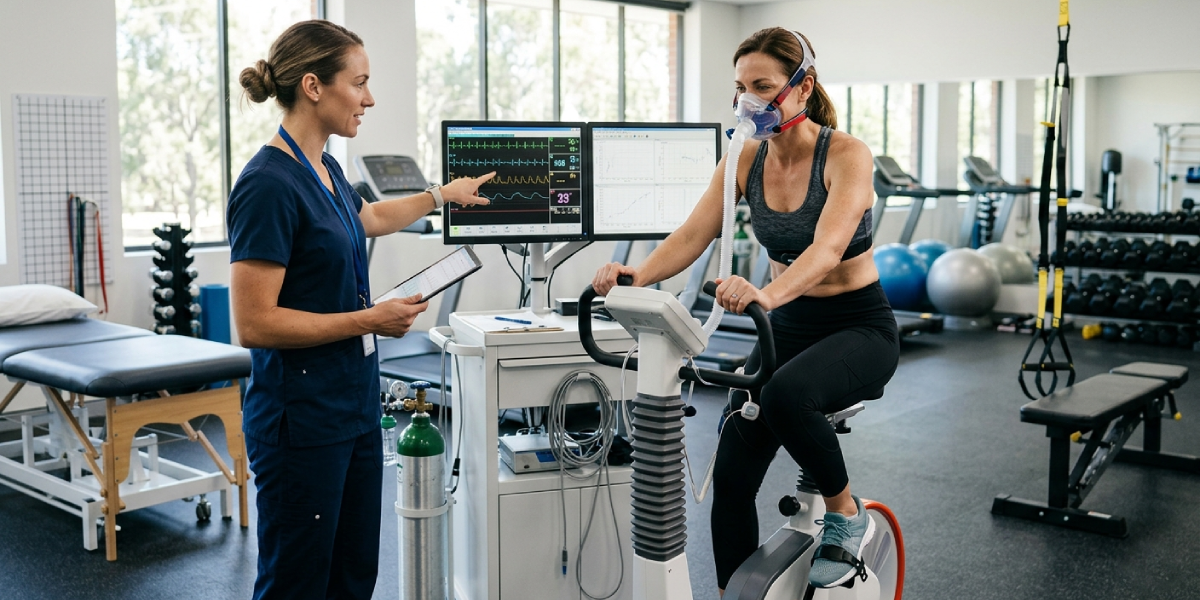
An exercise physiologist is one of the most underutilized health professionals available today. If you have ever wondered whether your workouts are actually helping your condition, or why your body responds differently to physical activity than you expected, an exercise physiologist may have the answers you need.
Understanding what an exercise physiologist does and when to see one can be the turning point in your long-term health journey.
What Is an Exercise Physiologist?
An exercise physiologist is a university-trained allied health professional who specializes in the science of human movement and how the body responds to physical activity.
Their work sits at the intersection of clinical health and physical performance, making them uniquely qualified to design and deliver exercise programs for people across the entire health spectrum — from elite athletes to individuals managing chronic disease.
Exercise physiologists study how the cardiovascular, musculoskeletal, metabolic, and neurological systems respond and adapt to exercise. This scientific foundation allows them to prescribe safe, targeted, and evidence-based physical activity that goes far beyond what a standard gym program can offer.
In many countries, clinical exercise physiologists are registered health professionals who work alongside doctors, physiotherapists, and dietitians. They are not personal trainers, although their work may look similar on the surface. The key difference lies in the depth of clinical knowledge and the populations they are qualified to work with.
Exercise Physiologist vs. Personal Trainer: Key Differences

This is one of the most common points of confusion for people exploring their options. Both professionals use exercise as their primary tool, but their scope, training, and purpose differ significantly.
- Education: Exercise physiologists complete a four-year university degree in exercise science or clinical exercise physiology, often with additional postgraduate training. Personal trainers typically complete a shorter certificate course.
- Scope of practice: Exercise physiologists are qualified to work with individuals who have chronic illnesses, injuries, disabilities, mental health conditions, and post-surgical needs. Personal trainers are generally suited for healthy individuals with performance or aesthetic goals.
- Clinical assessment: Exercise physiologists conduct formal health assessments, interpret medical records, and collaborate with other healthcare providers. Personal trainers focus on fitness testing and goal setting.
- Medicare and insurance: In some countries, exercise physiology services are covered under government health schemes and private health insurance, recognizing them as legitimate clinical care.
What Does an Exercise Physiologist Actually Do?

The day-to-day practice of an exercise physiologist covers a wide range of activities depending on the setting and the client. Here is a closer look at what these professionals do in practice.
Comprehensive Health and Fitness Assessments
Before prescribing any exercise, an exercise physiologist conducts a thorough assessment. This includes reviewing medical history, current medications, lifestyle factors, and previous injury or surgery. They may also perform fitness tests such as cardiovascular capacity assessments, muscular strength and endurance testing, flexibility evaluations, and body composition analysis.
Tracking your BMI and body composition over time is one of the tools they use to measure progress and guide program adjustments.
Individualized Exercise Prescription
Based on the assessment, exercise physiologists create structured, goal-specific exercise programs tailored to the individual. These programs specify the type of exercise, intensity, duration, frequency, and progression. Unlike generic workout templates, these prescriptions are grounded in clinical reasoning and adapted to the person’s health status and functional capacity.
Chronic Disease Management
One of the most impactful roles exercise physiologists play is in managing and improving chronic health conditions through targeted physical activity.
Conditions commonly addressed include type 2 diabetes, heart disease, osteoporosis, obesity, cancer, chronic obstructive pulmonary disease (COPD), Parkinson’s disease, and metabolic syndrome. Exercise is now recognized as medicine, and exercise physiologists are the practitioners trained to prescribe it with clinical precision.
Injury Rehabilitation and Prevention
Exercise physiologists work with individuals recovering from injury, surgery, or prolonged illness. They design progressive rehabilitation programs that help restore function, rebuild strength, and reduce the risk of re-injury. Their programs complement physiotherapy and medical treatment rather than replacing them.
Mental Health Support Through Movement
Research has consistently shown that structured exercise can reduce symptoms of depression, anxiety, and stress. Exercise physiologists working in mental health settings design programs that support psychological wellbeing, often working as part of a multidisciplinary team including psychologists and psychiatrists.
Workplace Health and Ergonomics
Some exercise physiologists operate within corporate wellness programs, helping employees manage musculoskeletal pain, improve posture, and reduce the physical toll of sedentary work. This can reduce sick leave, improve productivity, and support long-term employee health.
Performance Optimization for Athletes
Exercise physiologists work with competitive and recreational athletes to enhance performance through sport-specific conditioning, VO2 max testing, lactate threshold analysis, and recovery strategies. Their approach is data-driven and periodized, helping athletes peak at the right time.
When Should You See an Exercise Physiologist?
Many people wait until something goes wrong before seeking specialist support. However, there are clear situations where consulting an exercise physiologist sooner rather than later can make a significant difference.
You Have a Chronic Health Condition
If you are living with a condition such as heart disease, type 2 diabetes, arthritis, or osteoporosis, exercise can be both therapeutic and risky without proper guidance. An exercise physiologist can ensure you exercise in a way that delivers benefits without aggravating your condition.
Exploring structured health-focused exercise approaches under professional guidance is especially important when managing long-term illness.
You Have Had Surgery or a Major Injury
Post-operative rehabilitation and return-to-movement programs require careful progression. Exercise physiologists design these programs to support tissue healing, restore functional capacity, and prevent complications from returning to activity too quickly or too cautiously.
You Are Struggling to Lose Weight Despite Exercising
If your efforts at the gym are not translating into the results you expect, an exercise physiologist can identify barriers such as overtraining, poor exercise selection, insufficient intensity, or metabolic factors that may be limiting your progress. They take a whole-person approach rather than simply prescribing more of the same.
You Are New to Exercise and Have Health Risk Factors
Starting an exercise program when you are older, carry significant health risk factors, or have been sedentary for a long time requires proper screening. Exercise physiologists can conduct a pre-participation health assessment and design a safe entry point into structured exercise routines that build your capacity gradually.
You Are Experiencing Unexplained Fatigue or Poor Recovery
If exercise consistently leaves you exhausted rather than energized, or you are not recovering well between sessions, something may be off. An exercise physiologist can assess whether your program is appropriate for your current fitness level, health status, and lifestyle demands.
You Want to Exercise Safely During Pregnancy or Menopause
Hormonal changes during pregnancy and menopause significantly affect how the body responds to exercise. Exercise physiologists can prescribe safe, stage-appropriate programs that support physical health, manage symptoms, and reduce the risk of complications.
What to Expect at Your First Appointment
Your first session with an exercise physiologist is largely consultative. Expect to spend time discussing your medical history, current health status, medications, lifestyle, and goals. You may complete some functional assessments or physical tests, depending on your reason for attending.
Following this, your exercise physiologist will explain their findings and outline a proposed plan. Programs may be delivered one-on-one, in small groups, via telehealth, or as a home program. They will also communicate with your other healthcare providers as needed to ensure your exercise plan fits within your broader treatment.
How to Find a Qualified Exercise Physiologist
When selecting an exercise physiologist, look for registration or accreditation with the relevant professional body in your country. In Australia, this is Exercise and Sports Science Australia (ESSA). In the United States, the American College of Sports Medicine (ACSM) and the American Society of Exercise Physiologists (ASEP) are the main credentialing bodies.
Registration ensures the practitioner meets educational and ethical standards and maintains ongoing professional development.
Ask your general practitioner for a referral, check whether your private health insurer covers the cost, or search the practitioner database of your national professional body. Many exercise physiologists also offer bulk-billing or subsidized sessions depending on your eligibility.
The Growing Importance of Exercise Physiology in Modern Healthcare
As healthcare systems worldwide shift toward preventive and chronic disease management models, the role of exercise physiology has never been more relevant. Physical inactivity is now recognized as one of the leading modifiable risk factors for chronic disease, and exercise is increasingly prescribed alongside medication and other treatments.
Exercise physiologists are positioned at the front line of this shift, bringing clinical expertise and practical application together in a way few other health professionals can. Whether you are managing a health condition, recovering from injury, trying to improve performance, or simply looking to move better and feel stronger, an exercise physiologist can help you get there safely and effectively.
Frequently Asked Questions
What qualifications does an exercise physiologist need?
An exercise physiologist typically holds a four-year university degree in exercise science, clinical exercise physiology, or a related field. Many also complete postgraduate qualifications. In most countries, they must be registered with a professional body such as ESSA in Australia or be certified through organizations like the ACSM in the United States to practice clinically.
Is an exercise physiologist the same as a physiotherapist?
No. While both work with movement and rehabilitation, physiotherapists primarily focus on diagnosing and treating injuries, pain, and movement dysfunction, often using manual therapy. Exercise physiologists specialize in exercise prescription for chronic disease management, rehabilitation, and performance. They frequently work together as part of a multidisciplinary team.
Can an exercise physiologist help with weight loss?
Yes. Exercise physiologists can design evidence-based programs that support fat loss, preserve lean muscle mass, and improve metabolic health. They can also identify why current efforts may not be working and adjust the approach based on your individual physiology, fitness level, and health status.
Do I need a doctor’s referral to see an exercise physiologist?
In most cases, no. You can self-refer to an exercise physiologist. However, a referral from your doctor may be required if you want to access subsidized sessions through government health programs or claim rebates through private health insurance. It is worth checking your specific coverage and local healthcare rules.
How often should I see an exercise physiologist?
The frequency depends on your goals and health needs. Some people attend weekly sessions, while others see their exercise physiologist monthly for program reviews and progress assessments. Many also receive home-based or independent programs to follow between appointments. Your exercise physiologist will recommend an appropriate schedule based on your situation.
Can exercise physiologists work with children and older adults?
Yes. Exercise physiologists are trained to work with people across all life stages. For children, they may address developmental movement needs, sports performance, or chronic conditions. For older adults, they focus on fall prevention, maintaining functional independence, managing age-related health conditions, and improving strength and balance.
What conditions can exercise physiology help manage?
Exercise physiologists work with a wide range of conditions including cardiovascular disease, type 2 diabetes, obesity, osteoporosis, cancer, COPD, mental health disorders, neurological conditions such as Parkinson’s disease and multiple sclerosis, musculoskeletal injuries, and post-surgical recovery. The common thread is that structured, targeted exercise has been shown to produce meaningful clinical benefits for each of these conditions.
Is exercise physiology covered by health insurance?
In many countries, exercise physiology services are partially or fully covered by private health insurance and government health schemes. In Australia, for example, eligible patients can access Medicare-subsidized sessions through chronic disease management plans. In the United States, coverage varies by insurer and plan. It is recommended to contact your provider directly to confirm your entitlements before booking.