


How exercise affects your sleep quality is one of the most practical health questions you can ask, because the answer changes how fast you fall asleep, how deeply you rest, and how recovered you feel each morning. After years of testing different training schedules and tracking my own sleep data, I have seen firsthand how a well-timed workout can turn restless nights into consistent, restorative sleep.
This is not a theoretical discussion. It is a grounded look at what actually happens in your body when you move during the day and rest at night, backed by current research and real-world experience from coaching people through their own sleep struggles.
The Real Connection Between Exercise and Sleep Quality
Sleep and physical activity operate on a feedback loop. Movement during the day raises your core body temperature and activates your nervous system, then several hours later, as your body cools and your stress hormones decline, you become primed for deep, restorative sleep. Skip the movement, and that natural wind-down signal weakens.
Recent meta-analyses of randomized controlled trials confirm that moderate-intensity exercise meaningfully improves sleep parameters, supporting its use as a legitimate, low-risk component of insomnia management strategies. This is not a fringe claim.
It is becoming a standard recommendation in sleep medicine because the evidence keeps holding up across different age groups and exercise types.
From a practical standpoint, the people I have worked with who add consistent structured exercise routines into their week almost always report falling asleep faster and waking up less during the night within two to four weeks. The change is rarely dramatic on night one, but it compounds.
What Happens Inside Your Body When You Exercise Before Bed
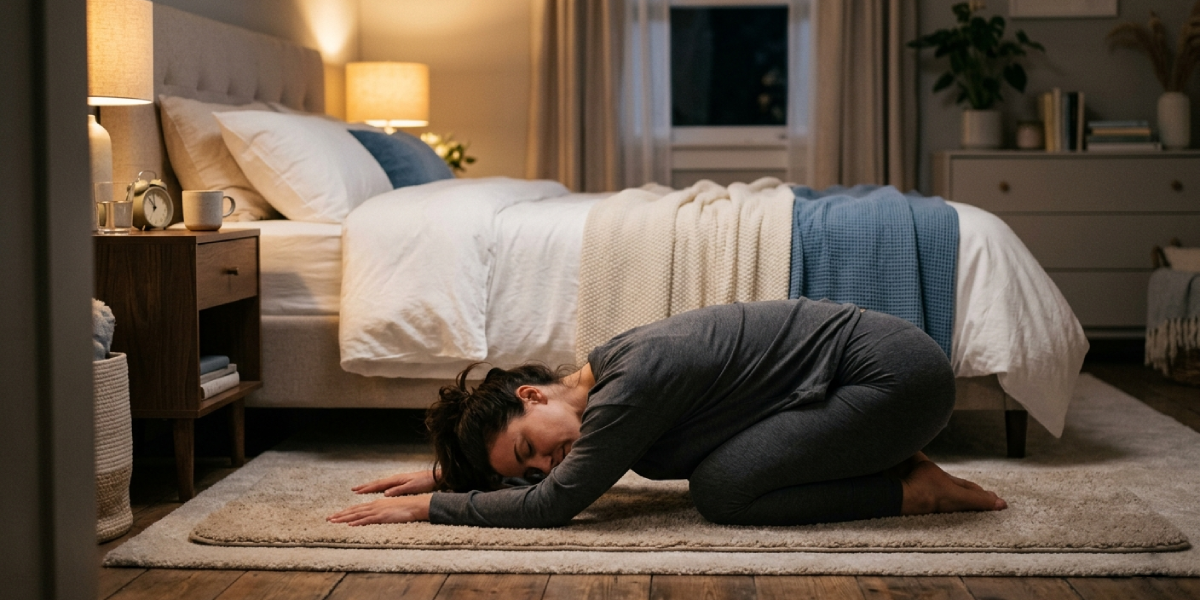
Understanding the mechanisms helps explain why timing and intensity matter so much. Exercise influences sleep through several overlapping biological pathways:
- Body temperature regulation: Exercise raises core temperature temporarily, and the subsequent drop a few hours later mimics the natural temperature decline that triggers sleep onset.
- Stress hormone reduction: Regular movement helps regulate the hypothalamic-pituitary-adrenal axis, which governs cortisol release. Chronically elevated cortisol is one of the most common reasons people lie awake at night.
- Neurotransmitter and growth factor support: Exercise increases brain-derived neurotrophic factor and supports the availability of sleep-related neurotransmitters, both of which play a role in deeper, more restorative sleep stages.
- Anxiety and mood regulation: Physical activity reduces everyday anxiety and tension, removing one of the most common psychological barriers to falling and staying asleep.
- Circadian rhythm reinforcement: Consistent activity timing, especially outdoor exercise with natural light exposure, helps anchor your internal clock so your body knows when to feel alert and when to wind down.
None of these mechanisms work in isolation. They reinforce each other, which is part of why people who exercise regularly tend to report not just longer sleep, but noticeably better sleep quality and fewer nighttime awakenings.
Morning, Afternoon, or Evening: Does Exercise Timing Matter?

This is the question I get asked most often, and the honest answer is that timing matters, but it is more individual than most generic advice suggests.
Morning Exercise
Morning workouts pair well with natural light exposure, which helps set your circadian rhythm earlier in the day. People who train in the morning often report easier wake-ups and more consistent sleep-wake timing over the following weeks.
Afternoon Exercise
For many people, this is the sweet spot. Your body temperature naturally rises in the late afternoon, and exercising during this window supports a deeper temperature drop later that evening, right when your body is preparing for sleep.
Evening Exercise
Evening workouts are not automatically harmful, but they require more nuance. Exercise has been shown to influence melatonin rhythms, and evening sessions in particular can delay or suppress melatonin release in some people, which may push back sleep onset.
If you only have time to train in the evening, a moderate-intensity session finished at least one to two hours before bed tends to work better than high-intensity training right before you try to sleep.
The practical takeaway from working with many different schedules: consistency in your exercise timing matters almost as much as the time of day itself. Your body adapts to patterns, so the goal is finding a window you can repeat night after night, not chasing a perfect formula.
How Much Exercise Do You Actually Need for Better Sleep?
According to current federal physical activity guidelines, adults should aim for at least 150 minutes of moderate-intensity aerobic activity per week, which breaks down to roughly 30 minutes a day, five days a week. This baseline is associated with measurable improvements in sleep quality, mood, and overall cardiovascular health.
Interestingly, newer research from 2025 has shifted some attention from total weekly volume toward consistency. A study analyzing Fitbit data found that exercising more frequently throughout the week, rather than concentrating activity into one or two long sessions, was associated with improvements in deep, restorative sleep.
This lines up with what I see in practice: someone who walks briskly for 25 minutes most days tends to sleep better than someone who does one intense two-hour session on the weekend and nothing else.
| Exercise Pattern | Typical Sleep Impact |
|---|---|
| Daily moderate activity (20-30 minutes) | More consistent sleep onset and deeper sleep stages |
| Weekend-only intense sessions | Some benefit, but less consistent improvement in sleep quality |
| No regular physical activity | Higher likelihood of fragmented or shallow sleep |
| Late-night high-intensity training | Possible delay in sleep onset for sensitive individuals |
If you are unsure where your body weight and activity level currently stand, using a tool like the BMI calculator can give you a starting reference point before adjusting your exercise routine for better recovery and sleep outcomes.
Exercise Type Matters: Aerobic, Strength, and Mind-Body Practices
Not all exercise affects sleep the same way. Based on both clinical research and what I have observed across different training styles, here is how the major categories compare.
Aerobic Exercise
Activities like brisk walking, cycling, swimming, and jogging are consistently linked to improved objective sleep measures, including deeper sleep stages and reduced time to fall asleep. This is often considered the most reliable category for improving measurable sleep architecture.
Resistance Training
Strength training contributes to better sleep largely through its effects on muscle recovery demand and overall energy expenditure. People combining resistance training with aerobic work often report the most well-rounded sleep improvements.
Mind-Body Practices
Yoga, tai chi, and similar low-intensity practices appear particularly effective for improving subjective sleep quality, meaning how rested someone feels they are, even when objective measurements show smaller changes. These practices are especially useful for people whose sleep issues are tied to stress and racing thoughts rather than physical restlessness.
For a broader look at structured workout options across these categories, the exercise resource library covers practical routines you can adapt to your current fitness level and schedule.
Who Benefits Most from Exercise-Driven Sleep Improvements
Age and life stage shape how much benefit you can expect, and how quickly.
Older adults, who often experience lighter, more fragmented sleep due to natural changes in sleep architecture, show some of the clearest improvements from structured exercise interventions in recent systematic reviews. Even modest, consistent activity appears to meaningfully improve subjective sleep quality in this population.
Adolescents and young adults face different challenges, often related to irregular schedules, screen exposure, and academic stress. Research from 2025 examining university students found that physical exercise improved sleep quality partly through its positive effects on health literacy and life satisfaction, suggesting the benefit is not purely physiological. Feeling more in control of your health and daily routine matters too.
Working adults managing demanding schedules tend to benefit most from consistency over intensity. A realistic, repeatable routine beats an ambitious one that gets abandoned after two weeks.
Common Mistakes That Undermine Exercise-Related Sleep Benefits
Through years of working with people trying to improve their sleep through movement, a few recurring mistakes show up again and again.
- Training too close to bedtime without adjusting intensity. High-intensity intervals right before sleep can leave your nervous system too activated to wind down quickly.
- Inconsistent scheduling. Exercising sporadically prevents your circadian rhythm from locking into a stable pattern.
- Ignoring hydration and nutrition timing. Large meals or excessive caffeine intake around workout time can offset the sleep benefits of the exercise itself.
- Overtraining without adequate recovery. Excessive training volume without rest days can elevate stress hormones rather than reduce them, working against sleep quality.
- Expecting overnight results. Sleep architecture changes gradually. Most people need two to four weeks of consistent activity before noticing a clear shift in sleep quality.
If you are also navigating broader lifestyle changes alongside your exercise routine, browsing the general health resources available can help you address sleep, nutrition, and stress management together rather than in isolation.
Building a Sleep-Friendly Exercise Routine
A practical, sustainable approach works better than a rigid plan you cannot maintain. Based on what consistently produces results:
- Aim for at least 150 minutes of moderate-intensity activity weekly, spread across most days rather than concentrated into one or two sessions.
- Choose a consistent time window you can realistically repeat, whether that is morning, midday, or early evening.
- If evening is your only option, finish moderate-intensity sessions one to two hours before bed and save high-intensity training for earlier in the day when possible.
- Combine aerobic activity with some resistance training and, if stress is a major factor in your sleep issues, a mind-body practice like yoga.
- Give any new routine at least three to four weeks before judging its effect on your sleep.
Frequently Asked Questions
Does exercise really improve sleep quality, or is this overstated?
Current research consistently supports a real, measurable benefit. Multiple randomized controlled trials and systematic reviews confirm that moderate-intensity exercise improves sleep parameters across different age groups, making it a credible, evidence-based recommendation rather than general wellness advice.
How soon will I notice better sleep after starting to exercise?
Most people notice initial improvements within one to two weeks of consistent activity, with more substantial changes in sleep depth and consistency appearing after three to four weeks of regular exercise.
Is it bad to work out right before bed?
It depends on intensity and individual sensitivity. High-intensity exercise immediately before bed can delay sleep onset for some people due to elevated heart rate and possible melatonin suppression. Moderate-intensity activity finished one to two hours before bed is generally better tolerated.
What type of exercise is best for sleep?
Aerobic exercise tends to produce the clearest improvements in objective sleep measures like deep sleep duration, while mind-body practices such as yoga often improve how rested people subjectively feel. A combination of both tends to offer the most complete benefit.
Can too much exercise hurt my sleep instead of helping it?
Yes. Overtraining without adequate recovery can elevate stress hormones and disrupt sleep rather than improve it. Balancing activity with proper rest days is essential for sleep benefits to materialize.
Does exercise help with insomnia specifically?
Research supports exercise as a legitimate, low-risk component of insomnia management strategies, often used alongside other behavioral approaches. It is not typically recommended as a sole replacement for clinical insomnia treatment in severe cases, but it consistently shows positive effects.
How much weekly exercise is recommended for better sleep?
Current guidelines recommend at least 150 minutes of moderate-intensity aerobic activity per week, which can be split into manageable daily sessions of around 20 to 30 minutes.
Does exercise timing matter more than total exercise volume?
Both matter, but recent research suggests that exercising more frequently throughout the week may be particularly important for improving deep, restorative sleep, even more so than concentrating the same total time into fewer sessions.
Can older adults benefit from exercise-related sleep improvements?
Yes. Systematic reviews specifically focused on older adults show meaningful improvements in subjective sleep quality from structured exercise interventions, making this one of the most well-supported age groups for this benefit.