

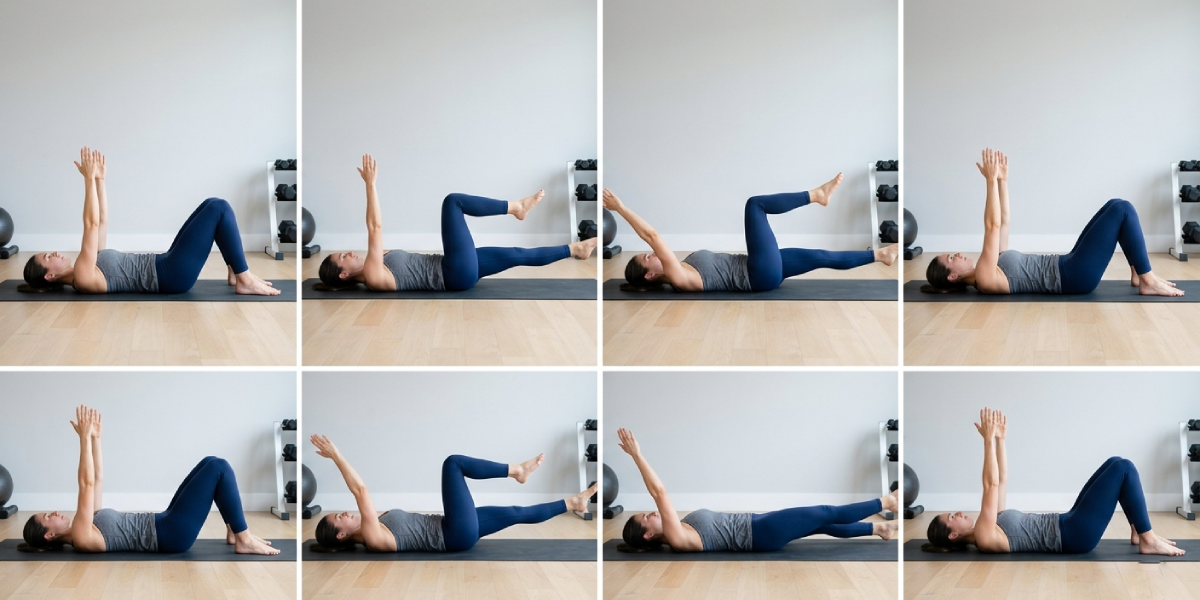
The dead bug exercise for core stability is one of the most effective yet underrated movements in strength and rehabilitation training. If you want a stronger, more resilient midsection without putting unnecessary stress on your spine, this floor-based exercise belongs in your weekly routine.
In this guide, you will learn exactly how to perform it correctly, why it works, and how to progress safely over time.
What Is the Dead Bug Exercise?
The dead bug is a supine (lying on your back) core exercise that challenges your ability to maintain a stable spine while moving your limbs independently. The name comes from the visual similarity to an insect lying on its back with legs in the air.
Do not let the quirky name fool you — this movement is used by physical therapists, strength coaches, and elite athletes worldwide for good reason.
Unlike crunches or sit-ups, the dead bug does not flex your spine. Instead, it trains anti-extension and rotational stability, which means your core muscles learn to resist unwanted movement rather than produce it.
This makes it an excellent option for people recovering from lower back pain, athletes looking to build functional strength, and beginners building a foundation of core control.
Muscles Worked During the Dead Bug
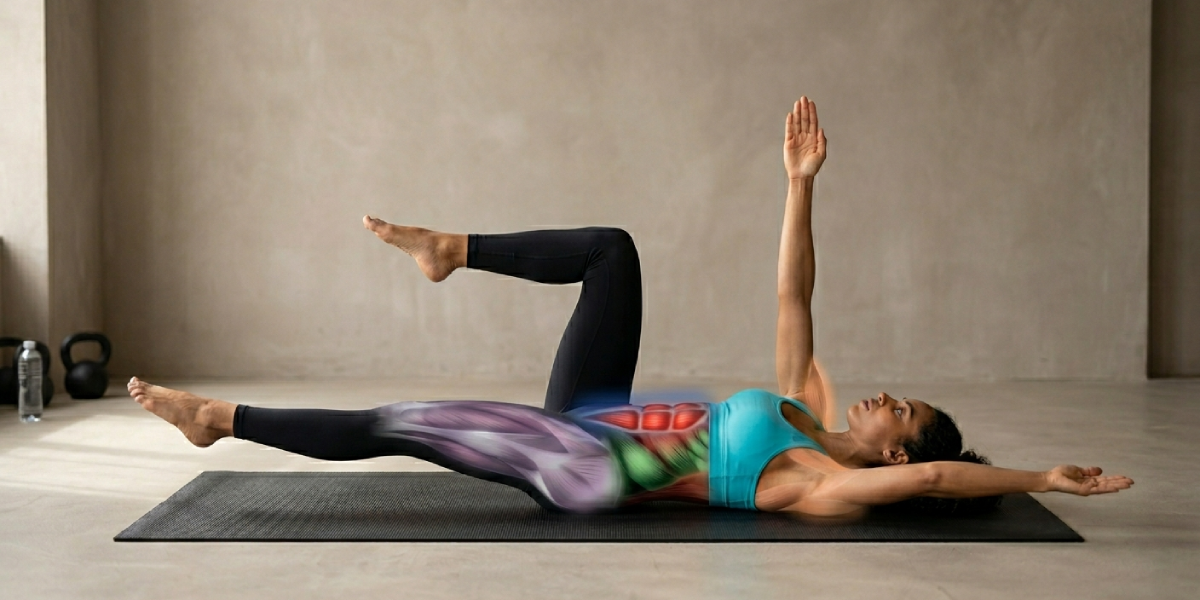
Understanding which muscles the dead bug targets helps you appreciate why it is so valuable for long-term health and performance. The primary muscles engaged include:
- Transverse abdominis: The deep stabilizing muscle that acts like a natural corset around your spine.
- Rectus abdominis: The front abdominal wall that assists in maintaining spinal position throughout the movement.
- Obliques (internal and external): These muscles resist rotation and lateral flexion, keeping your torso aligned as the limbs move.
- Erector spinae: The muscles running along your spine are isometrically engaged to prevent your lower back from arching.
- Hip flexors and glutes: Actively involved in controlling the movement of your legs during the exercise.
- Shoulder stabilizers: The rotator cuff and serratus anterior work to keep your arms overhead without compensating through your trunk.
This combination of deep and superficial muscle activation is what separates the dead bug from simpler core exercises and makes it a staple in well-rounded exercise programming.
Why Core Stability Matters for Your Health
Core stability is not just about aesthetics. A well-trained core protects your lumbar spine, improves your posture, enhances athletic performance, and reduces injury risk during everyday movements like lifting, bending, and twisting. Research consistently shows that individuals with poor core stability are at a higher risk of developing lower back pain — one of the leading causes of disability globally.
When your deep core muscles function properly, they create intra-abdominal pressure that acts as a natural brace for your spine. The dead bug specifically trains this bracing mechanism in a safe, controlled environment.
Because the exercise is performed lying down, your spine is fully supported by the floor, which minimizes loading while maximizing neuromuscular activation. This makes it ideal for a broad population, from post-rehabilitation patients to seasoned gym-goers.
Maintaining a healthy core is also linked to better metabolic health, improved breathing mechanics, and even reduced risk of pelvic floor dysfunction. For a broader look at how exercise supports overall wellness, explore evidence-based guidance on health and fitness.
How to Do the Dead Bug Exercise: Step-by-Step Instructions
Proper form is everything with this movement. The dead bug looks deceptively simple, but most people make critical errors the first time they attempt it. Follow these steps carefully.
Starting Position
- Lie flat on your back on a firm surface such as a yoga mat or exercise mat.
- Press your lower back firmly into the floor. There should be no gap between your lumbar spine and the mat.
- Engage your core by gently drawing your navel toward your spine — think about bracing as if you are about to be lightly punched in the stomach.
- Raise both arms straight up toward the ceiling directly above your shoulders, palms facing forward.
- Lift both legs so your hips and knees are each at 90-degree angles — shins parallel to the floor and thighs vertical.
The Movement
- Exhale slowly and simultaneously lower your right arm overhead toward the floor and extend your left leg out, keeping it a few inches above the ground.
- Move in a slow, controlled manner. Take approximately three to four seconds to reach the fully extended position.
- Keep your lower back pressed into the mat throughout the entire range of motion. If your back arches or lifts, you have gone too far.
- Hold briefly at full extension, then inhale as you return both limbs to the starting position.
- Repeat on the opposite side — left arm and right leg — to complete one full repetition.
Breathing and Bracing
Breathing is not optional — it is an essential part of executing the dead bug correctly. Exhale as you extend your limbs to help increase intra-abdominal pressure and stabilize the spine. Inhale as you return to the start. This rhythmic breathing pattern coordinates diaphragmatic activation with core muscle recruitment, which is exactly the kind of neuromuscular coordination the exercise is designed to develop.
Common Dead Bug Mistakes and How to Fix Them
Even experienced exercisers tend to make these errors. Knowing what to look for will help you correct form early and get more out of every repetition.
Allowing the Lower Back to Arch
This is the most common mistake. When you extend your leg too low or your arm too far back, the lower back lifts off the floor. This means your hip flexors and lumbar extensors are compensating instead of your deep core muscles doing the work.
Fix it by limiting your range of motion until you have the strength to go further. Even a small range done correctly is more beneficial than a large range done poorly.
Holding Your Breath
Breath holding creates a Valsalva maneuver, which can spike blood pressure and defeats the purpose of the breathing coordination the exercise is meant to train. Always maintain rhythmic breathing as described above.
Moving Too Quickly
Speed is your enemy here. Rushing through the repetitions reduces time under tension, makes it harder to detect form breakdowns, and removes the neurological challenge that makes the exercise valuable. Slow is controlled, and controlled is effective.
Letting the Arms Drift
Your arms should travel in a smooth arc directly overhead. Allowing them to drift sideways or collapse at the shoulder reduces the activation demand on your shoulder stabilizers and changes the mechanics of the movement.
Dead Bug Exercise Variations for Every Level
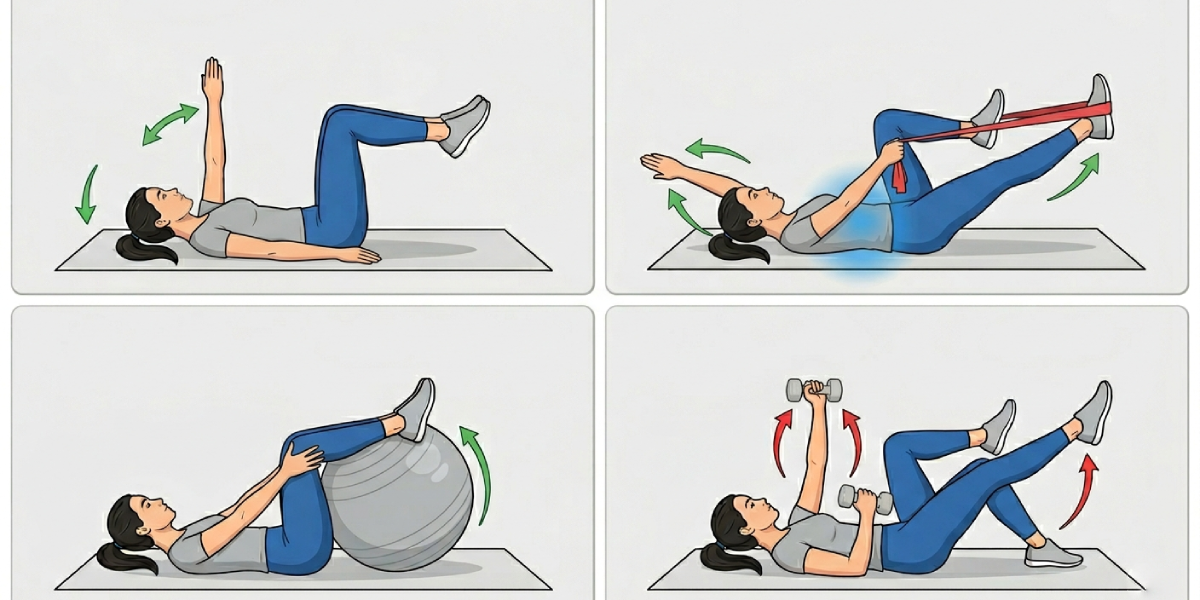
The dead bug can be scaled down for beginners or progressively made more challenging as your core stability improves.
Beginner: Arms Only or Legs Only
If the full contralateral movement is too challenging, start by moving just your arms while keeping your legs stationary, or move only your legs while your arms stay pointing toward the ceiling. This reduces the coordination demand while still building core stability.
Intermediate: Full Dead Bug with Band
Loop a resistance band around the arch of one foot and hold the other end in the opposite hand. As you extend that arm and leg, the band creates an additional challenge for your core to resist. This adds load without compromising spinal position.
Advanced: Dead Bug with Stability Ball
Place a stability ball between your knees and arms in the starting position, gently pressing into the ball with both contact points. As you extend one arm and the opposite leg, maintain light pressure on the ball with the stationary limb. This cue forces greater co-contraction of the deep stabilizers.
Advanced: Dead Bug with Dumbbell
Hold a light dumbbell in each hand. The additional weight at the end of your extended arm increases the lever arm your core must resist. Start conservatively — even a two to three kilogram dumbbell creates a meaningful challenge when combined with proper bracing.
How to Program the Dead Bug in Your Routine
The dead bug is versatile enough to be used as a warm-up activation drill, a standalone core training exercise, or a cool-down movement. Here are practical programming recommendations:
| Goal | Sets | Reps per Side | Rest |
|---|---|---|---|
| Rehabilitation / Beginner | 2–3 | 5–6 | 60 seconds |
| General Core Stability | 3 | 8–10 | 45–60 seconds |
| Athletic Performance | 3–4 | 10–12 | 30–45 seconds |
| Warm-Up Activation | 1–2 | 5–6 | Minimal |
Aim to include dead bugs two to three times per week for noticeable improvements in core control within four to six weeks. Pair the exercise with complementary movements such as bird-dogs, plank variations, and pallof presses to build a well-rounded core training program.
Who Should Do the Dead Bug Exercise?
The dead bug is one of the most universally appropriate core exercises available. It is particularly well suited for:
- Individuals recovering from lower back injuries, as it loads the core without spinal flexion or compression.
- Pregnant women (especially in the early stages) who need safe core strengthening options that do not place strain on the abdominal wall.
- Older adults seeking to improve balance, coordination, and spinal stability.
- Athletes looking to reinforce the trunk stability that transfers to sport-specific movements.
- Beginners who need a foundational movement to learn proper bracing and breathing before advancing to more demanding exercises.
If you are managing a specific injury or medical condition, consult with a qualified physiotherapist or certified personal trainer before adding new exercises to your program. Tracking your body composition alongside your training progress can also provide useful context — tools like a BMI calculator can help you monitor basic health metrics over time.
Dead Bug vs. Bird Dog: What Is the Difference?
Both the dead bug and the bird dog are contralateral limb exercises that build core stability, and they are often programmed together. The key distinction lies in position and loading pattern. The bird dog is performed on hands and knees, which means gravity loads the spine differently and requires greater balance.
It also places a higher demand on the glutes and posterior chain.
The dead bug, performed lying on your back, is generally considered slightly more accessible for people with limited hip mobility or balance challenges, and provides an excellent training stimulus for the anterior core muscles. The two exercises complement each other well and can be used in the same session without redundancy.
Safety Tips and Precautions
The dead bug is a low-risk exercise, but a few precautions are worth noting to ensure you train safely and sustainably.
- Always perform the exercise on a firm, non-slip surface to prevent unwanted sliding.
- If you experience any sharp pain in your lower back, hips, or shoulders, stop immediately and reassess your form or consult a professional.
- Do not attempt advanced variations until you can perform 10 controlled repetitions per side of the basic dead bug with no lower back lift.
- Avoid the exercise immediately after abdominal surgery without clearance from your medical team.
- Listen to your body. Muscle fatigue in the core is expected; joint discomfort is not.
Frequently Asked Questions
What is the dead bug exercise good for?
The dead bug exercise is primarily used to build deep core stability, improve spinal control, and strengthen the muscles that protect your lower back. It is also used in rehabilitation settings to help people recover from lumbar injuries safely, and by athletes to improve the trunk stability that transfers to sport performance.
How many reps of dead bug should I do?
For general core stability, aim for 8 to 10 repetitions per side for 3 sets. Beginners may start with 5 to 6 reps per side, while more advanced trainees can progress to 10 to 12 per side with added resistance. Quality always takes priority over quantity — each rep should be slow and fully controlled.
Is the dead bug safe for lower back pain?
Yes, the dead bug is widely recommended by physical therapists for individuals with lower back pain because it strengthens the core without flexing or compressing the spine. However, if you are currently experiencing acute back pain, consult your healthcare provider before beginning any new exercise routine.
How do I know if I am doing the dead bug correctly?
The clearest indicator of correct form is that your lower back remains in contact with the floor throughout the entire movement. Your breathing should remain rhythmic, your movements slow and controlled, and you should feel muscular work in your abdomen rather than strain in your lower back.
Can beginners do the dead bug exercise?
Absolutely. The dead bug is an ideal beginner core exercise. If the full contralateral pattern is too challenging, start by moving only your arms or only your legs independently before combining both limbs. Progress gradually as your coordination and core strength improve.
How often should I do dead bugs?
Two to three times per week is an effective frequency for most people. Because the dead bug is a low-impact, low-load exercise, it recovers quickly and can be used as a warm-up or cool-down on non-dedicated core training days as well.
What muscles does the dead bug exercise target?
The dead bug primarily targets the transverse abdominis, rectus abdominis, internal and external obliques, and the erector spinae. Secondary muscles include the hip flexors, glutes, and shoulder stabilizers, which are actively engaged in controlling the limbs throughout the movement.
Can I do dead bugs every day?
While the dead bug is low-intensity enough to be performed daily by some individuals, most people will see excellent results training it two to three times per week with adequate recovery in between. Daily performance is reasonable if used as a short activation drill rather than a full training stimulus.
How does the dead bug compare to planks for core training?
Both the dead bug and the plank are excellent core exercises, but they train different qualities. The plank builds static endurance and anti-extension strength in a prone position. The dead bug trains dynamic anti-extension stability with contralateral limb movement, which more closely mimics real-world movement patterns. Combining both exercises gives a more complete core training stimulus.
What equipment do I need for the dead bug exercise?
No equipment is required for the standard dead bug exercise. A yoga mat or exercise mat is helpful for comfort and grip on the floor. As you progress, you can add resistance bands, light dumbbells, or a stability ball to increase the challenge, but these are optional accessories rather than requirements.