

The clamshell exercise stands as one of the most effective yet underutilized movements for building hip strength and stability. Whether you’re an athlete, fitness enthusiast, or someone recovering from an injury, learning proper clamshell exercise technique can transform your lower body health.
This comprehensive guide walks you through everything you need to know about performing this powerful hip strengthening movement correctly.
What Is the Clamshell Exercise?
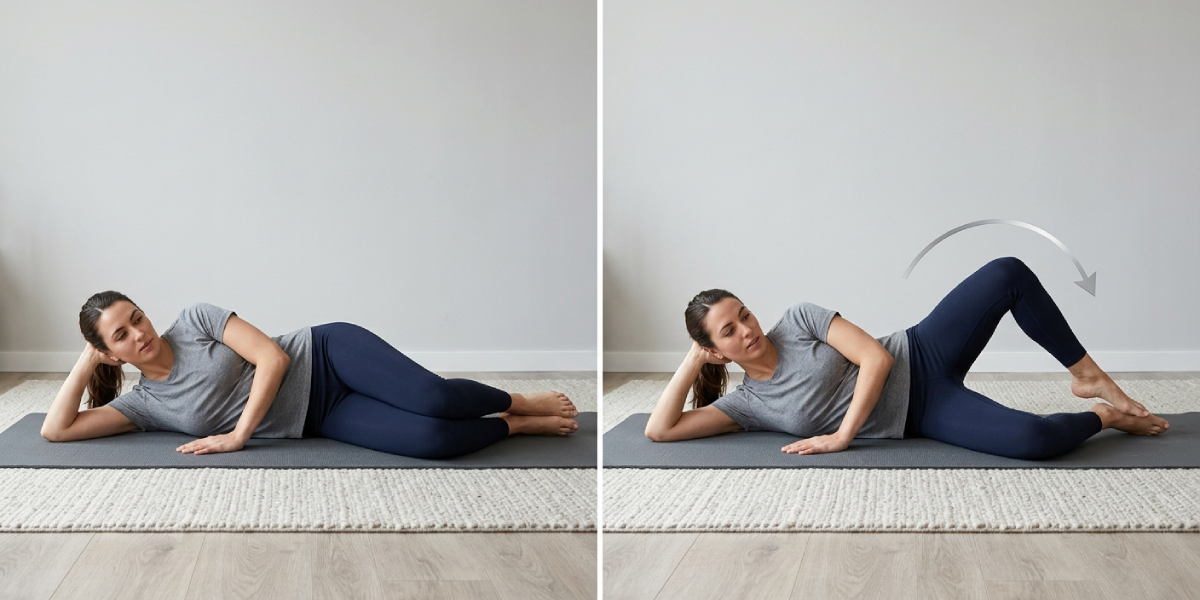
The clamshell exercise is an isolated hip abduction movement that primarily targets the gluteus medius muscle. Named for its resemblance to a clamshell opening and closing, this exercise involves lying on your side with your knees bent and opening your top knee while keeping your feet together.
The movement mimics the natural hip abduction mechanics your body uses during daily activities like walking and climbing stairs.
This exercise has gained recognition in physical therapy clinics, CrossFit gyms, and home fitness routines because it effectively activates the hip stabilizers without requiring any equipment. The clamshell exercise works muscles that most traditional strength training movements neglect, making it an essential addition to any balanced fitness program.
Why Hip Strength Matters for Overall Fitness
Your hip muscles form the foundation for virtually every lower body movement. Strong hips provide stability, reduce injury risk, and improve athletic performance. The gluteus medius specifically functions as a primary hip stabilizer, preventing excessive pelvic drop during single-leg activities.
Weak hip muscles contribute to poor movement patterns that cascade up the kinetic chain, affecting your knees, lower back, and ankles.
Many people experience knee pain, lower back discomfort, or hip instability because their hip muscles lack adequate strength and endurance. By consistently performing the clamshell exercise, you address this critical weakness at its source.
This is why physical therapists frequently recommend the clamshell exercise for patients recovering from injury or seeking to prevent future problems.
Top Benefits of Regular Clamshell Exercise Practice
Incorporating the clamshell exercise into your routine delivers multiple evidence-based benefits. The primary advantage is direct strengthening of the gluteus medius, which improves hip stability and reduces pain in many individuals.
Regular practice also enhances muscular endurance in the hip abductors, helping you maintain proper alignment throughout daily activities.
The clamshell exercise also contributes to improved posture and movement quality. Better hip stability translates to reduced knee valgus (inward collapse) during squats and lunges, protecting your knee joints from excessive stress.
Many athletes report improved running mechanics and jumping performance after adding this movement to their training. Additionally, the clamshell exercise serves as an excellent warm-up or activation exercise, preparing your hip muscles for more demanding movements.
People with sedentary jobs find particular value in the clamshell exercise because it counteracts the hip flexor tightness and gluteal amnesia that desk work creates. Even short daily sessions of this exercise can help restore proper muscle balance and reduce discomfort from prolonged sitting.
Step-by-Step Guide to Performing the Clamshell Exercise Correctly
Starting Position
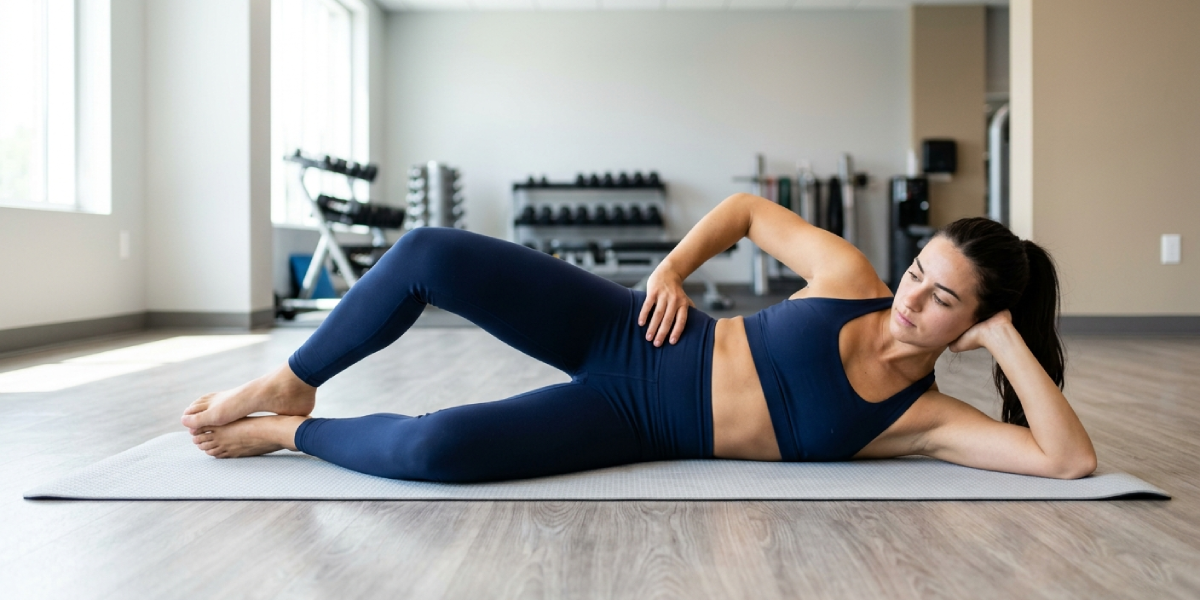
Begin by lying on your left side on a mat or padded surface. Your body should form a relatively straight line from your head to your knees. Position your left arm either extended beneath your head for support or bent at the elbow with your hand supporting your head. Your right arm can rest on your side or across your chest for balance.
Bend both knees to approximately ninety degrees. Your knees should align with your hips, and your feet should stay together throughout the movement. Your hips should be stacked, with your right hip directly above your left hip. Maintain this alignment throughout the entire exercise to maximize effectiveness.
The Movement Phase
Keeping your feet together and your lower body stable, slowly open your top knee upward, separating your knees as far as comfortable. This movement should originate from your hip, with your right knee lifting toward the ceiling. Your hips should remain stacked throughout this phase. Avoid letting your top hip roll backward, as this shifts the emphasis away from the target muscles.
Open your knee only as far as you can while maintaining perfect form. You do not need to achieve a large range of motion to activate your hip muscles effectively. Many beginners make the mistake of prioritizing range of motion over proper positioning, which reduces exercise effectiveness and increases injury risk.
The Closing Phase
After a brief pause at the top position, slowly return your top knee to meet your bottom knee in a controlled manner. Avoid letting the knee drop quickly or collapse inward. The eccentric portion of this movement, when your muscle lengthens under tension, provides significant strengthening benefits. Control the lowering phase for the full count.
Complete your desired number of repetitions on your left side before switching positions. Then lie on your right side and repeat the same movement pattern. Perform three sets of fifteen to twenty repetitions on each side for optimal results.
Common Mistakes to Avoid When Performing the Clamshell Exercise
Understanding frequent errors helps you maintain proper form and maximize results. The most common mistake involves rolling the hips backward during the opening phase. This compensation pattern shifts emphasis from the gluteus medius to the hip flexors and erector spinae, undermining the exercise’s primary benefit.
Another frequent error is moving too quickly through the repetitions. The clamshell exercise requires controlled, deliberate movement to properly activate the target muscles. Rushing through reps creates momentum that reduces muscle engagement and increases injury risk. Each repetition should take approximately three to four seconds total, with a slight pause at the top.
Failing to keep your feet together throughout the movement is another common issue. When your feet separate, your hips rotate, and your movement pattern changes dramatically. The contraction shifts from the hip abductors to other muscle groups, reducing the clamshell exercise’s effectiveness.
Some people position their legs incorrectly at the start. If your knees sit too far forward relative to your hips, or if your bottom leg angles incorrectly, you’ll struggle to maintain proper alignment. Ensure your knee stacks directly over your hip, not in front of or behind it.
Progressive Variations to Advance Your Clamshell Exercise Training
Resistance Band Clamshell Exercise
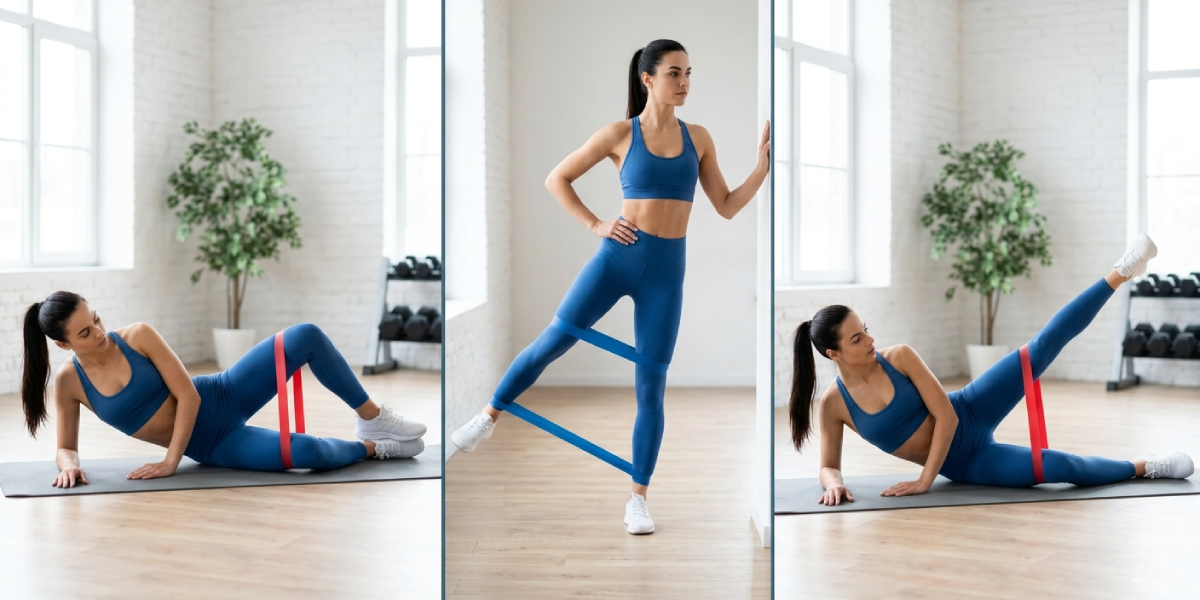
Once you master the bodyweight version, adding a resistance band dramatically increases difficulty and strength gains. Place a band around your thighs just above your knees. The band provides additional resistance during the opening phase, forcing your hip muscles to work harder. Band tension significantly amplifies muscle activation without requiring complex equipment.
Standing Clamshell Exercise Variation
The standing clamshell exercise offers a functional variation that closely mimics real-world movement patterns. Stand with your weight on one leg and open your elevated knee, mimicking the lying version’s movement. This standing variation demands greater stability and core engagement, making it a more challenging progression.
Side-Lying Leg Lift with Clamshell Combination
Combine the clamshell movement with side leg lifts for an advanced variation that targets multiple hip muscle groups. Open your knee like a clamshell, then extend your leg straight while maintaining the elevated position before returning. This combination exercise increases time under tension and demands greater muscular endurance.
Proper Frequency and Duration for Clamshell Exercise Programming
For general fitness and hip health, performing the clamshell exercise three to four times weekly provides substantial benefits. Many people notice significant improvements within two to three weeks of consistent practice. If you’re using this movement specifically for injury rehabilitation or prevention, consult with a physical therapist regarding appropriate frequency for your situation.
Each training session need not exceed ten to fifteen minutes. Even brief sessions of three sets per side, three times weekly, generate noticeable improvements in hip stability and strength. Consistency matters more than duration, so establishing a sustainable routine proves more valuable than sporadic intense sessions.
Avoid performing the clamshell exercise on consecutive days without addressing broader exercise programming needs. Your hips require recovery time between intense sessions. However, light activation clamshells performed daily as part of a warm-up routine provides excellent benefits without overtraining concerns.
Incorporating the Clamshell Exercise Into Your Training Routine
The clamshell exercise serves multiple roles in a comprehensive training program. As a warm-up movement, performing two to three sets of clamshells before lower body training activates your hip muscles and prepares them for more demanding exercises. This activation improves performance during subsequent movements and reduces injury risk.
You can also program clamshells as a primary exercise within lower body or hip-focused training days. When addressing hip weakness or imbalance, dedicating focused attention to this movement yields faster results. Some athletes perform clamshells as a finisher, adding high repetition sets to exhaust the hip muscles after heavier compound movements.
For individuals managing hip pain or recovering from injury, the clamshell exercise often appears as a cornerstone movement within physical therapy protocols. Your healthcare provider may recommend specific volume and frequency parameters based on your individual situation and recovery goals.
Real-World Applications for Hip Strengthening
Strong hips developed through consistent clamshell exercise training benefit numerous real-world activities. Runners experience improved stride mechanics and reduced injury incidence when hip strength improves. Athletes in cutting and pivoting sports like basketball, soccer, and tennis find that hip stability reduces ankle and knee injury risk during directional changes.
For general population health, stronger hips developed through the clamshell exercise improve gait quality, reduce fall risk in older adults, and alleviate hip and lower back pain that affects many individuals with sedentary lifestyles. People who spend extended periods sitting often experience significant relief from incorporating regular health-focused exercises like clamshells into their daily routines.
Addressing Individual Variations and Modifications
Not everyone tolerates the standard clamshell exercise position equally. If lying on your side creates discomfort, try placing a pillow between your knees or adjusting your leg position slightly. Some individuals find comfort by extending their bottom leg straight rather than keeping both knees bent.
Experiment with minor positioning adjustments to discover what allows you to maintain proper form while staying comfortable.
Individuals with significant hip pain or restricted range of motion should start with smaller opening ranges. You need not achieve a large knee separation to effectively target your hip muscles. Even opening your knee fifteen to twenty degrees while maintaining perfect positioning provides substantial benefits.
If you experience pain rather than muscle sensation during clamshells, discontinue the exercise and consult a physical therapist or healthcare provider. The clamshell exercise should never cause sharp pain, though mild muscle fatigue during and slight soreness afterward is normal when beginning a new exercise program.
Tracking Progress and Adjusting Your Clamshell Exercise Program
Monitor improvements in strength, endurance, and daily function rather than relying solely on feel. Track how many repetitions you complete each session, noting increases over weeks and months. Many people double or triple their initial capacity within eight to twelve weeks of consistent practice. Increased repetition volume indicates genuine strength gains.
Beyond numerical metrics, notice functional improvements. Can you now comfortably stand on one leg? Does climbing stairs cause less hip fatigue? Do you experience reduced lower back discomfort? These real-world improvements validate that your clamshell exercise training delivers meaningful results.
As your strength increases, progressively increase difficulty through resistance bands, slower tempos, or higher repetitions. Avoid stalling in your program by continuing to challenge your muscles appropriately. Progression ensures continued strength development and maintains engagement with your training routine.
Frequently Asked Questions
How many clamshell exercises should I do daily?
Most people benefit from performing three sets of fifteen to twenty repetitions per side, three to four times weekly. This volume provides substantial strengthening without overtraining. Some athletes perform additional clamshells as activation work before training, which is fine as long as it does not interfere with recovery.
Will clamshell exercises help reduce knee pain?
Yes, the clamshell exercise often helps reduce knee pain caused by hip weakness. Poor hip stability creates excessive stress on knee joints during movement. By strengthening your hip abductors through clamshells, you improve lower limb alignment and reduce knee stress. However, consult a healthcare provider about knee pain to rule out other causes requiring different treatment.
How long before I see results from clamshell exercises?
Most people notice improved hip stability and reduced discomfort within two to three weeks of consistent practice. Measurable strength gains become apparent within four to six weeks. Continued training over eight to twelve weeks produces substantial functional improvements and visible changes in athletic performance.
Can I do clamshell exercises if I have a hip labral tear?
Hip labral tears require specific rehabilitation protocols prescribed by your healthcare provider or physical therapist. While the clamshell exercise may be appropriate for your recovery, improper execution could aggravate your condition. Always obtain professional guidance before exercising with structural hip injuries.
Is the clamshell exercise effective for building glute strength?
The clamshell exercise primarily targets the gluteus medius, which is distinct from the larger gluteus maximus responsible for hip extension. While clamshells effectively strengthen hip stabilizers, they do not provide sufficient stimulus for significant gluteus maximus growth. Combine clamshells with hip thrusts, squats, and deadlifts for comprehensive glute development.
Should I feel the clamshell exercise in my lower back?
Feeling the movement in your lower back indicates you are rolling your hips backward during the exercise. Maintain stacked hips and keep your movement purely at the knee joint. If lower back involvement persists after correcting form, reduce your range of motion or consult a physical therapist for assessment.
Can beginners start with resistance bands for clamshell exercises?
Beginners should master the bodyweight clamshell exercise first. This establishes proper movement patterns without external resistance. Add resistance bands only after you consistently perform perfect-form repetitions without compensations. Start with light band tension rather than heavy resistance.
How does the clamshell exercise compare to other hip strengthening movements?
The clamshell exercise specifically targets hip abduction in an isolated pattern. Other movements like squats, lunges, and side-lying leg lifts engage the hips differently. A comprehensive hip strengthening program includes multiple movement patterns to fully develop all hip muscles. The clamshell exercise excels at targeting gluteus medius activation, making it valuable for balanced training.