

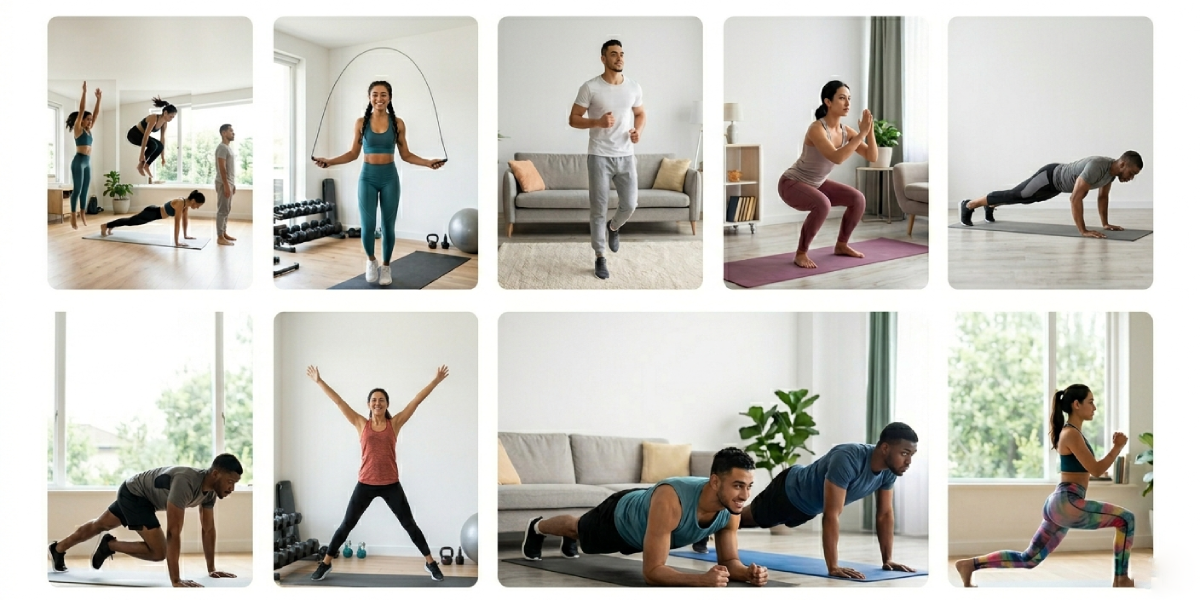
The best exercises for weight loss at home are more accessible, effective, and science-backed than most people realize. You do not need a gym membership, expensive equipment, or hours of free time to start burning fat and building a leaner body.
With the right movements, the right structure, and a consistent effort, your living room, backyard, or bedroom floor can become one of the most powerful fat-burning environments available to you.
This guide walks you through the most effective home-based exercises for weight loss, explains the science behind why they work, and gives you a practical framework for putting them into a routine that delivers real, lasting results.
Why Home Workouts Are Effective for Weight Loss
One of the biggest misconceptions about losing weight through exercise is that you need a fully equipped gym to see meaningful results. Research consistently shows that caloric expenditure, progressive overload, and consistency matter far more than the setting.
Home workouts eliminate commute time, remove psychological barriers like gym anxiety, and allow you to exercise more frequently because they are simply more convenient.
Weight loss occurs when you sustain a caloric deficit over time. Exercise accelerates this process not only by burning calories during the session but also by increasing your resting metabolic rate, building lean muscle mass, and improving hormonal balance.
The exercises covered below are chosen precisely because they maximize these effects without requiring a single piece of equipment.
Before diving into specific movements, it helps to understand that your BMI and body composition can serve as a useful starting benchmark. Knowing where you are today gives you a measurable point of comparison as your fitness improves over weeks and months.
The Best Exercises for Weight Loss at Home
1. Burpees
Burpees are widely regarded as one of the most demanding and effective full-body exercises for fat loss. A single burpee engages the chest, arms, core, glutes, and legs simultaneously while spiking your heart rate rapidly. Studies have shown that high-intensity exercises like burpees can burn up to 50 percent more fat than moderate-intensity steady-state cardio in a shorter time frame.
To perform a burpee correctly, stand with feet shoulder-width apart, drop into a squat position and place your hands on the floor, jump or step your feet back into a plank, perform a push-up, jump your feet back to your hands, and explosively jump upward with arms overhead. Aim for three sets of ten to fifteen repetitions with thirty seconds of rest between sets.
2. Jump Rope (or Jump Rope Simulation)
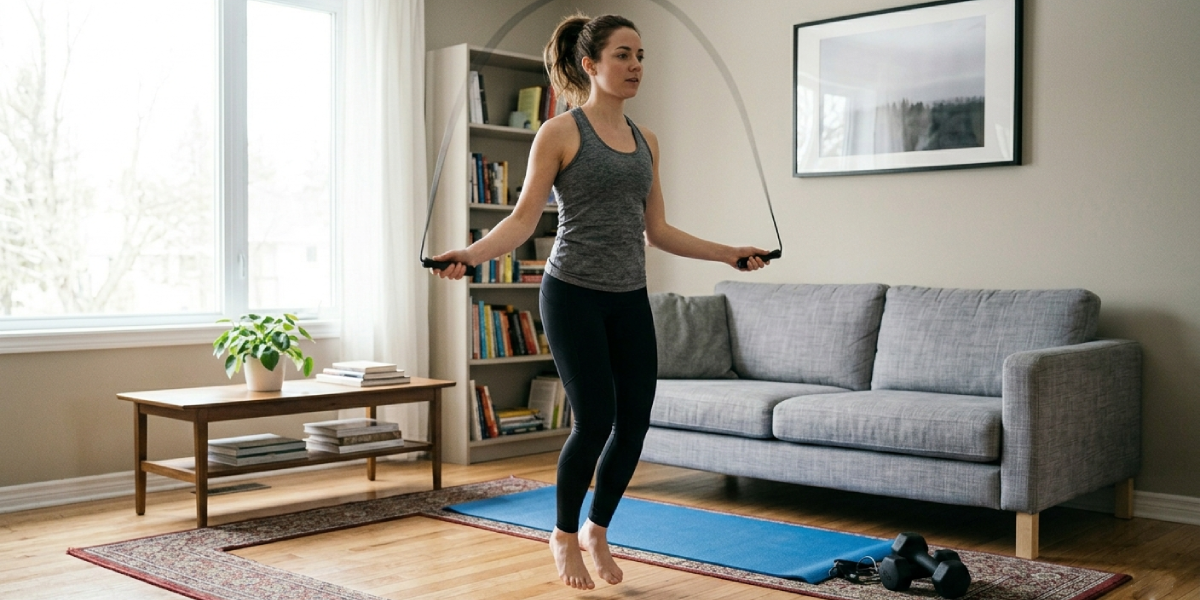
Jumping rope is one of the highest-calorie-burning exercises per minute available to you. A person weighing around 155 pounds can burn approximately 370 calories in just thirty minutes of moderate jump roping. If you do not have a rope, simulating the motion with your wrists and feet still delivers substantial cardiovascular benefit.
Jump rope also improves coordination, bone density, and cardiovascular endurance. Incorporating it into interval training — thirty seconds on, thirty seconds off — can dramatically enhance fat-burning efficiency through what is known as excess post-exercise oxygen consumption, or EPOC, the calorie-burning aftereffect of intense exercise.
3. High Knees
High knees are a zero-equipment cardio exercise that activates the hip flexors, core, and lower body while keeping your heart rate elevated. Stand in place and drive your knees alternately up toward your chest as fast as you comfortably can, pumping your arms in opposition. This movement mimics the biomechanics of running while being completely stationary.
Performing high knees for twenty to thirty seconds followed by a ten-second rest, repeated for eight rounds, constitutes a Tabata-style interval that research has demonstrated burns fat both during and after exercise.
4. Bodyweight Squats
The squat is arguably the most important movement pattern in human fitness. Bodyweight squats engage the quadriceps, hamstrings, glutes, and core, targeting some of the largest muscle groups in the body. Because muscle tissue burns more calories at rest than fat tissue, building lower body strength through squats contributes to a higher resting metabolic rate over time.
For proper form, stand with feet slightly wider than hip-width, toes pointed slightly outward. Lower your hips back and down as if sitting into a chair, keeping your chest tall and knees tracking over your toes. Drive through your heels to return to standing. Progress to jump squats to add a cardio component and intensify calorie burn.
5. Push-Ups
Push-ups are a compound upper body exercise that simultaneously works the chest, shoulders, triceps, and core stabilizers. Beyond their muscle-building benefits, push-ups performed at higher intensities or in circuit form elevate heart rate substantially, contributing to meaningful caloric expenditure.
Beginners can start with incline push-ups using a chair or countertop. Intermediate exercisers should aim for standard push-ups. Advanced practitioners can progress to decline push-ups, plyometric push-ups, or archer push-ups. Regardless of variation, maintaining a rigid plank alignment from head to heels is essential for both safety and effectiveness.
6. Mountain Climbers
Mountain climbers are a dynamic core and cardio exercise that burns calories at a rate comparable to running. Starting in a plank position, you drive alternate knees toward your chest in a running motion while your upper body remains stationary. This challenges the entire core, hip flexors, and shoulders while generating significant cardiovascular demand.
For weight loss, perform mountain climbers at a fast pace for thirty to sixty seconds. The combination of resistance and cardio in a single movement makes them exceptionally efficient for burning body fat.
7. Jumping Jacks
A classic movement that remains highly effective, jumping jacks provide a full-body warm-up option and a sustained low-to-moderate intensity cardio exercise. They are ideal for beginners building cardiovascular capacity or for active recovery intervals within a circuit. Adding them to a structured home workout routine helps keep total caloric burn high without overstressing joints.
8. Plank Variations
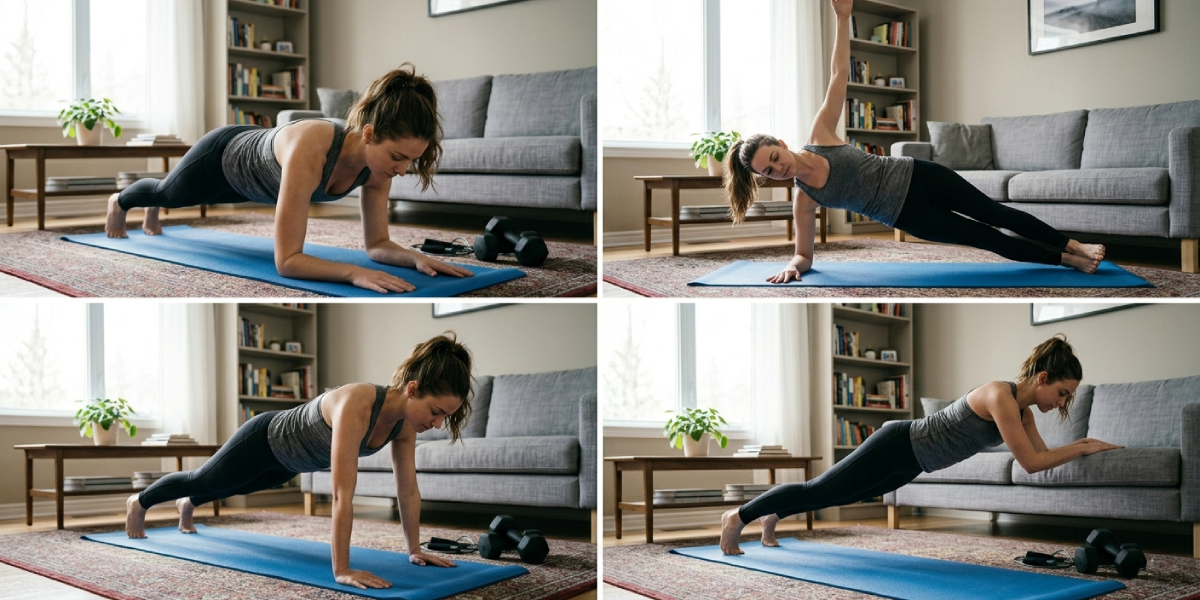
While planks are primarily known as a core exercise, their fat-loss value should not be underestimated. Holding a plank engages virtually every muscle group in your body simultaneously, increasing overall muscular demand and metabolic rate. Side planks, plank shoulder taps, and plank-to-downward-dog transitions keep the movement fresh and progressively challenging.
9. Lunges
Lunges target the glutes, quads, and hamstrings while also requiring core stabilization and balance. They can be performed as stationary lunges, walking lunges, or reverse lunges. Adding a knee drive at the top of the movement turns a strength exercise into a dynamic cardio-strength hybrid, making lunges highly effective for fat burning at home.
10. Stair Climbing
If you have a staircase at home, you have access to one of the most underutilized fat-burning tools available. Stair climbing has a high metabolic cost, engages the glutes and quadriceps powerfully, and can be performed at varying intensities. Walking stairs burns more calories per minute than flat walking. Running or skipping steps significantly intensifies the effort. Even ten to fifteen minutes of continuous stair climbing can constitute an effective cardiovascular session.
How to Structure a Home Weight Loss Workout
Individual exercises become far more effective when organized into a structured program. For weight loss, two training formats are particularly well-supported by exercise science.
High-Intensity Interval Training (HIIT)
HIIT alternates short bursts of near-maximal effort with brief recovery periods. A typical home HIIT session might involve twenty seconds of burpees, ten seconds of rest, twenty seconds of high knees, ten seconds of rest, and so on for four to eight rounds per exercise.
HIIT is time-efficient, elevates the post-workout metabolic rate for hours after the session, and consistently outperforms steady-state cardio for fat loss in controlled studies.
Circuit Training
Circuit training strings multiple exercises together with minimal rest between movements. A simple home circuit for weight loss might include jump squats, push-ups, mountain climbers, lunges, and plank holds performed consecutively for a set time or rep count before resting and repeating.
This format keeps heart rate elevated throughout while providing muscular resistance, combining the benefits of strength training and cardio in a single session.
For a deeper dive into exercise science and programming principles, exploring resources on structured exercise routines can help you build a well-rounded weekly plan that balances intensity, recovery, and variety.
The Role of Nutrition in Exercise-Based Weight Loss
No article on exercise for weight loss would be complete without acknowledging the critical role of nutrition. Exercise accelerates fat loss, but dietary habits determine whether a caloric deficit is actually achieved. You cannot out-train a poor diet, as the saying among fitness professionals goes, and research strongly supports this reality.
Focus on whole foods, adequate protein intake to preserve muscle mass during a caloric deficit, sufficient hydration, and consistent sleep. Sleep deprivation impairs fat metabolism, increases hunger hormones, and reduces workout performance, making it one of the most overlooked factors in weight management. Pairing your home exercise routine with sound nutrition and evidence-based health habits creates the most powerful foundation for sustainable fat loss.
A Sample Weekly Home Workout Plan for Weight Loss
| Day | Workout Type | Duration |
|---|---|---|
| Monday | HIIT (burpees, high knees, mountain climbers) | 25 minutes |
| Tuesday | Strength circuit (squats, push-ups, lunges, planks) | 30 minutes |
| Wednesday | Active recovery (light walking, stretching) | 20 minutes |
| Thursday | HIIT (jump rope, jumping jacks, jump squats) | 25 minutes |
| Friday | Full-body circuit (all exercises combined) | 35 minutes |
| Saturday | Stair climbing or outdoor walk | 30 minutes |
| Sunday | Rest or gentle yoga | Optional |
Tips for Staying Consistent and Maximizing Results
- Schedule workouts like appointments. Treat your exercise time as non-negotiable by blocking it on your calendar. Consistency over weeks and months produces far greater results than intensity over a few days.
- Progress gradually. Increase duration, intensity, or exercise difficulty every one to two weeks to continue challenging your body and avoid plateaus.
- Warm up and cool down. Spend five minutes on dynamic movements before each session and five minutes on static stretching after to reduce injury risk and improve recovery.
- Track your workouts. Logging sets, reps, and duration builds accountability and allows you to see tangible progress over time.
- Rest when needed. Overtraining impairs fat loss by elevating cortisol and increasing injury risk. Rest days are part of the program, not gaps in it.
- Stay hydrated. Dehydration reduces exercise performance significantly. Aim to drink water before, during, and after every session.
Frequently Asked Questions
How many days per week should I exercise at home for weight loss?
Most exercise science guidelines recommend a minimum of three to five days of structured physical activity per week for meaningful weight loss. Beginners may start with three sessions and progress to five as fitness improves. Including at least one rest or active recovery day per week is important for preventing burnout and overuse injuries.
How long should a home workout be to lose weight?
Sessions of twenty to forty-five minutes are generally sufficient for weight loss when workout intensity is appropriate. High-intensity interval training sessions can be as short as twenty minutes and remain highly effective. Longer sessions at lower intensity are equally valid. The most important factor is consistency, not session length.
Can I lose weight with just bodyweight exercises at home?
Yes, absolutely. Bodyweight exercises like squats, push-ups, burpees, mountain climbers, and lunges create meaningful caloric expenditure and build lean muscle mass. Combined with a modest caloric deficit from diet, bodyweight training alone is sufficient to produce significant fat loss for most people.
What is the single best exercise for weight loss at home?
Burpees are commonly cited as the most effective single exercise for fat loss because they engage the entire body, spike heart rate rapidly, and have a very high caloric cost per minute. However, the best exercise for you individually is the one you will perform consistently, which depends on your fitness level and preferences.
Is cardio or strength training better for weight loss at home?
Both are beneficial and ideally should be combined. Cardio burns more calories during the workout itself, while strength training builds muscle that raises your resting metabolic rate over time. Circuit training and HIIT effectively combine both stimulus types, making them the most efficient format for fat loss in a home setting.
How soon will I see results from a home weight loss exercise routine?
Most people begin noticing improvements in energy, endurance, and how their clothes fit within two to four weeks of consistent training. Visible body composition changes typically become apparent in four to eight weeks, depending on dietary habits, starting fitness level, workout consistency, and sleep quality.
Do I need to eat differently when exercising at home for weight loss?
Nutrition plays a critical role in weight loss outcomes. To lose fat, you generally need to consume fewer calories than you expend. Prioritizing lean protein helps preserve muscle mass during a deficit. Reducing processed foods, excess sugar, and liquid calories has an outsized positive impact when combined with a regular exercise routine.
Are morning or evening workouts better for losing weight at home?
Research does not conclusively favor one time of day over another for fat loss. Morning workouts benefit from hormonal conditions that may slightly favor fat oxidation and tend to have higher adherence rates because fewer scheduling conflicts arise. Evening workouts may allow for better physical performance due to peak body temperature. The best time is whichever you can perform consistently.
Can beginners do HIIT at home for weight loss?
Yes, though beginners should start with shorter intervals and longer rest periods and choose lower-impact movement options. For example, instead of jump squats, a beginner might use bodyweight squats. Instead of sprint-pace high knees, a moderate-tempo version works well. Gradually increasing intensity over several weeks allows safe adaptation while still producing fat-loss results.
How important is rest and recovery for home weight loss workouts?
Rest and recovery are essential components of any effective fat-loss program. During recovery, the body repairs muscle tissue, regulates fat-burning hormones, and consolidates fitness adaptations. Skipping recovery days or chronically under-sleeping elevates cortisol, which promotes fat storage and impairs muscle building, ultimately working against your weight loss goals.