

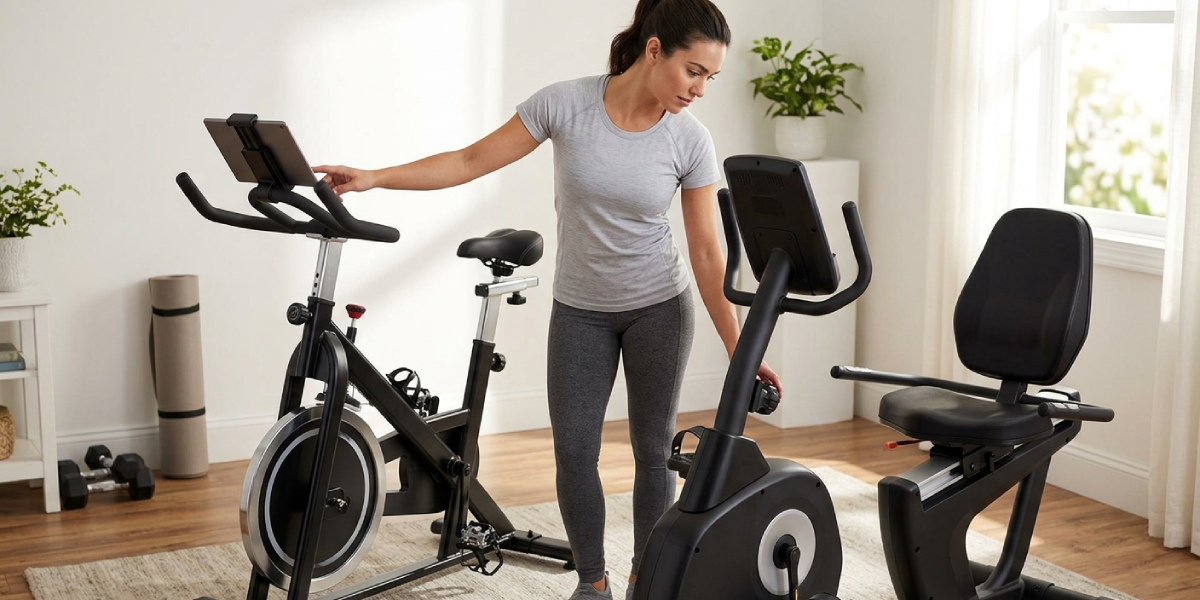
Finding the best exercise bike for your home gym takes more than a quick search and a price comparison. With dozens of models flooding the market, knowing exactly what to look for can save you hundreds of dollars and hours of frustration.
Whether you are a beginner building your first home setup or a seasoned cyclist looking to train indoors, this guide walks you through every factor that matters.
Why an Exercise Bike Belongs in Your Home Gym
Cycling is one of the most joint-friendly, cardiovascular-efficient forms of exercise available. Unlike running on a treadmill, riding a stationary bike places minimal stress on your knees and ankles while still delivering a powerful aerobic workout.
Studies published by the American College of Sports Medicine consistently rank cycling among the top exercises for improving cardiovascular health, burning calories, and building lower-body endurance.
For anyone managing weight, recovering from an injury, or simply wanting a reliable daily workout without the weather getting in the way, a quality indoor bike is a long-term investment in your health.
Understanding your personal fitness goals before buying is the first step. You can explore a range of exercise routines and training strategies to understand how cycling fits into a broader fitness plan.
The Four Main Types of Exercise Bikes
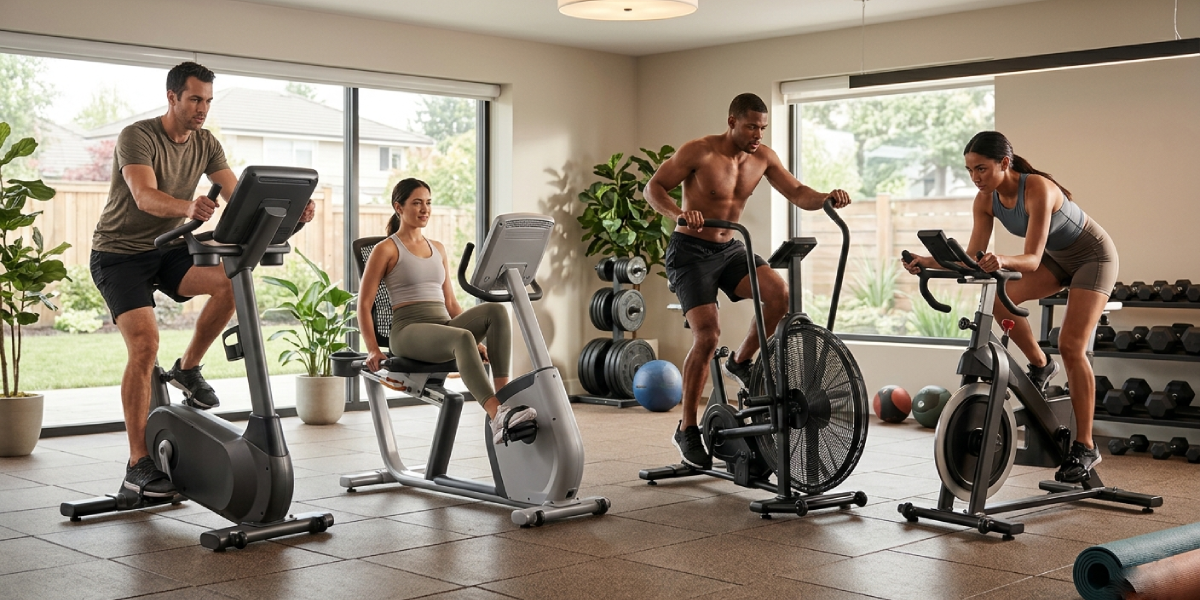
Not all exercise bikes are built the same. Each type serves a different purpose, and choosing the wrong one for your goals is a common and costly mistake.
Upright Bikes
Upright bikes most closely replicate the feel of riding an outdoor bicycle. You sit in an upright or slightly forward-leaning position, engaging your core, legs, and glutes simultaneously. These are excellent for general cardio fitness and are typically the most compact option, making them ideal for smaller home gym spaces.
Resistance levels on modern upright bikes range from magnetic systems to friction-based mechanisms, with magnetic being the quieter and lower-maintenance choice.
Recumbent Bikes
Recumbent bikes place you in a reclined, seated position with a larger backrest and the pedals positioned in front of you rather than beneath you. This design significantly reduces lower back strain and is widely recommended by physical therapists for individuals recovering from injury or managing chronic back pain.
The trade-off is that they are generally larger, heavier, and provide less core engagement than upright or spin options.
Spin Bikes (Indoor Cycling Bikes)
Spin bikes are built to mimic the experience of road cycling as closely as possible. They feature a heavy flywheel, a more aggressive forward-leaning riding position, and the ability to stand up and pedal, replicating hill climbs. These bikes are preferred by serious fitness enthusiasts and those following high-intensity interval training programs.
They tend to be more durable, more adjustable, and require more space than standard upright bikes.
Air Bikes (Fan Bikes)
Air bikes use a large fan as both the resistance mechanism and cooling system. The harder you pedal, the greater the resistance. They also include moving handlebars for a full-body workout. Air bikes are favored in functional fitness and CrossFit communities because of their scalability and the sheer intensity they can generate.
They are also louder than magnetic alternatives, which is worth considering if noise is a concern in your home.
Key Features to Evaluate Before You Buy
Once you have identified the type of bike that fits your training style, evaluating specific features will narrow your decision considerably.
Resistance System
Magnetic resistance bikes are almost universally considered the best option for home use. They operate silently, require no physical contact between parts, and require minimal maintenance. Friction-based resistance bikes are less expensive but wear down over time and can be noisy. For serious training, look for bikes with at least 16 levels of magnetic resistance to give you room to progress as your fitness improves.
Flywheel Weight
The flywheel is the weighted wheel that creates the momentum of your ride. Heavier flywheels, typically between 18 and 22 kilograms on quality spin bikes, produce a smoother, more consistent pedaling motion. Lighter flywheels feel choppier and less like real cycling.
For casual users and beginners, a flywheel between 7 and 12 kilograms is usually sufficient. For serious training or daily use, aim higher.
Adjustability and Fit
A bike that does not fit your body correctly will cause discomfort, reduce performance, and increase injury risk. Look for bikes that offer four-way seat adjustment (up, down, forward, backward) and handlebar height adjustment. If multiple people in your household will use the same bike, multi-directional adjustability becomes essential.
Before purchasing, check the minimum and maximum seat height against your own inseam measurement.
Weight Capacity and Build Quality
Most consumer exercise bikes have weight capacities ranging from 100 to 160 kilograms. If you are near the upper limit of a bike’s stated capacity, it is always wiser to choose a model with higher clearance. Look for frames made of heavy-gauge steel rather than aluminum for long-term durability, especially if you plan to use the bike daily or at high intensities.
Console and Connectivity
Entry-level bikes come with basic LCD displays showing time, speed, distance, and calories. Mid-range and premium models offer Bluetooth connectivity, compatibility with fitness apps like Zwift, Peloton, or Apple Fitness+, and in some cases built-in touchscreens with on-demand classes.
If technology and gamified training keep you motivated, investing in connectivity features can significantly improve adherence and enjoyment. That said, if you prefer simplicity, a straightforward display and a good pair of headphones may be all you need.
Understanding Your Budget
Exercise bikes span a wide price range, and the differences between tiers are meaningful.
| Budget Range | What You Get | Best For |
|---|---|---|
| Under $300 | Basic upright or recumbent, friction resistance, limited adjustability | Light casual use, beginners testing the waters |
| $300 to $700 | Magnetic resistance, better build quality, Bluetooth, more adjustment | Regular home users, moderate fitness goals |
| $700 to $1,500 | Heavy flywheel, near-silent operation, app integration, durable frame | Serious cyclists, daily training, multi-user households |
| $1,500 and above | Commercial-grade build, large touchscreen, live classes, premium performance | Performance athletes, tech-driven users, studio-quality experience |
It is worth noting that mid-range bikes in the $400 to $800 range currently offer the best value for most home gym users. You get magnetic resistance, solid construction, and sufficient features without paying for a built-in screen you may not always use.
Space and Noise Considerations
Measuring your available floor space before purchasing sounds obvious, but it is a step many buyers skip. A standard upright bike requires roughly 100 by 50 centimeters of floor space, while spin bikes and recumbent bikes can require significantly more.
Many manufacturers include a footprint in their specifications, but always add at least 60 centimeters of clearance around the bike for safe, comfortable mounting and dismounting.
Noise matters more in home settings than in commercial gyms. Magnetic resistance bikes are the quietest option. If you live in an apartment, share walls with neighbors, or plan to ride early in the morning, a magnetic bike on a rubber mat is the responsible choice.
Air bikes and friction-based models generate considerably more noise and vibration.
How to Match Your Bike to Your Health and Fitness Goals
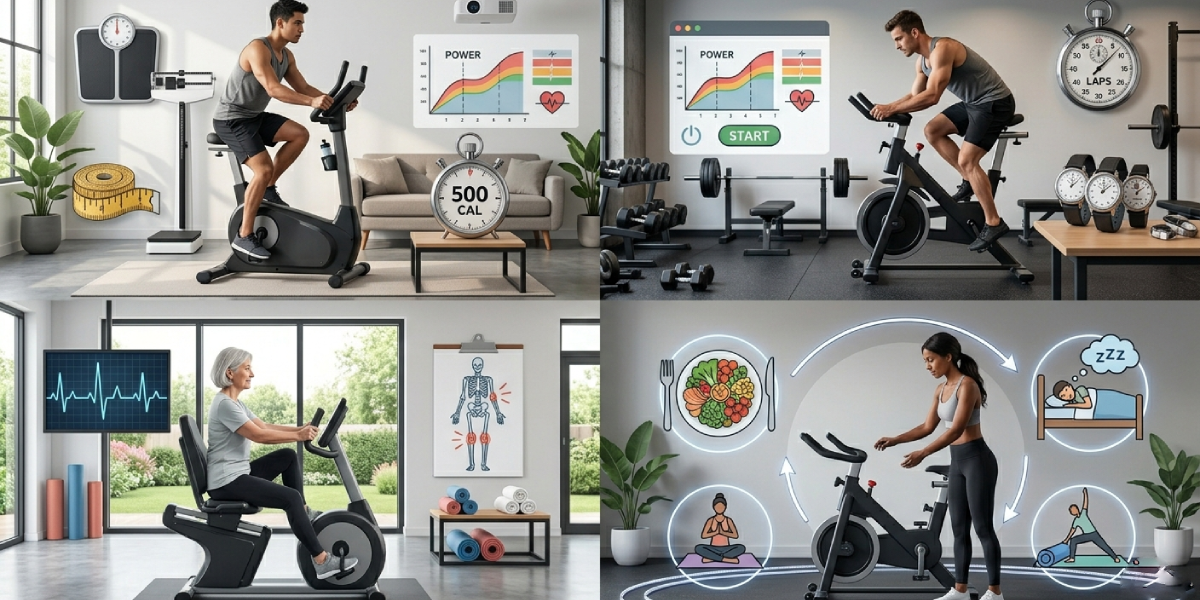
Your current health profile should play a major role in the type of bike you choose. Maintaining a healthy body weight is one of the most cited motivations for buying home exercise equipment, and cycling is one of the most effective tools available for sustainable weight management.
You can use a BMI calculator to get a clearer picture of where you currently stand and set realistic goals for your training program.
For individuals with cardiovascular conditions or those returning to exercise after a period of inactivity, recumbent bikes offer the safest starting point due to their supported seating and low joint impact.
For healthy adults with weight loss or general fitness goals, upright and spin bikes offer higher calorie expenditure and greater variety of workouts. Those following structured training programs or looking to complement outdoor cycling should invest in a spin bike with proper resistance range and a stable, road-like feel.
It is also worth integrating your cycling routine with broader health practices including nutrition, sleep, and recovery to maximize the results of your effort on the bike.
Top Brands Worth Considering
While specific model recommendations change with each product generation, several brands have established consistent reputations in the home exercise bike market.
- Schwinn: One of the oldest cycling brands in the world, offering reliable upright and recumbent options at mid-range prices with solid warranty support.
- Bowflex: Known for the JRNY app integration and solid build quality across its upright and recumbent lineup, with good value in the $600 to $1,000 range.
- Peloton: The premium connected fitness leader, best suited for users who want live and on-demand studio classes and are willing to pay subscription fees alongside the hardware cost.
- NordicTrack: Offers strong iFIT integration, a range of form factors, and competitive mid-to-high-range pricing.
- Assault Fitness: The benchmark brand for air bikes, preferred by serious athletes and functional fitness communities for durability and performance.
Warranty, Assembly, and After-Sale Support
A warranty is one of the clearest signals of a manufacturer’s confidence in their product. Look for bikes that offer at least a one-year parts warranty, with better models covering the frame for five years or more. Brands that offer in-home assembly services or detailed video guides reduce the friction of getting started, which matters more than many buyers anticipate.
After-sale support, including replacement part availability and responsive customer service, is particularly important for high-use equipment. Reading verified customer reviews on third-party platforms gives you a realistic picture of real-world ownership experiences that manufacturer marketing does not provide.
Final Checklist Before You Purchase
- Identify your primary fitness goal: weight loss, cardio conditioning, injury rehabilitation, or performance training.
- Measure your available floor space and confirm the bike’s dimensions and clearance requirements.
- Set a realistic budget and focus on the mid-range tier for the best long-term value.
- Choose magnetic resistance for quieter, lower-maintenance operation.
- Verify the seat and handlebar adjustability accommodates your body proportions.
- Check the weight capacity against your needs and leave a reasonable margin.
- Decide whether app connectivity and on-demand classes are genuinely motivating for you or just marketing features.
- Read real user reviews and verify warranty terms before finalizing your choice.
Frequently Asked Questions
What is the best type of exercise bike for weight loss?
Upright bikes and spin bikes tend to burn more calories per session than recumbent models because they engage more muscle groups simultaneously and allow for higher intensity intervals. For maximum calorie burn, a spin bike with varied resistance levels and the ability to perform standing climbs is generally the most effective choice.
How much should I spend on a home exercise bike?
For most home gym users, spending between $400 and $800 delivers the best balance of quality, features, and durability. Bikes below $300 often compromise on resistance systems and build quality, while models above $1,500 include premium technology features that not every user needs.
Are exercise bikes good for people with knee pain?
Yes, stationary cycling is widely recommended for individuals with knee pain because it is a low-impact activity that strengthens the muscles supporting the knee without the jarring impact of running or jumping. Recumbent bikes are particularly gentle on the knees. Always consult a physiotherapist before beginning any exercise program if you have a diagnosed knee condition.
How often should I ride my exercise bike to see results?
Most fitness guidelines recommend at least 150 minutes of moderate-intensity cardio per week. Riding your exercise bike for 30 minutes five days a week at a moderate resistance level is a practical and evidence-backed target for improving cardiovascular health and managing body weight over time.
Is a spin bike better than an upright bike?
It depends on your goals. Spin bikes offer a more intense, road-cycling-like experience with greater resistance range and the option to ride standing. Upright bikes are better suited to casual cardio, beginners, and users who prefer a more traditional seated position. Neither is universally better; the right choice depends on your fitness level and training objectives.
What is a good flywheel weight for a home exercise bike?
For smooth, consistent pedaling on a spin or upright bike, a flywheel weight of 18 kilograms or more is recommended. Lighter flywheels between 7 and 12 kilograms are adequate for casual use but may feel choppy during intense sessions or high-cadence intervals.
Can I use an exercise bike if I am overweight?
Absolutely. Exercise bikes are one of the most recommended forms of exercise for individuals who are overweight because they are low-impact and easy to scale in intensity. Always verify that the bike’s weight capacity exceeds your body weight by a reasonable margin, and start with shorter, lower-intensity sessions before progressively increasing duration and resistance.
Do I need a mat under my exercise bike?
A rubber exercise mat is strongly recommended regardless of your flooring type. A mat protects hardwood and tile floors from scratches and sweat damage, reduces vibration and noise transmission, and adds stability to the bike during intense workouts. Exercise mats are inexpensive relative to the cost of the bike itself and are a worthwhile addition to any home gym setup.
How long do home exercise bikes typically last?
A well-maintained mid-range exercise bike from a reputable brand will typically last between seven and twelve years under regular home use. Commercial-grade models can exceed fifteen years. Longevity depends heavily on cleaning frequency, keeping moving parts lubricated, and avoiding use beyond the stated weight capacity.
Can I watch TV or use my phone while riding an exercise bike?
Yes, and many users find that entertainment significantly improves workout duration and enjoyment. Most upright and recumbent bikes have stable enough ride quality for phone or tablet use. If watching content is important to you, prioritize a bike with a built-in tablet holder or a handlebar design that accommodates one securely.