
The best bodyweight exercises prove that you do not need an expensive gym membership or a single piece of equipment to build a strong, healthy body. Whether you are at home, traveling, or simply short on time, a well-structured bodyweight routine can deliver real, measurable results in strength, endurance, and mobility.
This guide breaks down the most effective movements, how to perform them correctly, and how to build them into a routine that actually works.
Why Bodyweight Training Deserves a Permanent Place in Your Fitness Routine
Bodyweight training is one of the oldest and most well-researched forms of exercise in the world. Military organizations, elite athletes, and physical therapists all rely on it because it builds functional strength, improves movement patterns, and reduces injury risk.
Unlike machine-based workouts that isolate muscles in fixed ranges of motion, bodyweight exercises engage multiple muscle groups simultaneously and demand that your joints, tendons, and stabilizer muscles work together.
Research published in the Journal of Human Kinetics consistently shows that progressive bodyweight training produces comparable gains in muscular strength and endurance to resistance training, especially for beginners and intermediate-level exercisers. The key word is progressive.
The same principles that apply in a gym, including progressive overload, proper form, adequate recovery, and consistency, apply just as powerfully when your only tool is your own body.
Beyond pure muscle building, bodyweight training supports cardiovascular health, improves balance and coordination, and keeps you mobile as you age. It is also highly adaptable.
Every movement in this guide can be made easier for beginners or significantly harder for advanced athletes, making it a lifelong fitness method rather than a temporary solution. If you are exploring a broader approach to structured exercise routines, bodyweight training is an excellent and accessible foundation to build from.
The Best Bodyweight Exercises for Full-Body Strength
The following exercises have been selected based on their muscle recruitment, scalability, injury safety record, and effectiveness across fitness levels. They cover all major movement patterns: push, pull, squat, hinge, and core stabilization.
Push-Ups
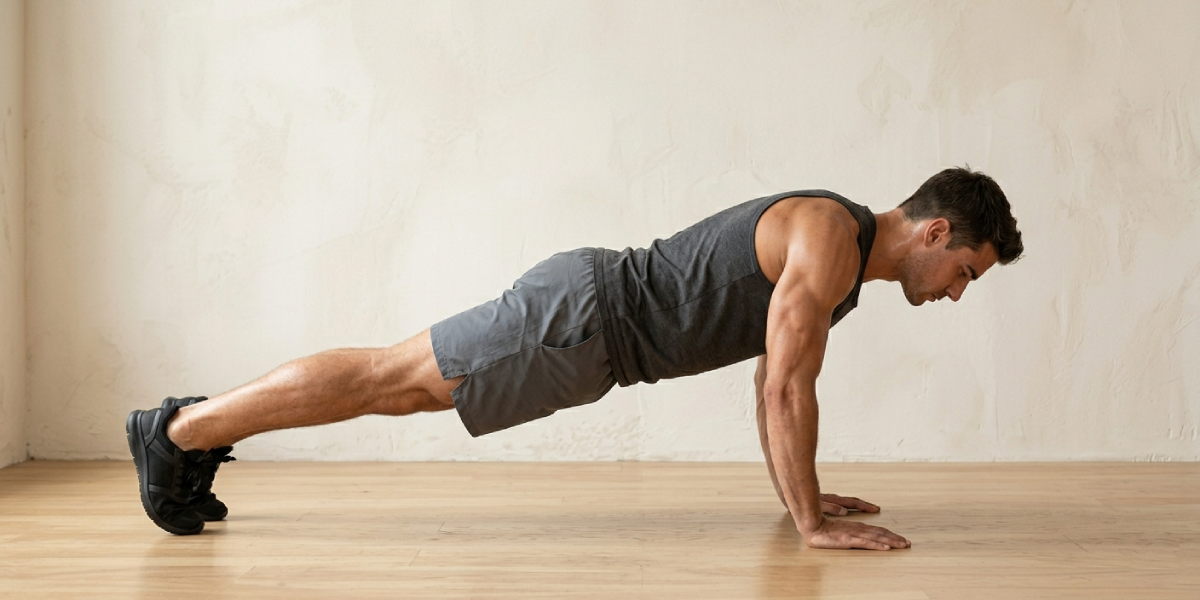
The push-up is arguably the most versatile upper-body exercise available. It primarily trains the chest, anterior deltoids, and triceps while also engaging the core, serratus anterior, and scapular stabilizers. Performed correctly with a rigid plank position, a flat back, and elbows tracking at roughly 45 degrees from the torso, the push-up is both shoulder-friendly and highly effective.
Beginners can start with incline push-ups, placing hands on a raised surface to reduce the load. Intermediate athletes can progress to standard push-ups, diamond push-ups for greater tricep emphasis, or wide-grip variations for chest development.
Advanced practitioners can work toward archer push-ups, deficit push-ups with hands on elevated surfaces, or eventually one-arm push-up progressions. The push-up never becomes easy. It only becomes harder as your standards rise.
Bodyweight Squats and Pistol Squat Progressions
The squat is the foundational lower-body movement and one that humans perform dozens of times a day without realizing it. A proper bodyweight squat trains the quadriceps, hamstrings, glutes, and adductors while reinforcing healthy knee tracking and ankle mobility.
Feet should be roughly shoulder-width apart, toes turned slightly outward, with the chest up and knees pushing out in line with the toes throughout the descent.
Once you can perform 20 or more clean bodyweight squats with full depth and control, progression becomes essential. Jump squats add an explosive, cardiovascular element. Pause squats, where you hold the bottom position for two to three seconds, dramatically increase time under tension.
The pistol squat, a single-leg squat taken all the way to depth, is one of the most demanding bodyweight lower-body exercises available. It requires exceptional leg strength, balance, and ankle mobility, and a full progression toward it can occupy months of training.
Pull-Ups and Inverted Rows
Horizontal and vertical pulling movements are the hardest to replicate without any equipment at all, but they are not impossible. If you have access to a pull-up bar, a sturdy tree branch, or even a door-mounted bar, the pull-up is the single best upper-back and bicep exercise you can perform with bodyweight.
It engages the latissimus dorsi, rhomboids, rear deltoids, biceps, and core stabilizers in a way that virtually no other exercise matches.
Beginners who cannot yet complete a full pull-up should start with dead hangs to build grip and scapular strength, followed by scapular pulls and negative pull-ups, where you jump to the top position and lower yourself slowly.
Inverted rows using a table edge, low bar, or suspension strap are an excellent horizontal pulling option that builds the same back muscles with lower difficulty and no bar required.
Dips
Using two parallel surfaces such as the edges of two sturdy chairs, a dip station, or gymnastic rings, the dip builds impressive tricep, chest, and anterior shoulder strength. The forward lean of the torso determines whether the movement emphasizes the chest more or the triceps more.
Keep your body upright for maximum tricep activation, or lean slightly forward to shift emphasis toward the lower chest. Dips are an intermediate to advanced movement and should not be attempted without adequate shoulder stability.
Glute Bridges and Hip Thrusts
The glute bridge is one of the most underrated bodyweight exercises available. Lying on your back with knees bent and feet flat on the floor, you drive your hips upward by squeezing the glutes until your body forms a straight line from knees to shoulders.
This movement directly targets the gluteus maximus, gluteus medius, and hamstrings while also activating the core and spinal erectors. It is safe for nearly all fitness levels, highly effective, and easy to progress.
Single-leg glute bridges dramatically increase the demand on each glute individually. Elevated single-leg hip thrusts, where shoulders rest on a couch or bench, add full range of motion and turn this into a serious strength builder. Strong glutes are not merely an aesthetic goal.
They are the foundation of healthy posture, lower back protection, and athletic power output.
Planks and Core Stabilization Exercises
A strong core is not built through endless crunches. It is built through anti-rotation, anti-extension, and anti-lateral-flexion exercises that train the core for what it actually does in real life: resist movement and stabilize the spine under load. The plank is the foundational movement here.
A proper plank performed with a neutral spine, braced abs, and no sag in the hips taxes the entire anterior core including the rectus abdominis, transverse abdominis, obliques, and serratus anterior.
Progressions include plank shoulder taps, plank to push-up, RKC planks where you actively try to pull your elbows toward your toes and your toes toward your elbows, and eventually ab wheel rollouts if you have access to the tool. Side planks, hollow body holds, and L-sits develop lateral and posterior core strength that directly transfers to every other exercise in your routine.
Lunges and Bulgarian Split Squats
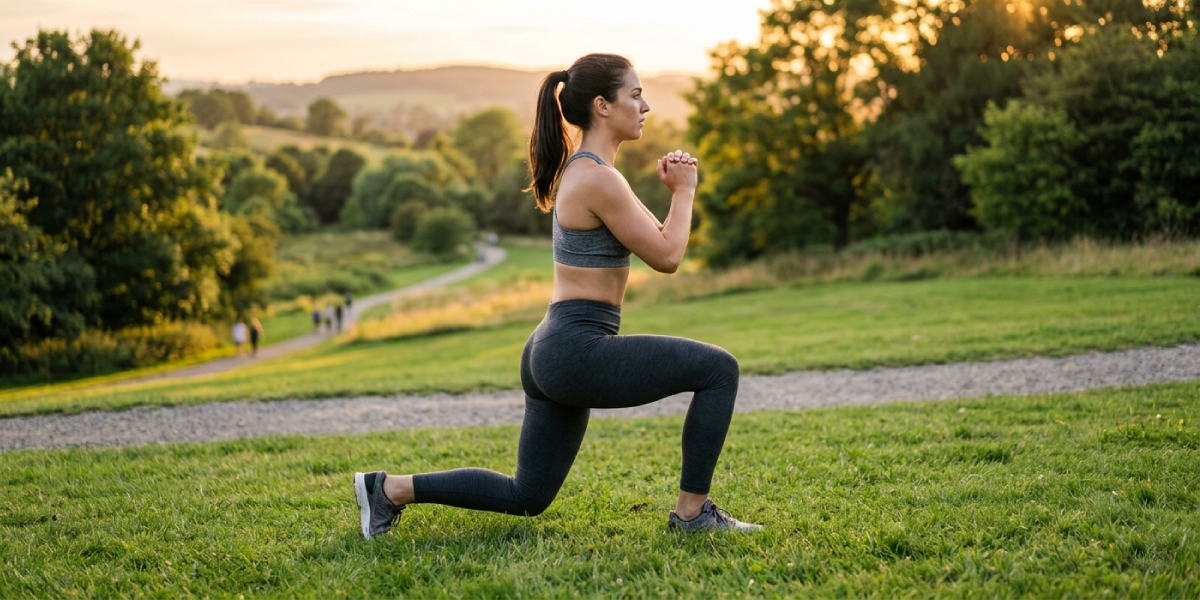
Lunges are an essential unilateral lower-body exercise that address strength imbalances between legs, improve hip flexor mobility, and build significant quadricep and glute strength. Forward lunges, reverse lunges, lateral lunges, and walking lunges each stress the lower body slightly differently and can be rotated for variety.
The Bulgarian split squat, where your rear foot is elevated on a chair or couch, is widely regarded as one of the most effective single-leg strength exercises in existence. It closely mimics the demands of sprinting and jumping, making it particularly valuable for athletic development.
Burpees
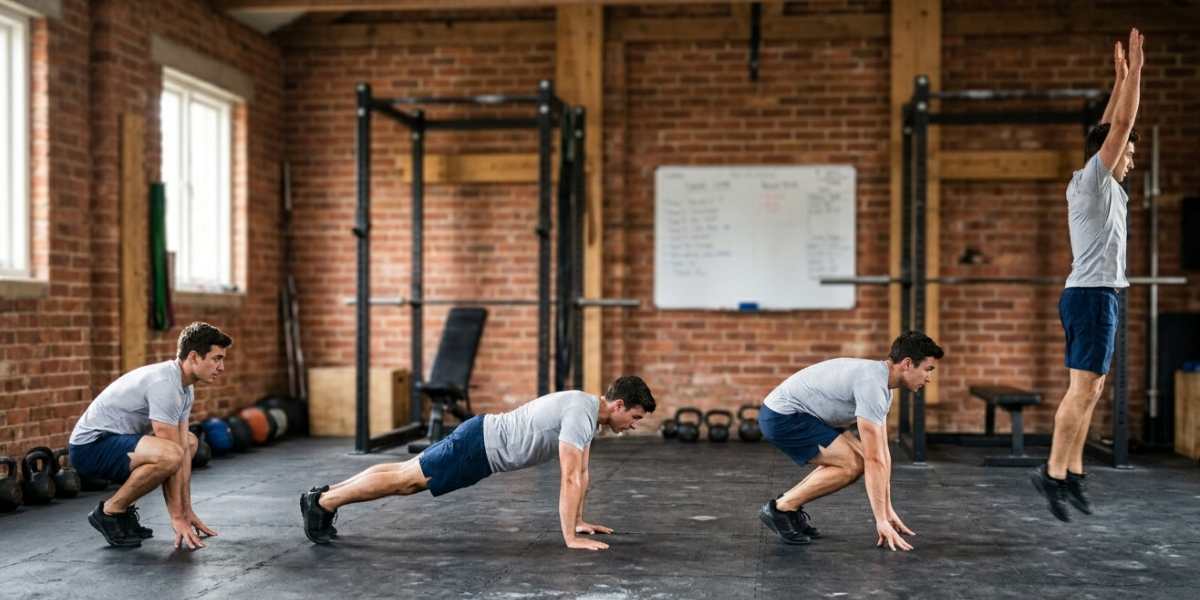
Few exercises challenge the entire body and cardiovascular system simultaneously as effectively as the burpee. A full burpee moves from standing to a push-up position, performs a push-up, jumps the feet forward, and explodes upward into a jump.
It builds muscular endurance, cardiovascular fitness, coordination, and mental toughness in a single movement. Burpees are not glamorous, but their effectiveness is beyond dispute. Even sets of five to ten burpees integrated into a circuit significantly elevate heart rate and total calorie expenditure.
How to Structure a Bodyweight Workout Routine
Knowing individual exercises is only half the equation. The structure of your training week determines whether those exercises produce real progress or simply maintain current fitness levels. A basic full-body bodyweight routine performed three times per week with at least one rest day between sessions is an excellent starting point for most people.
| Training Day | Exercises | Sets x Reps |
|---|---|---|
| Day 1 (Full Body) | Push-Ups, Squats, Glute Bridges, Plank | 3 x 10-15 each |
| Day 2 (Rest or Active Recovery) | Walking, Stretching, Mobility Work | 20-30 minutes |
| Day 3 (Full Body) | Dips, Lunges, Inverted Rows, Side Plank | 3 x 10-12 each |
| Day 4 (Rest or Active Recovery) | Walking, Stretching, Mobility Work | 20-30 minutes |
| Day 5 (Full Body) | Pull-Ups, Bulgarian Split Squat, Burpees, Hollow Body Hold | 3 x 8-12 each |
As you progress, increase difficulty by advancing to harder exercise variations rather than simply doing more reps of easier ones. This is the fundamental principle of progressive overload applied to bodyweight training and it is what separates a training program that produces results from one that plateaus after six weeks.
The Role of Recovery and Nutrition in Bodyweight Training Results
No training program produces results without adequate recovery and nutrition to support it. Muscle tissue is broken down during exercise and rebuilt stronger during rest. Sleep of seven to nine hours per night is the most powerful recovery tool available. Protein intake of around 0.7 to 1 gram per pound of bodyweight supports muscle repair and growth.
Hydration, stress management, and mobility work all contribute to how quickly you adapt and how consistently you can train.
Understanding the relationship between exercise and your broader health and wellness habits is essential for long-term success. Training in isolation from sleep, nutrition, and recovery is a recipe for stagnation or burnout. Treat your workouts as one component of a complete health strategy rather than a standalone effort.
Tracking Progress Without Gym Machines
One of the most powerful tools available to bodyweight athletes is progress tracking. Without weights to increase, you track different markers: the number of clean reps you can complete, the difficulty of variation you are using, your rest periods, and your overall work capacity over time.
Keeping a simple training log, whether in a notebook or a phone app, allows you to see genuine progress that might otherwise go unnoticed.
It is also worth periodically assessing your body composition. A useful starting point is understanding your current body mass index and how your training is affecting your overall weight and composition. Tools like a BMI calculator can help you track broad changes in your body composition over time and give context to the physical changes you experience as your fitness improves.
- Log each workout including exercises, sets, reps, and perceived difficulty
- Test yourself monthly with a max-rep challenge on a key exercise such as push-ups or pull-ups
- Track how your rest periods change as fitness improves
- Note energy levels, sleep quality, and recovery speed alongside training metrics
- Photograph or measure key body areas every four to six weeks to track visual changes
Common Mistakes to Avoid in Bodyweight Training
Even motivated people can undermine their results by falling into predictable patterns. The most common mistake is staying too comfortable with exercises that no longer challenge you. If you have been doing three sets of ten push-ups for months and they feel easy, they are no longer producing a meaningful training stimulus. Progress to a harder variation.
Another frequent error is neglecting the posterior chain. It is easy to focus on the muscles you can see in a mirror, the chest, biceps, and abs, while undertraining the glutes, hamstrings, upper back, and rear shoulders. These muscles are equally important for posture, injury prevention, and overall performance.
Make sure your routine includes horizontal pulling movements, glute bridges, and hip hinges to balance your push-heavy exercises.
Finally, skipping the warm-up is a mistake with real consequences. A five to ten minute dynamic warm-up that includes leg swings, arm circles, hip rotations, and light cardio raises your core body temperature, increases blood flow to working muscles, and prepares your joints for the demands of training. It is not optional and it directly reduces your injury risk.
Frequently Asked Questions
Can bodyweight exercises build real muscle mass?
Yes. Bodyweight exercises can absolutely build muscle mass, provided you apply progressive overload by consistently advancing to harder variations, reducing rest periods, or increasing volume over time. Beginners will experience significant muscle growth, and even advanced athletes can continue building muscle through challenging progressions like one-arm push-ups, pistol squats, and pull-up variations.
How often should I do bodyweight workouts?
Three to five sessions per week is optimal for most people, with at least one full rest day between hard training sessions. Full-body routines performed three times per week work well for beginners, while more advanced athletes can train five days per week using upper-lower or push-pull splits to allow adequate muscle group recovery.
Is bodyweight training effective for weight loss?
Bodyweight training supports weight loss by increasing muscle mass, which raises your resting metabolic rate, and by burning calories during exercise. Circuit-style bodyweight training that keeps rest periods short and incorporates explosive movements like burpees and jump squats provides a significant cardiovascular stimulus that contributes meaningfully to a caloric deficit.
What is the best bodyweight exercise for beginners?
The push-up, bodyweight squat, and glute bridge are the three best starting points for beginners. These exercises are safe, scalable, and train the most important muscle groups in the body. Mastering these movements with proper form before advancing to more complex exercises builds a strong foundation for long-term progress.
Do I need any equipment for bodyweight training?
Most bodyweight exercises require no equipment at all. A pull-up bar, which can be purchased inexpensively and mounted in a doorframe, is the one addition that significantly expands your training options by enabling vertical pulling movements. Beyond that, a yoga mat for floor exercises is a comfort item rather than a necessity.
How long does a bodyweight workout need to be?
An effective bodyweight session can be completed in 20 to 45 minutes. What matters most is the quality of effort and the structure of the workout rather than its duration. A focused 25-minute circuit of well-chosen exercises performed with proper form and adequate intensity will produce better results than a disorganized 60-minute session.
Can bodyweight training improve cardiovascular fitness?
Yes, particularly when structured as circuit training or high-intensity interval training with minimal rest between exercises. Movements like burpees, jump squats, mountain climbers, and high knees elevate heart rate significantly and train the cardiovascular system effectively. Combining these with strength-based movements creates a comprehensive workout that builds both muscular and cardiovascular fitness simultaneously.
How do I make bodyweight exercises harder as I get stronger?
Progress by advancing to more difficult variations of the same movement pattern. For push-ups, move from incline to standard to archer to one-arm progressions. For squats, progress from two-leg to jump squat to pistol squat. Reduce rest periods, increase time under tension with slow negatives, add pauses at the hardest point of the movement, or increase total weekly volume to continue producing a progressive overload stimulus.
Are bodyweight exercises safe for older adults?
Bodyweight exercises are among the safest and most recommended forms of training for older adults. Movements like bodyweight squats, glute bridges, wall push-ups, and seated leg lifts can be performed with minimal joint stress while building the leg strength, balance, and core stability that directly reduce fall risk and support independent living. Always consult a physician before beginning any new exercise program if you have existing health conditions.