

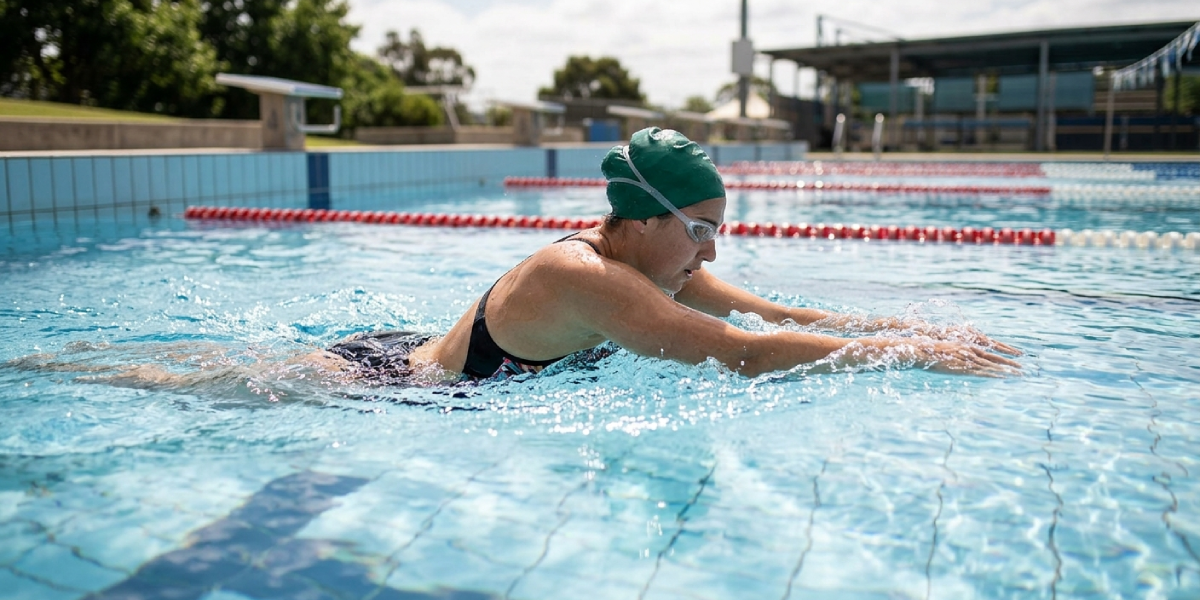
The benefits of swimming for weight loss go far beyond simply burning calories in the pool. If you have been searching for a workout that is gentle on your joints, total-body in its reach, and genuinely sustainable for the long term, swimming may be the most underrated tool in your fitness arsenal.
Whether you are a beginner wading into fitness for the first time or a seasoned gym-goer looking for a lower-impact alternative, this guide breaks down exactly how swimming reshapes the body, why it works so well, and how to make it work for you.
Why Swimming Is One of the Best Exercises for Weight Loss
Weight loss ultimately comes down to creating a calorie deficit, but not all calorie-burning activities are created equal. Swimming stands apart because it demands effort from virtually every major muscle group at once.
Your arms pull through the water, your legs kick for propulsion, your core stabilizes every stroke, and your cardiovascular system works overtime to supply oxygen to all of it. That combination makes swimming one of the most energy-intensive activities you can do, often rivaling running and cycling in terms of calories expended per hour.
According to data from Harvard Medical School, a 155-pound person can burn approximately 372 calories in 30 minutes of vigorous freestyle swimming. At a moderate pace, the same person burns around 223 calories in that same window.
These numbers shift with body weight, swimming intensity, and stroke type, but the takeaway is clear: the pool is a powerful place to create the energy deficit your body needs to shed fat.
What makes swimming especially attractive compared to land-based cardio is the water’s buoyancy. Water supports up to 90 percent of your body weight when you are submerged to your neck, which means your knees, hips, and spine are largely protected from impact stress.
For people dealing with arthritis, previous injuries, or excess weight that makes running painful, swimming offers a path to intense cardiovascular training without the injury risk. This is a major reason swimming is often recommended by physiotherapists and sports medicine professionals as rehabilitation exercise that doubles as conditioning.
How Swimming Targets Fat Loss, Not Just Calorie Burn
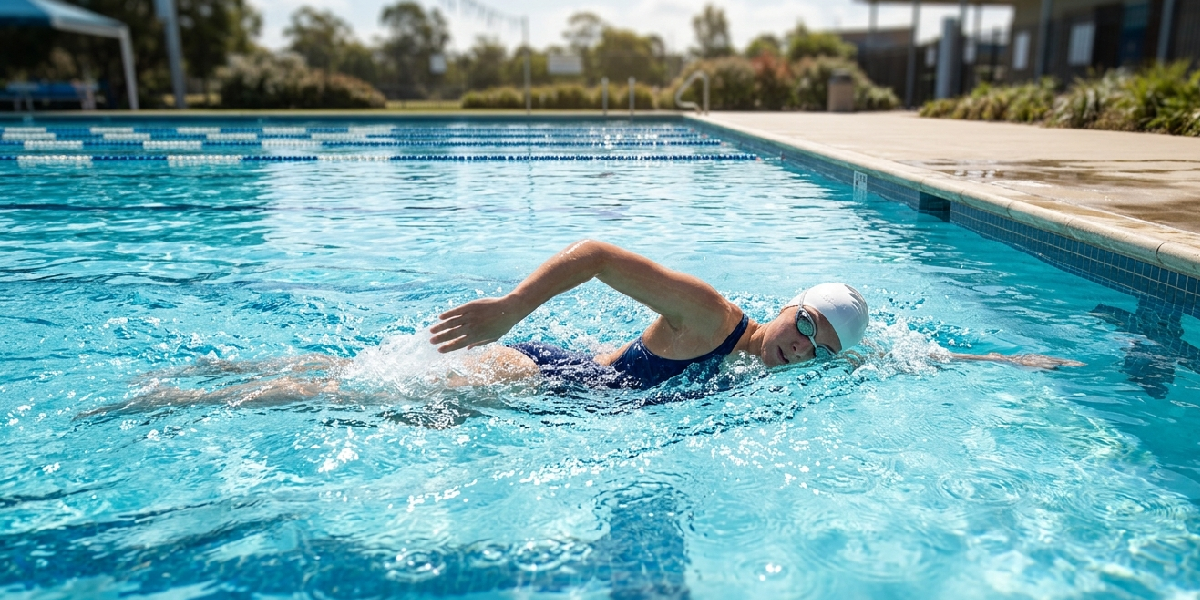
There is an important distinction between burning calories during exercise and actually losing stored body fat. Swimming helps with both, but understanding the mechanism helps you train smarter.
During moderate-intensity swimming, the body draws a significant portion of its energy from fat stores. This is because aerobic exercise at a steady, manageable pace encourages the oxidative energy system, which preferentially metabolizes fat. When you swim at a pace where you can hold a conversation but feel genuinely challenged, you are likely in the fat-burning zone.
High-intensity interval training in the pool, where you alternate between sprinting a lap and recovering at an easy pace, adds another dimension. Interval training elevates your post-exercise oxygen consumption, commonly known as the afterburn effect, which means your body continues to burn additional calories for hours after you get out of the pool.
Incorporating both moderate-pace sessions and interval work into your swimming routine creates a comprehensive fat-loss stimulus.
Swimming also preserves and even builds lean muscle mass. Resistance training is well established as a metabolic booster because muscle tissue burns more calories at rest than fat tissue does. Water provides natural resistance in every direction, meaning your muscles are constantly working against opposition.
Over time, consistent swimming can increase muscle tone throughout the shoulders, back, arms, glutes, and legs, subtly elevating your resting metabolic rate and making weight management easier between sessions.
Stroke-by-Stroke: Which Swimming Style Burns the Most Calories
The stroke you choose significantly affects your calorie expenditure and the muscle groups you emphasize. Understanding the differences allows you to tailor your sessions to your goals.
Butterfly Stroke
The butterfly stroke is the most demanding swimming style. It requires simultaneous arm movement and a powerful undulating dolphin kick, engaging the chest, shoulders, back, core, and legs intensely. A 155-pound person can burn upward of 400 calories per 30 minutes with butterfly, but it is also the most technically demanding stroke and difficult to sustain for long periods without proper training.
Freestyle (Front Crawl)
Freestyle is the most popular stroke for fitness swimming and for good reason. It is efficient, fast, and burns roughly 300 to 400 calories per 30 minutes at a vigorous pace. Most lap swimmers default to freestyle because it allows them to cover long distances while maintaining good speed. Freestyle is excellent for building cardiovascular endurance and upper body strength simultaneously.
Backstroke
Backstroke is a great option for people with shoulder sensitivity because it removes the overhead arm swing. It burns approximately 250 to 300 calories per 30 minutes and is particularly effective for strengthening the back muscles and improving posture, which is a welcome side effect for anyone who spends long hours at a desk.
Breaststroke
Breaststroke is slower and burns fewer calories per unit of time, typically 200 to 250 per 30 minutes at moderate effort, but it targets the inner thighs and glutes more intensely than other strokes. Many beginners find breaststroke the easiest to learn, making it a practical entry point before progressing to faster, higher-calorie strokes.
Building a Swimming Plan for Weight Loss
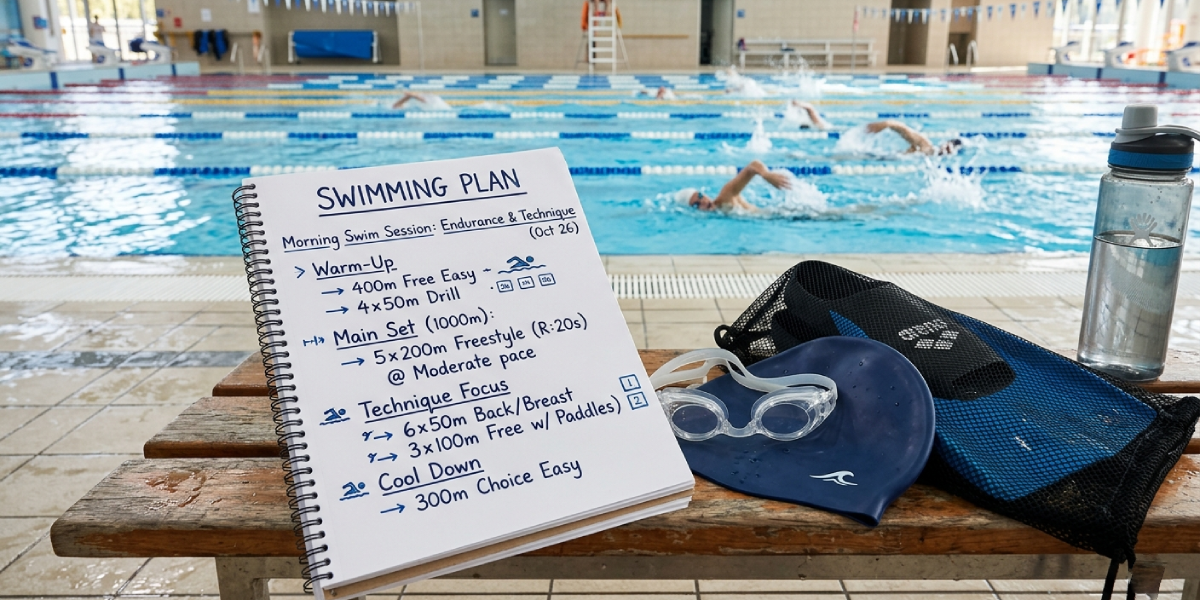
Consistency and progressive overload are the two pillars of any successful weight-loss training program, and swimming is no exception. The following framework gives you a starting structure to build from.
Beginner Plan (Weeks 1 to 4)
If you are new to swimming or returning after a long break, aim for three sessions per week, each lasting 20 to 30 minutes. Focus on breaststroke or freestyle at a comfortable pace. Rest for 30 to 60 seconds between laps if needed. The goal at this stage is simply to build the habit and develop your breathing rhythm.
Intermediate Plan (Weeks 5 to 10)
Increase sessions to four per week and extend duration to 40 to 45 minutes. Begin alternating between stroke types to challenge different muscles and prevent adaptation. Introduce one interval session per week: swim one lap hard, rest for 20 seconds, repeat for 20 minutes.
Advanced Plan (Weeks 11 Onward)
At this level, aim for four to five sessions per week, mixing endurance swims of 45 to 60 minutes with two high-intensity interval sessions. Track your total weekly yardage and aim to increase it by about 10 percent every two weeks.
Pairing your pool work with complementary exercise routines such as bodyweight strength training can accelerate your results by building the muscle mass that raises your resting metabolic rate.
Nutrition: The Missing Half of the Swimming Weight-Loss Equation
Swimming is famously associated with increased appetite. Many swimmers report feeling hungrier after a pool session than after an equivalent land workout, likely because water immersion lowers body temperature and the body stimulates hunger to generate heat.
This is not a flaw, but it does mean that nutritional awareness is especially important for swimmers aiming to lose weight.
The fundamental rule remains energy balance: consume fewer calories than you expend. However, the quality of those calories shapes your body composition. Prioritizing lean protein from sources like chicken, fish, eggs, legumes, and Greek yogurt supports muscle repair and recovery after swimming.
Complex carbohydrates from whole grains, fruits, and vegetables provide sustained energy for your sessions. Healthy fats from sources like avocado, nuts, and olive oil support hormonal function, including the hormones that regulate fat storage.
Hydration is also frequently underestimated by swimmers. The water environment masks the sensation of sweating, but you still lose fluids and electrolytes during a vigorous swim. Dehydration blunts performance and can trigger hunger signals that are actually thirst in disguise.
Drinking water before, during, and after swimming supports both performance and appetite management.
Monitoring your progress against evidence-based benchmarks can keep your plan on track. Using tools like a BMI calculator alongside body measurements and progress photos gives you a well-rounded view of how your body is responding to consistent swimming and improved nutrition.
The Mental Health Benefits That Support Long-Term Weight Loss
Weight loss is as much a psychological challenge as a physical one. Swimming offers a powerful and often overlooked advantage here. The rhythmic, repetitive nature of swimming strokes has a meditative quality that many swimmers describe as genuinely calming.
Research has consistently linked regular aerobic exercise with reductions in cortisol, the stress hormone that is directly associated with abdominal fat accumulation when chronically elevated.
Beyond cortisol, swimming triggers the release of endorphins, dopamine, and serotonin, the brain’s natural mood-regulating chemicals. Exercising in water is also shown to reduce anxiety and improve sleep quality. Better sleep, in turn, regulates leptin and ghrelin, the hormones that control hunger and fullness, creating a virtuous cycle that supports consistent healthy eating and sustained weight loss.
People who enjoy their workouts are far more likely to stick with them long enough to see meaningful results. Swimming, with its sensory immersion, the quiet of the water, the rhythmic breathing, and the feeling of weightlessness, tends to produce high rates of enjoyment compared to many gym-based exercises. That enjoyment is a genuine health asset.
Comparing Swimming to Other Popular Cardio Workouts
| Exercise | Calories Burned per 30 Min (155 lb person) | Joint Impact | Full-Body Engagement |
|---|---|---|---|
| Swimming (vigorous freestyle) | 372 | Very Low | Yes |
| Running (6 mph) | 372 | High | Partial |
| Cycling (moderate) | 260 | Low | Partial |
| Elliptical (moderate) | 270 | Low | Partial |
| Walking (brisk) | 149 | Low–Moderate | Partial |
Key Tips to Maximize Weight Loss Through Swimming
- Vary your strokes: Rotating between freestyle, backstroke, breaststroke, and butterfly challenges different muscle groups and prevents your body from adapting to a single movement pattern.
- Add pool tools: Kickboards, pull buoys, and hand paddles isolate specific muscles and intensify portions of your workout without requiring longer sessions.
- Track your sessions: Logging distance, time, and perceived effort helps you identify progress and ensures you are applying progressive overload over time.
- Warm up and cool down: Spending five minutes on gentle laps at the start and end of each session reduces injury risk and supports recovery.
- Stay consistent: Three to five sessions per week consistently outperforms sporadic intense sessions. Frequency is the most reliable driver of long-term weight-loss results.
- Combine with strength work: Pairing your pool sessions with resistance training two days per week builds the muscle mass that sustains a higher metabolism between workouts. Exploring a range of health and wellness strategies alongside your swimming plan can further accelerate your transformation.
Who Should Consider Swimming for Weight Loss
Swimming is one of the most universally accessible forms of exercise. It is particularly well suited to individuals with joint pain, osteoarthritis, obesity, or recovering from orthopedic surgery, since the buoyancy removes the impact load that makes land-based exercise painful or risky.
Pregnant women often find swimming comfortable when other exercises become awkward, and it is recommended by many obstetricians as a safe aerobic activity throughout pregnancy.
Older adults benefit from swimming’s combination of cardiovascular conditioning, muscle toning, and balance challenges without fall risk. Children and teenagers can use it as a foundation for lifelong fitness habits. Even highly trained athletes incorporate swimming as active recovery or cross-training to maintain cardiovascular fitness while reducing cumulative impact stress on their bodies.
The only meaningful barrier is access to a pool, but community pools, YMCA facilities, and hotel pools make swimming more available than many people assume. Many public pools offer adult swim lessons for those who are not confident in their technique, which is well worth the investment since better technique means more efficient movement and greater calorie burn per lap.
Frequently Asked Questions
How many times per week should I swim to lose weight?
For meaningful weight loss, aim to swim three to five times per week. Three sessions per week is sufficient for beginners to build a baseline, while four to five sessions allow more advanced swimmers to create a larger weekly calorie deficit and accelerate progress. Consistency over weeks and months matters more than any single session.
Can you lose belly fat by swimming?
Swimming does not spot-reduce fat from the belly specifically, but it is highly effective at reducing overall body fat, including abdominal fat. As total body fat decreases through consistent swimming and a calorie-controlled diet, the belly area typically shows noticeable improvement. Freestyle and butterfly strokes engage the core intensely, which also tones the abdominal muscles underneath the fat layer.
Is swimming better than running for weight loss?
Swimming and running burn comparable calories at vigorous intensities, but swimming has a significant advantage in joint safety. Running generates impact forces of two to three times your body weight with every step, which accumulates as stress on the knees and hips. Swimming eliminates this impact entirely. For people with joint issues or significant excess weight, swimming is the safer and often more sustainable long-term choice.
How long should a swimming session last for weight loss?
Sessions of 30 to 60 minutes are ideal for weight loss. Beginners should start with 20 to 30 minutes and build up gradually. As fitness improves, extending sessions to 45 to 60 minutes increases calorie expenditure significantly. Quality of effort within the session matters as much as duration, so focusing on maintaining good technique and appropriate intensity throughout is more valuable than simply adding time.
Does swimming speed up metabolism?
Yes, swimming supports a faster metabolism in two ways. First, aerobic swimming burns calories during the session itself. Second, the muscle-building effect of swimming resistance training against water increases resting metabolic rate over time. High-intensity interval swimming also creates an afterburn effect, elevating calorie burn for several hours after the session ends. Together, these factors contribute to a meaningfully elevated metabolism in regular swimmers.
What should I eat before and after swimming for weight loss?
Before swimming, eat a light meal or snack one to two hours beforehand that combines easily digestible carbohydrates with a moderate amount of protein, such as a banana with peanut butter or oatmeal with berries. After swimming, prioritize protein to support muscle recovery alongside complex carbohydrates to replenish glycogen. Examples include grilled chicken with brown rice, Greek yogurt with fruit, or a protein smoothie with vegetables.
Can beginners swim for weight loss if they are not strong swimmers?
Absolutely. Even basic water movement burns significant calories, and beginner swimming programs are specifically designed to build technique progressively. Starting with breaststroke or backstroke, which are slower and less technically demanding than freestyle, allows beginners to stay active in the water for longer periods while building confidence and skill. Adult swimming lessons are widely available and can dramatically improve efficiency and enjoyment within just a few weeks.
How soon will I see weight loss results from swimming?
With consistent sessions three or more times per week combined with a balanced, calorie-conscious diet, most people begin to notice physical changes within four to six weeks. These early changes may include improved muscle tone, better cardiovascular endurance, and initial fat loss. More substantial body composition changes typically become clearly visible within eight to twelve weeks of dedicated training. Results vary based on starting fitness level, dietary habits, and training intensity.
Does swimming help with water retention and bloating?
Yes, regular swimming can help manage water retention. The hydrostatic pressure of water gently compresses the limbs during swimming, which helps move excess fluid from tissues back into the circulatory system and lymphatic system for elimination. Many swimmers report feeling leaner and less bloated after consistent pool sessions, even before significant fat loss becomes apparent on the scale.
Is it safe to swim every day for weight loss?
Swimming daily is generally safe because its low-impact nature dramatically reduces the risk of overuse injuries compared to daily running or weightlifting. However, varying intensity is important. Alternating between vigorous sessions and lighter recovery swims allows your muscles and connective tissues to repair and adapt. Listening to your body and taking a full rest day once or twice per week is still a sound practice, particularly in the early stages of a new swimming program.