

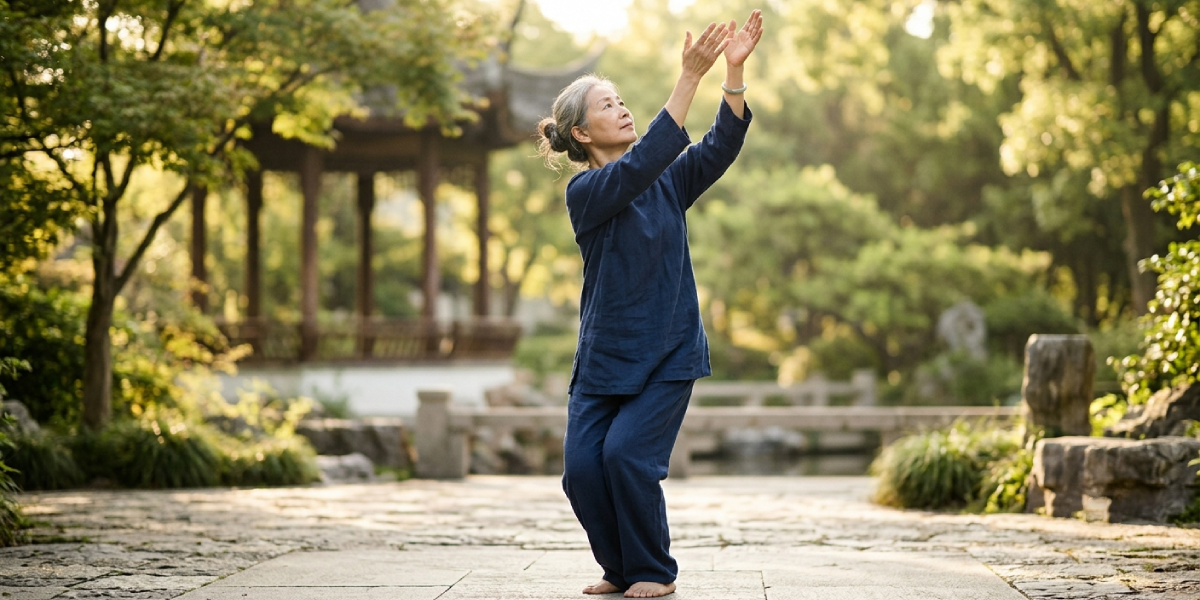
Baduanjin exercise is one of the most widely practiced forms of traditional Chinese qigong, combining slow, deliberate movements with controlled breathing and mindful awareness to support the health of the whole body. If you have ever been curious about gentle yet powerful movement practices rooted in centuries of tradition and increasingly supported by modern research, Baduanjin is well worth your attention.
What Is the Baduanjin Exercise?
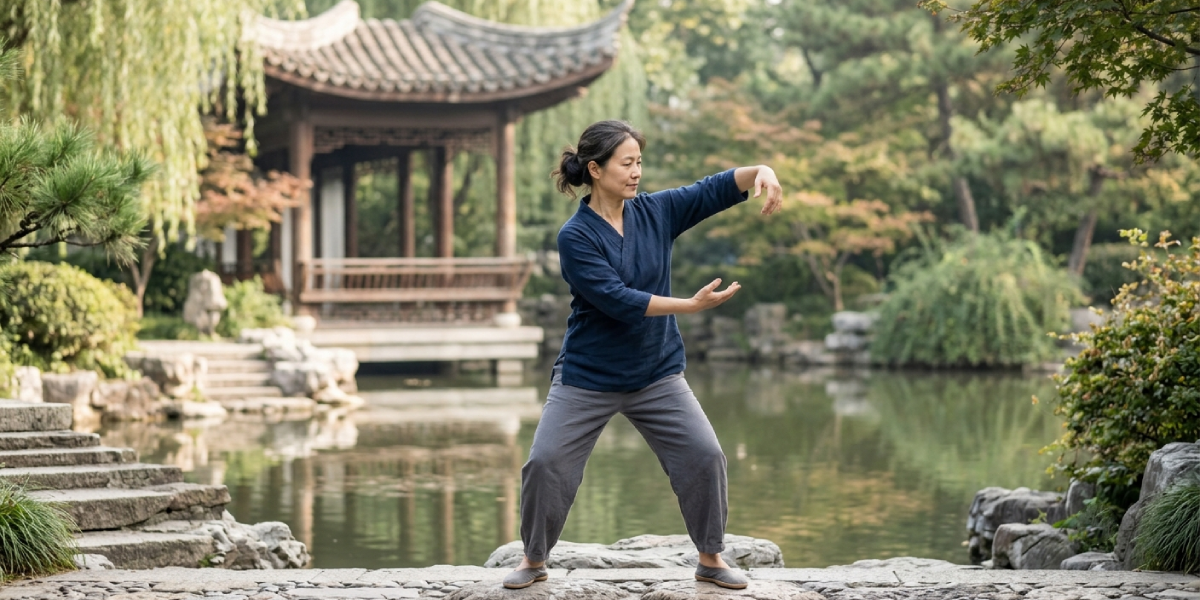
The name Baduanjin translates roughly to “Eight Pieces of Brocade” or “Eight Silken Movements,” referring to the eight distinct postures that make up the routine. Like fine silk, each movement is meant to be smooth, flowing, and continuous.
The practice belongs to the broader family of qigong, a system of coordinated body posture, movement, breathing, and meditation used in traditional Chinese medicine and martial arts.
Historical records trace Baduanjin back over a thousand years, with some sources pointing to its origins in the Song Dynasty (960–1279 CE). It was traditionally used by soldiers and scholars alike to maintain physical vitality and mental clarity.
Over centuries, two primary styles emerged: the standing form and the seated form. The standing form is by far the most practiced today and is the version most commonly taught in community centers, hospitals, and rehabilitation programs worldwide.
Each of the eight movements targets specific organ systems and meridian pathways according to traditional Chinese medicine theory. From a modern physiological standpoint, the exercises systematically work the spine, joints, muscles, and respiratory system through their full ranges of motion, making it a remarkably comprehensive low-impact workout.
The Eight Movements of Baduanjin Explained
Understanding what each movement involves helps clarify why this practice delivers such broad health benefits. The eight postures, practiced in sequence, are as follows:
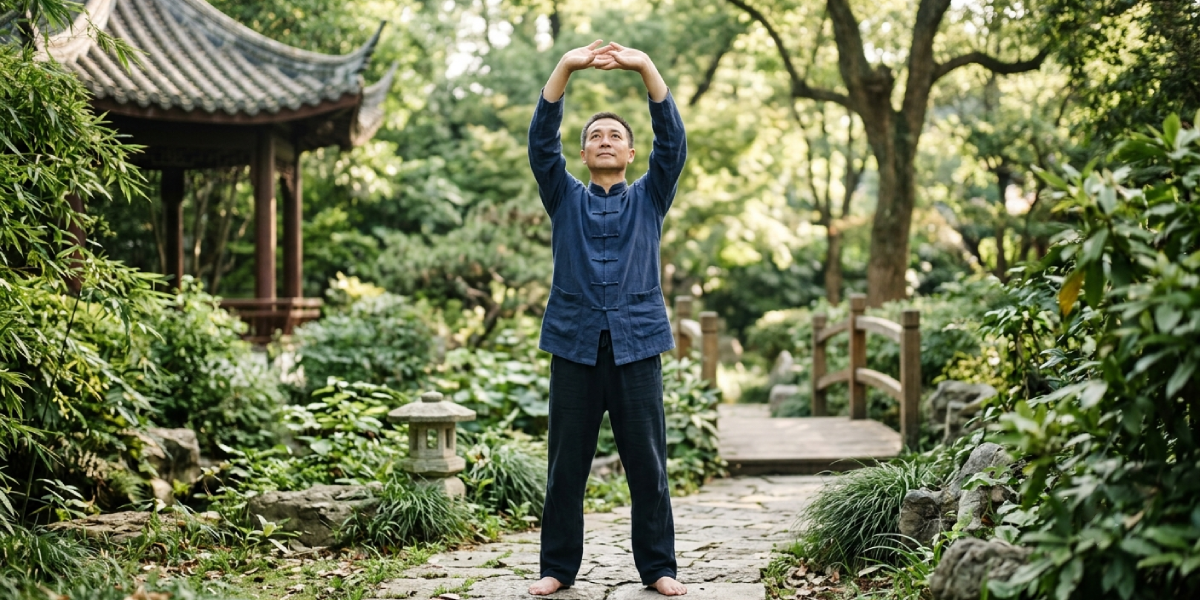
- Two Hands Hold Up the Heavens: The practitioner interlaces the fingers, raises the arms overhead, and stretches upward while inhaling. This movement is said to regulate the Triple Burner (San Jiao) and stretches the thoracic spine and intercostal muscles.
- Drawing the Bow to Shoot the Eagle: Performed in a horse stance, this mimics drawing a bow and strengthens the arms, opens the chest, and stimulates lung function.
- Separating Heaven and Earth: One hand pushes up while the other pushes down, alternating sides. This movement massages the spleen and stomach and stretches the lateral trunk muscles.
- Wise Owl Gazes Backward: A gentle turning of the head and torso to look behind, this movement improves cervical and thoracic rotation and stimulates the central nervous system.
- Sway the Head and Shake the Tail: Performed in a low stance with hands on the thighs, the practitioner sways the upper body and waist to release heat from the heart and reduce excess fire energy.
- Two Hands Hold the Feet to Strengthen the Kidneys and Waist: A forward bend reaching toward the feet, this movement stretches the hamstrings, lower back, and stimulates kidney function according to traditional theory.
- Clench the Fists and Glare Fiercely: Striking outward with clenched fists from a horse stance, this movement builds muscular strength and increases overall vitality.
- Bouncing on the Toes: The practitioner rises onto the toes and then drops back to the heels with a gentle shock. This is said to expel illness from the body and stimulates proprioception and bone density in the feet and ankles.
The entire sequence typically takes between ten and twenty minutes to complete, making it accessible even for those with busy schedules. Practitioners often repeat the full set two or three times in a session.
Science-Backed Health Benefits of Baduanjin Exercise
Over the past two decades, a growing body of peer-reviewed research has examined the effects of regular Baduanjin practice. The findings span multiple health domains and consistently point to meaningful benefits, particularly for middle-aged and older adults.
Improved Balance and Fall Prevention
One of the most consistently documented benefits of Baduanjin exercise is enhanced balance and postural stability. The practice demands continuous weight shifting, single-leg emphasis in some postures, and fine motor coordination between the upper and lower body.
Multiple randomized controlled trials have found that older adults who practice Baduanjin regularly show significant improvements in standard balance assessments such as the Berg Balance Scale and the Timed Up and Go test. For populations at risk of falls, this translates into a meaningful reduction in fall-related injuries.
Cardiovascular and Respiratory Health
Although Baduanjin is low in intensity compared to aerobic exercise, research has demonstrated that it produces measurable cardiovascular benefits. Studies have reported reductions in resting heart rate, improvements in heart rate variability, and modest but consistent decreases in systolic and diastolic blood pressure among hypertensive participants who practiced regularly for eight to twelve weeks.
The synchronized deep breathing involved in each movement also improves respiratory muscle strength and lung capacity over time.
Musculoskeletal Strength and Flexibility
The movements of Baduanjin place gentle but sustained demands on the major muscle groups of the legs, core, back, and shoulders. Regular practice has been associated with increased lower-limb muscle strength, improved range of motion in the spine and hip joints, and reduced symptoms in individuals with chronic lower back pain.
The practice is particularly valuable for maintaining functional mobility in aging populations without the injury risk associated with higher-impact activities.
If you are already tracking your fitness journey and monitoring body composition changes, you may find it useful to pair your Baduanjin practice with a tool like this BMI calculator to observe how gentle regular movement influences your overall health metrics over time.
Mental Health and Cognitive Benefits
Baduanjin is not purely a physical practice. The requirement to coordinate breath with movement and maintain mindful attention throughout the sequence makes it a form of moving meditation. Research has linked regular Baduanjin practice to reductions in perceived stress, anxiety, and depressive symptoms.
Some studies have also found improvements in cognitive measures including attention, memory, and executive function, particularly in older adults. The mechanisms proposed include reductions in cortisol, increased levels of brain-derived neurotrophic factor (BDNF), and enhanced cerebral blood flow.
Blood Sugar and Metabolic Regulation
Several clinical trials have investigated the use of Baduanjin as a complementary intervention for type 2 diabetes management. Results have been encouraging, with participants showing improvements in fasting blood glucose, glycated hemoglobin (HbA1c), and insulin sensitivity after sustained practice.
The combination of gentle muscular activation, stress reduction, and improved circulation is thought to contribute to these metabolic effects.
Immune Function and Inflammatory Markers
Emerging research suggests that Baduanjin may modulate immune function. Studies have observed increases in natural killer cell activity and reductions in pro-inflammatory cytokines such as interleukin-6 (IL-6) and tumor necrosis factor-alpha (TNF-α) following regular practice.
While more large-scale research is needed, these findings are consistent with the broader evidence showing that low-to-moderate intensity mind-body exercise supports immune resilience.
Sleep Quality
Poor sleep is a widespread concern, and Baduanjin has shown promise as a natural intervention. Research involving elderly participants and individuals with chronic illness found that those who practiced Baduanjin reported improved sleep onset, longer sleep duration, and better sleep quality scores on validated instruments such as the Pittsburgh Sleep Quality Index.
The likely mechanisms involve both the physiological relaxation response triggered by deep, rhythmic breathing and the reduction in anxiety that comes with regular mindful movement.
Who Can Practice Baduanjin?
One of the most appealing aspects of Baduanjin is its accessibility. Because the movements are low-impact, slow-paced, and highly adaptable, virtually anyone can learn and benefit from them regardless of age or fitness level. It is particularly well-suited for:
- Older adults seeking to maintain mobility, balance, and independence
- Individuals recovering from illness, surgery, or injury looking for gentle rehabilitation movement
- People with chronic conditions such as hypertension, type 2 diabetes, arthritis, or chronic pain
- Office workers or sedentary individuals who need a manageable daily movement routine
- Anyone interested in mind-body practices as part of a stress reduction or wellness strategy
For individuals with specific medical conditions or physical limitations, it is always advisable to consult a healthcare provider before beginning any new exercise program. A qualified Baduanjin or qigong instructor can also modify the postures to accommodate individual needs.
How to Get Started with Baduanjin
Starting a Baduanjin practice requires no special equipment and very little space. A flat, non-slip surface and comfortable clothing that allows free movement are all you need. Here are practical steps to begin:
- Find a qualified instructor or reliable video resource. While Baduanjin can be learned from books, beginners benefit greatly from visual demonstration. Look for instructors certified in qigong or traditional Chinese medicine.
- Begin with one or two movements. Rather than attempting the full sequence immediately, spend the first week learning two or three postures thoroughly, focusing on the coordination of breath and movement.
- Practice daily for at least ten minutes. Research consistently shows that daily practice, even brief sessions, produces more sustained benefits than longer but infrequent sessions.
- Be patient with your progress. The benefits of Baduanjin accumulate gradually. Most studies report significant measurable improvements after eight to twelve weeks of consistent practice.
- Combine it with other healthy habits. Baduanjin works best as part of a broader healthy lifestyle, which includes balanced nutrition, adequate sleep, and regular social connection.
Many hospitals, community health centers, and martial arts schools offer group Baduanjin classes, which provide the added benefits of social engagement and in-person instruction. Online communities have also grown significantly, making it easier than ever to find guided sessions and connect with other practitioners.
Baduanjin vs. Other Mind-Body Exercises
| Feature | Baduanjin | Tai Chi | Yoga |
|---|---|---|---|
| Origin | Traditional Chinese medicine | Chinese martial arts | Ancient India |
| Sequence length | Eight fixed movements | Varies (24 to 108 forms) | Varies widely by style |
| Learning curve | Low to moderate | Moderate to high | Low to high depending on style |
| Equipment needed | None | None | Mat recommended |
| Space required | Minimal | Moderate | Minimal to moderate |
| Primary focus | Organ health and qi circulation | Balance, flow, and martial application | Flexibility, strength, and breath |
While all three practices share broad similarities in their emphasis on slow movement and breath awareness, Baduanjin stands out for its compact, structured format that is especially easy to learn and maintain as a daily habit. For those exploring the range of gentle exercise options, Baduanjin offers an excellent starting point.
Frequently Asked Questions
What does Baduanjin mean in English?
Baduanjin translates from Chinese as “Eight Pieces of Brocade” or “Eight Silken Movements.” The name reflects the eight distinct postures in the sequence and the smooth, flowing quality that practitioners aim to achieve in each movement.
How long does it take to learn Baduanjin?
Most beginners can learn the basic form of all eight movements within two to four weeks of consistent practice. Developing the deeper coordination of breath, intention, and movement that characterizes skilled practice takes several months of regular repetition.
How often should you practice Baduanjin for health benefits?
Research generally supports daily practice of at least ten to twenty minutes for measurable health benefits. Studies typically report significant outcomes after eight to twelve weeks of consistent daily or near-daily practice.
Is Baduanjin safe for elderly people?
Yes. Baduanjin is considered one of the safest exercise forms for older adults. It is low-impact, adaptable to individual fitness levels, and can be performed seated if standing is difficult. It is widely used in geriatric rehabilitation and fall-prevention programs internationally.
Can Baduanjin help with back pain?
Multiple studies have found that regular Baduanjin practice can reduce chronic lower back pain and improve spinal flexibility. The movements gently mobilize the lumbar and thoracic spine, strengthen supporting muscles, and improve postural awareness, all of which contribute to back pain relief.
Does Baduanjin help with anxiety and stress?
Yes. Research consistently shows that Baduanjin reduces self-reported anxiety, perceived stress, and symptoms of depression. The combination of mindful movement, deep rhythmic breathing, and meditative focus activates the parasympathetic nervous system and reduces cortisol levels.
What is the difference between Baduanjin and Tai Chi?
Both are traditional Chinese mind-body practices, but they differ in origin and structure. Baduanjin is a qigong system focused on health cultivation through eight fixed movements. Tai Chi originated as a martial art and involves longer, more complex sequences with a greater emphasis on balance, flow, and self-defense applications.
Can Baduanjin help lower blood pressure?
Clinical trials have reported modest but statistically significant reductions in both systolic and diastolic blood pressure among hypertensive participants who practiced Baduanjin regularly for eight to twelve weeks. It is generally recommended as a complementary approach alongside medical treatment, not a replacement.
Do I need any equipment to practice Baduanjin?
No equipment is required. Baduanjin can be practiced in a small open area with a flat, non-slip surface. Loose, comfortable clothing that allows freedom of movement is all that is needed. Bare feet or flat-soled shoes are recommended.
Is Baduanjin a form of qigong?
Yes. Baduanjin is one of the most well-known and widely practiced forms of medical qigong. It integrates movement, breath regulation, and mental focus in the manner characteristic of qigong, and it is used both as a preventive health practice and as a complementary therapy in traditional Chinese medicine.