

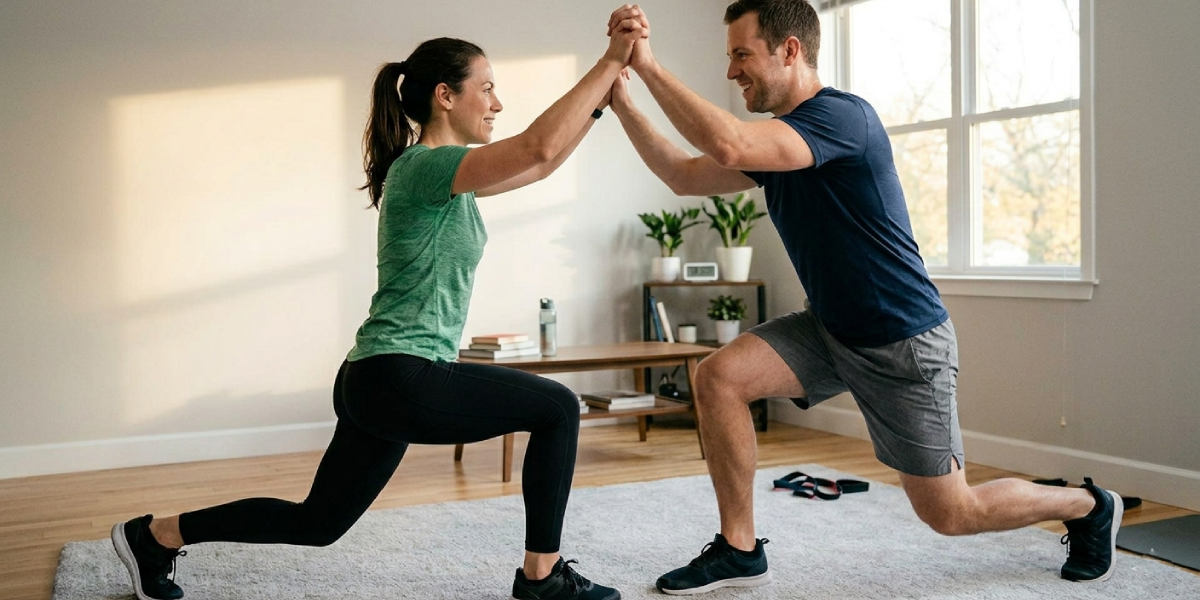
Working out with a partner is one of the most effective and underused strategies in fitness today. Whether you are just starting your journey or you have been training for years, having someone by your side during workouts can meaningfully change how hard you push, how consistently you show up, and ultimately how much progress you make.
This guide breaks down the real, evidence-backed reasons why partner training works, how to make the most of it, and what to look for in a good workout partner. If you have been training alone and feeling like your results have plateaued, this might be exactly the shift you need.
The Accountability Factor: Showing Up When It Counts
One of the biggest barriers to consistent exercise is simply showing up. On days when motivation is low, when work has been exhausting, or when the couch looks far too inviting, knowing that another person is waiting for you at the gym or in the park makes skipping far less likely.
This is not just anecdotal. Research in behavioral science consistently shows that social commitment is a powerful driver of follow-through. When you make a plan with someone else, canceling becomes a social cost, not just a personal inconvenience. That shift in psychology is enormous for building long-term exercise habits.
Partners also provide a form of positive peer pressure. When your training partner shows up even on a rough morning, it pushes you to do the same. Over time, this mutual accountability creates a rhythm that is much harder to break than solo exercise routines.
Performance Gains: The Köhler Effect in Action
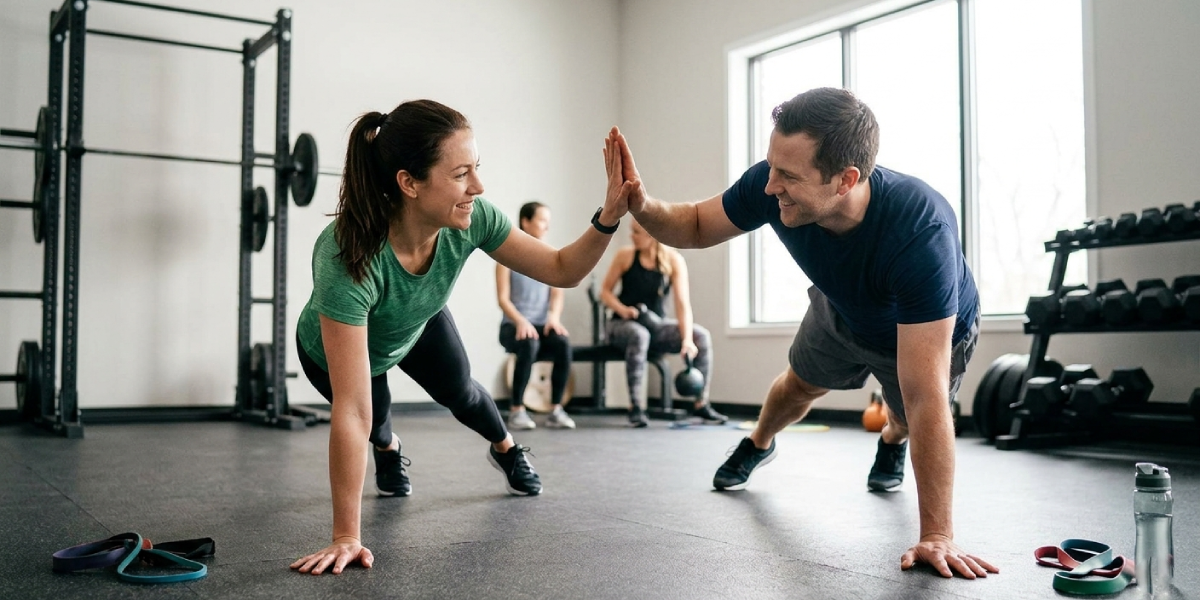
There is a well-documented psychological phenomenon called the Köhler Effect, which describes how people work harder when they are part of a group than when working alone. This is especially true when the partner is slightly more capable, creating a natural motivation to keep up and improve.
In practical terms, you are likely to run faster, lift heavier, and hold a plank longer when someone is beside you than when you are going it alone. Studies have shown that individuals exercising with a partner can increase their workout duration by significant margins compared to solo sessions.
This effect is not about competition in a negative sense. It is about the natural human tendency to rise to the level of the people around us. A good training partner sets a visible standard that encourages you to push just a little further each session.
Safer Workouts with a Spotter and Second Set of Eyes
Safety is a practical and important reason to train with a partner, particularly for resistance and strength training. Exercises like barbell bench press, heavy squats, and overhead lifts carry real injury risk when performed without supervision. A reliable spotter allows you to push closer to your limits without fear of being unable to complete a rep safely.
Beyond spotting, a partner can observe your form from angles you simply cannot see yourself. They can catch a caved knee during a squat, a rounded back on a deadlift, or an uneven press before these form errors become injury patterns. This real-time feedback is something no mirror or camera angle can fully replace.
If you are exploring different exercises and movement patterns to add to your routine, having a partner who can evaluate your technique in real time speeds up the learning process considerably and reduces the risk of reinforcing bad habits.
Variety and Fun: The Exercises You Would Never Do Alone
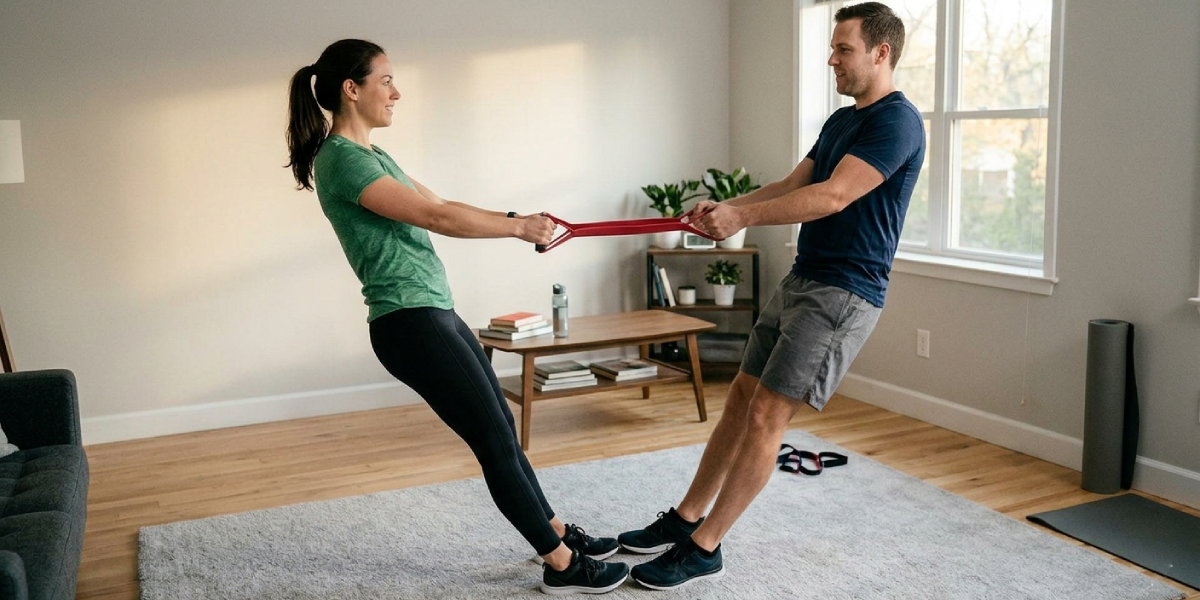
Let’s be honest: some of the most effective exercises are also the most awkward to do solo. Medicine ball passes, partner-assisted stretches, resistance band drills, and certain mobility work all become accessible and enjoyable with someone else involved.
Beyond specific exercises, partners introduce variety through friendly competition, trying new training styles, and keeping sessions from becoming repetitive. Boredom is one of the most common reasons people abandon fitness routines. A partner naturally disrupts the monotony by bringing new energy, ideas, and challenges to each workout.
Training together also tends to make sessions feel shorter. Conversation, laughter, and shared experience shift the focus away from discomfort and toward connection, which makes sustained effort feel much less like a grind.
Mental Health Benefits of Social Exercise
Exercise is well established as a tool for improving mood, reducing anxiety, and supporting overall mental health. What is less often discussed is how the social component of partner training amplifies these benefits.
Working out alongside someone you trust provides a sense of belonging and emotional support that solo training simply cannot replicate. After a difficult workout completed together, there is a shared sense of achievement that strengthens the relationship and reinforces positive feelings about exercise itself.
For people who struggle with motivation tied to mental health challenges, a supportive partner can be the difference between showing up and not. The relational element of partner training adds a layer of meaning to the activity that goes beyond calories burned or weight lifted.
Understanding how exercise intersects with broader health outcomes, including mental well-being, is an important part of building a sustainable fitness lifestyle. Partner training supports this by making the process more human and less transactional.
How to Choose the Right Workout Partner
Not every training partnership works. Choosing the right partner matters as much as deciding to train with one. Here are key qualities to look for:
- Similar availability: You need someone whose schedule aligns with yours reliably, not occasionally.
- Compatible goals: Your partner does not need to want exactly the same results, but your goals should be complementary enough that your workouts can serve both of you.
- Comparable fitness level: A partner slightly more advanced than you is motivating; a large gap in ability can lead to one person constantly waiting or being held back.
- Positive attitude: Look for someone who brings energy and encouragement, not negativity or competition that feels discouraging.
- Reliability: Consistency is the whole point. A partner who cancels frequently undermines the accountability benefit entirely.
- Honesty: You want someone willing to tell you that your form is off or that you are sandbagging, not just offer empty praise.
Structuring a Productive Partner Workout
Training with a partner works best when sessions are planned rather than improvised. Here are practical approaches to structuring effective partner workouts:
Alternating Sets
One of the simplest and most effective structures is alternating sets. While one partner performs a set, the other rests, then you swap. This keeps rest periods consistent, maintains intensity, and gives each person a moment to recover without losing momentum.
Circuit Training Together
Partner circuits involve both individuals moving through a series of stations, either simultaneously at different stations or mirroring each other. This format is excellent for cardiovascular conditioning and time efficiency.
Timed Challenges
Setting shared timed challenges, such as who can complete a set number of reps first or hold a position longer, introduces friendly competition that drives effort without creating a negative dynamic.
Skill-Sharing Sessions
If one partner has more experience with a movement pattern or training method, dedicating part of a session to teaching and coaching each other builds skill while deepening the partnership.
Partner Training and Long-Term Body Composition
One area where partner training particularly shines is in supporting long-term body composition changes. Fat loss and muscle building both require sustained effort over months and years, not just intense bursts of motivation. The consistency that a training partner provides is directly linked to the cumulative effort needed to see meaningful body composition changes.
Combining partner training with a sound understanding of your own body metrics is a smart approach. Using a BMI calculator alongside your training program helps you track where you are starting and how your body is changing over time, giving both you and your partner useful data to inform your approach.
Common Pitfalls to Avoid in Partner Training
Partner training is not without its challenges. Being aware of common issues can help you address them before they derail your progress:
- Letting one partner lead all decisions: Both people should have input on programming and goals to keep both invested.
- Socializing more than training: Conversation is great, but if it consistently cuts into your workout intensity, you need to build in structured focus time.
- Dependency: Your training consistency should not collapse if your partner is unavailable for a week. Cultivate the discipline to train solo when needed.
- Misaligned intensity: If one partner is always pushing much harder than the other, resentment or discouragement can build. Regular check-ins about how sessions feel for both parties keeps things balanced.
Frequently Asked Questions
Does working out with a partner actually improve results?
Yes. Research consistently shows that people who exercise with a partner work harder, train longer, and maintain consistency at higher rates than those who train alone. The psychological effects of social commitment and mutual motivation are well documented and have a measurable impact on performance outcomes.
What if my fitness level is very different from my partner’s?
A moderate difference in fitness levels can actually be beneficial, as the less advanced partner is motivated to keep up while the more advanced partner benefits from leadership and teaching. A very large gap can make it difficult to structure workouts that serve both people effectively. In that case, focusing on complementary exercises rather than identical loads and intensities helps both partners get a productive session.
How do I find a workout partner if I do not know anyone who trains?
Gyms often have community boards or social programs for connecting members. Group fitness classes are a natural way to meet people with similar exercise interests. Online communities, local running clubs, and social fitness apps are also effective ways to find training partners when your existing social circle does not include regular exercisers.
Can partner training work for home workouts?
Absolutely. Many effective partner workouts require no equipment at all, relying on bodyweight exercises, partner-assisted stretches, and movement drills. Video calling platforms also allow virtual partner training, which maintains the accountability and social connection benefits even when training in different locations.
How often should workout partners train together each week?
This depends on your individual goals and schedules. Most people benefit from training with a partner two to four times per week. Training every session together is not necessary and can create scheduling pressure. A combination of partner sessions and solo workouts often produces the best balance of accountability and flexibility.
What are the best exercises to do with a partner?
Exercises that benefit most from partner training include barbell lifts requiring a spotter such as bench press and squat, partner-assisted stretching and mobility work, medicine ball drills, rowing machine intervals, and any circuit or interval format where one person works while the other rests. Core exercises like planks and sit-ups also respond well to partner challenge formats.
Is it better to train with a friend or a personal trainer?
Both serve different purposes. A personal trainer provides professional programming, technical coaching, and structured progression. A training friend provides social accountability, shared experience, and long-term motivation. Ideally, both have a role in a comprehensive fitness approach. Many people find that training with a knowledgeable friend who shares their goals covers much of what a trainer offers while adding the relationship dimension.
How does partner training affect motivation over time?
Initial motivation from a new partnership tends to be high. Over time, the relationship deepens and becomes a consistent habit anchor, which is actually more valuable than early enthusiasm. Couples, longtime friends, and coworkers who train together often report that their partnership becomes one of the most reliable parts of their fitness routine precisely because the relationship itself creates obligation and enjoyment that pure willpower cannot sustain alone.
Can working out with a partner help with weight loss specifically?
Yes. Weight loss depends on consistent caloric expenditure and dietary habits over time. A training partner supports the exercise consistency side of that equation meaningfully. Partners also tend to encourage healthier lifestyle choices outside the gym, including better nutrition habits, simply through shared commitment to their goals. The social reinforcement of a fitness-oriented partnership extends beyond the workout itself.
What should two partners do if they have different fitness goals?
Different goals do not prevent effective partner training. If one partner is focused on building strength while the other is prioritizing endurance, you can structure sessions around shared warm-ups, complementary training blocks, and a shared cooldown. The key is designing sessions where both people feel their goals are being served, even if the specific exercises and loads differ. Communication about what each person needs from the session keeps the partnership productive for both.