


The debate over morning exercise vs evening exercise is one of the most common questions in the fitness world. Whether you are lacing up your shoes before sunrise or heading to the gym after dinner, both approaches can deliver real health results.
But science and practical experience suggest that timing does matter depending on your specific goals, lifestyle, and biology.
This guide breaks down what the research says, what real-world exercisers report, and how to choose the workout schedule that truly fits your life. Whether you are trying to lose weight, build muscle, sleep better, or simply stay consistent, understanding when to exercise can sharpen your results significantly.
Why Exercise Timing Matters More Than You Think
Your body operates on a circadian rhythm, an internal 24-hour clock that regulates sleep, hormone release, body temperature, and physical performance. Exercise timing interacts directly with this biological system.
Cortisol, testosterone, body temperature, and cardiovascular efficiency all fluctuate throughout the day in predictable patterns, and aligning your workouts with these rhythms can influence how hard you can push and how well you recover.
That said, the single most important factor in any fitness program is consistency. The best time to exercise is the time you can do it reliably, day after day. With that foundation in place, understanding the advantages of each window can help you get more out of every session.
The Case for Morning Exercise

Jumpstarts Your Metabolism and Fat Burning
Exercising in a fasted state, which is common during morning workouts before breakfast, may enhance fat oxidation. When your glycogen stores are partially depleted after an overnight fast, your body turns to stored fat as fuel more readily.
This can be especially useful for people working toward body composition goals. Morning cardio in particular is popular among those focused on fat loss.
Boosts Mental Clarity and Mood All Day
A morning workout triggers the release of endorphins, dopamine, and serotonin early in the day. These neurochemicals improve mood, sharpen focus, and reduce anxiety. Many people who exercise in the morning report greater productivity at work, improved decision-making, and a more optimistic outlook throughout the rest of their day. This mental edge is hard to replicate with coffee alone.
Fewer Distractions and More Consistency
Life is unpredictable. Work meetings run long, family obligations emerge, and evening plans cancel gym sessions. Morning workouts sidestep most of these disruptions. When you exercise first thing, nothing has had a chance to derail your plan yet.
Research consistently shows that morning exercisers tend to maintain their habits longer over time compared to those who plan to work out in the evening.
Better Sleep Through Circadian Alignment
Morning exercise reinforces your natural sleep-wake cycle. Exposure to natural light during an outdoor morning run or walk can strengthen your circadian clock, signaling wakefulness in the morning and sleepiness at night. People who exercise in the morning often report falling asleep faster and sleeping more deeply, which in turn supports recovery and overall health and wellness.
The Case for Evening Exercise
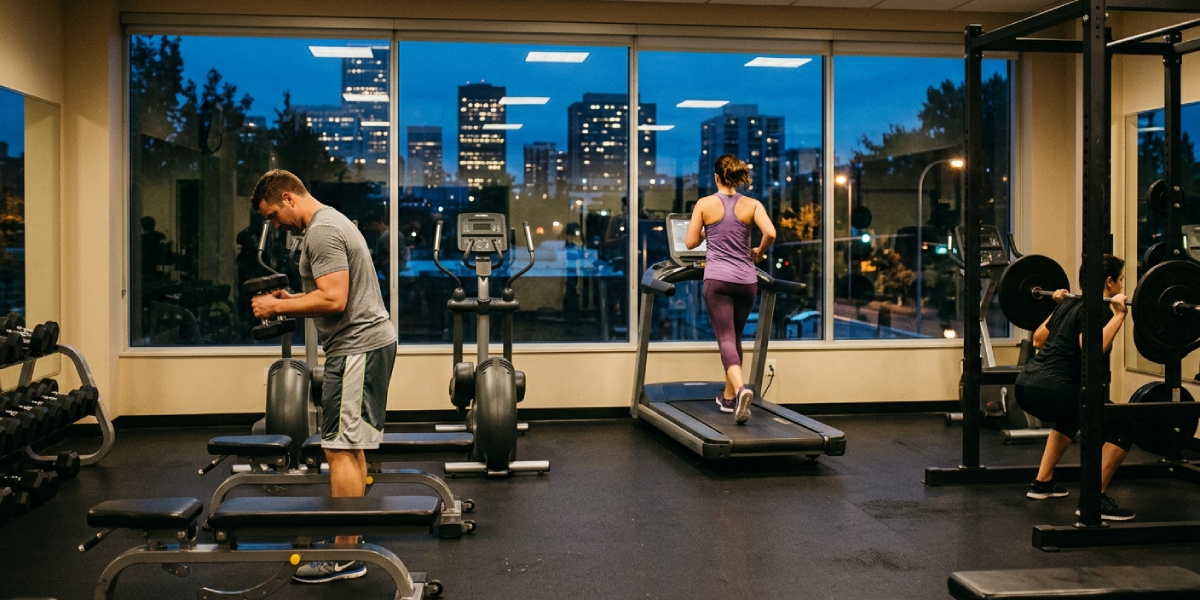
Peak Physical Performance
From a pure physiology standpoint, your body is primed for peak athletic performance in the late afternoon and early evening. Core body temperature reaches its daily high between 4 PM and 7 PM, which is associated with greater muscle flexibility, stronger reaction times, and higher cardiovascular efficiency.
Strength output, anaerobic capacity, and endurance performance are all measurably higher during this window. If performance matters to you, evenings have a distinct edge.
Stress Relief After a Long Day
For many people, exercise serves as a powerful decompressor after a stressful workday. Physical activity lowers cortisol levels and helps discharge the mental tension that builds up during the day. An evening workout can be the difference between bringing work stress home and leaving it at the gym.
This psychological benefit makes evening exercise a natural fit for people in demanding jobs or high-stress environments.
Greater Strength and Muscle Gains
Testosterone and growth hormone levels, two key drivers of muscle development, are influenced by circadian timing. Some studies suggest that resistance training in the late afternoon may produce slightly greater gains in muscle mass and strength over time.
If your primary goal is building a stronger physique, your body is genuinely more prepared for heavy lifting in the evening hours than it is first thing in the morning.
More Social and Enjoyable
Evening gym sessions tend to be livelier. Group fitness classes, sports leagues, running clubs, and workout partners are all more readily available in the evening. Social accountability is one of the strongest predictors of long-term exercise adherence.
If the social energy of a fitness community motivates you, evening workouts are often where that energy is most abundant.
Morning vs Evening Exercise: A Side-by-Side Comparison
| Factor | Morning Exercise | Evening Exercise |
|---|---|---|
| Fat Burning | Higher in fasted state | Moderate, depends on meals |
| Physical Performance | Lower body temperature, slightly reduced | Peak body temp, optimal performance |
| Muscle and Strength Gains | Good | Slightly better hormonal environment |
| Mental Clarity | Boosts focus for the whole day | Helps decompress after work |
| Sleep Quality | Generally improves sleep | Late sessions may delay sleep onset |
| Consistency | Fewer schedule conflicts | More prone to cancellation |
| Social Options | Limited | More classes and partners available |
| Best For | Fat loss, habit building, sleep health | Performance, strength, stress relief |
What About Evening Exercise and Sleep?
One of the most persistent concerns about evening workouts is whether they disrupt sleep. The answer is nuanced. High-intensity exercise completed within one to two hours of bedtime can elevate heart rate, body temperature, and adrenaline levels, making it harder to wind down.
However, moderate evening exercise such as yoga, walking, or light strength training does not negatively impact sleep for most people and may actually improve sleep quality.
If you prefer evening workouts, try to finish intense sessions at least two hours before bed. Use the window between your workout and bedtime for a relaxed cool-down, a light meal, or a shower to help your body transition toward rest.
Managing this window is key to getting the benefits of evening training without the drawback of disrupted sleep.
The Role of Individual Chronotype
Not everyone’s biology works the same way. Your chronotype, whether you are naturally a morning person or a night owl, significantly influences when you feel best and perform best. Early risers often find morning workouts energizing and natural, while those who struggle to function before 9 AM may deliver far better workouts in the afternoon or evening.
Trying to force an exercise schedule against your natural chronotype is one of the most common reasons people abandon fitness routines. If you are not a morning person, do not feel pressured to exercise at 5 AM just because it works for someone else.
Choosing a time that aligns with your natural energy cycle leads to better workouts and better long-term adherence.
Special Considerations for Specific Goals
For Weight Loss
Morning exercise, particularly fasted cardio, may offer a modest advantage for fat burning. Additionally, morning workouts can improve insulin sensitivity throughout the day and help regulate appetite hormones. Pair your morning exercise habit with a well-structured nutrition plan for the best results.
Tracking your BMI and body composition over time helps confirm whether your timing strategy is working.
For Athletic Performance
Athletes and performance-focused individuals benefit most from afternoon or early evening training, when body temperature, reaction time, and cardiovascular efficiency peak. If you are training for a race, sport, or competition, consider scheduling your most demanding sessions during this window.
For Stress and Mental Health
Both morning and evening exercise have well-documented benefits for mental health. Morning workouts set a positive tone for the day, while evening workouts serve as a powerful outlet for daily stress. Choose based on when your mental load is heaviest and when you need the most relief.
Building a Sustainable Exercise Routine
Regardless of when you choose to train, building a sustainable routine depends on choosing the right exercises and workout structures that support your goals. Variety, progressive overload, proper warm-up, and recovery all matter far more than the clock on the wall.
If your schedule allows flexibility, consider splitting your training. You might do strength training in the evening when performance peaks and save walking, stretching, or mobility work for the morning. This hybrid approach captures the best of both worlds without compromising recovery or consistency.
Final Verdict: Which Is Better?
There is no universally correct answer to the morning exercise vs evening exercise debate. The research supports both, and the ideal choice depends on your personal goals, schedule, chronotype, and lifestyle. Here is a simple framework to guide your decision:
- Choose morning if your primary goals are fat loss, habit consistency, better sleep, and mental clarity throughout the day.
- Choose evening if your priorities are athletic performance, maximum strength output, stress relief, and social motivation.
- Choose whenever you will actually do it if consistency has been your biggest challenge. The perfect timing means nothing if you skip the session.
Commit to your chosen schedule for at least four to six weeks before evaluating results. Your body adapts to the timing of exercise over time, and you may find that what felt awkward in week one feels natural and energizing by week four.
Frequently Asked Questions
Is morning or evening exercise better for weight loss?
Morning exercise, especially in a fasted state, may slightly favor fat burning due to lower glycogen levels overnight. However, total caloric burn and overall diet quality matter far more than timing for sustainable weight loss.
Does exercising at night affect sleep?
High-intensity exercise close to bedtime can delay sleep onset for some people. However, moderate evening workouts finished two or more hours before bed typically do not disrupt sleep and may even improve sleep quality for many individuals.
Is it better to work out before or after eating?
For low to moderate intensity workouts, exercising after a light meal can improve performance and reduce dizziness. For fat-burning goals, fasted morning workouts may be advantageous. For high-intensity or strength sessions, fueling beforehand helps sustain output.
Can I switch between morning and evening workouts?
Yes, though consistency in timing helps your body adapt and can improve performance over time. Occasional variation is fine, but if you are trying to optimize results, picking one consistent window is generally more effective.
Are evening workouts less effective than morning workouts?
No. In fact, for strength training and athletic performance, evening workouts may be more effective due to higher body temperature and better hormonal conditions. Effectiveness depends more on effort, nutrition, and recovery than on the time of day.
What if I am not a morning person but want to exercise in the morning?
Start gradually by shifting your workout time earlier by 15 to 30 minutes each week. Prepare your gear the night before, keep a consistent sleep schedule, and give yourself at least four weeks for the habit to feel natural before judging whether it works for you.
How long should a morning workout be?
Even 20 to 30 minutes of morning exercise provides meaningful health and mental benefits. You do not need a long session to feel the effects. Short, consistent workouts in the morning outperform longer workouts that happen infrequently.
Does exercise timing affect muscle building?
Testosterone and growth hormone patterns may give a slight edge to afternoon and evening resistance training for muscle building. However, the difference is modest compared to the impact of training volume, progressive overload, protein intake, and adequate sleep.
What type of exercise is best in the morning?
Cardio, yoga, bodyweight training, and moderate-intensity strength work all perform well in the morning. Avoid attempting personal records or maximum-effort lifts early in the morning when your muscles and joints are still warming up.
Can I do both morning and evening workouts?
Yes, if your fitness level, recovery capacity, and schedule allow it. Two-a-day training can be effective for advanced athletes, but it requires careful programming to avoid overtraining. Most people benefit more from one focused daily session with quality rest and recovery.