

If you are searching for the most effective exercises for knee pain relief, you are not alone. Knee pain is one of the most common musculoskeletal complaints affecting adults of all ages, whether from arthritis, injury, overuse, or age-related wear.
The encouraging truth is that the right movement, done consistently and correctly, can dramatically reduce pain, restore function, and help you reclaim an active life without relying solely on medications or invasive procedures.
This guide draws on established physical therapy principles, orthopedic research, and real-world rehabilitation practices to walk you through the safest and most effective exercises you can start today.
Whether you are recovering from a knee injury, managing osteoarthritis, or simply trying to prevent future problems, these strategies are built for you.
Why Exercise Is One of the Best Treatments for Knee Pain
It may feel counterintuitive to move a painful joint, but decades of clinical evidence consistently show that targeted exercise is among the most effective non-surgical treatments for knee pain. Strengthening the muscles around the knee, particularly the quadriceps, hamstrings, glutes, and calves, reduces the mechanical load on the joint itself.
When these muscles are weak, your knee absorbs far more impact and stress than it should during everyday activities like walking, climbing stairs, or standing from a chair.
Exercise also improves circulation to the joint, helping deliver nutrients to cartilage, which has limited blood supply. It reduces inflammation over time, improves joint lubrication through synovial fluid movement, and supports a healthy body weight.
Managing weight is particularly important for knee health, since every extra pound of body weight adds roughly four pounds of pressure on the knee joint during walking. You can use a BMI calculator to assess where your weight falls and better understand how it may be contributing to your knee discomfort.
Before You Begin: Important Safety Guidelines
Not all knee pain is the same, and not every exercise is appropriate for every condition. Before starting any new exercise program for knee pain, consider these foundational safety principles.
- Get a proper diagnosis first. Exercises for knee osteoarthritis differ from those appropriate for a ligament sprain or a meniscus tear. Knowing your specific condition ensures you do not aggravate the injury.
- Work within a pain-free or low-pain range. A mild ache or muscle fatigue during exercise is generally acceptable. Sharp, stabbing, or worsening pain is a signal to stop.
- Start slow and progress gradually. Rushing through rehabilitation is one of the most common causes of setback. Build volume and intensity over weeks, not days.
- Warm up before every session. Even five to ten minutes of gentle walking or cycling improves blood flow and prepares the joint tissues for movement.
- Consult a physical therapist or physician if you have severe pain, recent surgery, significant swelling, or instability in the knee.
The Best Low-Impact Exercises for Knee Pain Relief
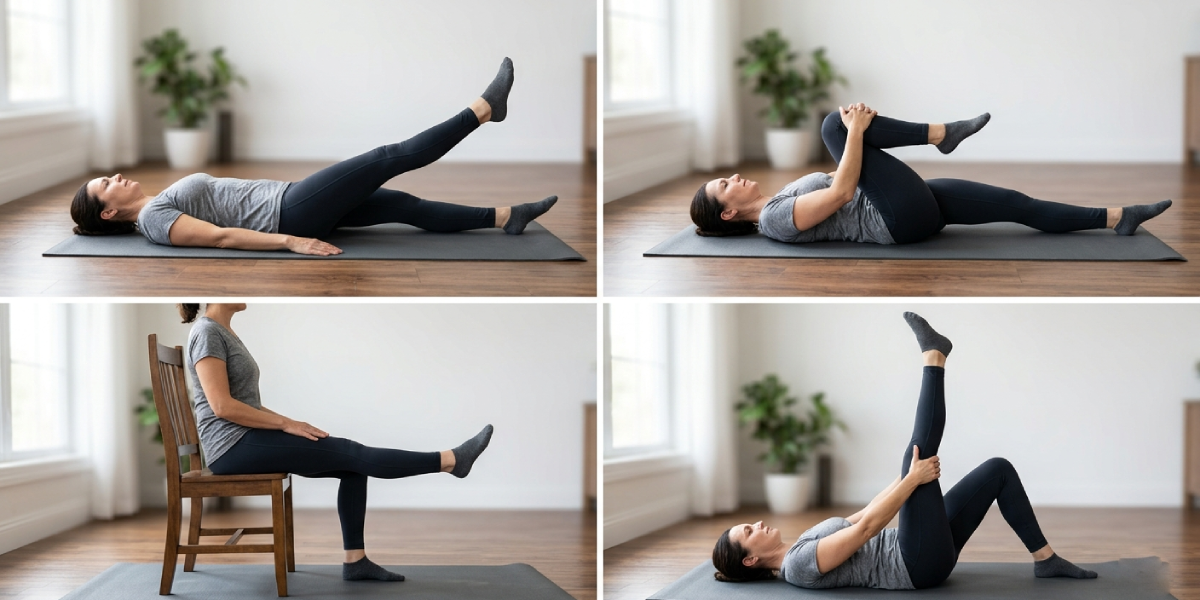
These exercises are widely recommended by orthopedic specialists and physical therapists for their effectiveness in reducing knee pain while minimizing stress on the joint. They can be performed at home with minimal equipment.
1. Straight Leg Raises
Straight leg raises are one of the first exercises prescribed after knee injury or surgery because they strengthen the quadriceps without placing any bending stress on the knee joint itself. Lie flat on your back with one leg bent and the foot flat on the floor.
Keep the other leg straight, tighten the thigh muscle of the straight leg, and slowly lift it to the height of the bent knee. Hold for two seconds, lower slowly, and repeat ten to fifteen times per set. Perform two to three sets per leg. As strength improves, you can add a light ankle weight to increase resistance.
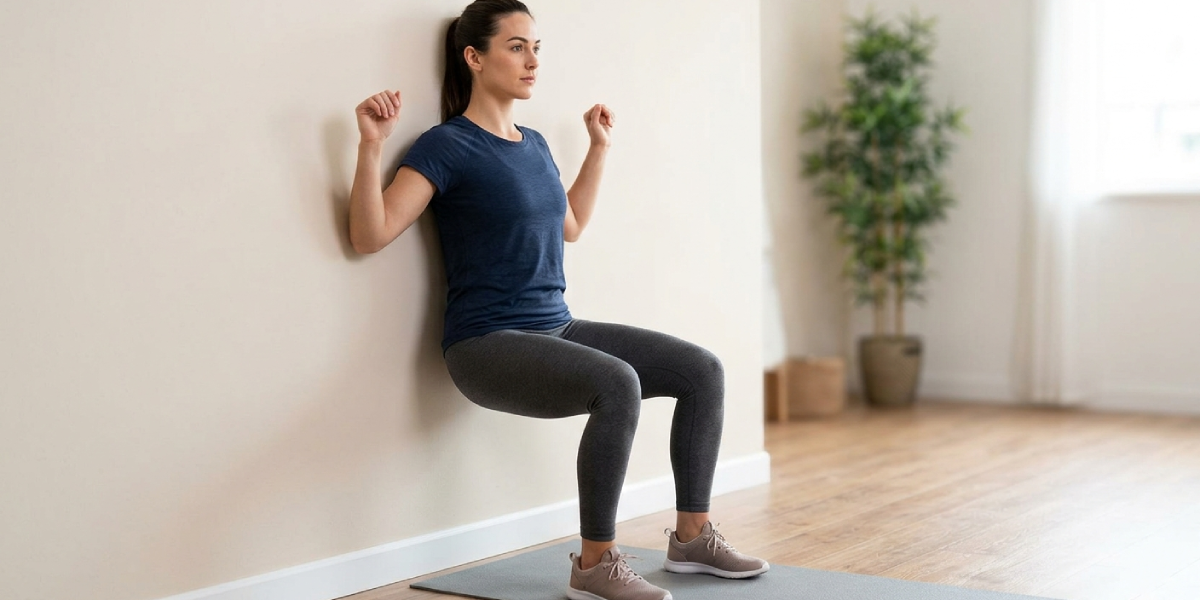
2. Wall Squats (Wall Slides)
Wall squats allow you to build quadriceps and glute strength while controlling the depth of knee bend, making them safer for people with knee pain than traditional squats. Stand with your back flat against a wall, feet shoulder-width apart and about eighteen inches from the wall.
Slowly slide down the wall until your knees are at roughly a 30 to 45-degree angle. Do not go lower than 90 degrees if it causes pain. Hold for five to ten seconds, slide back up, and repeat ten times. This is a compound movement that also teaches proper alignment, preventing the knees from caving inward.
3. Calf Raises
Strong calves help absorb shock during walking and reduce compressive forces on the knee. Stand behind a chair or counter for balance, rise onto the balls of your feet, hold for two seconds, then lower slowly. Perform three sets of fifteen repetitions.
As balance improves, try single-leg calf raises to add a stability challenge. This exercise is particularly beneficial for people with patellofemoral pain syndrome (runner’s knee).
4. Prone Hamstring Curls
The hamstrings play a crucial role in knee stability, yet they are often overlooked in rehab programs that focus exclusively on the quads. Lie face down on a flat surface with legs straight. Slowly bend one knee, bringing your heel toward your glutes as far as comfort allows.
Hold briefly, lower with control, and repeat. For added resistance, loop a light resistance band around your ankles. Aim for two to three sets of twelve repetitions per side.
5. Side-Lying Hip Abduction
Weak hip abductors, particularly the gluteus medius, are a frequently overlooked contributor to knee pain. When the hip fails to stabilize properly during movement, the knee is forced to compensate, increasing stress on its inner or outer structures.
Lie on your side with legs stacked straight. Keeping your top leg straight and foot flexed, lift it about twelve to eighteen inches, hold for two seconds, and lower with control. Perform three sets of fifteen repetitions per side. This exercise directly addresses the hip-knee biomechanical chain and is essential for long-term knee health.
6. Step-Ups
Step-ups mimic real-life movements like climbing stairs and are excellent for building functional knee strength. Using a low step (four to six inches to begin), place one foot on the step, press through that heel to lift your body up, tap the step with the trailing foot, then slowly lower back down.
Keep the motion controlled throughout and avoid letting the knee drift inward. Perform ten to fifteen repetitions per leg for two to three sets. Increase step height as strength improves.
7. Terminal Knee Extensions (TKE) with a Resistance Band
Terminal knee extensions are a staple in sports medicine and physical therapy for strengthening the last few degrees of quadriceps contraction, which is essential for joint stability. Anchor a resistance band to a fixed point, loop it behind one knee, and stand facing the anchor point.
With a slight bend in the knee, press your knee backward against the band until fully straight, then slowly release. The controlled resistance challenges the quad at its weakest point in the range of motion. Perform two to three sets of fifteen repetitions per side.
Stretching and Flexibility Exercises for Knee Pain Recovery
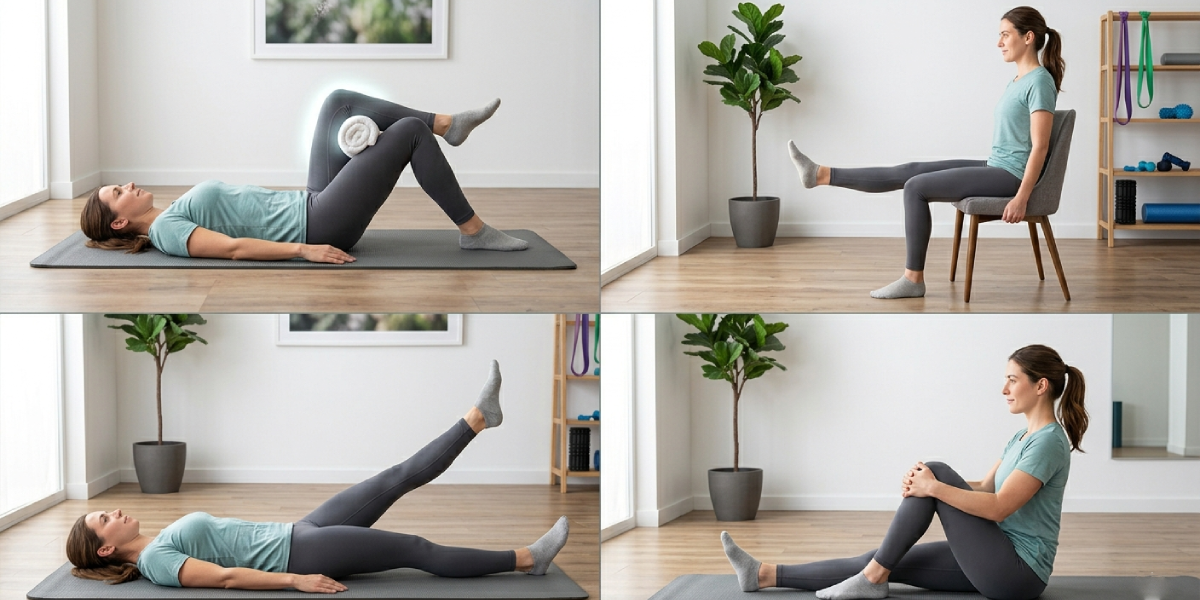
Tight muscles pull unevenly on the knee joint, altering tracking and increasing pain. Incorporating flexibility work alongside strengthening exercises produces far better outcomes than strengthening alone.
Quadriceps Stretch
Stand near a wall for balance. Bend one knee and bring your heel toward your glutes, holding your ankle with the same-side hand. Keep your knees together and stand tall. Hold for twenty to thirty seconds per side. This stretch targets the front of the thigh, which often becomes tight and pulls on the kneecap.
Hamstring Stretch
Sit on the edge of a chair and extend one leg in front with the heel on the floor. Sit tall and gently lean forward from the hips until you feel a comfortable stretch along the back of the thigh. Hold for twenty to thirty seconds per side. Avoid rounding the lower back. Tight hamstrings restrict knee range of motion and increase compressive forces on the joint.
Calf Stretch
Stand facing a wall. Place one foot behind you with the heel flat on the floor and the knee straight, and lean gently into the wall until you feel a stretch in the calf. Hold for thirty seconds, then bend the back knee slightly to target the deeper calf muscle. Repeat on both sides. Calf tightness is often linked to limited ankle mobility, which in turn places greater stress on the knee.
IT Band and Hip Flexor Stretches
Iliotibial band tightness is a common cause of outer knee pain, particularly in runners and cyclists. Cross one leg behind the other and lean to the opposite side until you feel a stretch along the outer hip and thigh. For the hip flexors, take a low lunge position with one knee on the ground and gently push your hips forward. Hold each stretch for twenty to thirty seconds per side.
Aerobic Exercise Options That Are Gentle on the Knee
Maintaining cardiovascular fitness while protecting the knee is a key part of long-term recovery and prevention. These low-impact aerobic options are safe and effective for most people with knee pain.
- Swimming and water aerobics: Exercising in water reduces the gravitational load on joints by up to 90 percent, making it ideal for people with significant pain or post-surgical recovery.
- Stationary cycling: Cycling improves quad and hamstring strength while maintaining cardiovascular health with minimal joint impact. Keep the seat height adjusted so the knee does not fully lock at the bottom of the pedal stroke.
- Elliptical training: The elliptical provides a walking or running motion with dramatically reduced impact compared to treadmill use, making it a popular recommendation from physical therapists.
- Walking on flat terrain: A simple, consistent walking program remains one of the best long-term interventions for knee osteoarthritis, with research supporting reductions in pain and improvements in function.
Exploring a wide variety of structured exercise routines tailored to different fitness levels can help you build a sustainable, balanced program that supports your knee recovery without overloading the joint.
A Sample Weekly Exercise Plan for Knee Pain Relief
| Day | Focus | Exercises |
|---|---|---|
| Monday | Strengthening | Straight leg raises, wall squats, calf raises |
| Tuesday | Low-impact cardio | 20–30 minutes stationary bike or swimming |
| Wednesday | Stretching and mobility | Quad, hamstring, calf, IT band stretches |
| Thursday | Strengthening | Hip abduction, step-ups, hamstring curls, TKEs |
| Friday | Low-impact cardio | 20–30 minutes elliptical or walking |
| Saturday | Active recovery | Gentle walking, stretching routine |
| Sunday | Rest | Full rest or light mobility work |
Lifestyle Factors That Support Knee Pain Recovery
Exercise is the cornerstone of knee pain management, but it works best alongside healthy lifestyle habits. Addressing these factors accelerates recovery and prevents recurrence.
Nutrition and body weight: A diet rich in anti-inflammatory foods such as fatty fish, leafy greens, berries, nuts, and olive oil supports joint health. Maintaining a healthy body weight is particularly impactful. Even a modest five to ten percent reduction in body weight can lead to meaningful reductions in knee pain for people with osteoarthritis. Your overall health and wellness habits play a powerful supporting role in how quickly and fully you recover.
Proper footwear: Worn-out shoes with poor arch support alter your gait mechanics and increase stress on the knee. Replace athletic shoes every 300 to 500 miles or when cushioning is noticeably reduced. Orthotics can further improve alignment for those with flat feet or overpronation.
Ice and heat therapy: Ice applied for fifteen to twenty minutes after exercise helps reduce inflammation and post-activity swelling. Heat before exercise can loosen stiff joints and prepare muscles for movement. Neither replaces exercise but can make recovery more comfortable.
Sleep and recovery: Tissue repair happens primarily during sleep. Prioritizing seven to nine hours of quality sleep per night is not optional for recovery. Chronic sleep deprivation increases pain sensitivity and slows healing.
When to See a Doctor or Physical Therapist
While most cases of knee pain respond well to targeted exercise and lifestyle modification, certain symptoms warrant professional evaluation. Seek medical attention if you experience sudden or severe swelling, inability to bear weight, a popping sensation at the time of injury, knee that locks or gives way unexpectedly, or pain that persists or worsens despite several weeks of conservative care.
A physical therapist can provide hands-on assessment, manual therapy, and a personalized exercise program tailored precisely to your anatomy and goals.
Frequently Asked Questions
What are the best exercises for knee pain relief at home?
The most effective home exercises for knee pain include straight leg raises, wall squats, calf raises, prone hamstring curls, and side-lying hip abductions. These require no equipment, are easy to learn, and directly target the muscles that support and protect the knee joint.
How long does it take for knee exercises to reduce pain?
Most people begin to notice meaningful improvements in knee pain within four to six weeks of consistent exercise. Full recovery timelines vary depending on the underlying cause, severity, age, and overall health, but most non-surgical cases see significant progress within three to six months of structured rehabilitation.
Can I exercise with knee pain, or should I rest completely?
Complete rest is rarely the best approach for knee pain. Prolonged inactivity leads to muscle weakness and joint stiffness, which worsen pain over time. The goal is to exercise smartly within a tolerable pain range, using low-impact movements and avoiding activities that trigger sharp or worsening pain.
Are squats bad for the knees?
Traditional deep squats can be problematic for people with existing knee pain, particularly if performed with poor form or excessive depth. However, modified squats such as wall squats or partial-range squats are generally safe and highly beneficial when done correctly. Keeping the knee aligned over the second toe and avoiding caving inward are essential technique points.
Is walking good for knee pain?
Yes, walking is widely endorsed as one of the best activities for people with knee pain, especially osteoarthritis. Regular walking strengthens the surrounding muscles, maintains joint mobility, supports weight management, and has been shown in clinical studies to reduce knee pain and improve daily function. Start on flat terrain and gradually increase duration.
What exercises should I avoid if I have knee pain?
Exercises to approach with caution or avoid during active knee pain include full deep squats, running on hard surfaces, lunges with heavy loads, leg press with excessive depth, and high-impact jumping or plyometrics. These can be reintroduced gradually once strength and pain tolerance improve, ideally under professional guidance.
Does stretching help with knee pain?
Yes, stretching the quadriceps, hamstrings, calves, hip flexors, and iliotibial band relieves tension that pulls unevenly on the knee joint. Flexibility training improves range of motion, reduces stiffness, and complements strengthening work. Hold each stretch for at least twenty to thirty seconds and stretch daily for best results.
Can strengthening hip muscles relieve knee pain?
Absolutely. The hip and knee are biomechanically linked, and weakness in the hip abductors and external rotators is a well-documented contributor to knee pain conditions including patellofemoral pain and IT band syndrome. Exercises like side-lying hip abduction and clamshells that target the gluteus medius often produce significant reductions in knee pain even when the exercises themselves do not directly involve the knee.
How often should I do knee exercises for the best results?
For most people, performing strengthening exercises three to four times per week with rest days between sessions produces optimal results. Stretching and flexibility work can be done daily. Consistency over weeks and months matters more than intensity on any single day. Gradual progression of resistance and volume is the key principle guiding long-term improvement.
Is cycling good for knee pain?
Stationary cycling is one of the most recommended low-impact exercises for knee pain. It builds quadriceps and hamstring strength, improves cardiovascular fitness, and places significantly less compressive force on the joint compared to running or jumping. Proper seat height is critical, the knee should maintain a slight bend at the bottom of the pedal stroke rather than locking out fully.