


Finding time for daily exercise routines when you have a busy schedule can feel nearly impossible. Between back-to-back meetings, family responsibilities, and the never-ending demands of modern life, fitness often gets pushed to the bottom of the priority list.
But here is the truth that exercise science consistently confirms: you do not need hours in the gym to stay healthy, strong, and energized. What you need is a smarter approach.
This guide breaks down exactly how to build sustainable daily exercise habits that fit around your real life, not an idealized version of it. Whether you have 10 minutes or 45, whether you work from home or commute daily, there is a practical routine here for you.
Why Consistency Beats Duration Every Single Time
One of the biggest misconceptions about fitness is that workouts must be long to be effective. Research published in exercise physiology journals has repeatedly shown that shorter, consistent bouts of physical activity deliver measurable benefits for cardiovascular health, metabolism, muscle tone, and mental well-being.
The American Heart Association recommends at least 150 minutes of moderate-intensity aerobic activity per week, which works out to just over 21 minutes per day.
That is an achievable target for almost anyone with a busy schedule. The key is shifting your mindset from “all or nothing” to “something is always better than nothing.” A 15-minute brisk walk, a 20-minute bodyweight circuit, or even three 10-minute movement breaks spread across the day all count.
Your body accumulates those benefits regardless of whether the activity happens in one continuous session or several shorter ones.
How to Assess Your True Available Time
Before designing your routine, it helps to do an honest audit of your week. Most people overestimate how little free time they have and underestimate how much time disappears into low-value activities like scrolling social media or watching television passively.
Try logging your activities in 30-minute blocks for just two or three days. You will almost certainly find pockets of time you did not realize existed.
Common time windows busy people successfully reclaim for exercise include early mornings before the household wakes up, lunch breaks, the commute itself (if cycling or walking is possible), and the 20 to 30 minutes before dinner. Identifying even two or three of these windows gives you a foundation to build a realistic weekly plan.
The Best Daily Exercise Routines for a Busy Schedule
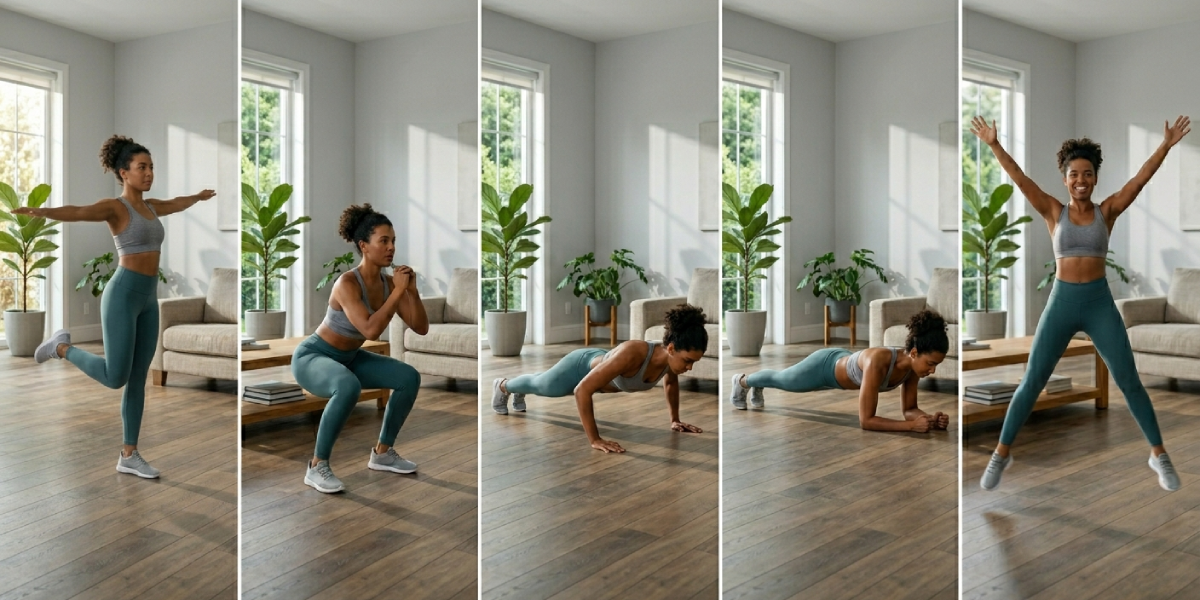
The 10-Minute Morning Activation Routine
Starting your day with movement sets a positive tone for everything that follows. A 10-minute morning routine does not require equipment and can be done in your bedroom or living room before you even check your phone. A practical sequence includes:
- 2 minutes of dynamic stretching — leg swings, arm circles, and hip rotations to wake up the joints
- 2 minutes of bodyweight squats — activates the glutes, quads, and core while raising your heart rate gently
- 2 minutes of push-up variations — standard, incline, or knee push-ups depending on your fitness level
- 2 minutes of plank holds — builds core stability and improves posture, which is especially important for desk workers
- 2 minutes of light cardio — jumping jacks, high knees, or stair climbing to finish with an energy boost
This sequence improves circulation, loosens stiff muscles from sleep, and triggers the release of endorphins that sharpen your focus for the day ahead.
The Lunch Break Workout
A dedicated 20 to 30-minute lunch break workout is one of the most underutilized strategies among busy professionals. You do not need a gym nearby. A small outdoor space, an empty meeting room, or a quiet corner of your office works perfectly for bodyweight training or a brisk walk.
Research consistently shows that midday exercise reduces afternoon fatigue, improves mood, and enhances cognitive performance for the remainder of the workday.
A practical lunch break circuit might alternate between push-ups, lunges, mountain climbers, and tricep dips on a chair. Alternatively, a 25-minute brisk walk at a pace that makes conversation slightly challenging delivers significant cardiovascular benefits. Keep a resistance band in your desk drawer for added variety without any extra commute or preparation time.
The Evening Decompression Workout
For those who feel most energized in the late afternoon or evening, a post-work routine serves a dual purpose: it provides physical conditioning and acts as a powerful stress-relief mechanism. A 30 to 40-minute session that combines moderate-intensity cardio with strength training is highly efficient for body composition and overall health.
A simple structure that works well for busy people includes a 5-minute warm-up walk or jog, followed by 20 minutes of circuit training alternating upper and lower body exercises, and ending with 10 minutes of yoga or deep stretching to lower cortisol levels and prepare the body for quality sleep.
Micro-Workouts: The Science Behind Movement Snacks
Movement snacks, also called exercise snacks in academic literature, are brief bouts of physical activity lasting anywhere from 1 to 10 minutes performed multiple times throughout the day. A growing body of research supports their effectiveness for improving cardiometabolic health, blood sugar regulation, and even muscular fitness.
For someone with a truly fragmented schedule, three to five movement snacks per day can fully replace a traditional workout session. Practical examples include doing 20 bodyweight squats every time you refill your water bottle, taking the stairs instead of the elevator, doing calf raises while waiting for your coffee to brew, or performing a set of push-ups before each video call. These small choices compound significantly over the course of a week.
Strength Training on a Tight Schedule
Many busy people prioritize cardio because it feels more time-efficient, but strength training is equally important and arguably more impactful per minute for long-term metabolic health. Muscle tissue burns more calories at rest than fat tissue, improves bone density, supports joint health, and reduces the risk of injury in everyday activities.
You do not need to spend an hour lifting weights three days a week. A well-designed 20-minute full-body resistance session performed twice a week delivers measurable strength and body composition improvements. Compound movements that work multiple muscle groups simultaneously are the cornerstone of time-efficient strength training. These include squats, deadlifts, push-ups, rows, and lunges.
If you want to track your progress and ensure your training aligns with a healthy body composition, it is worth knowing your baseline metrics. Using a reliable BMI calculator can give you a useful starting reference point and help you monitor changes over time as your fitness improves.
Using Technology and Habit Stacking to Stay Consistent

Two behavioral strategies are particularly effective for making exercise non-negotiable in a busy life: habit stacking and smart use of technology.
Habit stacking means attaching a new behavior to an existing, well-established one. For example, “After I pour my morning coffee, I will do 10 minutes of stretching” or “After I close my laptop at the end of the workday, I will change into workout clothes immediately.” The existing habit acts as a trigger for the new one, reducing the amount of willpower required to get started.
Technology tools such as fitness apps, wearable trackers, and even calendar blocking can meaningfully improve adherence. Scheduling workouts as fixed appointments in your calendar treats them with the same priority as meetings. Wearable devices that nudge you to move every hour are especially helpful for people with sedentary desk jobs.
Nutrition’s Role in Maximizing a Busy Person’s Exercise Routine
No exercise plan exists in isolation from nutrition. When you are exercising consistently and managing a demanding schedule, your body needs adequate fuel to perform, recover, and adapt. Undereating, skipping meals, or relying heavily on processed convenience foods will blunt your results and increase fatigue.
Practical nutrition strategies for busy active people include prepping meals in batches once or twice a week, keeping portable high-protein snacks like Greek yogurt, boiled eggs, nuts, or protein bars on hand, and prioritizing hydration throughout the day. Even mild dehydration measurably impairs both physical performance and cognitive function.
For deeper guidance on how diet and lifestyle choices interact with your fitness goals, exploring evidence-based resources on health and wellness can help you build a complete picture of what your body needs to thrive.
Weekly Exercise Schedule Template for Busy People
| Day | Workout Type | Duration | Intensity |
|---|---|---|---|
| Monday | Full-body strength circuit | 20–25 minutes | Moderate–High |
| Tuesday | Brisk walk or light jog | 20–30 minutes | Low–Moderate |
| Wednesday | Morning activation + movement snacks | 10 min + 3×5 min | Low |
| Thursday | Full-body strength circuit | 20–25 minutes | Moderate–High |
| Friday | Cardio of choice (cycling, swimming, HIIT) | 20–30 minutes | Moderate–High |
| Saturday | Active recovery (yoga, stretching, nature walk) | 30–45 minutes | Low |
| Sunday | Rest or gentle movement | Optional | Very Low |
This template is deliberately flexible. If Thursday is heavier than expected at work, swap the strength session for a shorter walk. The goal is to keep momentum, not achieve perfection.
Overcoming the Most Common Obstacles
When You Travel Frequently
Business travel is one of the most common reasons people abandon exercise routines. Hotel gyms are often limited, schedules are unpredictable, and fatigue from travel itself is real. The solution is a portable bodyweight routine that requires zero equipment and fits in a small hotel room.
Push-ups, squats, lunges, planks, and burpees cover all major muscle groups and can be arranged into an effective 20-minute circuit without any apparatus at all.
When Motivation Is Low
Motivation is unreliable and should never be the foundation of your fitness habit. Discipline, systems, and environmental design are far more dependable. Lay out your workout clothes the night before. Find an exercise format you genuinely enjoy.
Commit to just starting for two minutes — in the vast majority of cases, the momentum of beginning carries you through the full session.
When Work Demands Spike
During high-pressure periods at work, scale down rather than eliminate. Even a 10-minute walk at lunch and five minutes of stretching before bed maintains the habit and keeps your body active. Stopping entirely and restarting is far harder psychologically than maintaining a minimal version of your routine through a challenging period.
Choosing Exercise Types That Match Your Lifestyle
Adherence to any exercise routine is significantly higher when the activity is inherently enjoyable. If you genuinely dislike running, no amount of discipline will make it a long-term habit. Fortunately, the range of effective exercise options is broad.
Cycling, swimming, dance-based fitness, martial arts, group classes, hiking, and resistance training all deliver meaningful health benefits.
Experimenting with different exercise types until you find formats you look forward to is not indulgence — it is strategy. The best workout is consistently the one you will actually do.
The Long-Term Payoff of Daily Movement
The benefits of consistent daily exercise extend far beyond aesthetics or athletic performance. Regular physical activity is one of the most powerful interventions known to medicine for reducing the risk of type 2 diabetes, cardiovascular disease, certain cancers, depression, anxiety, and cognitive decline.
It improves sleep quality, boosts immune function, and is associated with significantly longer life expectancy.
For busy people, perhaps the most compelling benefit is the cognitive one. Exercise has been shown to improve executive function, working memory, and creative thinking — the very capabilities that professional success depends on. Carving out time to exercise is not a luxury that competes with productivity; it is an investment that directly enhances it.
Frequently Asked Questions
How many days per week should I exercise if I have a busy schedule?
Aim for at least four to five days of some form of physical activity, even if individual sessions are short. Two of those days should include strength training, two should include cardiovascular exercise, and one should focus on recovery through gentle movement like walking or stretching. Consistency across the week matters more than the intensity of any single session.
Can I get fit with only 20 minutes of exercise per day?
Yes, absolutely. Twenty minutes of purposeful, well-structured exercise daily is sufficient to improve cardiovascular fitness, build muscle, manage weight, and support mental health. The key is using that time efficiently with compound movements, moderate to high intensity where appropriate, and minimal rest periods. Quality and consistency outperform duration every time.
What is the best time of day to exercise when you have a busy schedule?
The best time is whenever you can be most consistent. Research shows that morning exercisers tend to have higher long-term adherence because the activity is completed before the day’s unpredictable demands accumulate. However, if you are not a morning person or your mornings are too chaotic, midday or evening exercise is equally effective physiologically. Your personal schedule and preference should drive the decision.
Is it effective to break exercise into multiple short sessions throughout the day?
Yes. Multiple studies confirm that accumulated physical activity, meaning exercise performed in several short bouts across the day, produces comparable cardiovascular and metabolic benefits to a single continuous session of equivalent total duration. Three 10-minute walks produce similar health benefits to one 30-minute walk for most health markers.
What type of exercise burns the most calories in the shortest time?
High-Intensity Interval Training (HIIT) is consistently shown to burn the highest number of calories per minute of exercise. A 20-minute HIIT session can match the caloric expenditure of 40 minutes of steady-state cardio, partly due to the afterburn effect — the elevated metabolic rate that persists for hours after the workout ends. However, HIIT is demanding and should not be performed every day; two to three sessions per week is a sustainable frequency.
Do I need gym equipment to maintain a good exercise routine?
No. An effective exercise routine can be built entirely around bodyweight movements that require no equipment whatsoever. Push-ups, squats, lunges, planks, burpees, mountain climbers, and glute bridges together cover all major muscle groups. Adding a single resistance band, a pair of dumbbells, or a jump rope significantly expands your options without requiring a gym membership or significant investment.
How do I stay motivated to exercise when I am exhausted from work?
The most effective strategy is to stop relying on motivation and start building systems. Schedule workouts in advance as non-negotiable calendar events. Prepare your workout clothes and equipment the night before to remove friction. Start with just two to five minutes of movement — often the hardest part is simply beginning. Also, consider reframing exercise not as an additional burden but as the recovery tool it genuinely is: movement reduces stress hormones and restores mental energy far more effectively than passive rest.
How long does it take to see results from a consistent exercise routine?
Most people notice improvements in energy levels, mood, and sleep quality within the first one to two weeks of consistent exercise. Visible changes in body composition typically become apparent after four to eight weeks of consistent training and appropriate nutrition. Significant strength gains are measurable within six to eight weeks. The timeline varies based on starting fitness level, exercise intensity, nutrition, sleep quality, and individual genetics.
Should I exercise if I only slept a few hours the night before?
Light to moderate exercise such as a walk, gentle yoga, or a low-intensity bodyweight session is generally fine and can even help restore energy and alertness on a poor night of sleep. However, high-intensity training on severely inadequate sleep increases injury risk, impairs performance, and can elevate stress hormones in ways that are counterproductive. On days after very poor sleep, prioritize movement over intensity and protect your sleep the following night.
What should I eat before a short morning workout?
For workouts lasting 20 to 30 minutes, many people perform well in a fasted state, especially if the intensity is moderate. If you feel lightheaded or fatigued without food, a small, easily digestible snack 30 minutes before training works well. Good options include a banana, a small handful of nuts, or half a cup of oatmeal. Avoid heavy meals immediately before exercise as they divert blood flow to digestion and can cause discomfort during training.