

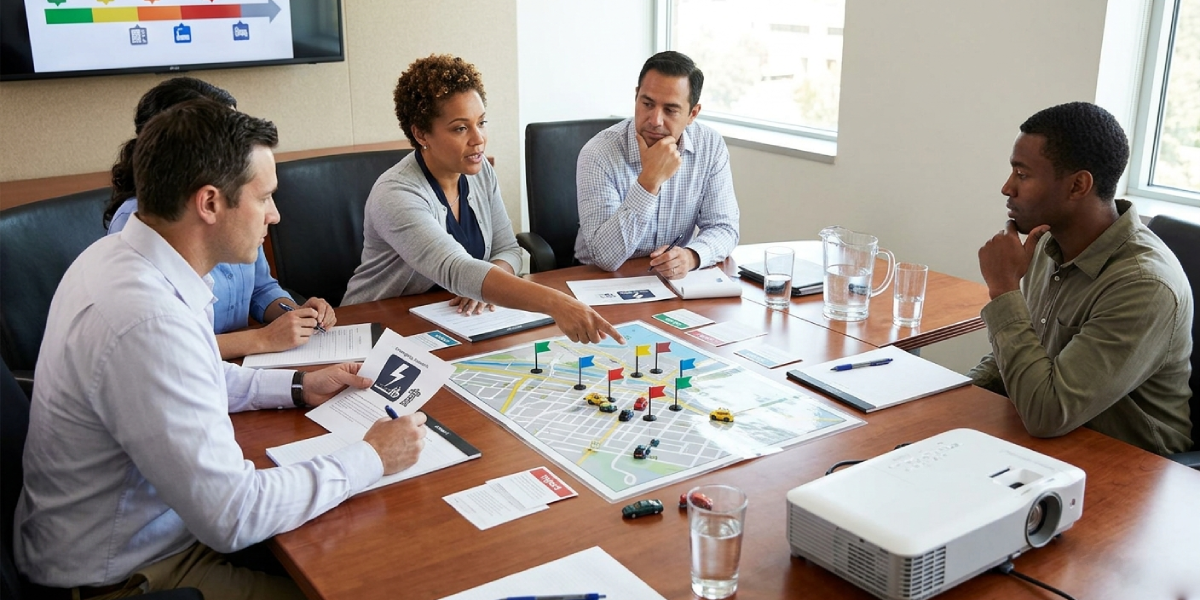
A tabletop exercise is a structured, discussion-based activity where team members gather around a table — physically or virtually — to walk through a simulated emergency, crisis, or operational scenario. Understanding what a tabletop exercise is and when it is used can mean the difference between an organization that panics during a real crisis and one that responds with clarity and confidence.
Defining the Tabletop Exercise

At its core, a tabletop exercise is a low-cost, high-value preparedness tool. Participants are presented with a realistic scenario — a cyberattack, a natural disaster, a public health emergency, a workplace safety incident — and then guided through a facilitated conversation about how they would respond.
No physical action is taken. No equipment is deployed. The goal is purely cognitive and communicative: to test plans, expose gaps, and build shared understanding among decision-makers.
The term comes from the tradition of laying out maps and scenario documents on an actual table. Today, these sessions are equally common in virtual meeting rooms, but the spirit remains the same.
A trained facilitator presents injects — new pieces of information that escalate or change the scenario — and participants discuss how their policies, roles, and resources would be applied in real time.
Tabletop exercises sit within a broader spectrum of emergency preparedness drills. They are less resource-intensive than full-scale exercises, which involve actual personnel movements and physical simulations, and more robust than orientation seminars, which are purely informational.
They occupy the ideal middle ground for organizations that want to rigorously test their thinking without the cost and disruption of a live drill.
When Is a Tabletop Exercise Used
Organizations across virtually every sector use tabletop exercises as part of routine preparedness planning. Knowing when to deploy one is just as important as knowing what it is.
Before a Known Risk Period
Businesses in hurricane-prone regions often conduct tabletop exercises before storm season. Healthcare systems run them before flu season peaks. Organizations with major public events on the calendar use them weeks or months in advance.
The logic is straightforward: it is far better to discover a flaw in your communications chain during a conference room discussion than during an actual emergency.
After Developing or Updating a Plan
Any time an organization finalizes a new emergency response plan, business continuity plan, or crisis communications protocol, a tabletop exercise is one of the most effective ways to validate it. A written plan can look airtight on paper but collapse under the first realistic scenario.
Walking a scenario through the plan exposes contradictions, missing decision points, and role ambiguities that would otherwise remain invisible until they matter most.
After a Real Incident
Post-incident tabletop exercises are particularly valuable. Following a data breach, a supply chain disruption, or a workplace injury, organizations use a carefully designed scenario to examine not just what happened but how the response could be improved.
This after-action approach transforms a painful experience into a learning opportunity without placing personnel back into a stressful environment.
As Part of Regulatory Compliance
Many industries are required by law or regulation to conduct regular preparedness exercises. Hospitals, financial institutions, utilities, and government agencies frequently cite tabletop exercises in their compliance documentation. Regulatory bodies such as FEMA, the Joint Commission, and various financial oversight authorities recognize tabletop exercises as acceptable components of broader preparedness programs.
For Leadership Onboarding and Team Integration
When new executives, emergency managers, or department heads join an organization, a tabletop exercise is an efficient way to integrate them into existing response frameworks. Rather than reading through dozens of policy documents, new leaders can absorb the organization’s decision-making culture, escalation paths, and resource constraints by participating in a live scenario conversation.
What Happens During a Tabletop Exercise
A well-designed tabletop exercise follows a clear structure. Most sessions include three phases: a pre-exercise orientation, the scenario walkthrough, and a formal debrief.
Pre-Exercise Orientation
The facilitator opens by reviewing the ground rules, the exercise objectives, and the scenario context. Participants are reminded that the goal is honest discussion, not performance. Blame has no place in a productive tabletop exercise. The opening phase also establishes the fictional nature of the scenario so participants can engage critically without the psychological weight of treating it as a real emergency.
The Scenario Walkthrough
The facilitator presents the opening scenario — perhaps a ransomware attack that has encrypted the organization’s patient records, or a sudden evacuation order due to a chemical spill two blocks away. Participants discuss their immediate actions: who calls whom, what systems are checked, what external agencies are contacted, and how decisions get made when key personnel are unavailable.
As the discussion unfolds, the facilitator introduces injects. These are new developments that complicate the response: a secondary system failure, a media inquiry, a missing team member, conflicting information from two sources. Each inject is designed to stress-test specific elements of the plan and reveal whether the team’s response remains coherent under pressure.
The Debrief
The debrief is arguably the most important part of the entire session. This is where participants discuss what worked, what did not, and what needs to change. A skilled facilitator draws out quiet voices, captures specific action items, and ensures that observations are translated into concrete follow-up tasks. Many organizations document the debrief using a formal after-action report that tracks identified gaps and assigns ownership for improvements.
Who Should Participate
The value of a tabletop exercise depends heavily on who is in the room. The ideal participant group varies by objective, but most effective exercises include a cross-functional mix of stakeholders.
- Senior leadership who can authorize resources and communicate with external stakeholders
- Operations and logistics personnel who understand the physical and procedural realities on the ground
- IT and cybersecurity teams for any scenario involving systems or data
- Human resources and communications staff who handle internal messaging and personnel decisions
- Legal and compliance officers for scenarios with regulatory or liability dimensions
- External partners and vendors when the scenario involves shared infrastructure or mutual aid agreements
Exercises with too few participants risk missing critical perspectives. Exercises with too many risk becoming unmanageable. Most practitioners recommend groups of eight to twenty for optimal discussion depth and participation balance.
Tabletop Exercises and Broader Wellness at Work
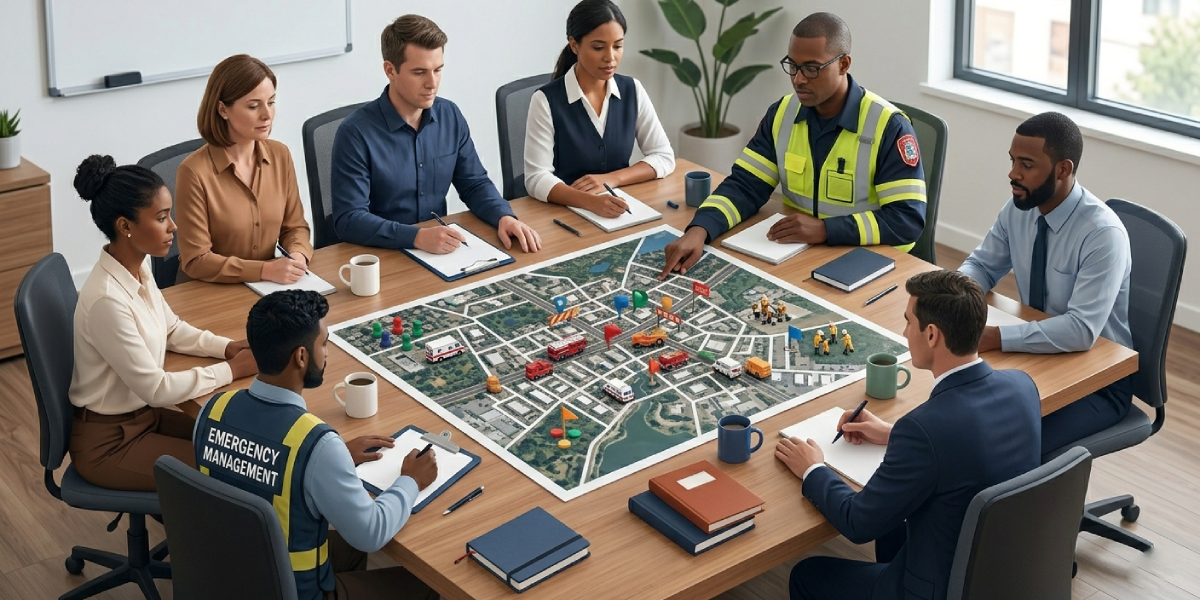
What many organizations overlook is the connection between emergency preparedness and overall workforce wellbeing. When employees understand response protocols and feel confident in their organization’s ability to handle a crisis, stress levels drop significantly.
This psychological safety is a meaningful component of workplace health and health management. Organizations that invest in preparedness exercises are not just protecting their operations — they are investing in the mental wellbeing of their people.
Physical readiness is equally relevant. Personnel who work in high-demand environments — emergency responders, healthcare workers, industrial staff — benefit from understanding how crisis scenarios may physically affect their bodies.
Connecting preparedness culture with good exercise and physical fitness habits creates a more resilient workforce overall. Organizations that support both cognitive and physical preparedness tend to see stronger performance during actual emergencies.
Common Mistakes to Avoid
Even experienced organizations fall into predictable traps when designing and running tabletop exercises. Being aware of these pitfalls reduces the likelihood of a session that wastes time or produces false confidence.
Designing Scenarios That Are Too Easy
A scenario that participants sail through without any meaningful friction does not test the plan — it merely confirms existing assumptions. The best tabletop exercises are designed to be uncomfortable in productive ways. They surface the difficult decisions, not the obvious ones.
Neglecting the Debrief
Rushing or skipping the debrief is one of the most common and costly mistakes. The debrief is where learning actually crystallizes. Without it, participants leave with impressions rather than insights, and the organization collects no structured data to drive improvement.
Treating It as a Pass-or-Fail Test
Tabletop exercises are learning activities, not performance evaluations. When participants feel they are being graded, they become defensive and cautious, which suppresses the honest conversation that makes these sessions valuable. The facilitator’s role includes maintaining a psychologically safe environment throughout.
Failing to Follow Through on Action Items
An exercise that generates an after-action report but no actual changes is worse than no exercise at all — it creates a false sense of preparedness. Assigning ownership and deadlines to every identified gap is essential. Leadership must champion follow-through as visibly as they champion the exercise itself.
Measuring the Effectiveness of a Tabletop Exercise
Organizations often struggle to quantify the value of preparedness activities. While tabletop exercises do not produce revenue, their effectiveness can be assessed through several concrete indicators.
One approach is to track the number and severity of gaps identified across successive exercises. If an organization runs the same scenario two years apart and identifies fewer critical gaps the second time, that is a meaningful signal of improvement.
Another approach involves measuring response speed and decision clarity: did participants reach consensus more quickly? Were escalation paths followed correctly? Were communication protocols executed as written?
Some organizations use a simple scoring rubric aligned to their response objectives. Others rely entirely on facilitated discussion and qualitative after-action documentation. Either approach is valid as long as the results are honestly recorded and acted upon.
For organizations managing complex health and safety programs, tools like a BMI calculator can be one part of a broader effort to track and support employee health — just as tabletop exercises are one part of a broader preparedness program. No single tool tells the whole story, but each contributes to a more complete picture of organizational resilience.
Frequently Asked Questions
What is the main purpose of a tabletop exercise?
The main purpose is to test an organization’s emergency plans, identify gaps in response procedures, and build shared understanding among key decision-makers — all within a low-stakes, discussion-based environment.
How long does a tabletop exercise typically take?
Most tabletop exercises run between two and four hours. Simpler, single-function exercises may conclude in ninety minutes, while complex, multi-department scenarios can extend to a full day with breaks.
Who should facilitate a tabletop exercise?
An experienced facilitator — either an internal emergency manager or an external consultant — should lead the session. The facilitator must be neutral, skilled at drawing out discussion, and capable of introducing injects at the right moments to challenge participants without overwhelming them.
How often should tabletop exercises be conducted?
Most preparedness frameworks recommend at least one tabletop exercise per year. Organizations facing complex risk environments, regulatory requirements, or significant operational changes may benefit from quarterly sessions or targeted exercises tied to specific plan updates.
What is the difference between a tabletop exercise and a full-scale drill?
A tabletop exercise is discussion-based and requires no physical action or deployment of resources. A full-scale drill involves real personnel movements, equipment activation, and simulated physical response — making it far more resource-intensive and disruptive but also more realistic.
Can tabletop exercises be conducted virtually?
Yes. Virtual tabletop exercises conducted over video conferencing platforms have become common and are widely accepted as equivalent in value to in-person sessions, provided the facilitator maintains active engagement and uses appropriate digital tools to present the scenario and injects.
What types of scenarios are used in tabletop exercises?
Common scenarios include cyberattacks and data breaches, natural disasters such as earthquakes or floods, public health emergencies, active threat situations, supply chain disruptions, utility outages, and workplace safety incidents. The scenario should be realistic and relevant to the organization’s actual risk profile.
What should happen after a tabletop exercise concludes?
After the session, the facilitator or a designated recorder should produce an after-action report documenting the scenario, key discussion points, identified gaps, and assigned action items with owners and deadlines. Leadership should review and formally approve the improvement plan within a defined timeframe.
Are tabletop exercises required by law for any industries?
Yes. Healthcare organizations accredited by the Joint Commission, federally regulated financial institutions, utilities classified as critical infrastructure, and government agencies operating under FEMA preparedness guidelines are among those with formal exercise requirements that tabletop activities can satisfy.
How do you know if a tabletop exercise was successful?
Success is measured by the quality and honesty of the discussion, the number of actionable gaps identified, and whether the organization follows through on improvements. A session that feels comfortable and produces no surprises is often a sign that the scenario was not challenging enough.