

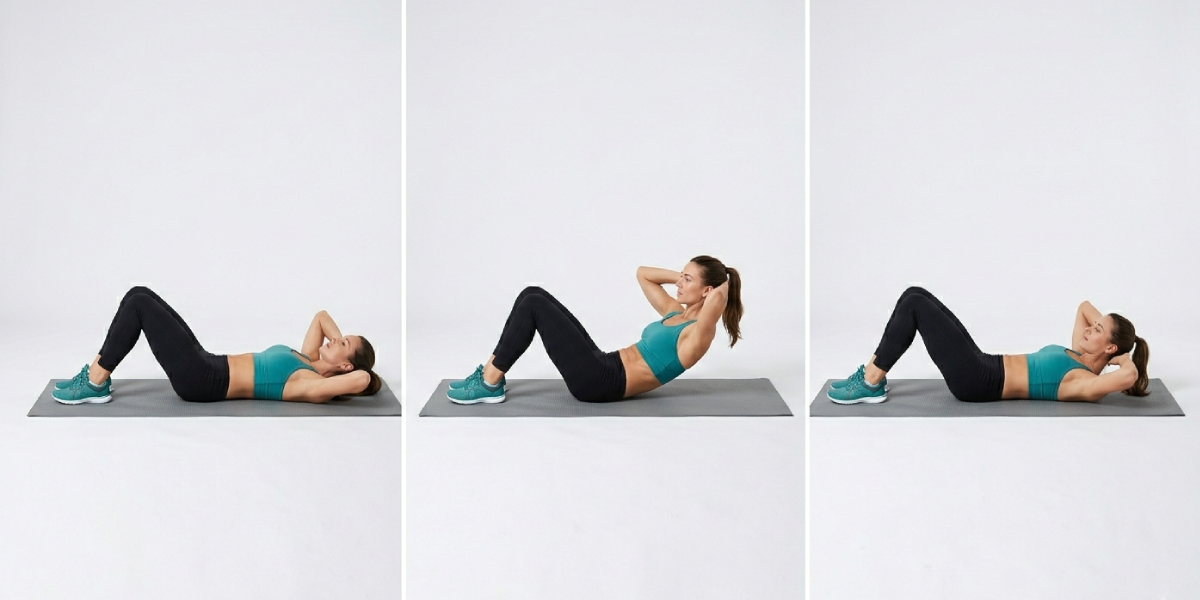
Learning how to do crunches exercise correctly is one of the most practical steps you can take toward building a stronger, more stable core. Crunches are a foundational abdominal movement performed in gyms, homes, and rehabilitation settings worldwide — and when done with proper form, they deliver real results without putting your lower back at unnecessary risk.
This guide walks you through everything you need to know, from setup and technique to variations and common mistakes, so you can train smarter and feel the difference.
What Is a Crunch and Why It Matters for Core Strength
A crunch is a bodyweight exercise that targets the rectus abdominis — the long, paired muscle that runs vertically along the front of your abdomen. Unlike a full sit-up, a crunch involves only a partial range of motion, lifting the upper back off the floor while keeping the lower back grounded.
This controlled movement isolates the abdominal muscles more effectively and reduces excessive strain on the lumbar spine.
Core strength is about far more than aesthetics. A well-conditioned core stabilizes the spine during everyday movements like bending, lifting, and twisting. It supports better posture, reduces the risk of injury, and improves athletic performance across virtually every sport and physical activity.
Including crunches in a balanced exercise routine is a proven way to build that foundation from the ground up.
Muscles Worked During a Crunch
Understanding which muscles are engaged helps you train with greater intentionality. The primary and secondary muscles involved in a standard crunch include:
- Rectus abdominis — the main muscle targeted, responsible for spinal flexion and the “six-pack” appearance
- Transverse abdominis — the deep stabilizing layer that contracts to support the spine throughout the movement
- Internal and external obliques — activated especially during rotational crunch variations
- Hip flexors — play a secondary role in stabilization, though they should not dominate the movement
- Neck flexors — lightly engaged to hold the head in a neutral position
How to Do a Basic Crunch: Step-by-Step Form Guide
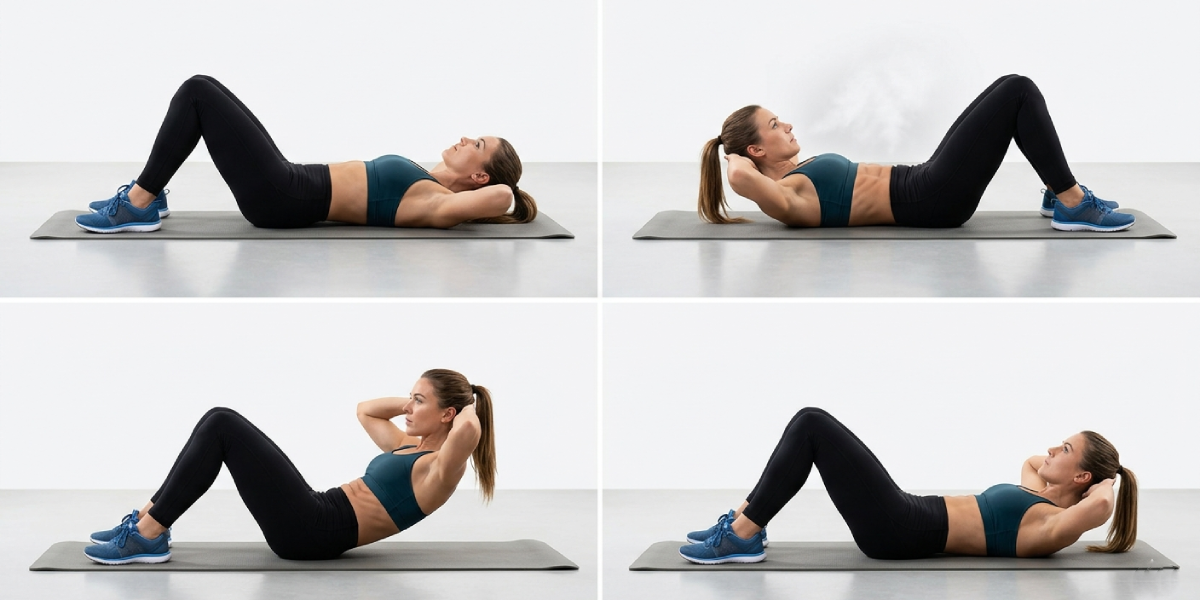
Proper technique is what separates an effective crunch from one that wastes effort or causes strain. Follow these steps precisely to get the most out of every repetition.
Step 1: Set Up Your Starting Position
Lie flat on your back on a firm, comfortable surface — a yoga mat or exercise mat works well. Bend your knees to approximately 90 degrees and place your feet flat on the floor, hip-width apart. Your lower back should maintain a slight natural curve, not pressed aggressively into the floor or arched upward.
Place your hands lightly behind your head with your elbows pointing outward, or cross your arms over your chest. Never interlace your fingers tightly behind your neck, as this encourages pulling on the cervical spine.
Step 2: Engage Your Core Before You Move
Before initiating any movement, take a breath in and gently draw your navel toward your spine to activate the transverse abdominis. This pre-activation step stabilizes the lumbar region and ensures the abdominals — not momentum — are doing the work. Think of bracing as if you were about to absorb a light punch to the stomach.
Step 3: Perform the Upward Phase
Exhale as you slowly lift your head, neck, and shoulder blades off the floor. The movement should feel like curling your ribcage toward your pelvis — not thrusting your chin toward the ceiling. Your lower back remains in contact with the mat throughout. Aim to lift only about 30 degrees off the ground. At the top of the movement, pause briefly and squeeze your abdominals deliberately for a count of one second.
Step 4: Control the Lowering Phase
Inhale as you slowly lower your upper body back to the starting position. Do not let your head drop all the way down between reps — keep a slight tension in your core and neck to maintain control. Controlled lowering is where a significant portion of your muscle development actually happens, so resist the urge to rush this phase.
Step 5: Repeat for Your Target Repetitions
Beginners can aim for 2 to 3 sets of 10 to 15 repetitions. As your core strength improves over weeks of consistent training, gradually increase repetitions or add more challenging variations. Quality always outranks quantity — 12 perfect crunches produce better results than 30 sloppy ones.
Common Crunch Mistakes and How to Fix Them
Even experienced exercisers fall into habits that undermine the effectiveness of this movement. Here are the most frequent errors and their corrections.
| Common Mistake | Why It’s a Problem | How to Fix It |
|---|---|---|
| Pulling on the neck | Strains the cervical spine and reduces abdominal engagement | Rest hands lightly behind the head; lead with the chest, not the chin |
| Using momentum | Transfers the work away from the abs | Slow down; pause at the top of each rep |
| Lifting too high | Activates hip flexors excessively and reduces ab isolation | Limit range of motion to shoulder blades clearing the floor |
| Holding the breath | Increases intra-abdominal pressure and reduces performance | Exhale on the way up, inhale on the way down |
| Rushing the reps | Reduces time under tension and limits muscle development | Use a 2-second lift, 1-second hold, 2-second lower cadence |
Crunch Variations to Progress Your Training
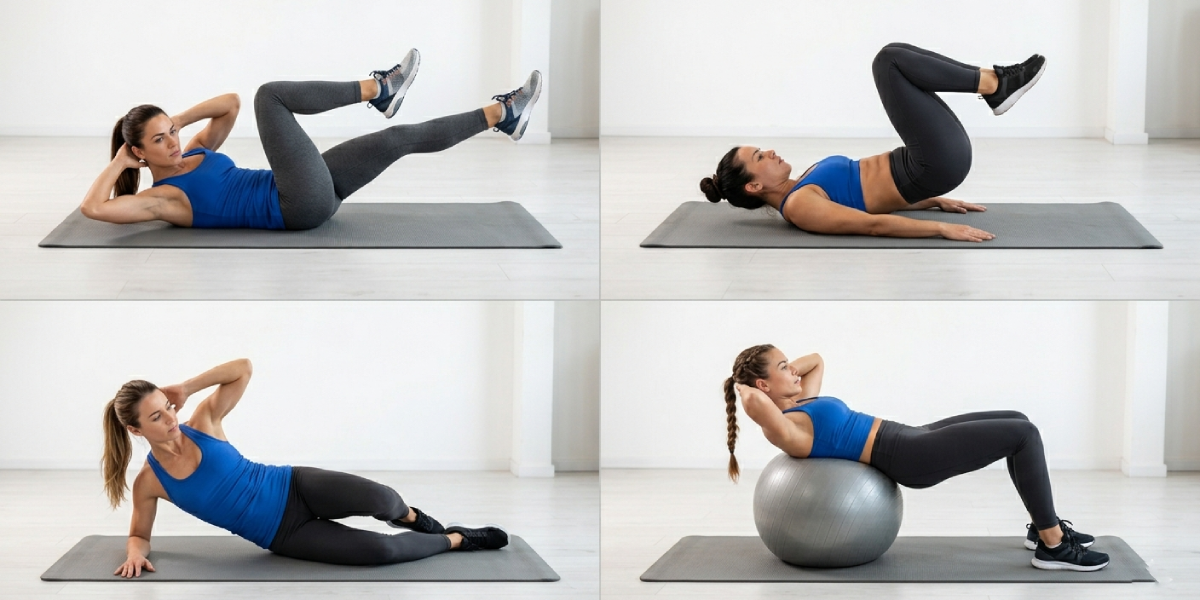
Once you have mastered the standard crunch, introducing variations keeps your workouts fresh, challenges different muscle fibers, and prevents adaptation plateaus. These progressions are organized from beginner-friendly to more advanced.
Bicycle Crunch
Lie on your back with hands behind your head and legs raised, knees bent at 90 degrees. As you crunch upward, rotate your right elbow toward your left knee while extending your right leg. Alternate sides in a smooth, pedaling motion. The bicycle crunch consistently ranks among the most effective abdominal exercises because it recruits both the rectus abdominis and the obliques simultaneously.
Reverse Crunch
Lie on your back with knees bent and feet lifted so your thighs are vertical. Place your hands flat on the floor beside your hips. Exhale as you use your lower abs to curl your hips and knees toward your chest, lifting your tailbone slightly off the mat. This variation shifts emphasis toward the lower portion of the rectus abdominis, which is often underdeveloped with standard crunches alone.
Oblique Crunch
From the standard starting position, drop both knees to one side so they rest on the floor at roughly a 45-degree angle. Perform your crunch as normal. This rotation of the hips places greater demand on the oblique muscles on the opposite side of your torso. Complete equal sets on both sides.
Stability Ball Crunch
Sit on a stability ball, then walk your feet forward until your lower back is supported on the ball. Perform the crunch movement from this position. The unstable surface engages the transverse abdominis and stabilizer muscles at a significantly higher level than floor crunches, making this an excellent intermediate-to-advanced option.
Weighted Crunch
Hold a small weight plate or dumbbell against your chest as you perform a standard crunch. Adding external resistance increases the mechanical load on the rectus abdominis, promoting greater strength and hypertrophy over time. Start with a light load — 5 to 10 pounds — and increase gradually as your strength develops.
How to Incorporate Crunches Into a Balanced Workout Plan
Crunches are most effective when they form part of a comprehensive core training strategy rather than standing alone as the only abdominal exercise. A well-rounded approach combines flexion exercises like crunches with anti-extension work (planks), rotational movements (Russian twists), and anti-rotation drills (Pallof presses).
For general fitness, performing core work three to four times per week is sufficient. Since the abdominal muscles recover relatively quickly, they can be trained more frequently than large muscle groups like the legs or back. However, rest is still essential — training a fatigued core with poor form increases injury risk and decreases the quality of adaptation.
Pairing consistent core training with attention to your overall health and lifestyle habits — including adequate sleep, hydration, and a nutrient-dense diet — accelerates results and supports long-term physical wellbeing.
Safety Tips and Contraindications
Crunches are generally safe for healthy adults when performed with correct technique. However, there are circumstances where modifications or alternatives may be more appropriate.
- Neck pain or cervical disc issues: Avoid pulling on the neck entirely. Consider crossing arms on the chest or using a towel held behind the head for gentle support without pulling.
- Lower back pain: Ensure the lumbar spine is not pressed forcibly into the floor during the movement. Consult a physical therapist before adding crunches if you have active disc problems or spinal stenosis.
- Diastasis recti: Individuals with abdominal separation — common postpartum — should seek guidance from a qualified physiotherapist before performing spinal flexion exercises. Certain crunch variations may worsen the separation.
- Pregnancy: Supine exercises are generally discouraged after the first trimester. Modified standing or seated core exercises are preferred during pregnancy.
If you are uncertain whether crunches are appropriate for your situation, knowing your baseline body composition can also be informative — check your numbers with our BMI calculator and consider speaking with a qualified fitness or healthcare professional for personalized guidance.
Tracking Progress and Staying Consistent
One of the most motivating aspects of learning how to do crunches exercise properly is the measurable progress you can experience within weeks. Track your performance by recording sets, reps, and variations in a training journal or app.
Notice improvements in how your core feels during everyday activities — standing taller, lifting with more confidence, and experiencing less fatigue in your midsection during other exercises are all reliable indicators that your training is working.
Consistency over the long term matters far more than any single exceptional workout session. Committing to two or three quality core sessions per week, focusing relentlessly on form, and progressing sensibly through variations will deliver lasting, functional strength that makes a genuine difference in your daily life.
Frequently Asked Questions
How many crunches should I do per day to see results?
For most people, 3 sets of 15 to 20 quality crunches performed three to four times per week is an effective starting point. The number matters less than the quality of each repetition and the consistency of your routine over weeks and months. Doing hundreds of poorly executed crunches each day will not produce faster results than fewer well-performed ones.
Are crunches better than sit-ups for core training?
Crunches isolate the abdominal muscles more effectively than full sit-ups because they limit the range of motion and reduce hip flexor involvement. Sit-ups recruit more muscle groups overall but place greater stress on the lumbar spine. For pure abdominal development with lower spinal risk, crunches are generally preferred, though both have a place in a balanced training program.
Can crunches alone give me a flat stomach or visible abs?
No exercise, including crunches, can selectively burn fat from the abdominal area. Visible abs result from a combination of developed abdominal muscles and a sufficiently low body fat percentage, which is achieved primarily through overall caloric balance and a nutritious diet. Crunches build the underlying muscle; what makes that muscle visible is determined by your body composition as a whole.
How do I avoid neck pain when doing crunches?
Neck pain during crunches is almost always caused by pulling on the head with the hands. Rest your fingertips lightly behind your ears and focus on leading the movement with your chest rather than your chin. Keeping your gaze at a 45-degree angle toward the ceiling rather than tucking your chin directly to your chest also helps maintain a neutral cervical spine.
How long does it take to see results from doing crunches?
With consistent training and an appropriate diet, most people begin to notice improvements in core strength and endurance within three to four weeks. Visible changes in muscle definition typically require longer — usually eight to twelve weeks or more — depending on starting fitness level, training frequency, and overall body composition changes happening in parallel.
Is it safe to do crunches every day?
While the abdominals recover faster than most muscle groups, training them to fatigue every single day without rest can lead to overuse and diminished returns. Three to four sessions per week with at least one rest day between sessions is a more effective and sustainable approach for the vast majority of people.
What is the correct breathing technique for crunches?
Exhale fully as you lift your shoulder blades off the floor — this naturally engages the deep core muscles and facilitates the spinal flexion movement. Inhale steadily as you lower back down. Never hold your breath during the exertion phase, as this increases intra-abdominal pressure unnecessarily and can cause dizziness or discomfort.
Can beginners start with crunches, or should they build up first?
Crunches are suitable for beginners when performed with correct form. If a standard crunch feels too challenging at first, start with dead bug exercises or abdominal bracing drills to develop foundational core activation before progressing to crunches. Once basic body awareness and control are established, the standard crunch is an excellent entry point into abdominal training.
Do crunches help with lower back pain?
When performed correctly, crunches can contribute to a stronger core that better supports the lumbar spine and may help reduce chronic lower back discomfort over time. However, if you currently have acute or significant lower back pain, crunches may aggravate the condition. Always consult a physiotherapist or physician before beginning abdominal exercise training if you are managing an existing back issue.
What should I eat to support my core training results?
Supporting your crunches and core training with adequate protein intake — typically 1.6 to 2.2 grams per kilogram of body weight per day — helps the muscles recover and grow stronger. Staying well hydrated, minimizing processed foods, and maintaining a caloric intake appropriate for your goals (whether building muscle or reducing body fat) will significantly amplify the results you achieve from consistent core training.