

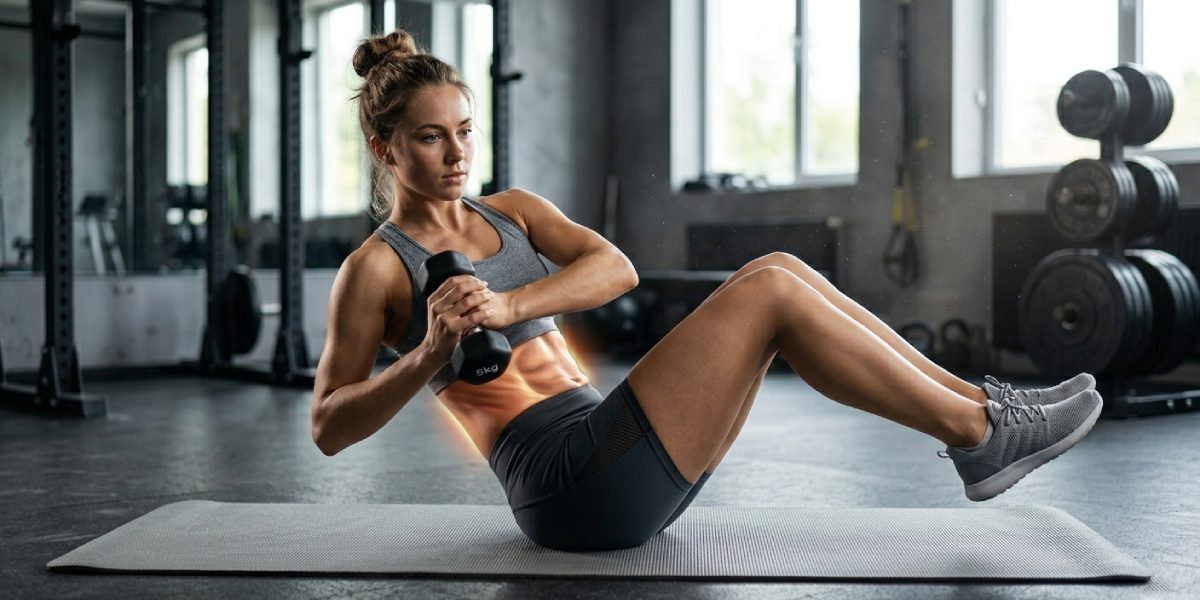
The Russian twist exercise is one of the most effective movements you can add to your core training routine. Whether you are a beginner building your first fitness habit or an experienced athlete looking to sharpen rotational power, this exercise delivers real results when done correctly.
In this guide, you will learn exactly how to perform it, why it works, and how to scale it to match your fitness level.
What Is the Russian Twist Exercise?
The Russian twist is a seated rotational core exercise that targets the oblique muscles on the sides of your abdomen. It involves sitting on the floor with your torso leaned slightly back, feet either flat or elevated, and rotating your upper body from side to side while keeping your spine neutral.
The movement mimics the twisting motion used in sports like golf, tennis, swimming, and baseball, making it highly functional for athletes and everyday movers alike.
Despite its name, the exercise does not have a confirmed Russian origin. It became popular in Western fitness culture during the Cold War era and has remained a staple in structured exercise programs ever since. Its enduring popularity comes from its simplicity, versatility, and measurable impact on core strength and stability.
Muscles Worked by the Russian Twist
Understanding the muscles involved helps you get more out of every repetition. Here is a breakdown of the primary and secondary muscles engaged during the Russian twist exercise:
- Internal and external obliques: These are the primary movers. They control the rotational force as you twist left and right and are responsible for that coveted side-waist definition.
- Rectus abdominis: The front abdominal muscles work isometrically to keep your torso lifted off the floor throughout the movement.
- Transverse abdominis: This deep stabilizing muscle braces your spine and supports intra-abdominal pressure during rotation.
- Hip flexors: When your feet are elevated, the hip flexors engage to maintain that V-sit position.
- Erector spinae: The muscles along your spine help maintain an upright, neutral posture as you rotate.
- Shoulders and arms: These become more engaged when you hold a weight, medicine ball, or dumbbell during the exercise.
Why Oblique Strength Matters
Your obliques are not just cosmetic muscles. They play a critical role in nearly every movement your body performs throughout the day. Strong obliques protect your lower back by distributing load more evenly during bending and twisting activities.
They improve posture by supporting spinal alignment and contribute to better balance and coordination.
For athletes, oblique strength translates directly into rotational power, which drives performance in throwing, swinging, kicking, and paddling.
For non-athletes, strong obliques mean less lower back pain, better functional movement in daily tasks like picking something up or turning to look behind you, and a more supported core during cardiovascular activities.
Tracking your overall fitness progress alongside your core training can be a motivating and informative habit. Using a tool like the BMI calculator to monitor body composition changes can help you see how your training and nutrition are working together over time.
How to Do the Russian Twist Exercise: Step-by-Step
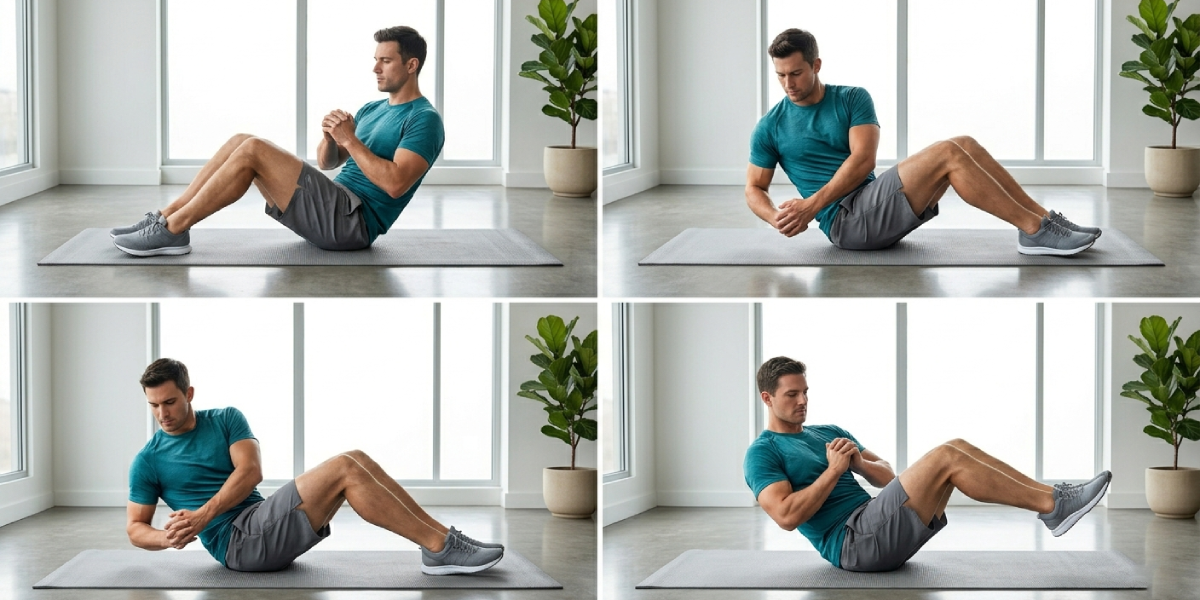
Follow these steps carefully to perform the Russian twist with proper form from the very first repetition.
Starting Position
Sit on the floor with your knees bent and feet flat on the ground about hip-width apart. Lean your torso back at roughly a 45-degree angle from the floor. This angle places your core under active tension without overstressing the lumbar spine. Keep your spine long and straight, avoiding any rounding in the lower back. Cross your arms over your chest or clasp your hands together in front of you.
The Movement
Engage your core by gently pulling your navel toward your spine. From this braced position, rotate your upper body to the right, bringing your hands or the weight toward the floor beside your right hip. Pause briefly at the end of the range of motion, then reverse the movement and rotate to the left side with the same controlled speed. One rotation to each side counts as one full repetition.
Breathing Pattern
Breathe out as you rotate to each side and breathe in as you return through the center. Maintaining a consistent breathing rhythm prevents you from holding your breath, which increases intra-abdominal pressure unnecessarily and can cause dizziness during high-rep sets.
Feet Position Options
Beginners should keep their feet flat on the floor. This reduces the demand on the hip flexors and allows you to focus entirely on the rotational movement. Once you have built up foundational strength, lift your feet off the floor to increase the challenge. Elevating the feet forces your hip flexors and lower abdominals to work harder while maintaining balance.
Common Russian Twist Mistakes to Avoid
Even experienced exercisers fall into these common form errors. Knowing what to watch for keeps your training effective and safe.
Rounding the Lower Back
This is the most frequent mistake. When the lower back rounds, the lumbar discs are placed under shear stress during rotation, which can cause pain or injury over time. Focus on sitting tall with a neutral spine even as fatigue sets in. If you cannot maintain a straight back, reduce the range of motion or rest before continuing.
Moving Too Fast
Speed is the enemy of the Russian twist. Swinging the arms rapidly from side to side uses momentum rather than muscle engagement, which dramatically reduces the oblique activation you are working for. Slow the movement down to a deliberate, controlled pace. A two-second rotation in each direction is a good tempo to aim for.
Collapsing the Chest
Letting the chest cave inward as you rotate limits your range of motion and reduces the rotational engagement of the obliques. Keep your chest open and shoulders pulled back and down throughout the exercise.
Using Too Much Weight Too Soon
Adding a heavy dumbbell or medicine ball before mastering the bodyweight version is a recipe for poor form and potential injury. Master the movement without any load first, then progress gradually to light resistance before increasing the weight further.
Russian Twist Variations for All Fitness Levels
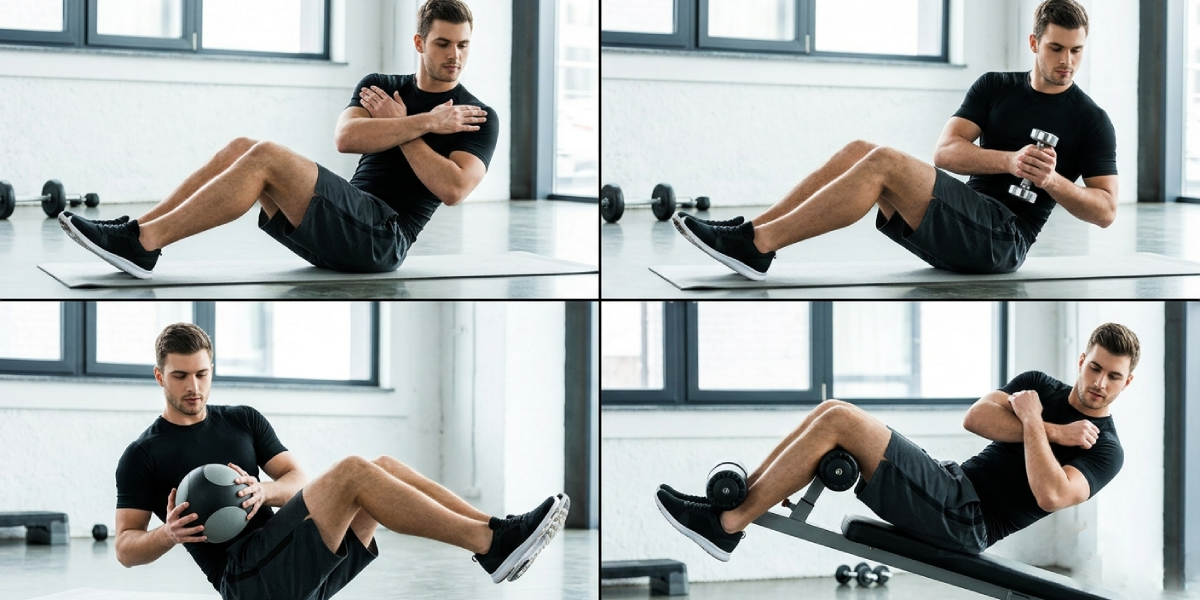
The Russian twist can be modified or progressed to suit any level of experience. Here are the most practical variations to include in your training.
Beginner: Feet-Down Russian Twist
As described above, keeping both feet flat on the floor and arms crossed over the chest is the most approachable version. Focus on form, breathing, and building the mind-muscle connection with your obliques before moving on.
Intermediate: Weighted Russian Twist
Hold a light dumbbell, weight plate, or medicine ball with both hands. Start with a weight between two and five kilograms and increase only when you can complete all repetitions with full control and a straight spine. The added resistance increases the challenge on the obliques and the stabilizing muscles of the shoulders.
Advanced: Elevated Feet with Weight
Lift both feet off the floor while holding a moderate-weight implement. This version demands significant balance, hip flexor endurance, and oblique strength simultaneously. It is particularly effective for athletes who require rotational power in their sport.
Decline Russian Twist
Performed on a decline bench, this variation increases the range of motion of the torso and places the obliques under greater stretch at the end of each rotation. Use this variation only once you are fully comfortable with the floor-based versions.
How to Program the Russian Twist in Your Routine
The Russian twist fits naturally into a core-focused circuit or as a finisher at the end of a strength or conditioning session. Here is a practical programming guide based on training goal and experience level:
| Goal | Sets | Reps per Side | Rest |
|---|---|---|---|
| Core Endurance | 3 | 15 to 20 | 30 to 45 seconds |
| Strength and Hypertrophy | 3 to 4 | 10 to 12 | 60 seconds |
| Athletic Power | 4 | 8 to 10 | 60 to 90 seconds |
| Beginner Conditioning | 2 | 8 to 10 | 45 to 60 seconds |
Perform core work two to four times per week for meaningful adaptation. Because the obliques recover relatively quickly compared to larger muscle groups, you can train them with higher frequency as long as you are not training to complete failure every session.
Pairing the Russian Twist with Complementary Exercises
The Russian twist is most effective when paired with exercises that train the core in multiple planes of movement. A well-rounded approach to core health includes not just rotation but also anti-flexion, anti-extension, and lateral stability training.
Excellent pairings include the plank for anti-extension stability, the pallof press for anti-rotation strength, the side plank for lateral core endurance, and the dead bug for coordinated deep core activation. Including one or two of these alongside the Russian twist creates a comprehensive oblique and core training session in a short amount of time.
Safety Tips and Who Should Avoid It
The Russian twist is safe for most healthy adults when performed with correct technique. However, there are situations where caution is warranted. People with existing lower back injuries, herniated discs, or acute lumbar strain should consult a physiotherapist or sports medicine professional before attempting this exercise.
The rotational component can aggravate certain spinal conditions if the form is not precisely controlled.
Pregnant individuals should avoid the Russian twist, particularly in the second and third trimesters, due to the pressure placed on the abdomen and the rotational demands on the thoracic spine. Safe alternatives during pregnancy should be discussed with a qualified healthcare provider.
If you experience any sharp or radiating pain in the back, hips, or abdomen during the exercise, stop immediately. Discomfort from muscle fatigue is normal, but pain is not.
Frequently Asked Questions
How many Russian twists should I do per day?
For most people, two to four sets of 10 to 20 repetitions per side, two to three times per week, is sufficient to build oblique strength without overtraining. Daily training is possible for endurance-focused goals, but ensure you are not experiencing lingering soreness or fatigue before each session.
Are Russian twists bad for your back?
Russian twists are not inherently bad for your back, but they can become harmful if performed with poor form, particularly a rounded lower spine. Keeping a neutral spine, controlling the speed of the movement, and avoiding excessive range of motion keeps the exercise safe for most healthy individuals. Those with pre-existing spinal conditions should seek professional guidance first.
Do Russian twists reduce belly fat?
No single exercise can reduce fat in a specific area of the body. This concept, known as spot reduction, has been consistently disproven by exercise science research. Russian twists build and tone the oblique muscles, which can improve the appearance of the midsection when combined with a calorie-appropriate diet and consistent cardiovascular exercise.
Can beginners do Russian twists?
Yes, beginners can safely perform Russian twists by starting with feet flat on the floor, no added weight, and a reduced range of motion. Focus on learning the movement pattern and feeling the obliques engage before progressing to harder variations.
What is the difference between a Russian twist and a seated twist?
A seated twist typically refers to a seated stretching or yoga movement performed upright on a chair or mat, emphasizing thoracic rotation and flexibility. The Russian twist is a strength exercise performed with the torso leaned back at an angle, placing the core under active resistance throughout the movement.
Should I hold a weight during Russian twists?
Adding weight is optional and depends on your current strength level. Bodyweight Russian twists are effective on their own for beginners and those focused on endurance. Adding a dumbbell, medicine ball, or weight plate increases resistance for those pursuing greater oblique strength or hypertrophy. Always master the bodyweight version before adding load.
How long does it take to see results from Russian twists?
With consistent training two to three times per week, most people begin to notice improved core stability and oblique engagement within three to four weeks. Visible muscle definition depends significantly on overall body composition, which is influenced by diet, total training volume, and individual genetics.
Can I do Russian twists every day?
While the obliques are relatively resilient muscles, training them intensely every single day without adequate recovery is not recommended. Daily low-intensity practice is fine, but for strength and muscle development, allow at least one rest day between hard core sessions. Overtraining the core can contribute to lower back fatigue and reduced performance in other lifts.
What weight should I use for Russian twists?
Start light, typically two to five kilograms for most beginners, and increase only when you can complete all planned repetitions with excellent form and a neutral spine. There is no fixed rule for loading since it depends on your body weight, training history, and goals. Form quality should always take priority over the amount of weight used.
Are Russian twists good for athletes?
Yes. Russian twists are particularly valuable for athletes in sports that require rotational power, including baseball, golf, tennis, swimming, martial arts, and rowing. The exercise develops oblique strength and the ability to generate force through trunk rotation, both of which translate directly to improved athletic performance when combined with sport-specific training.