

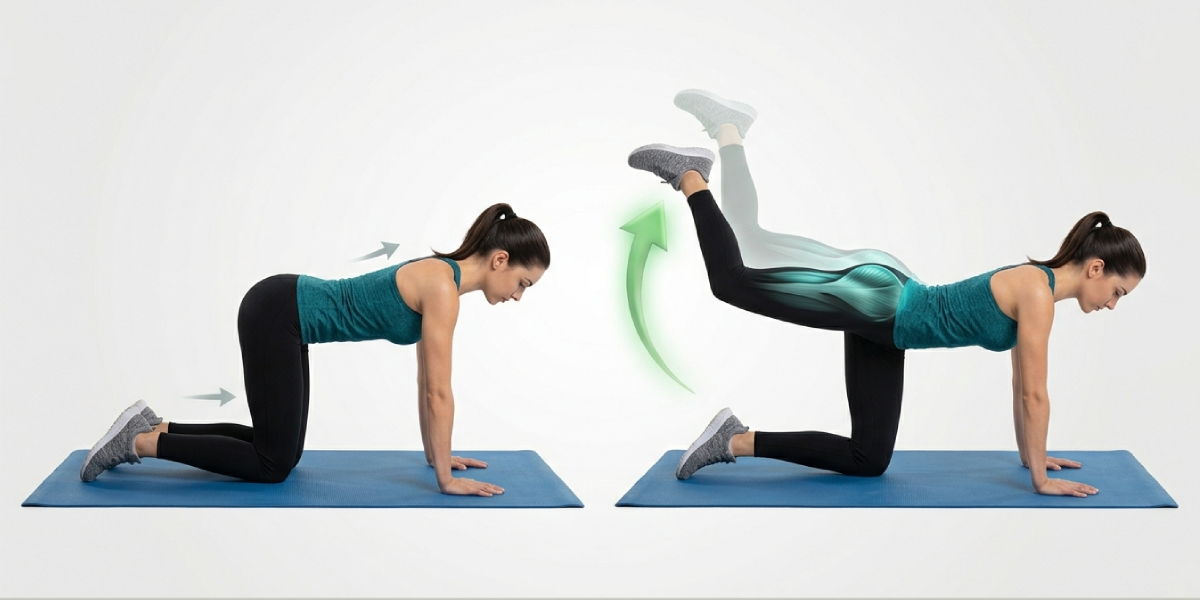
The fire hydrant exercise is one of the most effective bodyweight movements for targeting the hip abductors and gluteus medius — two muscle groups that are chronically underworked in people who sit for long periods.
If you want stronger, more stable hips and a rounder, firmer posterior, this simple floor-based move deserves a permanent spot in your workout routine. In this comprehensive guide, you will learn the correct form, proven variations, common mistakes to avoid, and how to program the fire hydrant exercise for real, lasting results.
What Is the Fire Hydrant Exercise?
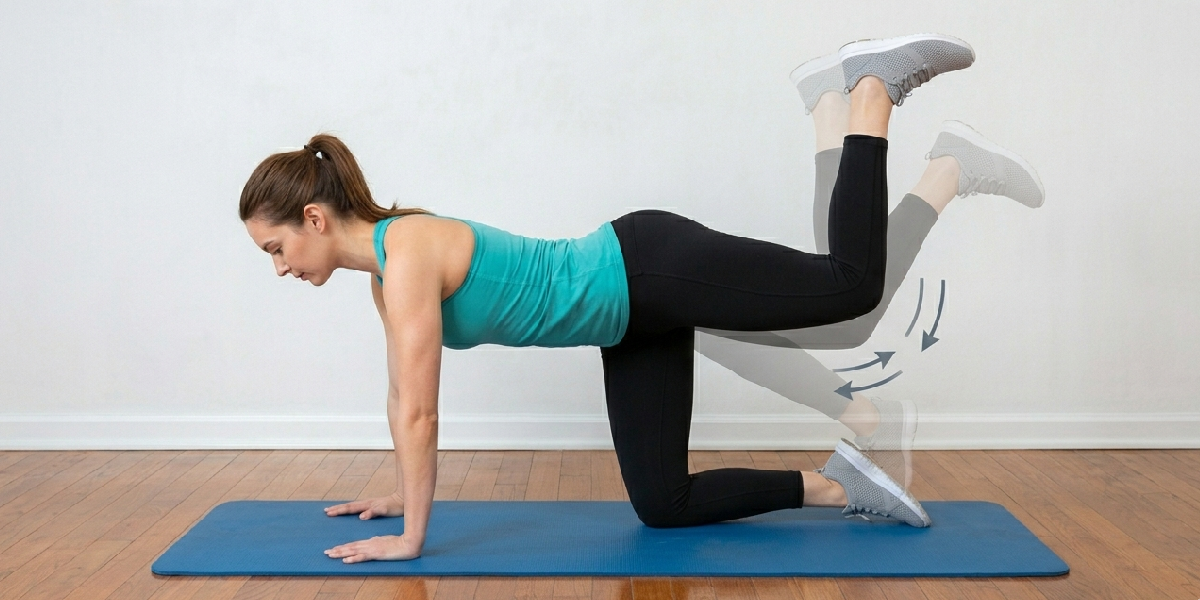
The fire hydrant gets its name from the position it mimics — a dog lifting its leg at a fire hydrant. Humor aside, this movement is a highly functional exercise that trains hip abduction and external rotation. It primarily works the gluteus medius and gluteus maximus, with secondary engagement of the hip flexors, core stabilizers, and inner thigh muscles.
Unlike squats and lunges that load the glutes through hip extension, the fire hydrant targets the lateral and upper portions of the glutes that are often missed by popular leg exercises. This makes it particularly valuable for athletes, runners, people recovering from lower back pain, and anyone looking to build well-rounded lower body strength.
It requires no equipment, making it one of the most accessible exercises you can add to your training program today. All you need is a mat and enough floor space to get on all fours.
Muscles Worked by the Fire Hydrant Exercise
Understanding which muscles the fire hydrant exercise targets helps you train with intention and get better results. Here is a breakdown of the primary and secondary muscles involved:
- Gluteus Medius: The main target. This muscle sits on the outer upper hip and is responsible for hip abduction — lifting the leg away from the midline of the body. It also plays a critical role in stabilizing the pelvis during single-leg activities like walking, running, and climbing stairs.
- Gluteus Maximus: The largest and most powerful glute muscle gets secondary activation, especially when you add a pulse or resistance at the top of the movement.
- Gluteus Minimus: Located beneath the gluteus medius, this smaller muscle assists in hip abduction and internal rotation.
- Hip External Rotators (Piriformis and Obturators): These deep muscles rotate the thigh outward, which is the second component of the fire hydrant movement pattern.
- Core and Spinal Stabilizers: Maintaining a neutral spine on all fours requires consistent co-contraction of the transverse abdominis and erector spinae throughout every repetition.
Step-by-Step Instructions: How to Do the Fire Hydrant Exercise
Proper form is everything with this movement. Doing it correctly ensures you are actually activating the intended muscles rather than compensating with the lower back or hip flexors. Follow these steps carefully.
Starting Position
Begin on all fours on a mat or comfortable surface. Place your wrists directly under your shoulders and your knees directly under your hips. Your back should be flat — neither arched nor rounded — and your neck should be in a neutral position, with your gaze directed toward the floor just in front of your hands. Engage your core lightly by drawing your navel slightly toward your spine.
The Movement
Keeping your knee bent at 90 degrees, slowly lift your right leg out to the side until your thigh is parallel to the floor — or as high as you can go without rotating your pelvis or shifting your weight. The key is to move only at the hip joint. Your torso, lower back, and supporting leg should remain completely still throughout the lift.
Pause briefly at the top of the movement and actively squeeze your glute. Then lower your knee back toward the starting position in a controlled manner, stopping just before it touches the floor. That is one repetition. Complete all reps on one side before switching.
Breathing Pattern
Exhale as you lift the leg and inhale as you lower it. This breathing pattern supports core stability and helps you stay connected to the movement.
Fire Hydrant Exercise: Sets, Reps, and Programming
For most people, 3 sets of 12 to 20 repetitions per side works well. Because the gluteus medius responds well to higher rep ranges and time under tension, staying in the 15 to 20 rep zone with a controlled tempo is often more effective than trying to add weight prematurely.
| Goal | Sets | Reps per Side | Rest |
|---|---|---|---|
| Glute Activation (Warm-Up) | 2 | 10–12 | 30 seconds |
| Strength and Hypertrophy | 3–4 | 15–20 | 45–60 seconds |
| Endurance and Tone | 3 | 20–25 | 30 seconds |
| Resistance Band (Advanced) | 3–4 | 12–15 | 60 seconds |
The fire hydrant exercise fits naturally into a lower body warm-up, a glute-focused accessory circuit, or a general fitness and mobility routine. Many physical therapists also prescribe it as part of rehabilitation protocols for knee, hip, and lower back issues.
Common Mistakes to Avoid
Even though the fire hydrant looks simple, several form errors can undermine your results and potentially lead to strain. Watch out for these common mistakes:
Rotating the Pelvis
This is the most common error. When the hip abductors are weak, the body compensates by tilting or rotating the pelvis to get the leg higher. If you notice your opposite hip dropping or your torso twisting, you are lifting too high. Reduce your range of motion and focus on keeping the hips square and level at all times.
Rushing Through the Reps
Speed is the enemy of muscle activation in isolation exercises. Using momentum to swing the leg up and letting gravity drop it down means the glutes are barely working. Use a 2-second lift, 1-second hold, and 2-second lower tempo for maximum muscle engagement.
Letting the Lower Back Arch
Some people hyperextend the lumbar spine when lifting the leg, especially at higher ranges. Maintain a neutral, stable spine throughout. Think of bracing your core as if you are about to be lightly tapped in the stomach.
Sinking Into the Shoulders
Your supporting arm should be active, not passive. Press through your palms and keep your shoulder blades slightly retracted to avoid dumping your body weight into your wrist joints.
Neglecting the Non-Working Side
The grounded leg, hip, and core are working just as hard to keep you stable. Pay attention to both sides of your body, not just the leg that is moving.
Fire Hydrant Exercise Variations and Progressions
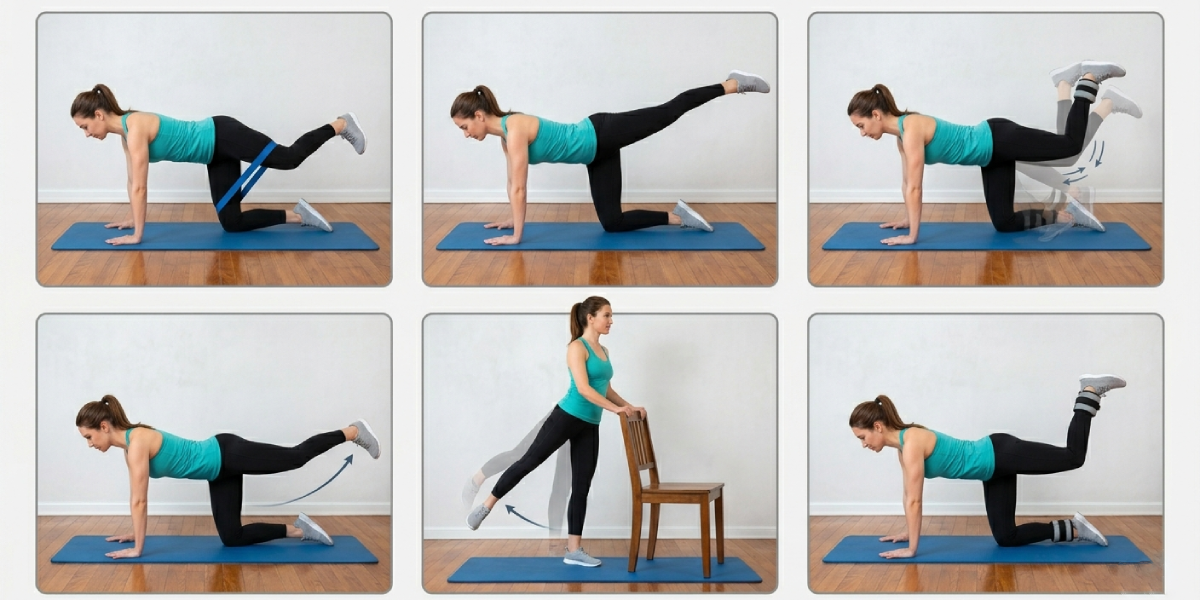
Once you have mastered the standard fire hydrant, these variations will help you continue progressing and keep your workouts fresh.
Resistance Band Fire Hydrant
Place a looped resistance band just above your knees before assuming the starting position. The band adds constant lateral tension, forcing your glutes to work harder throughout the full range of motion. This is the most effective way to increase the challenge without any machines or weights.
Fire Hydrant with Leg Extension
At the top of the fire hydrant position, extend your knee to straighten the leg out to the side before bending it back and lowering it. This variation adds hamstring and outer quad activation and increases the coordination challenge for the hip stabilizers.
Fire Hydrant with Pulse
At the top of the movement, perform 3 small, quick pulses before lowering the leg. This keeps the muscle under tension longer and increases the metabolic demand on the gluteus medius. It is an excellent technique for building the mind-muscle connection.
Standing Fire Hydrant
Using a wall or chair for balance, perform the same hip abduction and external rotation pattern while standing upright. This variation more closely mimics the single-leg loading patterns used in sports and everyday movement, making it a great functional progression.
Ankle Weight Fire Hydrant
Strap a light ankle weight — typically between 2 and 5 pounds — to the working leg to add external load. Keep the weight light enough that you can maintain perfect form for all reps. This is an effective bridge between bodyweight and resistance band variations.
How the Fire Hydrant Exercise Supports Overall Health and Function
Beyond aesthetics, strong hip abductors and a well-developed gluteus medius have measurable benefits for everyday movement and long-term health. The gluteus medius is one of the primary stabilizers of the pelvis during gait.
When it is weak, the pelvis drops on the opposite side with each step — a dysfunction called Trendelenburg gait — which creates a chain reaction of compensations in the knee, hip, and lumbar spine.
Regularly performing the fire hydrant exercise can help reduce knee valgus (knees caving inward during squats and walking), decrease IT band syndrome risk in runners, improve balance and stability on single-leg stances, and reduce strain on the lower back by improving pelvic control.
For individuals managing their body composition alongside exercise, tracking your body mass index can provide useful context — you can use this BMI calculator to monitor your progress over time.
How to Incorporate the Fire Hydrant Into Your Workout
There are several smart ways to program the fire hydrant exercise depending on your goals and current training schedule.
As a warm-up activation drill, perform 2 sets of 10 to 12 reps per side before any lower body session. This primes the glutes and hips for heavier compound movements like squats, deadlifts, and lunges.
As an accessory finisher, add 3 to 4 sets at the end of a leg day to flush the glutes and ensure the gluteus medius is thoroughly fatigued alongside the larger muscles.
As part of a bodyweight circuit, pair the fire hydrant with other floor-based glute exercises like glute bridges, donkey kicks, and clamshells for a complete glute activation and strength routine that can be done anywhere.
For rehabilitation and mobility work, perform the movement daily or on active recovery days at lower volumes to maintain hip health and mobility without taxing the body.
Frequently Asked Questions
How many fire hydrants should I do per day?
For most people, 3 sets of 15 to 20 repetitions per side is an effective daily or near-daily volume. If you are using the exercise as a warm-up, 2 sets of 10 to 12 reps is sufficient. Because it is a low-impact bodyweight movement, it can be performed on consecutive days without significant recovery concerns, though rest days are still beneficial for muscle adaptation.
Will the fire hydrant exercise make my hips wider?
Regular fire hydrant training will strengthen and add some muscular size to the gluteus medius, which sits on the upper outer portion of the hip. Over time and with consistent training, this can create a more rounded and lifted appearance to the hips. However, significant structural changes in hip width are primarily determined by bone structure rather than muscle development.
Is the fire hydrant exercise good for lower back pain?
In many cases, yes. Weak hip abductors are a contributing factor in lower back pain because the body compensates for poor hip stability with excessive lumbar movement. Strengthening the gluteus medius through fire hydrant training can reduce this compensation. That said, always consult a healthcare provider or physical therapist before beginning any exercise program if you are experiencing pain.
Can beginners do the fire hydrant exercise?
Absolutely. The fire hydrant is one of the most beginner-friendly glute exercises available. It requires no equipment, involves a small range of motion, and can be performed at a very gentle tempo. Start without any added resistance and focus entirely on form and muscle awareness before progressing to bands or ankle weights.
What is the difference between a fire hydrant and a clamshell exercise?
Both exercises target the gluteus medius and hip external rotators, but the starting position differs. The clamshell is performed lying on your side with your hips stacked and knees bent, opening and closing like a clamshell. The fire hydrant is performed on all fours with hip abduction occurring in a weight-bearing position. Fire hydrants tend to place greater demand on core stability, while clamshells allow more isolated focus on the hip rotators.
How long does it take to see results from fire hydrant exercises?
With consistent training three to four times per week, most people notice improved muscle activation and reduced hip tightness within two to three weeks. Visible changes in muscle tone and shape typically become apparent after six to eight weeks of regular, progressive training combined with an appropriate nutrition plan.
Should I feel the fire hydrant exercise in my lower back?
No. If you feel the fire hydrant in your lower back, it is a sign that your pelvis is rotating or your spine is arching during the movement. Reduce your range of motion, consciously brace your core throughout each rep, and ensure your wrists are stacked directly under your shoulders. The work should be felt exclusively in the outer hip and glute of the working leg.
Can I do fire hydrant exercises during pregnancy?
Fire hydrant exercises are generally considered safe during pregnancy for individuals who have been cleared for physical activity by their healthcare provider. The all-fours position can actually be comfortable during the second and third trimesters. However, every pregnancy is different, and it is essential to consult your obstetrician or midwife before continuing or beginning any exercise program during pregnancy.
Do I need a resistance band to do fire hydrants?
No, a resistance band is not required. The standard bodyweight version is highly effective, particularly for beginners and those using the exercise as a warm-up tool. Resistance bands are a useful progression once bodyweight reps feel easy, as they provide constant lateral tension that increases the challenge for the gluteus medius throughout the entire range of motion.
How does the fire hydrant compare to side-lying leg raises?
Both movements train hip abduction, but they differ in orientation and stability demand. Side-lying leg raises are performed lying down, which reduces the stabilization requirement. Fire hydrants are performed on all fours, requiring significantly more core and shoulder stability. Fire hydrants also incorporate more hip external rotation, engaging the deep hip rotators to a greater degree. Both exercises complement each other well in a comprehensive glute training program.