

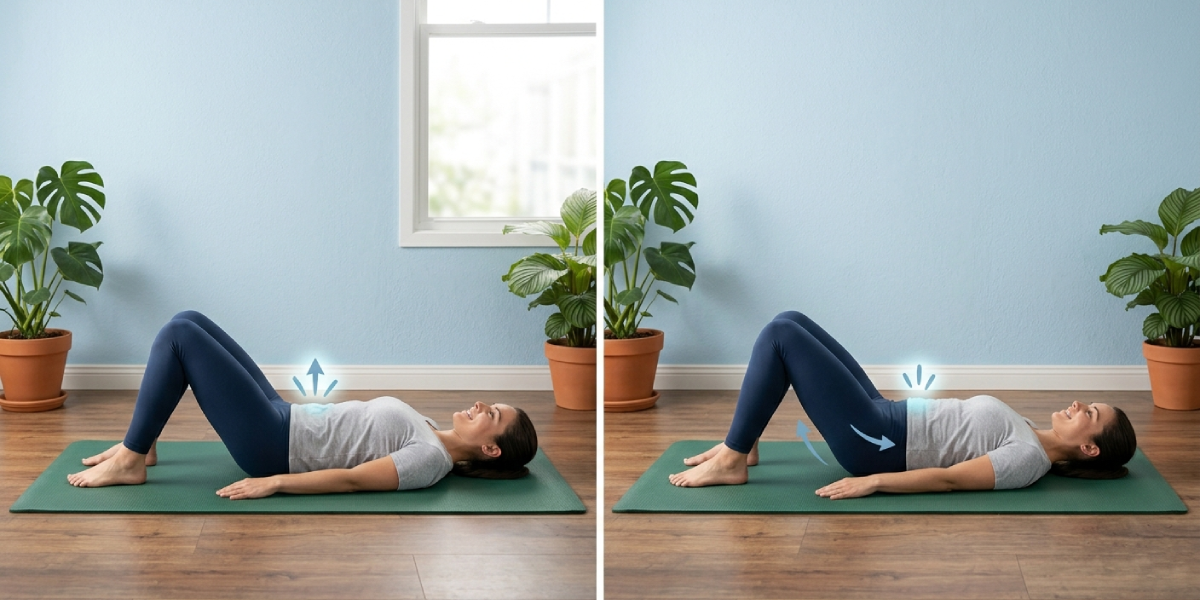
The pelvic tilt exercise for lower back pain is one of the most widely recommended movements in physical therapy, and for good reason. It is gentle, accessible, and directly targets the deep stabilizing muscles that support your lumbar spine.
Whether you are recovering from a strain, managing chronic discomfort, or simply trying to move better throughout the day, mastering this foundational movement can make a meaningful difference in how your back feels and functions.
This guide walks you through everything you need to know — from the anatomy behind why it works, to precise step-by-step instructions, common mistakes to avoid, and progressions that build lasting relief over time.
What Is the Pelvic Tilt Exercise?
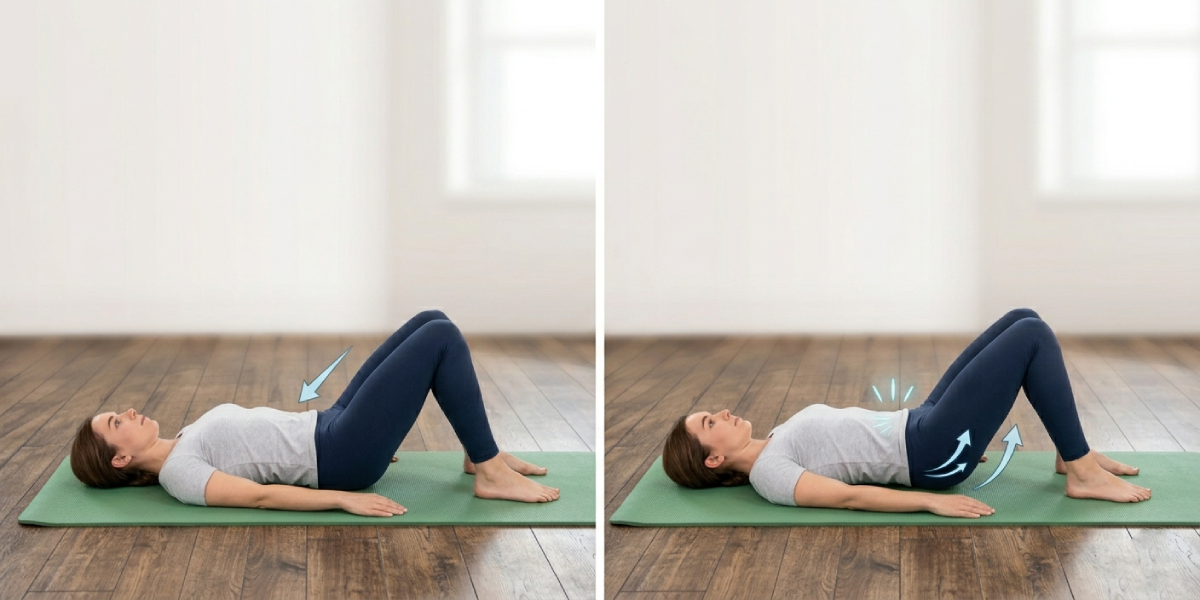
The pelvic tilt is a controlled movement of the pelvis that gently flattens the lower back against a surface — typically the floor — by engaging the deep abdominal muscles and the glutes.
It is often one of the first exercises prescribed after lower back injury or surgery because it requires no equipment, places virtually no load on the spine, and helps re-establish neuromuscular control in an area that commonly becomes inhibited due to pain or prolonged sitting.
Unlike high-intensity core exercises that can aggravate an already sensitive back, the pelvic tilt works within a very small, safe range of motion. It trains your body to find a neutral spine position and builds the foundational strength needed to maintain that position during everyday activities like walking, bending, and lifting.
The Anatomy Behind the Movement
To understand why this exercise is so effective, it helps to know which structures it engages. The pelvis sits at the junction of your spine and lower extremities, and its position directly influences lumbar curvature.
When the pelvis tips forward excessively — a condition called anterior pelvic tilt — it increases the arch in the lower back and places sustained compression on the lumbar facet joints and intervertebral discs.
Over time, this contributes to the muscle tension, nerve irritation, and chronic aching that many people associate with lower back pain.
The pelvic tilt exercise targets the following key structures:
- Transverse abdominis: The deepest layer of the abdominal wall, acting like a corset around the spine.
- Multifidus: Small but powerful muscles running along the vertebrae that provide segmental stability to the lumbar spine.
- Gluteus maximus: The primary hip extensor, which assists in posteriorly rotating the pelvis.
- Hip flexors (in a lengthening role): Tight hip flexors are a major contributor to anterior pelvic tilt, and the exercise gently helps release this tension.
By activating these muscles in a controlled, pain-free environment, the pelvic tilt begins to restore the balance and coordination that a healthy lower back depends on.
How to Do the Basic Pelvic Tilt Exercise: Step-by-Step
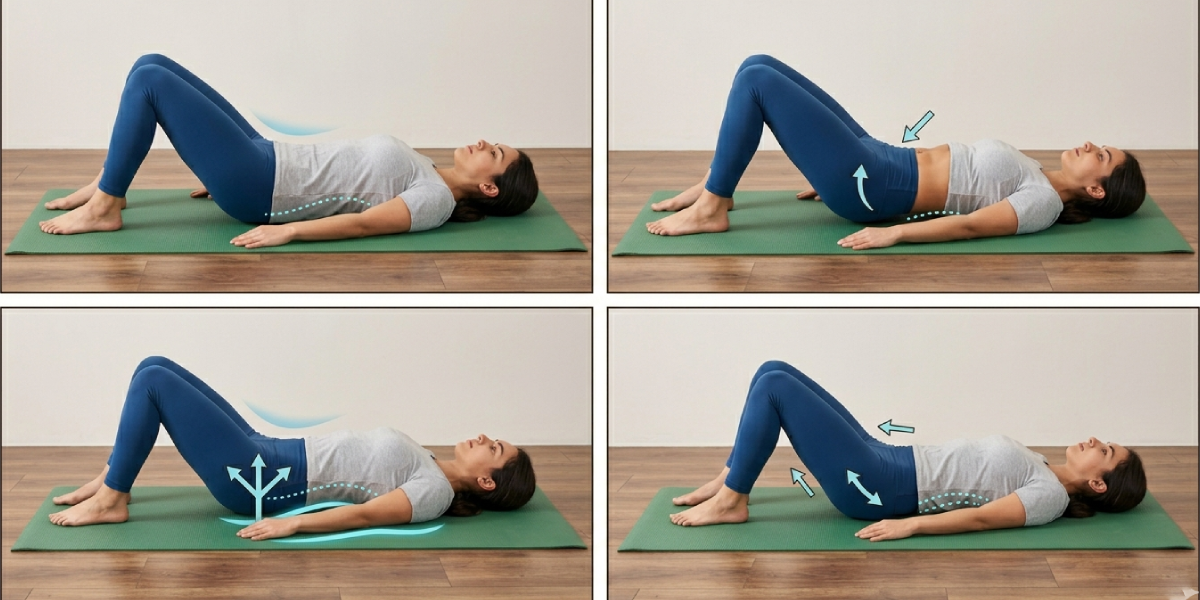
The standard version of this exercise is performed lying on your back. Follow these instructions carefully to ensure proper form and maximize its benefits.
Starting Position
Lie on your back on a firm but comfortable surface — a yoga mat on the floor works well. Bend your knees so that both feet are flat on the floor, hip-width apart. Let your arms rest comfortably at your sides. Allow your spine to settle into its natural resting position, which for most people means there is a small gap between the lower back and the floor. This gap is your lumbar curve, and it is completely normal.
The Movement
Take a slow breath in to prepare. As you exhale, gently draw your lower abdominal muscles inward — think about pulling your belly button lightly toward your spine without holding your breath or bracing aggressively.
At the same time, squeeze your glutes just slightly and rock your pelvis so that your lower back presses flat against the floor. You should feel the gap between your lower back and the mat close. This is the posterior pelvic tilt.
Hold this position for five to ten seconds while continuing to breathe normally. Then slowly release and allow your lower back to return to its natural curve. That completes one repetition.
Sets and Repetitions
Begin with one to two sets of ten repetitions, performed once or twice daily. As you become more comfortable with the movement and your symptoms improve, you can gradually increase to three sets of fifteen repetitions.
Quality of movement always matters more than quantity — a properly executed pelvic tilt with full muscle engagement provides far greater benefit than rushing through many repetitions with poor control.
Common Mistakes and How to Avoid Them
Even though the pelvic tilt appears simple, there are several errors that can reduce its effectiveness or, in rare cases, aggravate existing symptoms.
Holding Your Breath
Many people instinctively hold their breath when they engage their core. This increases intra-abdominal pressure in an uncontrolled way and can actually spike discomfort in a sensitive lower back. Instead, practice exhaling as you tilt and breathing normally during the hold phase. Coordinating breath with movement is a core principle of every effective back rehabilitation exercise.
Pushing Too Hard with the Glutes
Some people aggressively squeeze their glutes to force the lower back down, which can cause cramping in the buttocks and make the movement feel like a strain rather than a gentle activation. The pelvic tilt should feel like a subtle shift, not a forceful push. Use about 20 to 30 percent of your maximum glute effort.
Lifting the Hips Off the Floor
This is not a bridge exercise. Your hips should remain in full contact with the mat throughout. If you notice your hips rising, reduce the effort and focus on the deeper abdominal engagement rather than driving from the glutes.
Moving Too Quickly
Speed undermines neuromuscular control. Slow, deliberate repetitions teach your brain and muscles to communicate more effectively, which is precisely what a lower back recovering from pain needs. Aim for a two-to-three second tilt, a five-to-ten second hold, and a slow two-to-three second release.
Pelvic Tilt Variations for Progressive Rehabilitation
Once you are comfortable with the basic floor version, these variations allow you to continue progressing without abandoning the movement pattern.
Standing Pelvic Tilt
Stand with your back against a wall, feet a few inches forward, knees slightly bent. Perform the same posterior tilt movement, pressing your lower back flat against the wall. This variation is practical because it trains you in an upright position that directly transfers to how you stand and walk. It is particularly useful for people who spend long hours on their feet at work.
Seated Pelvic Tilt
Sit upright near the edge of a firm chair with your feet flat on the floor. Practice rocking your pelvis backward to flatten your lower back and then forward to restore the natural curve. This active exploration of your neutral spine position is excellent for office workers whose lower back pain is driven by hours of static, slouched sitting. Maintaining a healthy spine is part of the broader picture of long-term health and body wellness, and simple seated exercises done regularly throughout the day can meaningfully reduce cumulative stress on the lumbar spine.
Pelvic Tilt with Heel Slide
From the basic lying position, perform your pelvic tilt and hold it. While maintaining the tilt, slowly slide one heel along the floor to straighten that leg, then slide it back before releasing the tilt. This introduces a gentle challenge to your core stability while keeping spinal load minimal. It is an excellent bridge between the introductory exercise and more demanding core work.
Pelvic Tilt on a Stability Ball
Sitting on an exercise ball, the unstable surface naturally increases the demand on your deep stabilizing muscles. Practice the same forward-and-backward rocking motion while maintaining an upright posture. The feedback from the ball makes it easier to feel the difference between anterior and posterior tilt, accelerating your body awareness.
How Long Until You Feel Relief?
Many people notice some degree of reduced tension or improved comfort within the first one to two weeks of consistent daily practice. However, meaningful and lasting improvement in lower back pain typically requires four to eight weeks of regular exercise, combined with attention to movement habits throughout the day — such as how you sit at your desk, lift objects, and sleep.
The pelvic tilt is not a standalone cure. It is most effective when used as part of a broader approach that may include walking, hip flexor stretching, and gradual strengthening of the glutes and core.
If you are also managing your overall body composition as part of your recovery plan, tools like a BMI calculator can help provide useful context about how body weight may be influencing the load your lumbar spine carries daily.
When to See a Healthcare Professional
The pelvic tilt is a safe exercise for the vast majority of people with non-specific lower back pain. However, you should consult a physician or licensed physical therapist before beginning this or any exercise program if you experience any of the following:
- Sharp, shooting, or electric pain that radiates down one or both legs
- Numbness, tingling, or weakness in the legs or feet
- Back pain following a recent trauma, fall, or accident
- Lower back pain accompanied by bladder or bowel changes
- Pain that has been present for more than six weeks without improvement
- A known diagnosis of osteoporosis, spinal stenosis, or spondylolisthesis
These symptoms may indicate a more complex underlying condition that requires professional evaluation before exercise is initiated. A physical therapist can also assess your movement patterns and design a program precisely tailored to your needs, making your recovery faster and more targeted than a generic approach allows.
Tips for Making the Pelvic Tilt a Daily Habit
Consistency is the single most important factor in whether this exercise delivers lasting benefit. Here are practical strategies to help you stick with it:
- Pair it with something you already do: Perform your pelvic tilts immediately after waking up or just before bed. Attaching a new habit to an existing routine dramatically increases follow-through.
- Set a simple reminder: A phone alarm labeled “back exercise” takes seconds to set and removes the mental effort of remembering.
- Track your progress: Note how your back feels before and after sessions. Over time, this record of improvement becomes motivating evidence that the work is paying off.
- Be patient with slow days: Lower back pain often fluctuates. On days when discomfort flares, reduce the intensity and repetitions rather than skipping the exercise entirely — gentle movement is almost always preferable to complete rest for non-acute back pain.
Frequently Asked Questions
How often should I do the pelvic tilt exercise for lower back pain?
For most people managing lower back pain, performing the pelvic tilt once or twice daily is ideal. Starting with one to two sets of ten repetitions and building gradually over two to four weeks allows your muscles to adapt without overloading a sensitive area. Daily consistency over weeks matters far more than occasional high-volume sessions.
Can the pelvic tilt exercise make lower back pain worse?
When performed correctly, the pelvic tilt is one of the safest exercises available for lower back pain. It rarely aggravates symptoms. However, if you feel sharp or shooting pain during the movement, stop immediately and consult a healthcare provider, as this may indicate a condition that requires a modified approach.
Is the pelvic tilt effective for herniated disc pain?
The pelvic tilt is often included in rehabilitation programs for mild to moderate disc herniations because it gently activates spinal stabilizers without loading the disc. That said, anyone with a confirmed herniation should work with a physical therapist to ensure the exercise is appropriate for their specific presentation before beginning independently.
What is the difference between anterior and posterior pelvic tilt?
An anterior pelvic tilt occurs when the front of the pelvis drops and the lower back arches excessively — a very common postural pattern associated with prolonged sitting and tight hip flexors. A posterior pelvic tilt is the opposite: the front of the pelvis rises and the lower back flattens. The pelvic tilt exercise trains the posterior direction specifically to counteract the anterior tilt pattern and relieve compression on the lumbar spine.
How long does it take for the pelvic tilt to relieve lower back pain?
Many people feel some relief within one to two weeks of daily practice, particularly in the form of reduced morning stiffness and improved mobility. Significant and lasting improvement in chronic lower back pain typically develops over four to eight weeks when the exercise is performed consistently and combined with other healthy movement habits.
Can I do the pelvic tilt if I am pregnant?
The pelvic tilt is widely recommended during pregnancy, particularly in the second and third trimesters, to relieve the lower back discomfort that comes with a shifting center of gravity. The standing and seated variations are preferred as pregnancy advances. Always check with your obstetrician or midwife before beginning any new exercise during pregnancy.
Do I need any equipment to perform the pelvic tilt exercise?
No equipment is needed for the basic version of this exercise. A yoga mat or folded blanket on the floor provides sufficient cushioning for the lying variation. The standing and seated versions require only a wall or chair, making this one of the most accessible rehabilitation exercises available for people at any fitness level or budget.
Can the pelvic tilt help with sciatica?
The pelvic tilt can be a helpful component of sciatica management when the nerve irritation is associated with anterior pelvic tilt, tight hip flexors, or poor lumbar stabilization. By reducing excessive lumbar lordosis and improving deep core activation, it may help decrease the compressive forces that aggravate sciatic nerve tissue. However, sciatica can arise from several different causes, so a personalized assessment from a physical therapist or physician is strongly recommended before relying solely on this exercise.
Is the pelvic tilt the same as Kegel exercises?
No, though they are sometimes performed together. Kegel exercises specifically target the pelvic floor muscles through contraction and release, whereas the pelvic tilt focuses on the abdominals, glutes, and lumbar stabilizers through a movement of the pelvis. The two exercises complement each other well, and physical therapists treating pelvic pain or postpartum back issues often recommend both in combination.