

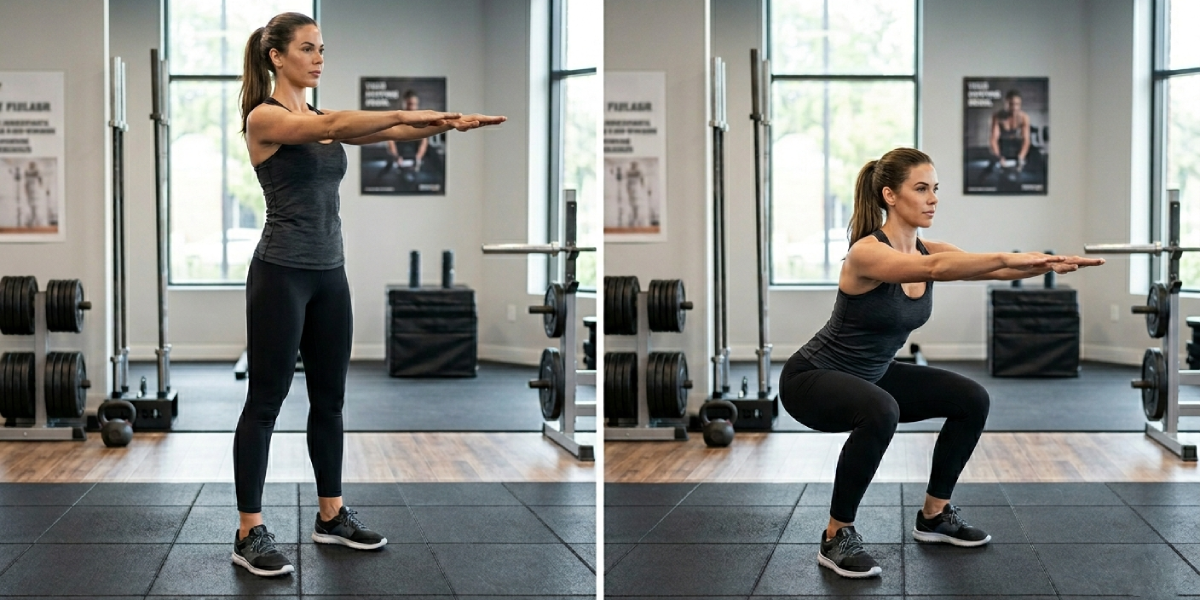
Learning how to do squats exercise with proper form is one of the most valuable skills you can develop in your fitness journey. Squats are a foundational compound movement that works multiple major muscle groups simultaneously, making them incredibly efficient and effective.
Whether you are a complete beginner stepping into the gym for the first time or an experienced lifter looking to refine your technique, mastering proper squat form is non-negotiable for both performance and long-term joint health.
This comprehensive guide walks you through everything you need to know about squatting correctly, from the muscles involved to step-by-step technique, common errors to fix, and variations to explore as you progress. By the end, you will have a thorough understanding of one of the most powerful exercises for building strength and improving overall fitness.
Why Squats Are a Cornerstone of Fitness
The squat is often called the king of all exercises, and for good reason. It is a functional movement pattern that mirrors everyday activities like sitting down, standing up, and lifting objects from the ground. When performed with correct technique, squats deliver a range of physical benefits that extend well beyond the gym.
Squats primarily target the quadriceps, hamstrings, glutes, and calves. They also engage the core muscles, lower back, and hip flexors as stabilizers. This multi-joint, multi-muscle activation makes squats an extraordinarily time-efficient exercise.
Research consistently supports the squat as a top-tier movement for building lower body strength, improving bone density, enhancing athletic performance, and supporting metabolic health.
From a long-term health perspective, regularly performing squats can help maintain joint integrity, reduce the risk of knee and hip injuries, and support healthy aging by preserving muscle mass and functional mobility.
Muscles Worked During a Squat
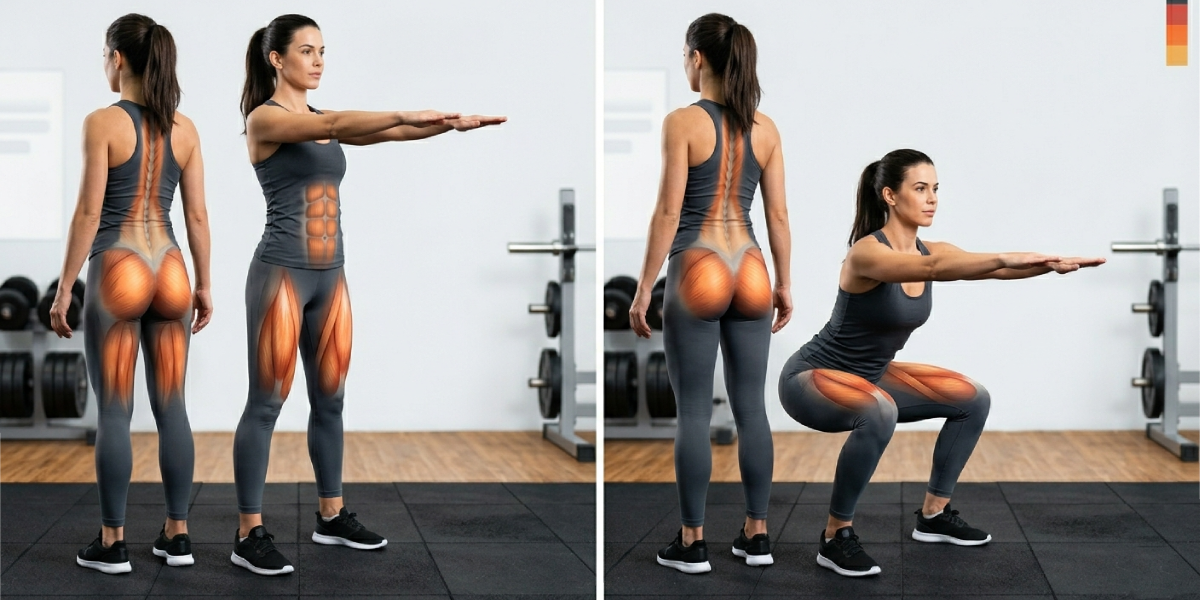
Understanding which muscles squats engage helps you train with greater intention and identify weaknesses that may be affecting your form.
- Quadriceps: The four muscles at the front of the thigh are the primary movers during the upward phase of the squat.
- Gluteus Maximus: The largest muscle in the body drives hip extension and contributes significantly to the power of the movement.
- Hamstrings: These muscles at the back of the thigh assist with hip extension and provide stability throughout the movement.
- Adductors: The inner thigh muscles help control knee alignment and stabilize the hips during the descent and ascent.
- Calves and Soleus: These ankle stabilizers maintain proper foot mechanics during the squat.
- Core and Erector Spinae: Your abdominal muscles and spinal erectors brace the torso to keep your spine neutral and prevent forward collapse.
Equipment and Setup Before You Begin
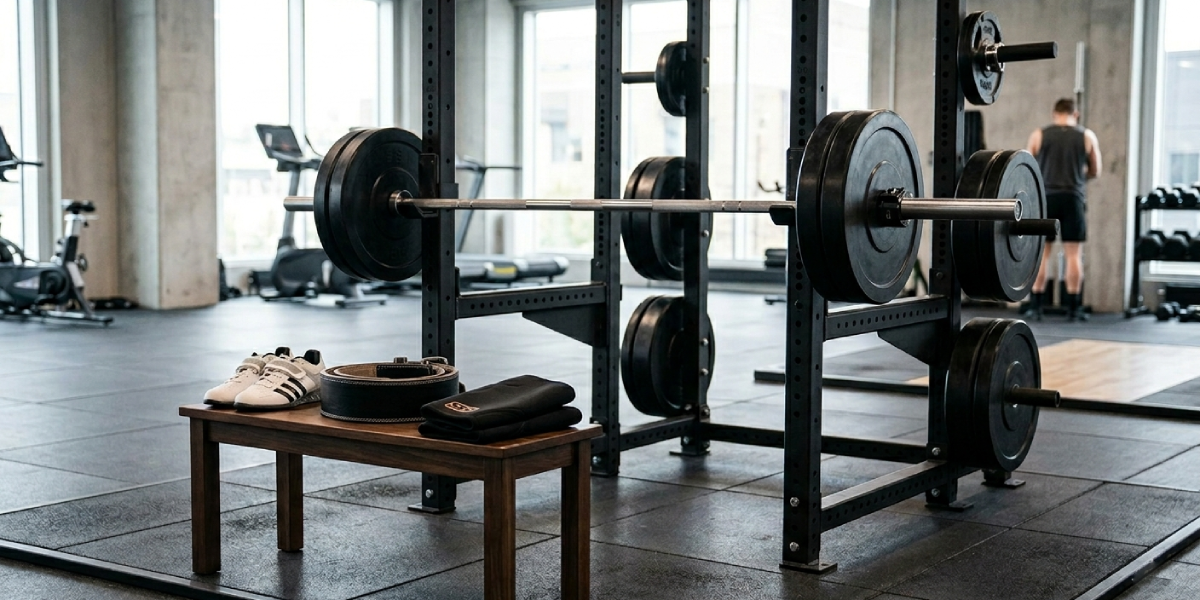
For bodyweight squats, no equipment is necessary. However, certain gear can enhance performance and safety as you progress to loaded variations.
- Footwear: Flat-soled shoes or weightlifting shoes with a slight heel elevation provide a stable base. Avoid thick-soled running shoes, which can compromise balance and ankle mechanics.
- Barbell and Rack: For barbell back squats, a sturdy squat rack or power cage is essential for safety.
- Weightlifting Belt: Optional for intermediate and advanced lifters, a belt helps brace the core under heavier loads.
- Knee Sleeves: Provide warmth and mild compression to the knee joint, beneficial for those with minor discomfort.
How to Do Squats Exercise with Proper Form: Step-by-Step
Follow these steps carefully to perform a bodyweight squat with correct technique. Once you have mastered the fundamentals, the same principles apply to all squat variations.
Step 1: Set Your Starting Position
Stand with your feet approximately shoulder-width apart or slightly wider. Your toes should point slightly outward, typically between 15 and 30 degrees, depending on your hip anatomy. Distribute your weight evenly across your entire foot, from heel to toe. Engage your core by bracing your abdominal muscles as if you are about to take a punch. Keep your chest tall and your shoulders pulled back and down.
Step 2: Initiate the Descent
Begin the movement by simultaneously pushing your hips back and bending your knees. Think of it as sitting back into a chair rather than simply bending the knees forward. Your weight should remain centered on your midfoot throughout the movement. Avoid letting your heels rise off the floor, which typically indicates limited ankle mobility.
Step 3: Maintain Proper Torso Position
As you lower yourself, keep your chest up and your spine in a neutral position. A slight forward lean of the torso is natural and acceptable, but excessive forward lean places undue stress on the lower back. Your gaze should be directed slightly downward and forward, roughly two to three feet in front of you, rather than straight up at the ceiling, which can strain the cervical spine.
Step 4: Achieve the Correct Depth
Aim to lower your hips until your thighs are at least parallel to the floor. This is commonly referred to as a parallel squat. Going deeper, to a full or below-parallel squat, further activates the glutes and is safe for most people when performed with proper form and adequate mobility. Avoid squatting so shallow that your thighs do not reach parallel, as this significantly reduces the muscular benefit of the exercise.
Step 5: Monitor Knee Alignment
Throughout the squat, your knees should track in line with your second and third toes. They should not cave inward, a fault known as knee valgus, which increases the risk of knee injury over time. If you notice your knees collapsing inward, focus on actively pushing them outward as you descend and ascend.
Step 6: Drive Back to the Starting Position
To rise from the bottom of the squat, press your feet firmly into the floor and drive your hips upward. Think about pushing the floor away from you. Extend your knees and hips simultaneously to maintain a consistent torso angle as you ascend. Avoid the common mistake of shooting your hips up first, which shifts the load excessively onto the lower back.
Step 7: Complete the Repetition
Return to the fully upright starting position, squeezing your glutes at the top. Do not hyperextend your lower back at the top of the movement. Maintain a braced core throughout the entire repetition, and breathe out during the upward phase of the movement.
Breathing Technique for Squats
Proper breathing significantly affects both performance and spinal safety during squats. Use the Valsalva maneuver for loaded squats: take a deep breath into your belly before you begin the descent, hold that breath as you lower and rise through the sticking point, then exhale forcefully at the top of the movement.
This creates intra-abdominal pressure that supports the spine under load. For bodyweight squats or lighter sets, a simpler approach works well: inhale during the descent and exhale during the ascent.
Common Squat Mistakes and How to Fix Them
Even experienced exercisers fall into poor movement habits. Identifying and correcting these errors will improve your safety, comfort, and results.
| Common Mistake | Why It Happens | How to Correct It |
|---|---|---|
| Heels rising off the floor | Limited ankle dorsiflexion | Stretch calves and ankles, elevate heels temporarily |
| Knees caving inward | Weak glutes or adductors | Cue knees out, add banded squats to activate glutes |
| Excessive forward lean | Tight hips or weak core | Improve hip flexor mobility, strengthen core |
| Rounding the lower back | Limited hip mobility or weak posterior chain | Reduce depth temporarily, work on hip and thoracic mobility |
| Squatting too shallow | Discomfort or habit | Gradually increase depth using a box or bench as a target |
| Looking straight up | Misinformation about neck positioning | Keep gaze neutral, roughly two to three feet ahead on the floor |
Squat Variations to Build On Your Foundation
Once you are confident with the bodyweight squat, a wide range of variations allows you to increase challenge, target specific muscles, and keep your training engaging.
Goblet Squat
Hold a dumbbell or kettlebell vertically at chest height. The counterbalance of the weight naturally encourages an upright torso, making this an excellent transitional exercise between bodyweight and barbell squats. It is especially useful for reinforcing proper depth and knee tracking.
Barbell Back Squat
The barbell back squat is the most widely practiced loaded squat variation in strength training. The bar rests on the upper back, either in a high-bar position across the traps or a low-bar position across the rear deltoids. Each placement has slightly different mechanics, but both require mastery of the fundamental movement pattern described above.
Front Squat
The barbell is held in a front rack position across the front of the shoulders. This places a greater demand on the quadriceps and requires a more upright torso, making it technically more demanding but highly effective for quad development and core strength.
Bulgarian Split Squat
One foot is elevated behind you on a bench while you perform a single-leg squat. This unilateral variation addresses muscular imbalances between legs and places significant demand on the glutes and quadriceps of the working leg.
Box Squat
Squatting down to a box or bench and briefly pausing before rising trains the squat from the bottom position, develops strength and power, and helps lifters learn proper depth and hip-back mechanics.
How to Program Squats into Your Routine
For beginners, two to three squat sessions per week is appropriate, allowing adequate recovery between sessions. Aim for three to four sets of eight to twelve repetitions per session. As you progress, you can periodize your training by cycling through phases of higher volume at lower intensity and lower volume at higher intensity.
Monitoring your body composition alongside your strength progress can also provide useful data. Understanding your overall health picture, including using tools like a BMI calculator to track your body metrics, can help you set more informed fitness goals and gauge whether your training and nutrition are aligned with your targets.
Always warm up before squatting with light cardio, dynamic stretches, and a few sets of bodyweight squats before adding load. Mobility work targeting the ankles, hips, and thoracic spine directly translates to improved squat form and comfort.
Mobility Drills to Improve Your Squat
Limited mobility in the ankles, hips, or thoracic spine is among the most common reasons for poor squat mechanics. Incorporating these drills into your warm-up will make a noticeable difference over time.
- Ankle dorsiflexion stretch: Face a wall, place one foot close to the base, and drive the knee forward over the toes without lifting the heel.
- Hip flexor stretch: A deep lunge with the back knee on the floor, driving the hips forward, lengthens the hip flexors and allows greater depth.
- 90-90 hip stretch: Sitting with both legs bent at 90 degrees in opposite directions targets internal and external hip rotation simultaneously.
- Thoracic spine rotation: Seated or on all fours, rotate the upper spine to improve the thoracic mobility needed for an upright torso during squats.
- Deep squat hold: Simply holding a supported deep squat for 30 to 60 seconds daily gradually improves hip, ankle, and knee mobility.
Safety Considerations and When to Seek Guidance
Squats are safe for the vast majority of healthy adults when performed with proper technique. However, certain conditions warrant professional guidance before training.
If you have a history of knee injuries, hip impingement, lower back disc issues, or recent surgery, consult a physiotherapist or certified strength and conditioning specialist before beginning a squat program.
Pain during squats that is sharp, localized, or persistent should be evaluated by a medical professional rather than trained through.
Starting with bodyweight squats and progressing gradually is the most prudent approach for all beginners and those returning from injury. Ego-lifting with weights you cannot safely control is the fastest route to injury and the most common mistake in resistance training.
Frequently Asked Questions
How deep should I squat?
Ideally, you should squat until your thighs are at least parallel to the floor. Going below parallel is fine for most people with adequate mobility and does not damage the knees when performed with proper alignment. Depth should be determined by your mobility, not arbitrarily limited.
Should my knees go past my toes when squatting?
Yes, it is completely normal and often necessary for the knees to travel past the toes during a squat, particularly for those with longer femurs. The key is that the knees should track in line with the toes and the heels must remain on the floor. Restricting knee travel excessively increases shear forces on the hips and lower back.
How often should I do squats?
Beginners benefit from squatting two to three times per week. Intermediate and advanced lifters can squat more frequently depending on their program. Allow at least 48 hours of recovery between intense squat sessions targeting the same muscle groups.
Can squats cause knee pain?
Squats performed with poor technique, such as knee valgus or excessive forward lean, can contribute to knee discomfort over time. However, correctly executed squats typically strengthen the muscles surrounding the knee and support joint health. If you experience knee pain, review your form, reduce load, and consult a professional if pain persists.
What is the difference between high-bar and low-bar squat?
In a high-bar squat, the barbell rests on the upper trapezius, promoting a more upright torso and greater quad engagement. In a low-bar squat, the bar rests lower on the rear deltoids, allowing more hip hinge and greater posterior chain involvement. Both are effective; the better choice depends on your goals and anatomy.
Do squats build glutes?
Yes, squats are one of the most effective exercises for building the gluteus maximus, particularly when performed to full depth. The glutes are maximally stretched at the bottom of the squat and forcefully contract during the ascent. Adding depth and load progressively over time will significantly develop glute size and strength.
Are squats suitable for beginners?
Absolutely. Bodyweight squats are one of the first exercises beginners should learn because they build foundational strength, body awareness, and mobility. Starting without weight allows you to focus entirely on mastering the movement pattern before adding load.
How do I improve my squat depth?
Improving squat depth requires addressing the specific mobility limitation holding you back. For most people, this involves stretching the ankles, hip flexors, and hips through targeted mobility drills performed consistently before and after workouts. Holding a deep squat position daily is one of the most effective methods for rapidly improving depth.
Should I use a belt when squatting?
A weightlifting belt is not necessary for beginners or moderate loads. It becomes beneficial for advanced lifters handling near-maximal weights, as it enhances intra-abdominal pressure and spinal support. Learning to brace your core effectively without a belt first is the recommended approach.
What is a good squat weight for beginners?
Beginners should start with bodyweight only and progress to light loads once they demonstrate consistent form. A general benchmark for a beginner barbell back squat after several months of training is approximately 0.75 to 1 times bodyweight for a single repetition, though individual progression varies significantly based on genetics, age, and training consistency.