

Burpees stand as one of the most effective full body exercises available to fitness enthusiasts at any level. Whether you’re training for athletic performance, building functional strength, or improving cardiovascular fitness, learning how to do burpees with proper form will transform your workout results.
This comprehensive guide breaks down everything you need to know about executing burpees correctly, avoiding injury, and integrating them strategically into your fitness routine.
What Are Burpees and Why They Matter for Your Fitness Goals
A burpee is a compound bodyweight exercise that combines multiple movement patterns into one fluid motion. The exercise engages your chest, arms, shoulders, core, and legs simultaneously, making it exceptionally efficient for time constrained workouts.
Athletes and fitness professionals recommend burpees because they deliver cardiovascular benefits while building muscular strength and endurance.
The term burpee originated from Royal H. Burpee, a physiologist who created the movement as part of his 1930s fitness assessment. Today, burpees appear in military training programs, CrossFit competitions, high intensity interval training sessions, and mainstream fitness routines. This widespread adoption reflects the exercise’s legitimacy and proven effectiveness.
What makes burpees particularly valuable is their accessibility. You need no equipment, minimal space, and can modify the movement to match your current fitness level. Whether you’re a beginner or elite athlete, burpees offer appropriate challenges and progression opportunities.
Step by Step Guide to Perfect Burpee Form

Executing burpees with proper technique ensures maximum benefit and minimizes injury risk. Follow this detailed breakdown of each movement phase.
Phase One: The Starting Position
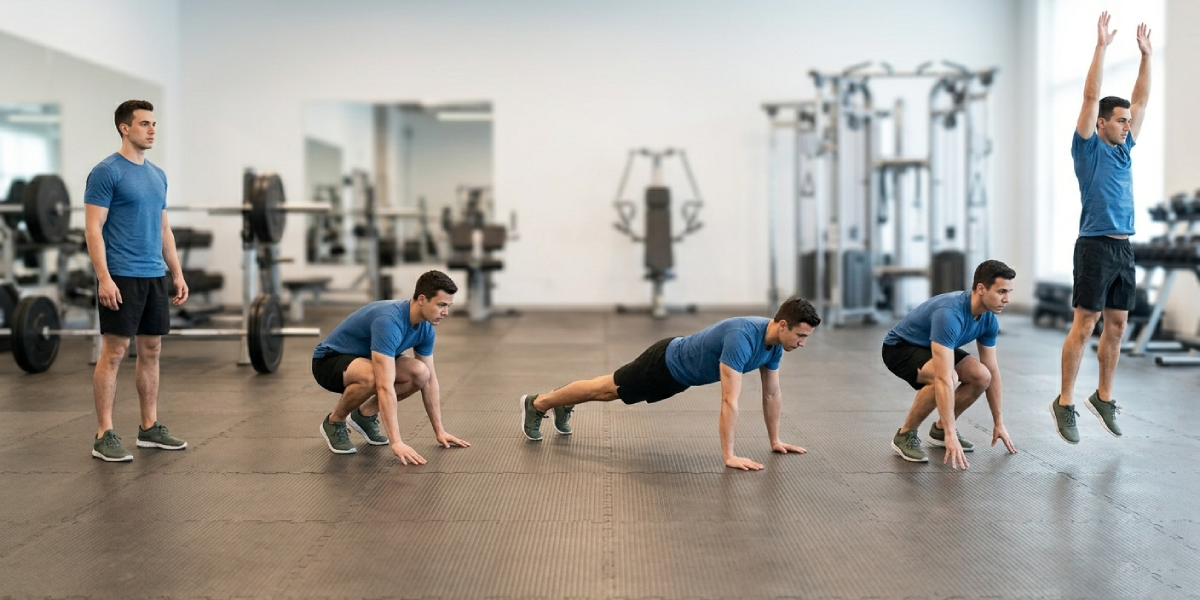
Begin standing with your feet shoulder width apart and arms at your sides. Your posture should be upright with your shoulders relaxed and your core engaged. Take a moment to ensure your weight is distributed evenly across both feet. This foundation sets up everything that follows.
Phase Two: The Squat Down
Lower your body into a squat position by bending your knees and hips simultaneously. Keep your chest upright and your weight in your heels rather than your toes. Your arms swing forward naturally as you descend. Go as low as your flexibility allows, ideally until your thighs reach parallel with the ground or slightly lower. This controlled lowering ensures you maintain tension throughout your muscles.
Phase Three: The Plank Position
Place your hands flat on the floor just outside your feet, approximately shoulder width apart. Explosively drive your feet backward, landing in a straight line from your head through your heels. Your body should form a perfect plank with your core tight and your hips level. Avoid letting your hips sag or pike upward. This is the most critical phase for core stability and upper body engagement.
Phase Four: The Push Up
From your plank position, lower your body by bending your elbows, bringing your chest close to the floor. Your elbows should stay relatively close to your body rather than flaring out to the sides. Push through your palms to drive yourself back to the plank position. This movement isolates your chest, shoulders, and triceps while maintaining core tension.
Phase Five: The Jump Forward
Explosively drive your feet forward toward your hands, returning to your squat position. Your feet should land softly just outside your hands. Use your legs to generate the power for this movement rather than relying on upper body strength. The jump forward requires significant leg power and helps elevate your heart rate.
Phase Six: The Jump Upward
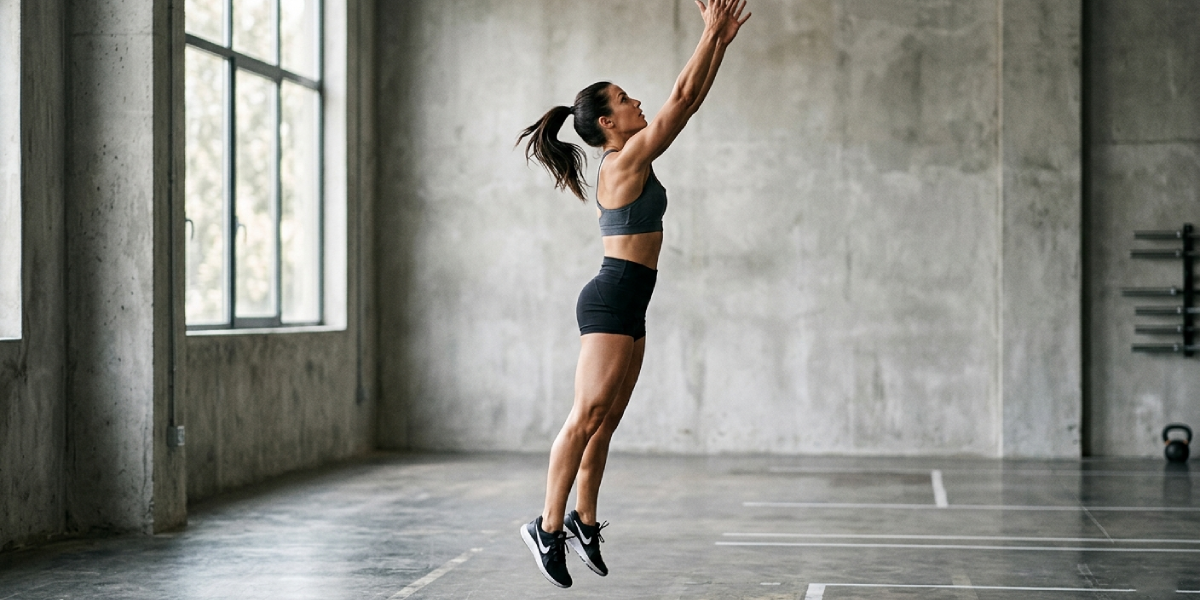
From your squat position, explosively jump upward, extending your arms overhead. Jump as high as your power allows, driving through your legs and extending your entire body. Land softly with bent knees to absorb impact and protect your joints. This final phase completes one full repetition.
Common Mistakes That Reduce Burpee Effectiveness and Increase Injury Risk
Even experienced exercisers develop bad habits that compromise results. Here are the most common mistakes and how to fix them.
Mistake One: Sagging Hips in the Plank Position
Many people allow their hips to sag toward the ground when they reach the plank position. This removes tension from your core and places excessive stress on your lower back. Before moving to the push up phase, check that your body forms a perfectly straight line. Engage your core actively by pulling your navel toward your spine.
Mistake Two: Incomplete Push Ups
Some people barely bend their elbows during the push up phase, reducing the exercise’s upper body benefits. Your chest should come close enough to the ground that your elbows bend to approximately ninety degrees. If full push ups prove too challenging, modify the exercise by dropping your knees instead.
Mistake Three: Rushed Repetitions
Performing burpees too quickly compromises form and increases injury risk significantly. Control each phase deliberately, especially during the lowering portions. Quality always outweighs quantity when it comes to exercise effectiveness.
Mistake Four: Poor Jump Mechanics
Landing heavily on straight legs creates dangerous impact forces. Always land with bent knees and soft feet. The forward jump and upward jump should feel controlled rather than chaotic. Your ankles, knees, and hips absorb impact together rather than one joint bearing excessive load.
Mistake Five: Neglecting Breathing
Holding your breath throughout burpees increases intracranial pressure and reduces exercise performance. Breathe in during the squat down, exhale forcefully during the jump upward, and maintain steady breathing throughout the movement sequence.
Progressive Variations for Every Fitness Level
The beauty of burpees lies in their scalability. Progress through these variations as your strength and conditioning improve.
Beginner Modification: Step Back Burpees
Instead of jumping your feet backward, step back one foot at a time. This reduces the explosive demand and impact on your joints while maintaining the movement pattern. Once you reach the plank position, step forward rather than jumping. This variation builds foundational strength safely.
Intermediate Variation: Standard Burpees
The standard burpee with both jumps intact represents the baseline full movement. Perform this variation consistently until you can complete sets with perfect form and controlled breathing.
Advanced Variation: Burpee Push Up with Extra Range
Instead of touching your hands to the ground at shoulder width, place them further forward, increasing the range of motion during the push up. You can also incorporate a push up with your hands elevated to increase difficulty.
Advanced Variation: Burpees with Additional Movements
Once standard burpees feel comfortable, add complexity by incorporating movements like tuck jumps, lateral movements, or directional changes. Some athletes add a pull up at the top of a box, creating a burpee pull up variation.
Key Benefits of Incorporating Burpees Into Your Training Program
Understanding why burpees matter helps you stay committed to mastering the movement. The benefits extend far beyond simple physical changes.
Burpees develop full body strength by engaging muscles throughout your entire kinetic chain simultaneously. Your legs drive the movement, your core stabilizes your spine, and your upper body manages body control during the plank and push up phases. This comprehensive muscle engagement produces results efficiently.
Your cardiovascular system responds dramatically to burpee training. The explosive nature combined with minimal rest periods elevates your heart rate quickly and sustains elevated rates throughout. Regular burpee training improves your aerobic capacity, anaerobic threshold, and overall cardiovascular health.
Burpees improve athletic performance across diverse disciplines. The explosive power developed transfers to running, jumping, throwing, and other sports movements. Functional strength from burpees translates directly to real world performance.
The metabolic impact of burpees extends well beyond your workout session. High intensity burpee training creates significant metabolic demand that persists long after exercise ends. This afterburn effect contributes meaningfully to fat loss and body composition changes.
Burpees require minimal equipment and space, making them accessible anywhere. Hotel rooms, parks, home gyms, or crowded fitness facilities all work perfectly. This accessibility removes common barriers to consistent training.
Safety Considerations and Injury Prevention Strategies
While burpees offer tremendous benefits, they demand respect due to their high impact nature and complex movement patterns. Several injury prevention strategies should guide your burpee training.
Warm up adequately before attempting burpees. At minimum, perform five to ten minutes of light cardio followed by dynamic stretching. This preparation elevates your body temperature, increases blood flow to working muscles, and prepares your nervous system for explosive movement.
Listen to your body carefully and respect pain signals. Discomfort during muscle fatigue differs fundamentally from pain indicating tissue damage. Sharp pain, joint pain, or pain in locations other than working muscles warrants stopping immediately and assessing for injury.
Progress training volume gradually. If burpees are new to your routine, start conservatively with small sets and extended rest periods. Increase volume and intensity weekly as your body adapts. This gradual progression builds resilience and reduces overuse injuries.
Consider your current shoulder and wrist health carefully. The plank position and push up components load these joints significantly. Individuals with shoulder impingement, wrist pain, or previous injuries should modify the movement or consult with medical professionals before proceeding.
Your knees and ankles absorb impact during landing phases. Athletes with previous knee injuries, ankle instability, or chronic joint pain should step back rather than jump, or consult a physical therapist about appropriate modifications to reduce impact forces.
Proper footwear matters significantly. Athletic shoes designed for lateral support and cushioning protect your joints better than minimalist shoes or training barefoot. Replace shoes regularly, as worn shoes provide inadequate support and cushioning.
Creating Your Effective Burpee Workout Program
Random burpee training produces random results. Structured programming optimizes your outcomes and progression. Here are proven approaches to incorporating burpees strategically.
Beginner Program: Building Foundation
Beginners should perform burpees one to two times weekly, allowing adequate recovery between sessions. Start with three sets of five to eight repetitions, resting two to three minutes between sets. Focus exclusively on perfect form and controlled movement. Week by week, increase repetitions by one to two reps per set. After four weeks, progress to step back burpees.
Intermediate Program: Building Volume and Intensity
Intermediate exercisers can train burpees two to three times weekly. Perform four to five sets of ten to fifteen repetitions with sixty to ninety seconds rest between sets. Vary your rest periods and rep ranges throughout the week to create different training stimuli. Incorporate burpees into high intensity interval training sessions with thirty seconds of work and thirty seconds of rest.
Advanced Program: Complex Integration
Advanced athletes perform burpees three to four times weekly across varied formats. Combine standard burpees with variations, different rest schemes, and integration with other compound movements. Perform longer sets of twenty to thirty repetitions, high intensity sprints of thirty to forty seconds, and endurance circuits lasting several minutes.
Sample Burpee Focused Workout
Warm up with five minutes of light jogging and dynamic stretching. Perform five rounds of eight burpees followed by eight jump squats. Rest two minutes between rounds. Finish with three rounds of twelve burpees for maximum effort. This session emphasizes power development and conditioning.
Alternatively, perform a descending ladder: ten burpees, nine burpees, eight burpees, continuing down to one burpee. Rest minimally between sets, moving immediately to the next round. This approach provides high volume training in a condensed timeframe.
Frequently Asked Questions
How many burpees should I do per week for optimal results?
The ideal frequency depends on your fitness level and goals. Beginners should perform burpees one to two times weekly, intermediates two to three times weekly, and advanced athletes three to four times weekly. This allows adequate recovery while providing sufficient training stimulus. Always include at least one to two complete rest days weekly.
Can burpees help with weight loss and fat burning?
Yes, burpees contribute significantly to weight loss goals. The high intensity nature elevates your heart rate dramatically, burning substantial calories during the exercise. Additionally, burpees create metabolic afterburn, meaning your body continues burning elevated calories for hours after your workout ends. Combined with proper nutrition, burpees accelerate fat loss effectively.
What is the best way to modify burpees if I have joint pain?
Several modifications reduce impact and joint stress. Step back instead of jumping to eliminate impact during the plank transition. Perform push ups on an elevated surface like a bench or countertop to reduce range of motion. Eliminate the final jump and simply stand up instead. Consider consulting a physical therapist or certified personal trainer for modifications specific to your injury.
How long does it take to build fitness through burpee training?
Results appear quickly with consistent training. Most people notice improved cardiovascular fitness and increased muscular endurance within two to three weeks. Visible strength gains typically emerge within four to six weeks. Significant body composition changes require eight to twelve weeks of consistent training combined with appropriate nutrition. Results depend heavily on training consistency and proper programming.
Are burpees suitable for older adults or people just starting fitness?
Burpees can be adapted for any fitness level with proper modifications. Older adults and fitness beginners should start with step back burpees, perform fewer repetitions, and emphasize perfect form. Working with a certified trainer helps ensure safe progression. For more information about starting a fitness program safely, explore our comprehensive exercises guide designed for all levels.
Can I do burpees every single day?
Daily burpee training is generally not recommended for most people. Your muscles, joints, and nervous system require recovery time to adapt and strengthen. Daily high intensity exercise increases injury risk and burnout potential without additional performance benefits. Most experts recommend training three to four days weekly with at least one complete rest day between sessions. Recovery days are when your body actually gets stronger.
How do burpees compare to other full body exercises?
Burpees excel at combining strength, power, and cardiovascular benefits into a single movement. Unlike isolated exercises that target one muscle group, burpees engage your entire body simultaneously. When compared to other compound movements like deadlifts or squats, burpees deliver superior cardiovascular stimulus while maintaining strength benefits. Most training programs benefit from including multiple compound movements rather than relying on burpees alone.
What breathing technique should I use during burpees?
Proper breathing maintains oxygen delivery and prevents dangerous pressure spikes. Breathe in as you lower into the squat position. Exhale forcefully as you jump upward at the end of each repetition. Maintain steady breathing during the jump forward and forward plank phases. Never hold your breath throughout the entire movement. Rhythmic breathing also helps maintain consistent pace and control throughout your sets.
Taking Your Burpee Training to the Next Level
Mastering burpee exercise technique opens doors to advanced training possibilities. Once standard burpees feel comfortable, explore variations that challenge you differently. Combine burpees with other movements in circuit training formats. Track your progress through workout journals, monitoring repetitions and rest times.
Remember that exercise represents just one component of complete health. Your nutrition, sleep, stress management, and overall lifestyle directly impact your results from burpee training. For additional guidance on building comprehensive health strategies, visit our health resources covering nutrition, recovery, and wellness practices.
Consider using tools like our BMI calculator to track overall health metrics as your training progresses. Monitoring multiple health indicators provides a more complete picture of your fitness journey beyond just performance metrics.
The journey to mastering burpees requires patience, consistency, and attention to proper form. Start where you are, progress gradually, and celebrate improvements along the way. Whether your goals involve athletic performance, body composition changes, or improved fitness capacity, burpees deliver results when performed correctly and integrated into thoughtful training programs.