

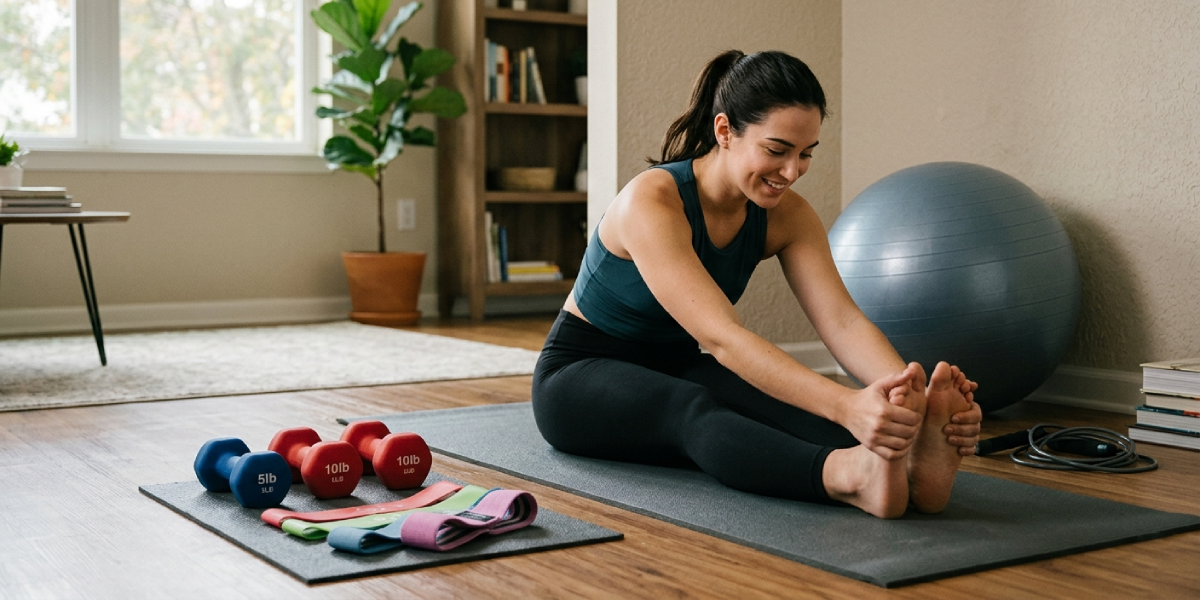
Finding the best affordable home exercise equipment does not have to mean settling for low quality or cluttering your living space with gear you never use. Whether you have fifty dollars or five hundred to spend, there are smart, proven options that deliver real fitness results — no gym membership required.
Home workouts have become a mainstream fitness strategy, and for good reason. Eliminating commute time, gym fees, and crowded locker rooms removes the biggest barriers between people and consistent exercise. The challenge most people face is not motivation — it is knowing which equipment is actually worth buying and which items end up collecting dust.
This guide cuts through the noise. Drawing on established exercise science, real-world training principles, and hands-on product knowledge, it walks you through the best home fitness investments at every price point. You will also find guidance on how to assess your current fitness level and build a routine that gets results.
Why Home Exercise Equipment Pays Off Long-Term
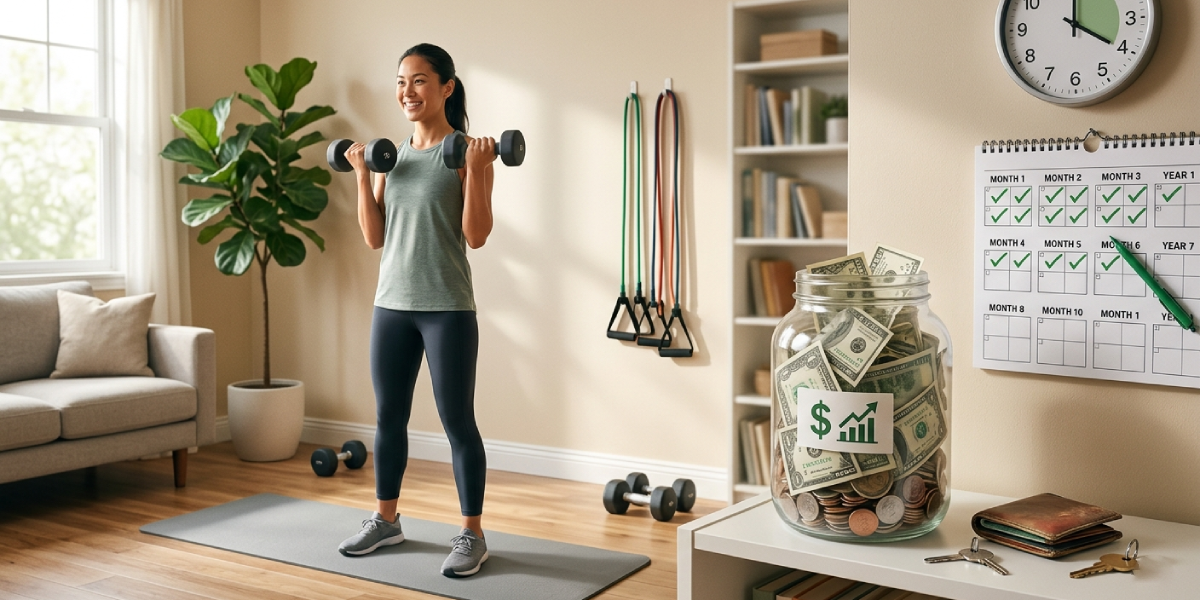
The average gym membership in the United States costs between $40 and $70 per month. Over a single year, that amounts to $480 to $840 — and that figure does not include gas, parking, or the time cost of traveling to and from a facility. A well-chosen set of home exercise tools can pay for itself within months.
Beyond cost, research consistently shows that convenience is the single strongest predictor of exercise adherence. When your equipment is already in your home, the psychological barrier to starting a workout drops significantly. You are far more likely to get in a 20-minute session before work when your resistance bands are three steps away than when you need to pack a bag and drive across town.
Home equipment also allows you to train on your own schedule, follow your own programming, and create an environment that motivates you — whether that means blasting music, training in silence, or watching your favorite show while on the treadmill.
How to Choose the Right Equipment for Your Goals
Before spending money, identify your primary fitness goal. The best equipment for weight loss looks different from the best equipment for building muscle, and both differ from what you need for mobility or injury rehabilitation. Broadly, goals fall into three categories: cardiovascular health, strength and muscle development, and flexibility or mobility.
If your goal leans toward overall health and you are unsure of your current fitness baseline, it helps to use a BMI calculator alongside other health markers to set a realistic starting point. Body mass index is not a perfect measure of health, but it provides a useful reference when planning a training program and tracking progress over time.
Once you know your goal, assess your space. A spare bedroom allows for more versatile setup than a studio apartment. Think vertically: wall-mounted storage, foldable benches, and stackable kettlebells all maximize efficiency in smaller homes.
The Best Affordable Home Exercise Equipment by Budget
Under $50: High-Value Essentials
At this price point, you can assemble a genuinely effective home training kit. These items are compact, durable, and backed by decades of training evidence.
- Resistance Bands (loop and tube styles): A set of five progressive-resistance loop bands typically costs between $15 and $30. They are used in physical therapy clinics, professional athletic programs, and beginner fitness routines alike. Resistance bands allow you to perform rows, squats, presses, lateral walks, and dozens of other movements that challenge your muscles through the full range of motion. They are also the most portable home gym option available.
- Jump Rope: A quality speed rope costs around $10 to $20 and delivers an elite cardiovascular workout. Jumping rope at moderate intensity burns calories at a rate comparable to running, while improving coordination, footwork, and cardiovascular endurance. It is one of the most time-efficient cardio tools ever invented.
- Yoga Mat: Priced between $20 and $40 for a solid entry-level option, a yoga mat serves as the foundation for bodyweight training, stretching, yoga, Pilates, and core work. Look for mats that are at least 4mm thick with a non-slip surface.
- Foam Roller: For $15 to $30, a foam roller delivers myofascial release — a self-massage technique that reduces muscle soreness, improves flexibility, and accelerates recovery. Regular use has been shown to decrease delayed onset muscle soreness (DOMS) and improve range of motion.
$50 to $150: Building a Functional Home Gym
With a modest additional investment, you can add versatile free weights and functional training tools that significantly expand the range of exercises available to you.
- Adjustable Dumbbells: A single pair of adjustable dumbbells replacing an entire rack of fixed weights is one of the best investments in home fitness. Entry-level adjustable sets start around $50 to $80 and allow you to train virtually every major muscle group. Look for sets that adjust in small increments (2.5 to 5 pounds) for more precise progression.
- Kettlebell: A single cast-iron kettlebell in a moderate weight (16 kg for men, 8 to 12 kg for women as a starting point) costs between $30 and $60 and opens up an entire category of functional training. Kettlebell swings, Turkish get-ups, goblet squats, and cleans develop strength, cardiovascular fitness, and mobility simultaneously.
- Pull-Up Bar (doorframe-mounted): For $20 to $50, a doorframe pull-up bar enables one of the most effective upper-body compound movements available. Pull-ups and chin-ups build significant back, bicep, and core strength using only bodyweight. Many models also support push-up and dip variations when placed on the floor.
- Ab Wheel: At $10 to $20, the ab wheel is deceptively challenging. Rollout exercises engage the deep core muscles — specifically the rectus abdominis and transverse abdominis — more effectively than crunches or sit-ups. It is a compact, inexpensive, and highly effective core training tool.
$150 to $500: A Comprehensive Home Gym Setup
At this investment level, you can replicate the training variety of a full commercial gym from home. These purchases represent long-term value rather than single-use tools.
- Adjustable Bench: A sturdy adjustable weight bench ($80 to $150) transforms your dumbbell training options. With incline, flat, and decline positions, you can target chest, shoulders, and triceps through a much wider range of angles. Look for a weight capacity of at least 600 pounds and a stable base.
- Power Tower or Dip Station: A freestanding pull-up and dip station ($100 to $200) removes the door-width limitation of doorframe bars and adds vertical knee raise capability for core training. These units support a complete upper-body calisthenics program.
- Rowing Machine (budget-tier): Entry-level magnetic or hydraulic rowing machines start around $200 to $300. Rowing is a full-body cardio workout — roughly 60 percent lower body, 40 percent upper body — that is low-impact on the joints. It is among the most comprehensive single-piece cardio equipment available.
- Resistance Band System with Door Anchor: Upgrading from simple loop bands to a cable-pulley-style resistance band system ($50 to $100) allows you to replicate cable machine exercises — lat pulldowns, face pulls, cable flyes, and tricep pushdowns — that would otherwise require a full gym machine.
Bodyweight Training: The Free Foundation of Any Home Gym
Equipment amplifies a training program, but it does not replace good movement fundamentals. Bodyweight training — push-ups, squats, lunges, dips, planks, and their many progressions — builds real-world strength, mobility, and muscular endurance with zero financial investment.
A well-structured bodyweight program can take a beginner to an intermediate fitness level without any equipment at all. Adding tools like resistance bands and pull-up bars expands the difficulty ceiling rather than replacing the foundation.
Exploring evidence-based exercise guides is one of the best ways to build a bodyweight program that progressively challenges you as your fitness improves.
The key principle in any home training program — whether bodyweight or equipment-based — is progressive overload. This means consistently increasing the challenge over time, whether through more reps, heavier resistance, reduced rest periods, or more advanced movement variations. Without progression, fitness plateaus quickly.
Nutrition and Recovery: The Other Half of the Equation
No amount of quality equipment replaces poor nutrition and inadequate recovery. Exercise creates a stimulus for adaptation, but the body actually improves during rest, given sufficient raw materials from food and sleep.
Protein intake is the most critical nutritional variable for people focused on building strength or muscle. Research consistently supports a target of 0.7 to 1 gram of protein per pound of body weight per day for active individuals. Whole food sources — chicken, fish, eggs, legumes, Greek yogurt — should form the primary source before turning to supplements.
Sleep quality directly impacts hormone regulation, recovery, and performance. Seven to nine hours per night is the range most research supports for healthy adults engaged in regular exercise. Those interested in a deeper look at how lifestyle habits connect to long-term health outcomes will find that sleep, stress management, and hydration are often underestimated variables in any fitness program.
Maintenance and Longevity of Home Exercise Equipment
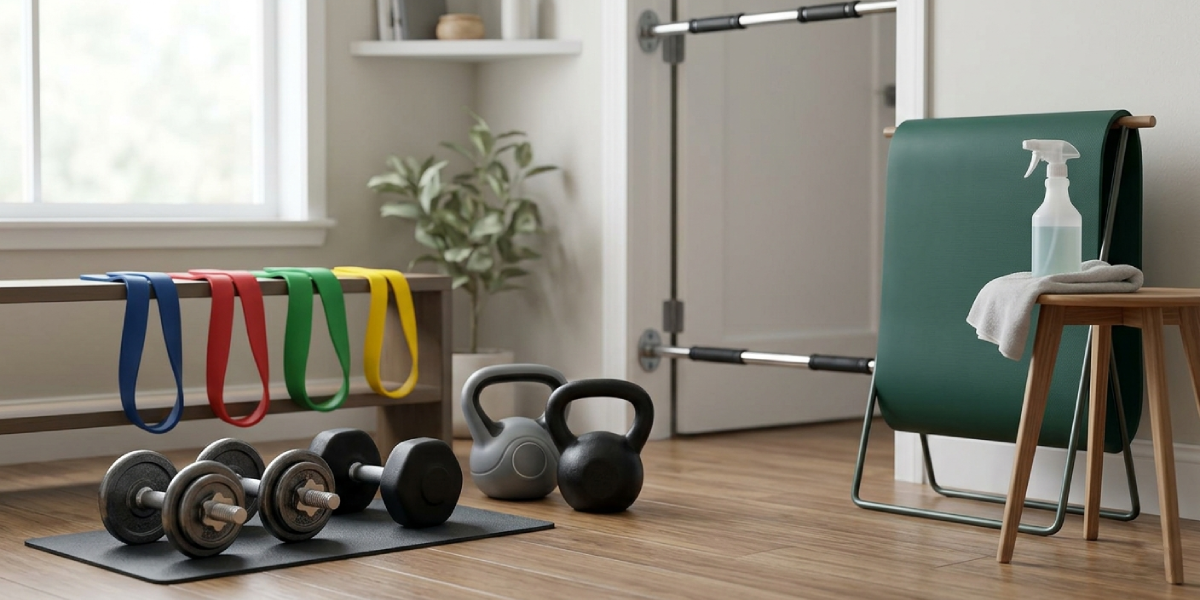
Affordable equipment lasts significantly longer with basic care. Resistance bands should be stored away from direct sunlight and inspected for cracks or fraying before each use — a snapped band under tension can cause injury. Dumbbells and kettlebells benefit from a wipe-down after use to prevent rust on iron surfaces.
Pull-up bars should be checked monthly for tightening, especially doorframe models that rely on friction or screw mechanisms.
Foam rollers and yoga mats should be cleaned with mild soap and water periodically, then allowed to air dry completely before storage. Keeping equipment clean extends usable life and prevents bacteria buildup — a hygiene consideration that matters whether you are training alone or with family members sharing the same gear.
Building Your Home Workout Routine
The most effective home gym is one that gets used consistently. A simple three-day-per-week full-body resistance training program combined with two to three sessions of moderate cardiovascular activity covers the exercise guidelines set by major health organizations, including the World Health Organization and the American College of Sports Medicine.
A practical weekly structure for beginners might look like this: resistance training on Monday, Wednesday, and Friday using a combination of compound movements (squats, hinges, presses, rows, and carries), with 20 to 30 minutes of cardio using a jump rope, rowing machine, or outdoor walking on Tuesday and Thursday. Saturday and Sunday serve as active recovery or full rest days.
Tracking your sessions — even in a simple notebook — provides data to guide progression and a sense of accomplishment that supports motivation over the long term. Noting weights used, repetitions completed, and how each session felt creates a training log that informs your next workout and makes plateau-breaking adjustments obvious rather than guesswork.
Frequently Asked Questions
What is the single best piece of affordable home exercise equipment for beginners?
Resistance bands are widely considered the best starting point for beginners. A full set costs under $30, covers a huge range of exercises, is safe for all fitness levels, and requires zero experience to use effectively. They are also the easiest equipment to store and travel with.
Can you build muscle with affordable home equipment?
Yes. Muscle growth requires progressive mechanical tension and sufficient protein intake — not expensive equipment. Adjustable dumbbells, resistance bands, a pull-up bar, and a consistent program that increases difficulty over time are all the tools needed to build meaningful muscle at home.
How much space do I need for a home gym?
A 6-by-6-foot area is sufficient for most foundational home gym setups. This space accommodates a yoga mat, resistance band training, dumbbell exercises, and bodyweight movements. A pull-up bar requires a doorframe but no additional floor space.
Is it better to buy one quality piece of equipment or several budget items?
It depends on your goal. For variety and progressive training, a small collection of affordable tools (resistance bands, a kettlebell, and a pull-up bar) typically delivers more value than one expensive single-use machine. However, if you have a specific goal like improving cardiovascular fitness, one quality investment like a rowing machine may be preferable.
What home cardio equipment is best for people with joint pain?
Rowing machines, stationary bikes, and elliptical trainers are the most joint-friendly cardio options because they eliminate the impact force of running. For a very low-cost option, resistance band cardio circuits and seated exercises provide cardiovascular benefit with minimal joint load.
How do I know which equipment matches my fitness level?
Beginners should start with bodyweight movements and light resistance to establish proper form before adding load. A useful starting benchmark is whether you can perform 10 bodyweight squats and 5 push-ups with full control. If not, bodyweight training should precede equipment-based loading. Using a health baseline tool like a BMI calculator can also help contextualize your starting point.
Are adjustable dumbbells worth the higher upfront cost compared to fixed-weight dumbbells?
Yes, for most home gym users. A set of fixed-weight dumbbells covering 5 to 50 pounds requires significantly more storage space and costs far more in total than a single adjustable set. The upfront cost of adjustable dumbbells is offset quickly by the storage savings and the ability to progress in small increments over time.
How often should I replace home exercise equipment?
Resistance bands should be inspected every three to six months and replaced if any cracking, discoloration, or loss of elasticity is observed — typically every one to two years with regular use. Quality dumbbells, kettlebells, pull-up bars, and benches can last a decade or more with basic maintenance. Foam rollers should be replaced when they lose structural density, usually after two to three years of daily use.
Can home workouts replace gym workouts entirely?
For the majority of fitness goals — including weight management, general strength, cardiovascular health, and mobility — a well-equipped home gym and consistent programming delivers equivalent results to a commercial gym. Competitive athletes who require specific machines, very heavy barbell loads, or sport-specific equipment may still benefit from supplemental gym access.
What is the most important factor in choosing home exercise equipment?
The most important factor is whether you will actually use it. Equipment that matches your fitness level, fits your space, aligns with exercises you genuinely enjoy, and can grow with you as you improve will always outperform technically superior gear that sits unused. Consistency beats optimization every time in long-term fitness.