

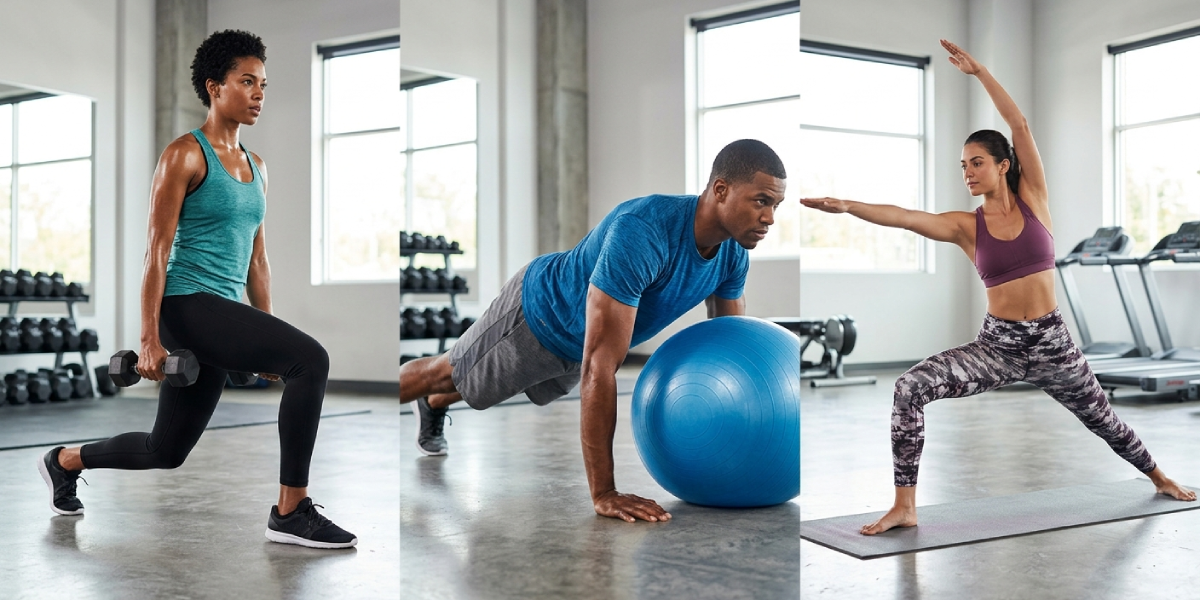
Finding time to exercise is one of the biggest challenges people face today. The good news is that the best 30-minute exercise routines for a full body workout can deliver real, measurable results without demanding hours of your day.
Whether you are a beginner just starting out or a seasoned gym-goer looking to optimize a tight schedule, a well-structured 30-minute session hits every major muscle group, elevates your heart rate, and leaves you stronger and more energized.
This guide walks you through science-backed workout formats, practical routines you can do at home or in the gym, and expert tips on how to maximize every minute. No filler, no fluff — just effective training strategies that work.
Why 30 Minutes Is Enough for a Full Body Workout
A common misconception is that shorter workouts are less effective. Research consistently shows that high-quality 30-minute sessions can match or exceed the benefits of longer, lower-intensity workouts when the right structure is applied.
The key lies in exercise selection, rest periods, and training density — how much productive work you pack into the available time.
Compound exercises, which engage multiple muscle groups simultaneously, are the backbone of any efficient short workout. Movements like squats, push-ups, deadlifts, and rows recruit the upper body, lower body, and core together.
This means you burn more calories, build more functional strength, and stimulate more muscle fibers in less time compared to isolated exercises.
For anyone following a healthy and active lifestyle, a consistent 30-minute routine is also far easier to sustain long-term than hour-long gym sessions. Consistency beats intensity over time, and a workout you actually complete five times a week outperforms a perfect two-hour plan you only manage once.
Key Principles Behind an Effective 30-Minute Routine
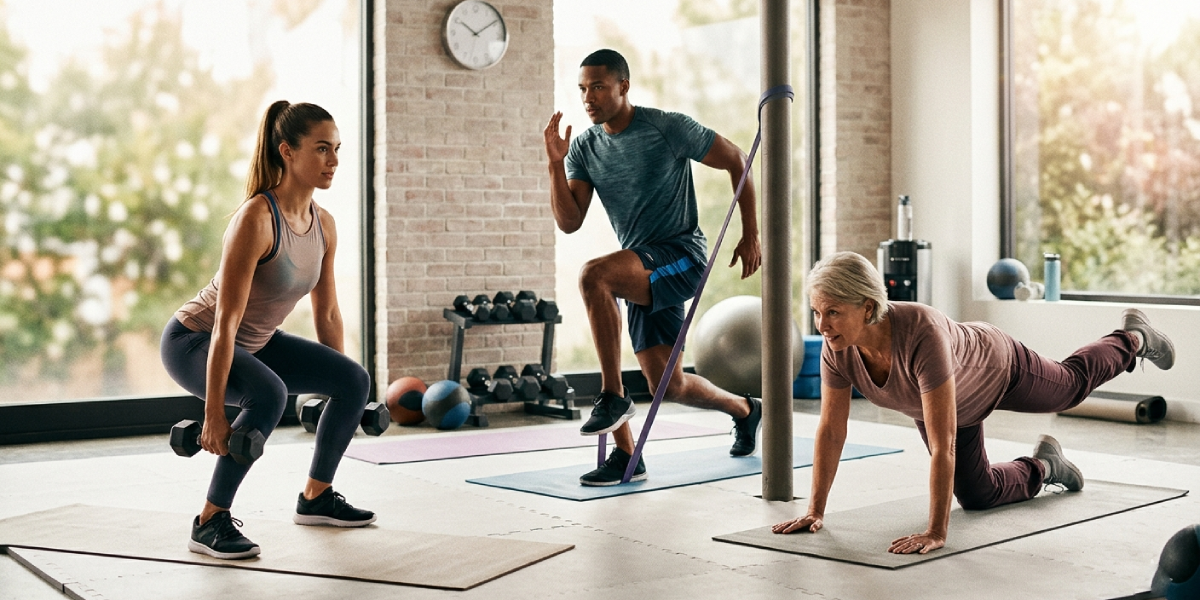
Before diving into specific routines, it helps to understand the principles that make a short workout highly effective.
Prioritize Compound Movements
Exercises that recruit multiple joints and muscle groups at once deliver the highest return on time invested. Squats, lunges, deadlifts, bench presses, rows, and overhead presses should form the core of your routine. These movements build total-body strength and coordination while burning significantly more calories than single-joint isolation work.
Minimize Rest, Maximize Work
In a 30-minute window, rest periods need to be controlled. Keeping rest intervals between 30 and 60 seconds maintains cardiovascular demand while still allowing enough recovery to sustain effort and good form. Circuit and superset formats are especially effective for this purpose.
Use Progressive Overload
A routine only continues to produce results if you progressively challenge your body. This means gradually increasing resistance, reps, sets, or reducing rest time over weeks and months. Without progression, the body adapts and results plateau.
Warm Up and Cool Down
Even with a compressed schedule, allocating three to five minutes at each end for a dynamic warm-up and brief cool-down is essential. Warming up improves blood flow, reduces injury risk, and primes your nervous system for performance. Cooling down aids recovery and flexibility.
The Best 30-Minute Exercise Routines for a Full Body Workout
Below are four proven workout formats you can rotate throughout the week. Each routine is designed to be completed in 30 minutes and targets the full body effectively. Exploring a wide range of exercise types and techniques will help you find what works best for your goals and fitness level.
Routine 1: The Bodyweight Circuit
This routine requires zero equipment, making it perfect for home workouts or travel. Perform each exercise for 40 seconds, rest for 20 seconds, and complete the circuit three times with a 90-second rest between rounds.
| Exercise | Target Area | Duration |
|---|---|---|
| Jump Squats | Quads, Glutes, Calves | 40 seconds |
| Push-Ups | Chest, Shoulders, Triceps | 40 seconds |
| Reverse Lunges | Quads, Hamstrings, Glutes | 40 seconds |
| Plank to Downward Dog | Core, Shoulders, Hamstrings | 40 seconds |
| Mountain Climbers | Core, Hip Flexors, Cardio | 40 seconds |
| Glute Bridges | Glutes, Hamstrings, Lower Back | 40 seconds |
This circuit elevates heart rate, builds muscular endurance, and works every major muscle group from your shoulders down to your calves. Beginners can reduce the work interval to 30 seconds and extend rest to 30 seconds.
Routine 2: Dumbbell Superset Training
Supersets pair two exercises back to back with minimal rest, doubling the work output in the same time frame. This routine requires a pair of dumbbells and targets the entire body through opposing muscle groups.
- Superset 1: Goblet Squat (12 reps) paired with Dumbbell Row (12 reps each side) — 3 rounds, 45 seconds rest
- Superset 2: Dumbbell Romanian Deadlift (12 reps) paired with Dumbbell Overhead Press (12 reps) — 3 rounds, 45 seconds rest
- Superset 3: Dumbbell Reverse Lunge (10 reps each leg) paired with Dumbbell Bicep Curl to Press (10 reps) — 3 rounds, 45 seconds rest
- Finisher: Dumbbell Thruster (squat to press) for 45 seconds on, 15 seconds off — 3 rounds
The superset format ensures that while one muscle group recovers, another is working, which dramatically increases training efficiency and caloric expenditure.
Routine 3: HIIT Full Body Blast
High-Intensity Interval Training (HIIT) alternates short bursts of maximum effort with brief recovery periods. A 30-minute HIIT session can burn as many calories as a 60-minute moderate-intensity workout and continues to elevate metabolism for hours afterward through the excess post-exercise oxygen consumption (EPOC) effect.
Structure: 20 seconds maximum effort, 10 seconds rest (Tabata protocol), 8 rounds per exercise, 60 seconds rest between exercises.
- Burpees
- Squat Jumps
- Push-Up to T-Rotation
- High Knees
- Lateral Lunge with Reach
HIIT is particularly effective for those focused on fat loss and cardiovascular fitness. However, because of its intensity, this format should not be used more than three times per week to allow adequate recovery.
Routine 4: Resistance Band Full Body Workout
Resistance bands are among the most versatile and underrated training tools available. They provide constant tension throughout the entire range of motion, which can enhance muscle activation compared to free weights in certain movements.
- Band Squat: 3 sets of 15 reps
- Band Pull-Apart: 3 sets of 20 reps
- Band Deadlift: 3 sets of 12 reps
- Band Chest Press (anchored to wall or door): 3 sets of 12 reps
- Band Lateral Walk: 3 sets of 15 steps each direction
- Band Overhead Press: 3 sets of 12 reps
- Band Bicycle Crunch: 3 sets of 20 reps
Resistance band training is ideal for beginners, older adults, and anyone recovering from minor injuries, as it provides joint-friendly resistance with a lower risk of acute strain.
How to Structure Your Weekly Schedule
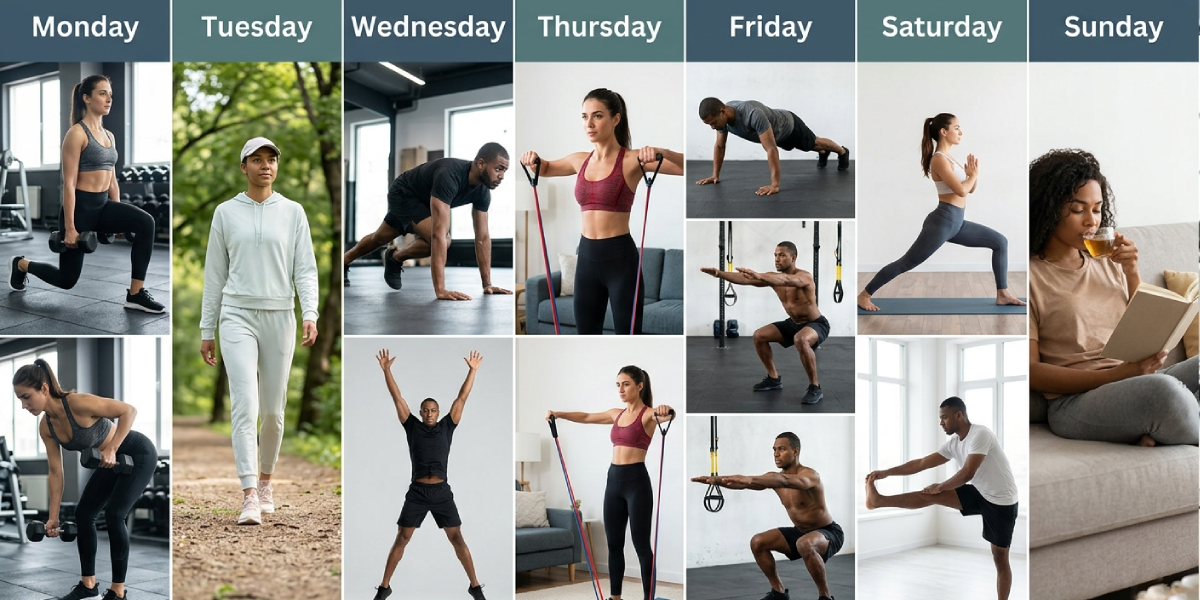
For optimal results, aim to complete three to five 30-minute full body workouts per week, with at least one rest or active recovery day between higher-intensity sessions. A balanced weekly plan might look like this:
- Monday: Dumbbell Superset Training
- Tuesday: Rest or light walking
- Wednesday: HIIT Full Body Blast
- Thursday: Resistance Band Workout
- Friday: Bodyweight Circuit
- Saturday: Active recovery (yoga, stretching, or a brisk walk)
- Sunday: Full rest
This structure provides enough training stimulus for strength and fat loss adaptations while allowing the recovery necessary to prevent overtraining and injury. Monitoring your overall health markers alongside your training — including body weight trends and energy levels — can help you fine-tune this plan over time.
You can use a BMI calculator as one of several tools to track changes in your body composition as your fitness improves.
Nutrition and Recovery to Complement Your Workouts
Even the most well-designed 30-minute exercise routines will underdeliver if nutrition and recovery are neglected. Exercise creates the stimulus for change; nutrition and rest are where the actual adaptation happens.
Prioritize protein intake to support muscle repair and growth. A general guideline for active individuals is 0.7 to 1 gram of protein per pound of body weight daily. Include lean meats, eggs, dairy, legumes, or plant-based protein sources spread evenly across meals.
Hydration is equally important. Dehydration of even two percent of body weight can reduce performance and increase perceived exertion. Drink water consistently throughout the day and add extra intake around workout times.
Sleep is the most powerful recovery tool available. Seven to nine hours of quality sleep per night supports hormone regulation, muscle protein synthesis, and mental focus — all of which directly affect your training quality and results. Learning more about how health and lifestyle habits interact with exercise can further accelerate your progress.
Common Mistakes to Avoid in Short Workouts
Getting the most from 30 minutes means avoiding the pitfalls that reduce effectiveness even in motivated trainees.
- Skipping the warm-up: Jumping straight into high-intensity work without warming up significantly increases injury risk and reduces performance output during the session.
- Poor exercise selection: Spending time on isolated movements like bicep curls alone wastes the limited time available. Compound-first programming is non-negotiable in short routines.
- Inconsistent effort: A 30-minute workout only works if the effort matches the time constraint. Distraction, excessive phone use between sets, and unfocused training stretch rest periods and cut into productive work time.
- Lack of variety over time: The body adapts quickly. Rotating between the four routines above, or progressing within each one, prevents stagnation and maintains continued adaptation.
- Ignoring form: Speed and intensity are valuable, but never at the cost of proper technique. Poor mechanics under fatigue is how preventable injuries occur. When in doubt, reduce resistance and focus on movement quality first.
Tracking Your Progress
One of the most motivating aspects of a structured 30-minute routine is how quickly measurable progress appears. Keep a simple workout log — either a notebook or a fitness app — to record the exercises, weights used, sets, reps, and how you felt during each session.
Review your log every two to four weeks and look for opportunities to increase load, add reps, or reduce rest intervals. These small, consistent progressions compound into significant strength and fitness gains over months.
Alongside performance metrics, track how your energy, sleep quality, and mood respond to consistent training. These subjective markers are often early indicators of whether your current program is working and sustainable.
Frequently Asked Questions
Can 30-minute workouts really build muscle?
Yes, 30-minute workouts can absolutely build muscle when they include compound exercises, sufficient resistance, and progressive overload. The key is training quality over duration. Consistently challenging your muscles with increasing demands over time is what drives hypertrophy, regardless of whether a session lasts 30 minutes or 90.
How many days per week should I do a 30-minute full body workout?
Three to five days per week is the recommended frequency for most people. Beginners may start with three sessions and add more as their recovery improves. Higher-intensity formats like HIIT should be limited to two to three sessions per week to allow adequate recovery between efforts.
Is a 30-minute workout enough to lose weight?
A 30-minute workout is an effective part of a weight loss strategy, particularly when combined with a caloric deficit through diet. High-intensity formats such as HIIT can burn 300 to 500 calories in 30 minutes and elevate metabolism for hours after training, making them especially efficient for fat loss goals.
What is the best 30-minute workout for beginners?
The bodyweight circuit routine is the best starting point for beginners. It requires no equipment, uses fundamental movement patterns, and can be easily scaled by adjusting work-to-rest ratios. It also builds a foundation of movement competency before adding external resistance.
Do I need equipment for an effective 30-minute full body workout?
No equipment is necessary for an effective full body workout. Bodyweight exercises like squats, push-ups, lunges, and planks can challenge the entire body and produce meaningful fitness gains. However, adding dumbbells or resistance bands when available significantly expands exercise variety and resistance options.
How do I avoid hitting a plateau with short workouts?
Avoid plateaus by rotating between different workout formats, progressively increasing resistance or reps over time, and periodically changing exercises within each routine. Taking a planned deload week every four to six weeks — where intensity is reduced — can also refresh adaptation and push through performance ceilings.
Should I do cardio or strength training in my 30-minute session?
A well-designed full body routine naturally combines both elements through compound strength exercises and minimal rest periods. If specific cardiovascular fitness is a primary goal, HIIT or circuit training formats are ideal. If muscle building is the priority, superset or straight-set resistance training with controlled rest delivers better results.
Can I do 30-minute full body workouts every day?
Daily high-intensity training without rest days is not recommended, as muscles need time to repair and strengthen between sessions. However, alternating higher-intensity days with lighter active recovery sessions — such as walking, yoga, or stretching — allows daily activity while respecting recovery needs. Most structured programs recommend at least one to two full rest or active recovery days per week.
What is the best time of day to do a 30-minute workout?
The best time to work out is whenever you can be most consistent. Research shows that both morning and evening exercise produce comparable fitness outcomes. Morning workouts often benefit from better adherence since fewer daily distractions compete for the time slot, while some individuals perform better physically in the late afternoon when body temperature and muscle function peak.
How should I eat before and after a 30-minute workout?
For sessions within an hour of eating, a light meal or snack with easily digestible carbohydrates and moderate protein works well — such as a banana with nut butter or a small portion of oats. After your workout, prioritize a protein-rich meal within one to two hours to support muscle recovery and glycogen replenishment. Staying hydrated before, during, and after training remains essential regardless of session length.