

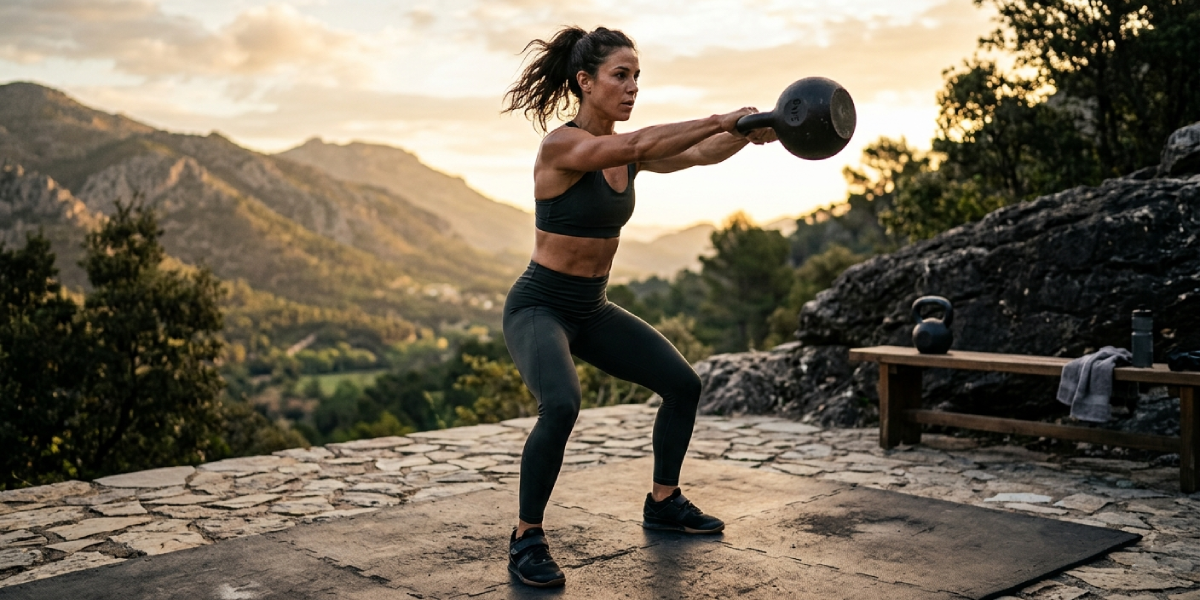
The best kettlebell exercises for strength and cardio combine explosive movements with controlled strength work to deliver a full-body workout in minimal time. After years of programming kettlebell routines for clients of all fitness levels, I can confidently say that few tools offer the same blend of metabolic conditioning and functional muscle building as a single kettlebell.
Kettlebells originated in Russia centuries ago as counterweights for measuring grain, but their fitness application has exploded in popularity over the last two decades. Today, they remain a staple in strength training programs, cardio classes, and rehabilitation protocols because they train the body as one connected system rather than isolating individual muscles.
Why Kettlebells Are Effective for Strength and Cardio
Unlike dumbbells, a kettlebell’s center of mass extends beyond the hand, forcing the body to stabilize through every rep. This instability recruits more muscle fibers, particularly in the core, shoulders, and posterior chain. The ballistic nature of many kettlebell movements also elevates heart rate quickly, making it possible to build cardiovascular endurance while simultaneously developing raw strength.
If you are tracking your fitness progress alongside your training, you can use the BMI calculator to monitor changes in body composition as you incorporate kettlebell training into your routine.
Top Kettlebell Exercises for Strength
1. Kettlebell Goblet Squat
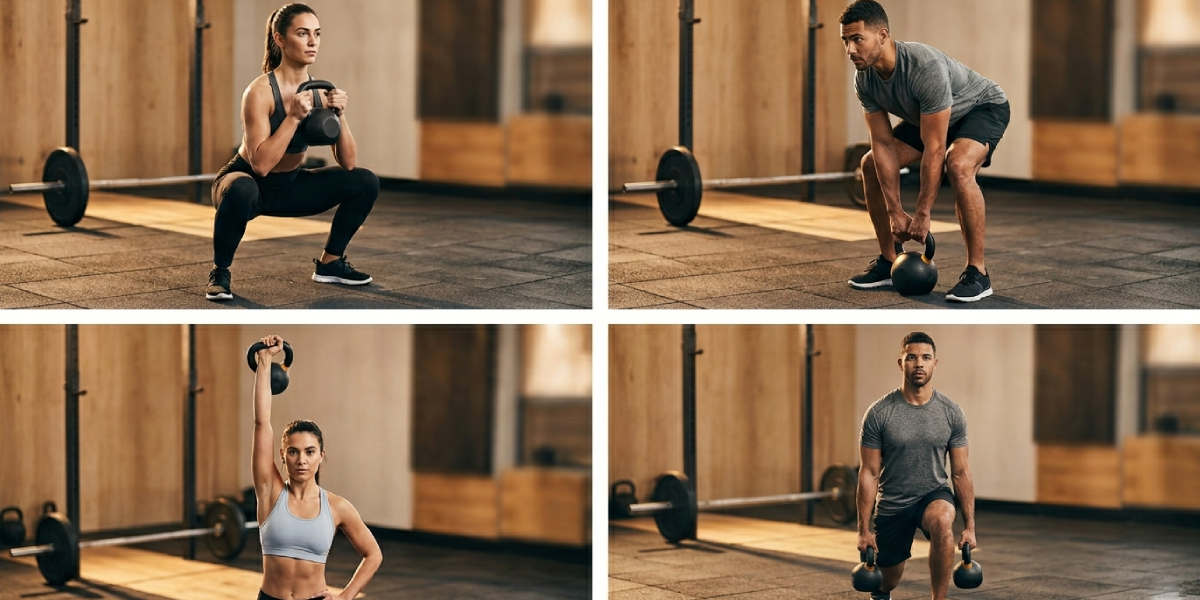
Hold the kettlebell by the horns close to your chest and squat down, keeping your chest upright and knees tracking over your toes. This exercise builds quadriceps, glute, and core strength while reinforcing proper squat mechanics.
2. Kettlebell Deadlift
Place the kettlebell between your feet, hinge at the hips, and drive through your heels to stand. The deadlift is one of the safest ways to teach proper hip hinge patterning and builds posterior chain strength essential for everyday movement.
3. Kettlebell Press
From a racked position at the shoulder, press the kettlebell overhead with control. This builds shoulder stability and upper body pressing strength, particularly when performed unilaterally to address muscle imbalances.
4. Kettlebell Row
Hinge forward with a flat back and row the kettlebell toward your hip, squeezing the shoulder blade at the top. This strengthens the upper back and improves posture, which is especially valuable for people who sit at desks for long periods.
Top Kettlebell Exercises for Cardio
5. Kettlebell Swing
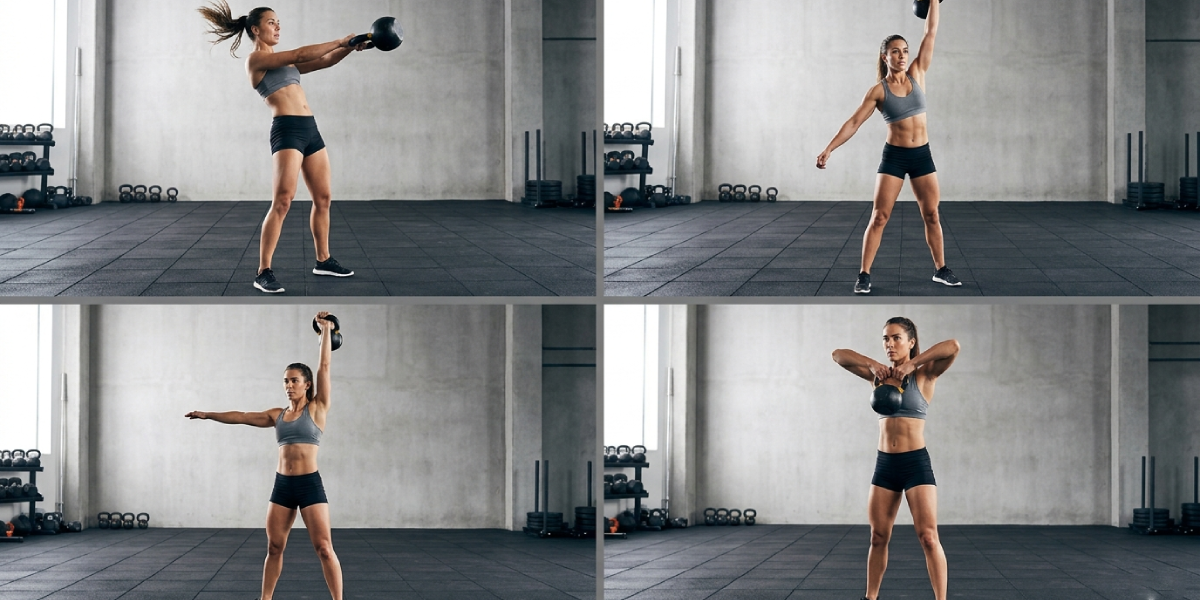
The swing is the foundational kettlebell movement and arguably the best cardio exercise the tool offers. Drive the kettlebell back between your legs and snap your hips forward to propel it to chest height. Done for higher repetitions, swings elevate heart rate dramatically while training the glutes, hamstrings, and core.
6. Kettlebell Snatch
An advanced movement that takes the kettlebell from the ground to an overhead lockout in one fluid motion. The snatch demands significant cardiovascular output and is commonly used in competitive kettlebell sport and high-intensity interval training.
7. Kettlebell Clean and Press
Combining a clean with an overhead press, this compound movement trains multiple muscle groups in sequence, raising heart rate while building total-body strength. It is a favorite among trainers for its efficiency.
8. Kettlebell High Pull
Similar to the swing but with an added pulling action that brings the kettlebell to chest height with bent elbows. This adds an upper body cardio component while reinforcing hip drive mechanics.
Sample Kettlebell Workout for Strength and Cardio
| Exercise | Sets | Reps | Focus |
|---|---|---|---|
| Kettlebell Goblet Squat | 3 | 10-12 | Strength |
| Kettlebell Swing | 4 | 15-20 | Cardio |
| Kettlebell Press | 3 | 8-10 per side | Strength |
| Kettlebell Clean and Press | 3 | 6-8 per side | Strength and Cardio |
| Kettlebell Row | 3 | 10-12 per side | Strength |
This circuit can be performed two to three times per week with at least one rest day between sessions. Beginners should start with lighter kettlebells, typically 8 to 12 kilograms for women and 12 to 16 kilograms for men, and prioritize technique before increasing load.
Choosing the Right Kettlebell Weight
Selecting the correct kettlebell weight is one of the most common challenges for beginners. A kettlebell that is too light limits strength gains, while one that is too heavy compromises form and increases injury risk. As a general guideline, choose a weight that allows you to complete the prescribed reps with the last two repetitions feeling challenging but controlled.
- Beginners: 8 to 12 kilograms
- Intermediate: 12 to 20 kilograms
- Advanced: 20 kilograms and above
Safety Tips and Common Mistakes
Kettlebell training is highly effective, but technique matters more than load. Common mistakes include rounding the lower back during swings and deadlifts, using the arms to lift the kettlebell during swings instead of hip drive, and rushing into ballistic movements before mastering the basics.
Learning proper form from a qualified coach or reputable resource significantly reduces injury risk and improves results.
To explore more structured workout routines and movement guides, visit the exercises category for additional resources tailored to different fitness goals.
Combining Kettlebell Training with Overall Health Goals
Kettlebell training works best as part of a broader approach to health that includes proper nutrition, adequate sleep, and recovery. For more guidance on building sustainable healthy habits alongside your training, check out the health category for practical, evidence-based advice.
Final Thoughts
Kettlebells remain one of the most efficient tools for building strength and cardiovascular fitness simultaneously. Whether your goal is fat loss, muscle building, or improved athletic performance, incorporating the exercises above into a consistent routine will deliver measurable results over time.
As with any training program, consistency, proper form, and progressive overload are the keys to long-term success.
Frequently Asked Questions
What is the best kettlebell exercise for beginners?
The goblet squat and the kettlebell deadlift are ideal starting points because they teach fundamental movement patterns with lower technical demand.
How often should I do kettlebell workouts?
Two to three sessions per week with rest days in between is sufficient for most people to see strength and cardio improvements.
Can kettlebells replace cardio machines like treadmills?
Yes, exercises like kettlebell swings and snatches can elevate heart rate similarly to traditional cardio while also building strength.
What weight kettlebell should a beginner use?
Most beginners do well starting with 8 to 12 kilograms, adjusting based on comfort and technique.
Are kettlebell swings bad for the lower back?
Swings are safe when performed with proper hip hinge mechanics. Rounding the back during the movement is the primary cause of strain.
How long should a kettlebell workout be?
Effective kettlebell workouts can range from 20 to 40 minutes, depending on intensity and exercise selection.
Do kettlebells help with weight loss?
Kettlebell training burns significant calories through both strength and cardio components, making it effective for weight management when paired with proper nutrition.
What muscles do kettlebell exercises target?
Kettlebell exercises primarily target the glutes, hamstrings, core, shoulders, and back, while also engaging stabilizing muscles throughout the body.
Can I do kettlebell training every day?
Daily training is not recommended for most people. Allowing recovery time between sessions helps prevent overuse injuries and supports muscle adaptation.
Is kettlebell training suitable for older adults?
Yes, with appropriate weight selection and proper coaching, kettlebell training can improve strength, balance, and mobility in older adults.