

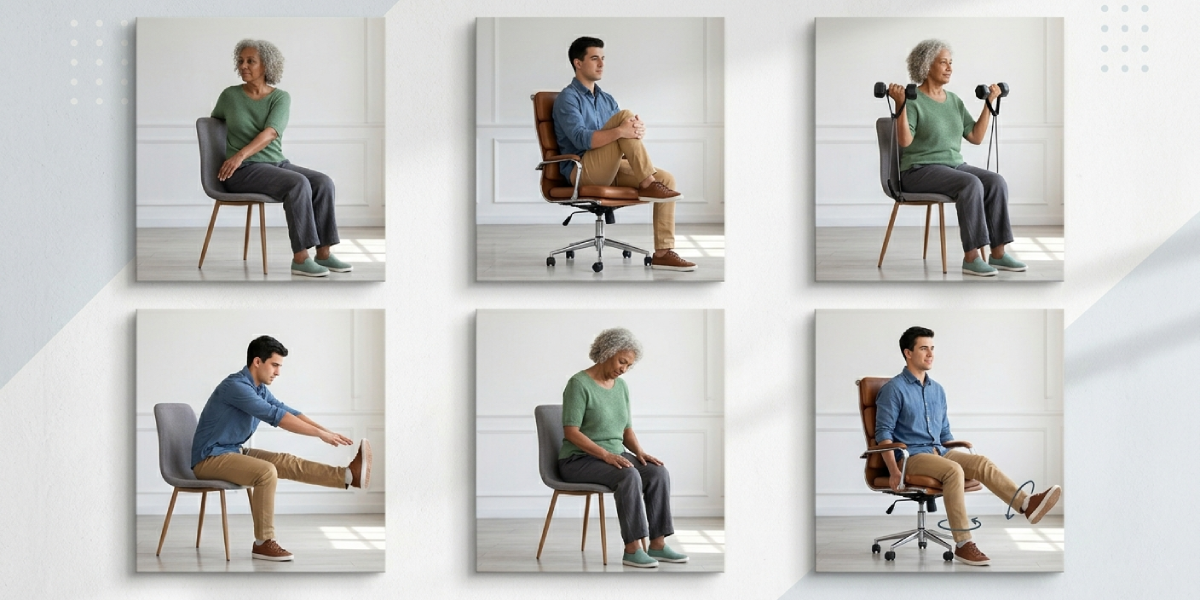
Chair exercises for office workers and seniors offer a practical, low-impact way to stay active, reduce pain, and improve overall health without requiring a gym, special equipment, or even standing up. Whether you spend long hours at a desk or are looking for safe movement options as you age, these exercises fit seamlessly into everyday life.
Why Chair Exercises Matter for Desk Workers and Older Adults
Prolonged sitting is one of the most common health risks in modern life. Research from the American Heart Association has linked extended sedentary behavior to increased risk of cardiovascular disease, type 2 diabetes, and musculoskeletal disorders.
For older adults, reduced mobility and balance concerns make floor exercises difficult or unsafe, making chair-based movement an ideal solution.
Chair exercises address both groups effectively. They improve circulation, maintain joint flexibility, strengthen core and leg muscles, and reduce the physical toll of a sedentary routine. Incorporating even ten to fifteen minutes of seated movement into your day can produce measurable improvements in energy levels and posture.
If you are exploring a range of exercises that work for different fitness levels and body types, seated options are among the most accessible and sustainable starting points.
The Benefits of Exercising from a Chair
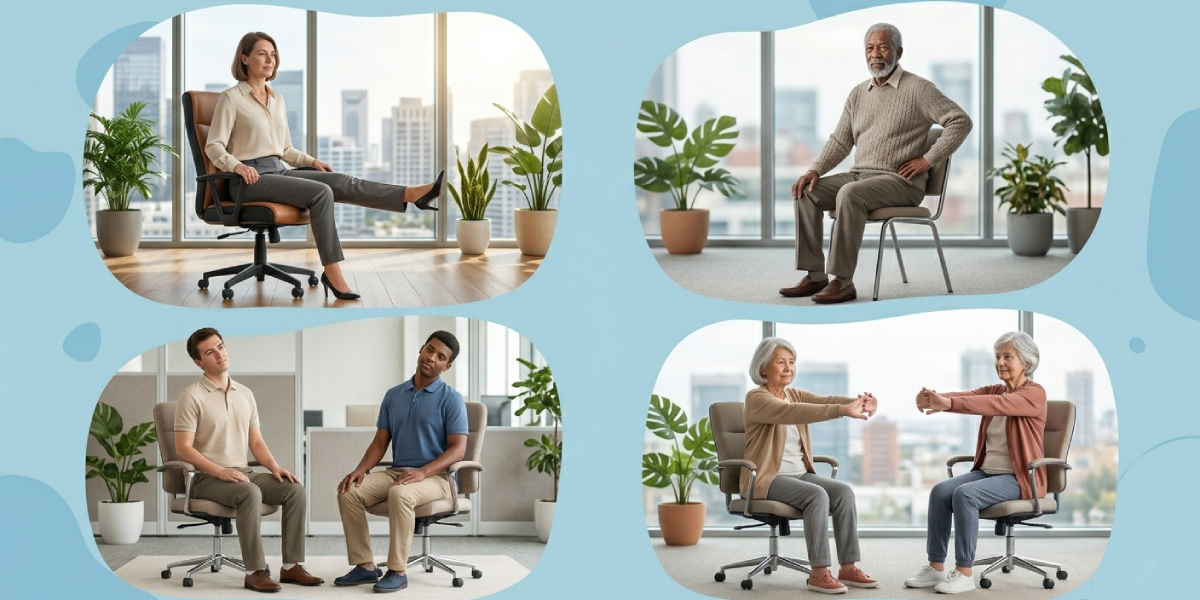
- Low impact on joints: Seated movement reduces stress on the knees, hips, and ankles, making it ideal for those with arthritis or joint pain.
- No equipment required: Most chair exercises use only your own bodyweight and a stable chair.
- Convenient for busy schedules: Exercises can be performed at a desk, in a waiting room, or at home during breaks.
- Suitable for all fitness levels: Beginners and advanced movers alike can adjust intensity by controlling range of motion or adding resistance bands.
- Supports mental health: Short movement breaks are associated with reduced stress hormones and improved mood, according to the Mayo Clinic.
Choosing the Right Chair
Before beginning any seated exercise routine, your chair matters. Use a firm, stable chair without wheels if possible, or lock the wheels on a desk chair if that is what you have available. Your feet should rest flat on the floor with knees at approximately a ninety-degree angle. Avoid soft cushions or chairs that sink, as these compromise posture and reduce the effectiveness of many movements.
The Best Chair Exercises for Office Workers and Seniors
Seated Marching
Seated marching is one of the simplest and most effective chair exercises for improving circulation in the lower body. Sit tall with your back away from the chair back. Lift your right knee toward your chest, lower it, then alternate with the left. Aim for thirty repetitions per leg.
This movement activates the hip flexors, engages the core, and gently pumps blood back from the legs toward the heart, reducing the risk of deep vein thrombosis during long sitting periods.
Seated Leg Extensions
From a seated position, extend your right leg until it is parallel to the floor, hold for two to three seconds, and slowly lower it. Repeat ten to fifteen times per leg. Seated leg extensions strengthen the quadriceps and improve knee stability, which is particularly important for seniors navigating stairs or uneven terrain. For office workers, this exercise combats the weakening of the anterior thigh muscles that occurs with prolonged desk sitting.
Ankle Circles and Heel-Toe Raises
These two movements are often overlooked but deliver significant benefits for circulation and ankle mobility. For ankle circles, lift one foot slightly off the floor and rotate it clockwise ten times, then counterclockwise. For heel-toe raises, press your heels up while your toes remain on the floor, then reverse to lift your toes while your heels press down.
Perform fifteen to twenty repetitions on each side. These movements are especially valuable during long flights or extended periods at a fixed workstation.
Seated Spinal Twist
Sit upright and place your right hand on your left knee. Gently rotate your torso to the left, looking over your left shoulder. Hold for fifteen to twenty seconds, breathing deeply, then switch sides. The seated spinal twist improves thoracic mobility, counteracts the forward-rounding posture common among desk workers, and gently activates the muscles along the spine.
For seniors, this movement helps maintain rotational flexibility that is essential for everyday tasks like checking blind spots while driving.
Seated Shoulder Rolls and Neck Stretches
Roll your shoulders backward in large, slow circles ten times, then forward ten times. Follow this with gentle neck stretches: tilt your right ear toward your right shoulder, hold for fifteen seconds, then switch sides. Finish by slowly lowering your chin toward your chest and holding for fifteen seconds.
These movements release tension in the upper trapezius and levator scapulae, the two muscle groups most commonly affected by prolonged keyboard and mouse use.
Seated Calf Raises
With both feet flat on the floor, raise your heels as high as possible while your toes remain grounded. Hold at the top for one to two seconds and lower slowly. Complete three sets of fifteen repetitions. Calf raises activate the gastrocnemius and soleus muscles, which act as a secondary pump for venous blood return.
This is one of the most clinically supported seated exercises for reducing lower limb swelling and fatigue in office settings.
Seated Core Engagement
Sit at the edge of your chair with feet flat on the floor. Straighten your spine and draw your navel gently toward your lower back, engaging your deep abdominal muscles without holding your breath. Hold for five to ten seconds and release. Repeat ten to fifteen times.
This exercise, often called abdominal bracing, activates the transverse abdominis and multifidus, the deep stabilizing muscles of the spine. Regular practice reduces lower back pain, which affects up to eighty percent of office workers at some point in their careers, according to data from the National Institute of Neurological Disorders and Stroke.
Chair-Supported Sit-to-Stand
Position yourself at the front of your chair with feet hip-width apart and flat on the floor. Lean slightly forward from the hips and push through your heels to stand, then lower yourself back down slowly without plopping into the seat. Aim for ten repetitions.
The sit-to-stand is one of the most functional movements available to both seniors and office workers. It strengthens the quadriceps, glutes, and core while directly training the movement pattern used dozens of times each day. For older adults, strong sit-to-stand ability is a recognized predictor of independence and reduced fall risk.
Seated Hip Flexor Stretch
Move to the edge of your chair and slide your right foot back so your right leg extends behind you, with your right toes on the floor. Keeping your torso upright, gently press your right hip forward until you feel a stretch at the front of the right hip.
Hold for twenty to thirty seconds and switch sides. Hip flexor tightness is one of the most common consequences of prolonged sitting and contributes to lower back pain and reduced stride length in older adults. This stretch directly addresses that tightness.
Seated Resistance Band Rows
Loop a resistance band around a stable anchor point or the legs of a heavy desk in front of you. Hold one end in each hand with arms extended. Pull your elbows back, squeezing your shoulder blades together, then slowly extend your arms forward. Perform three sets of twelve to fifteen repetitions.
This exercise strengthens the rhomboids, middle trapezius, and posterior deltoids, the muscles responsible for maintaining an upright, open-chested posture. Adding a resistance band is one of the most effective low-cost upgrades to a seated exercise routine.
How to Build a Daily Chair Exercise Routine
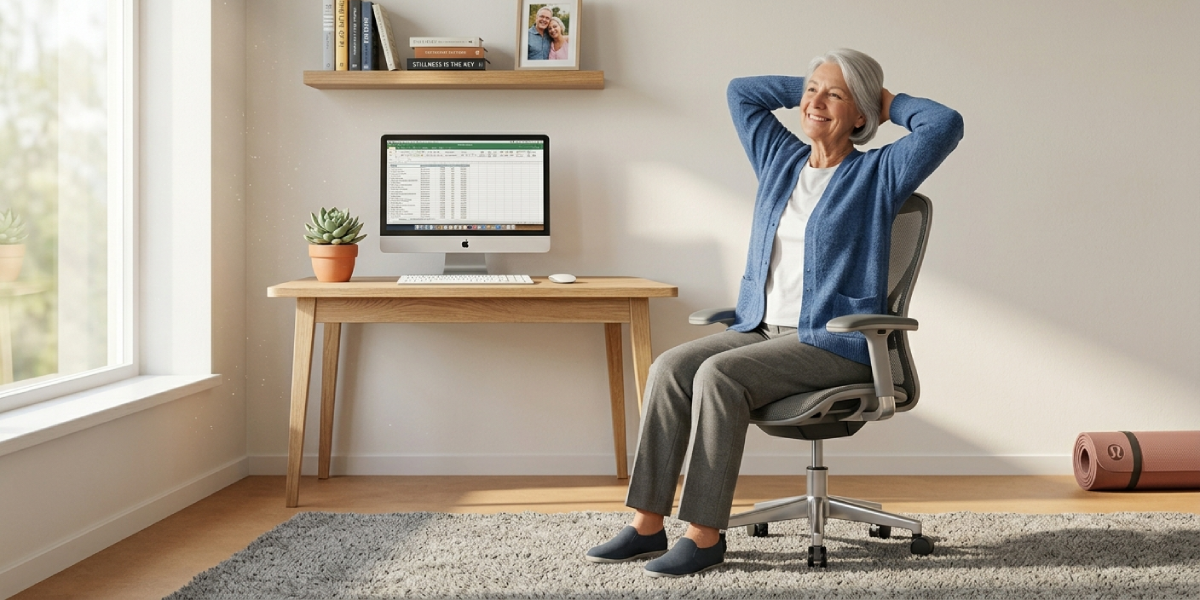
Consistency matters far more than intensity when building any exercise habit. A practical approach is to set a movement reminder every sixty to ninety minutes during your workday. During each break, perform two or three of the exercises above for a total of five to ten minutes.
Over the course of a workday, this accumulates to a meaningful amount of physical activity without disrupting productivity.
For seniors using chair exercises as a primary fitness method, aim for at least twenty to thirty minutes of seated activity per day, distributed across two or three sessions. Combine lower body, upper body, and flexibility movements in each session for balanced conditioning.
Tracking your activity and pairing your exercise habit with attention to broader health practices such as nutrition, hydration, and sleep will amplify the benefits of even a modest seated exercise routine.
Safety Tips Before You Begin
- Consult your physician before beginning any new exercise program, especially if you have a cardiac condition, recent surgery, or joint replacement.
- Stop any exercise that causes sharp, shooting, or radiating pain.
- Move slowly and deliberately, particularly when first learning each movement pattern.
- Stay hydrated, as even mild dehydration can cause dizziness during exercise.
- Seniors with osteoporosis should avoid exercises involving rapid or forceful trunk rotation.
Tracking Progress and Setting Goals
Monitoring your progress keeps motivation high and helps you identify areas for improvement. Track the number of repetitions you can complete comfortably, note any reduction in pain or stiffness, and observe improvements in your posture throughout the day.
For those managing weight alongside exercise, pairing this routine with regular use of a BMI calculator can help you set realistic health benchmarks and track change over time.
Small, consistent gains compound quickly. Many individuals who begin with a single five-minute chair exercise session find themselves naturally extending their routine within two to three weeks as their strength and confidence improve.
Frequently Asked Questions
Are chair exercises effective enough to replace traditional workouts?
Chair exercises provide meaningful benefits for flexibility, circulation, and muscular endurance, but they are generally not sufficient to replace higher-intensity cardiovascular or resistance training for individuals who are already active and have no physical limitations. For sedentary individuals, beginners, and seniors with mobility restrictions, however, they represent a clinically appropriate and highly effective starting point.
How often should office workers do chair exercises?
Most occupational health guidelines recommend breaking up sitting every sixty to ninety minutes. Performing two to three chair exercises during each break is an effective pattern. This amounts to roughly fifteen to thirty minutes of accumulated seated movement throughout a standard workday.
Can chair exercises help with lower back pain?
Yes. Chair-based core engagement exercises, hip flexor stretches, and seated spinal twists directly target the muscles and movement patterns most associated with desk-related lower back pain. Regular practice strengthens the spinal stabilizers and reduces the muscular tightness that drives most non-specific lower back discomfort.
What type of chair is best for seated exercises?
A firm, stable chair without wheels is ideal. The seat height should allow your feet to rest flat on the floor with knees bent at approximately ninety degrees. Avoid soft chairs or sofas that sink under your weight, as these make it difficult to maintain proper alignment during exercises.
Are chair exercises safe for seniors with arthritis?
Chair exercises are among the most arthritis-friendly forms of physical activity because they minimize joint loading while still improving circulation, flexibility, and muscle strength. The Arthritis Foundation specifically recommends low-impact seated movement as part of an arthritis management program. Begin gently and stay within a pain-free range of motion.
Can I use resistance bands with chair exercises?
Resistance bands are an excellent and affordable addition to seated routines. They add progressive resistance to exercises like seated rows, bicep curls, and leg extensions without requiring heavy equipment. Light to medium resistance bands are appropriate for most beginners and seniors.
How long does it take to see results from chair exercises?
Most people report noticeable improvements in posture, reduced stiffness, and better energy levels within two to four weeks of consistent daily practice. Strength gains and measurable changes in body composition take longer and depend on the intensity and frequency of the routine as well as overall diet and lifestyle factors.
Is it necessary to warm up before chair exercises?
A brief warm-up of two to three minutes is recommended before more vigorous movements like seated leg extensions or resistance band exercises. Simple ankle circles, shoulder rolls, and gentle neck stretches serve as an effective warm-up and can be the first exercises in your session before progressing to more demanding movements.
Can chair exercises improve balance in seniors?
Seated exercises strengthen the core, hip stabilizers, and lower leg muscles that all contribute to standing balance. The chair-supported sit-to-stand movement in particular has direct carryover to real-world balance and fall prevention. For enhanced balance training, many of these exercises can be performed standing with the chair used for light support.
What is the best time of day to do chair exercises at the office?
There is no single best time, but many people find that performing a short routine first thing in the morning helps set a positive tone, while mid-afternoon sessions counteract the energy dip that often occurs between two and four o’clock. The most important factor is consistency rather than timing.