

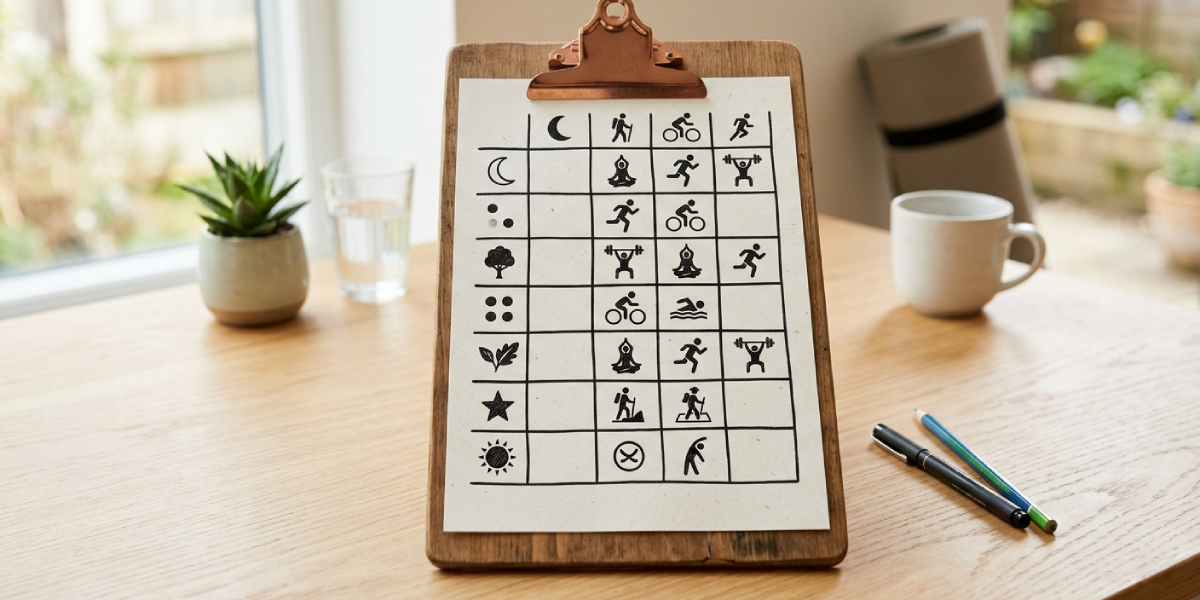
Creating an exercise schedule that you can actually stick to is one of the most important steps toward a healthier life. Too many people start the year with bold fitness goals, only to abandon them within weeks because their plan was unrealistic from the start.
The good news is that building a sustainable exercise schedule does not require a personal trainer or hours at the gym every day. It requires the right strategy, an honest look at your lifestyle, and a commitment to small, consistent actions.
This guide walks you through every step of designing a workout plan that fits your life, not the other way around. Whether you are a complete beginner or someone returning to fitness after a long break, these principles will help you build momentum that lasts.
Why Most Exercise Schedules Fail
Before building a schedule that works, it helps to understand why so many fall apart. The most common reason is an all-or-nothing mindset. People go from zero activity to planning six days a week of intense workouts. This approach is not only physically taxing but mentally unsustainable.
When life inevitably gets in the way, the missed session feels like total failure, and the schedule collapses entirely.
Another major culprit is a mismatch between goals and daily reality. Someone who works long hours, has children, and commutes for an hour each way cannot realistically commit to ninety-minute gym sessions. A schedule built without accounting for actual time constraints is not a plan at all. It is wishful thinking.
Finally, many people choose exercises they actively dislike simply because they believe those activities burn the most calories. Forcing yourself through workouts you dread is a fast path to quitting. Research published in the journal Psychology of Sport and Exercise consistently shows that enjoyment is one of the strongest predictors of long-term exercise adherence.
Step 1: Define Your Fitness Goals Clearly
A vague goal like “get fit” or “lose weight” gives you no direction. Effective exercise schedules are built around specific, measurable outcomes. Ask yourself what you genuinely want to achieve in the next three to six months. Common goal categories include improving cardiovascular health, building muscle and strength, losing body fat, increasing flexibility and mobility, reducing stress, or training for a specific event like a 5K or charity walk.
Your goal determines the type of training you prioritize. Someone focused on cardiovascular health needs more aerobic activity, while someone aiming to build strength will center their schedule around resistance training. It is perfectly fine to have more than one goal, but choose a primary focus so your schedule has clear direction.
If you want a quick, objective look at where you are starting from, using a tool like a BMI calculator can give you a baseline metric to track alongside your fitness progress. While BMI is not a complete picture of health, it provides a useful data point when combined with other measurements.
Step 2: Audit Your Available Time Honestly
Pull out your calendar or daily planner and block in every fixed commitment you have. Work hours, family obligations, commute time, sleep, and meal preparation all need to be accounted for before you can identify genuine windows for exercise.
Most adults find they have more flexibility than they initially think, especially once they audit how much time goes to passive activities like scrolling through a phone.
Look for pockets of twenty to forty-five minutes, not just the elusive ninety-minute blocks. Research from the American College of Sports Medicine confirms that multiple shorter bouts of exercise throughout the day provide health benefits comparable to single longer sessions.
A twenty-minute walk in the morning, a brief bodyweight circuit at lunch, and a short yoga session in the evening all count.
Be realistic rather than optimistic. If you have a genuine window of thirty minutes four days a week, build your schedule around that. A program you actually follow will always outperform a perfect program you abandon after ten days.
Step 3: Choose the Right Types of Exercise
A well-rounded exercise schedule typically includes three components: cardiovascular training, resistance or strength training, and flexibility and recovery work. How you balance these depends on your primary goal.
Cardiovascular Training
Cardio improves heart and lung health, supports fat metabolism, and boosts mood through endorphin release. Options range from walking, running, cycling, swimming, and dancing to group fitness classes, jump rope, and rowing.
The key is choosing an activity you find genuinely enjoyable or at least tolerable. Adults should aim for at least 150 minutes of moderate-intensity aerobic activity or 75 minutes of vigorous-intensity activity per week, according to the World Health Organization.
Resistance and Strength Training
Strength training builds and preserves lean muscle mass, increases metabolic rate, improves bone density, and supports joint health. You do not need a gym membership to get started. Bodyweight exercises like squats, push-ups, lunges, and planks are highly effective, especially for beginners.
Once you have mastered the basics, adding resistance bands or free weights increases the challenge progressively. Most health guidelines recommend resistance training at least two days per week, targeting all major muscle groups.
Flexibility and Recovery
This is the component most people skip, often to their detriment. Stretching, yoga, foam rolling, and rest days are not optional extras. They reduce injury risk, improve range of motion, and allow your muscles to repair and grow stronger between sessions.
At minimum, include one full rest day per week and spend five to ten minutes on mobility work after each session.
Exploring a variety of exercise types can help you discover what you genuinely enjoy and what works best for your body and fitness level.
Step 4: Build Your Weekly Schedule Template
Now that you know your goals, your available time, and the types of exercise you want to include, it is time to map out a weekly template. Think of this as a framework rather than a rigid contract with yourself. The following table shows a sample weekly layout for someone with moderate fitness goals and about four hours of exercise time per week.
| Day | Activity | Duration | Intensity |
|---|---|---|---|
| Monday | Strength Training (Upper Body) | 40 minutes | Moderate to High |
| Tuesday | Brisk Walk or Light Cardio | 30 minutes | Low to Moderate |
| Wednesday | Strength Training (Lower Body) | 40 minutes | Moderate to High |
| Thursday | Rest or Gentle Yoga | 20 minutes | Low |
| Friday | Cardio of Choice | 45 minutes | Moderate |
| Saturday | Full Body Strength or Active Recreation | 45 minutes | Moderate |
| Sunday | Full Rest and Recovery | — | — |
This is a starting template. Adjust the days, durations, and activities to match your own schedule and preferences. The most important principle is to alternate between harder effort days and lighter recovery days to prevent overtraining and burnout.
Step 5: Apply the Progressive Overload Principle
One of the most evidence-based concepts in exercise science is progressive overload. Simply put, your body adapts to physical stress. If you perform the same workout at the same intensity indefinitely, your progress will plateau. To keep improving, you need to gradually increase the challenge over time.
You can apply progressive overload in several ways: adding more weight to your resistance exercises, increasing the number of repetitions or sets, shortening rest periods between sets, increasing the duration or distance of your cardio sessions, or adding an extra workout day once the current schedule feels manageable.
Make increases gradually, around five to ten percent at a time, to reduce injury risk while maintaining forward momentum.
Step 6: Create Accountability Systems That Actually Work
Motivation is not a reliable foundation for a long-term exercise schedule. It fluctuates with mood, energy levels, and external circumstances. What keeps people exercising consistently is not motivation but systems, habits, and accountability structures.
Several strategies are particularly effective. Scheduling workouts in your calendar with the same commitment you would give a work meeting makes them feel non-negotiable. Laying out your workout clothes the night before reduces friction in the morning.
Partnering with a friend or joining a fitness class creates social accountability. Tracking your sessions in a journal or fitness app provides a visual record of progress that motivates continued effort.
Research from the Dominican University of California found that people who write down their goals and share weekly progress reports with a friend are significantly more likely to achieve them compared to those who simply think about their goals. The act of writing and sharing creates commitment and follow-through.
Step 7: Plan for Obstacles Before They Happen
Every exercise schedule will face disruptions. Travel, illness, family demands, work deadlines, and bad weather are all predictable disruptions even if their exact timing is not. The difference between people who maintain their fitness habits long-term and those who do not is rarely willpower. It is having a prepared response to obstacles before they arise.
Think through your most common barriers and create simple backup plans. If you cannot make it to the gym, have a fifteen-minute home bodyweight routine ready to go. If you are traveling, pack resistance bands and identify a nearby park or hotel gym in advance.
If an illness sets you back, give yourself full permission to rest and resume gently without guilt once you recover. Consistency over months and years matters far more than perfection over any given week.
The Role of Nutrition and Sleep in Your Exercise Schedule

An exercise schedule does not exist in isolation. The results you get from your workouts depend heavily on what happens outside the gym. Nutrition and sleep are the two most powerful recovery tools available to you, and neglecting them undermines even the best workout plan.
Adequate protein intake supports muscle repair and growth. Most research suggests a target of 1.6 to 2.2 grams of protein per kilogram of body weight daily for people engaged in regular resistance training. Staying well-hydrated supports performance and reduces fatigue during sessions.
And eating enough overall calories is critical because chronic undereating impairs hormone function, recovery, and energy levels, making workouts feel far harder than they should.
Sleep is when your body does the majority of its physical repair work. Growth hormone, which is essential for muscle recovery, is released primarily during deep sleep. Most adults need seven to nine hours per night. Consistently sleeping less than this amount not only impairs recovery but also negatively affects appetite-regulating hormones, making it harder to maintain a healthy weight even with regular exercise.
Learning more about the connection between lifestyle habits and long-term fitness can be found in quality health resources that address both exercise and overall well-being together.
How to Track Your Progress Effectively

Tracking gives you objective data to see whether your exercise schedule is producing results, which helps you stay motivated and make intelligent adjustments. There are several dimensions worth monitoring depending on your goals.
- Performance metrics: How much weight you are lifting, how far or fast you are running, or how many repetitions you can complete. These show fitness improvements even before visible physical changes occur.
- Body measurements: Waist, hip, and chest measurements can reflect body composition changes that the scale does not capture.
- Energy and mood: Keeping brief notes on how you feel after workouts reveals patterns and helps you identify which types of exercise are most beneficial for your mental state.
- Sleep quality: Regular exercise generally improves sleep, so tracking this gives you another signal of whether your program is on track.
- Workout consistency: Simply logging how many sessions you completed each week compared to how many you planned builds awareness and accountability.
Review your tracking data every two to four weeks and use it to make minor adjustments to your schedule. This iterative approach keeps your program aligned with your evolving goals and fitness level.
When to Modify or Upgrade Your Exercise Schedule
A good exercise schedule is not static. Your fitness level, lifestyle, and goals will change over time, and your program should evolve accordingly. Signs that it is time to modify your schedule include a persistent plateau in performance or results, boredom or dread before workouts, new fitness goals, a major change in schedule or life circumstances, or the onset of persistent fatigue or nagging pain.
When you update your schedule, keep what is working and thoughtfully change one or two variables at a time rather than overhauling everything. This makes it easier to identify what the change accomplished and prevents the overwhelm of starting from scratch.
Frequently Asked Questions
How many days per week should a beginner exercise?
Beginners should start with two to three days of exercise per week. This frequency allows adequate recovery time while building the habit and physical foundation needed for more frequent training. After four to six weeks of consistent training, adding a fourth day is reasonable for most people.
How long should each workout session last?
Sessions as short as twenty minutes can produce meaningful fitness benefits, especially for beginners. Most health guidelines recommend working toward thirty to sixty-minute sessions over time. The quality and effort of your workout matters more than its duration, particularly when you are just starting out.
Is it okay to exercise every day?
Daily exercise is possible but requires intelligent programming. If you train every day, at least one or two sessions per week should be very light, such as walking or gentle stretching. Training hard seven days a week without rest significantly increases the risk of overtraining, injury, and burnout.
What is the best time of day to exercise?
The best time to exercise is the time you will actually do it consistently. Morning workouts tend to face fewer scheduling conflicts and can boost energy levels throughout the day. Evening workouts may allow for better physical performance but can interfere with sleep for some people. Experiment and choose the time that fits your natural rhythm and daily schedule.
How do I stay motivated when results are slow?
Shift your focus from outcomes to behaviors. Instead of measuring success by how much weight you have lost or how much muscle you have gained, measure it by how consistently you showed up. Results take time, but every completed session is a real achievement. Tracking performance improvements such as running farther or lifting heavier also provides motivation independent of visual changes.
Can I build muscle and lose fat at the same time?
Yes, this is possible particularly for beginners, those returning after a long break, or people with higher body fat percentages. It requires a balanced approach combining resistance training with a modest caloric deficit and adequate protein intake. As you advance, these two goals become harder to achieve simultaneously and may need to be pursued in separate phases.
What should I do if I miss a workout?
Simply skip that workout and return to your schedule at the next planned session. Do not try to make up for missed workouts by doubling up on exercises, as this often leads to fatigue and a cycle of over-training followed by more missed sessions. One missed workout has no meaningful impact on long-term progress; however, the mental habit of resuming without guilt does matter enormously.
How important is warming up before exercise?
Warming up is important for performance and injury prevention. A proper warm-up gradually increases heart rate, blood flow to muscles, and joint mobility, preparing your body for more intense effort. Spend five to ten minutes on light cardio and dynamic stretches before each session, especially before strength training or high-intensity cardio.
Do I need equipment to follow an effective exercise schedule?
No equipment is required to build a highly effective exercise schedule. Bodyweight exercises such as squats, push-ups, lunges, burpees, and planks develop real strength and cardiovascular fitness. Resistance bands are an inexpensive addition that significantly expand your training options. Equipment becomes more useful as your fitness level advances and your goals become more specific.
How soon will I see results from my exercise schedule?
Most people begin to notice improvements in energy, mood, and sleep quality within one to two weeks of consistent exercise. Measurable fitness improvements such as increased strength or endurance typically appear within three to four weeks. Visible physical changes in body composition generally take six to twelve weeks of consistent training and appropriate nutrition. Patience and consistency are the most important variables.