

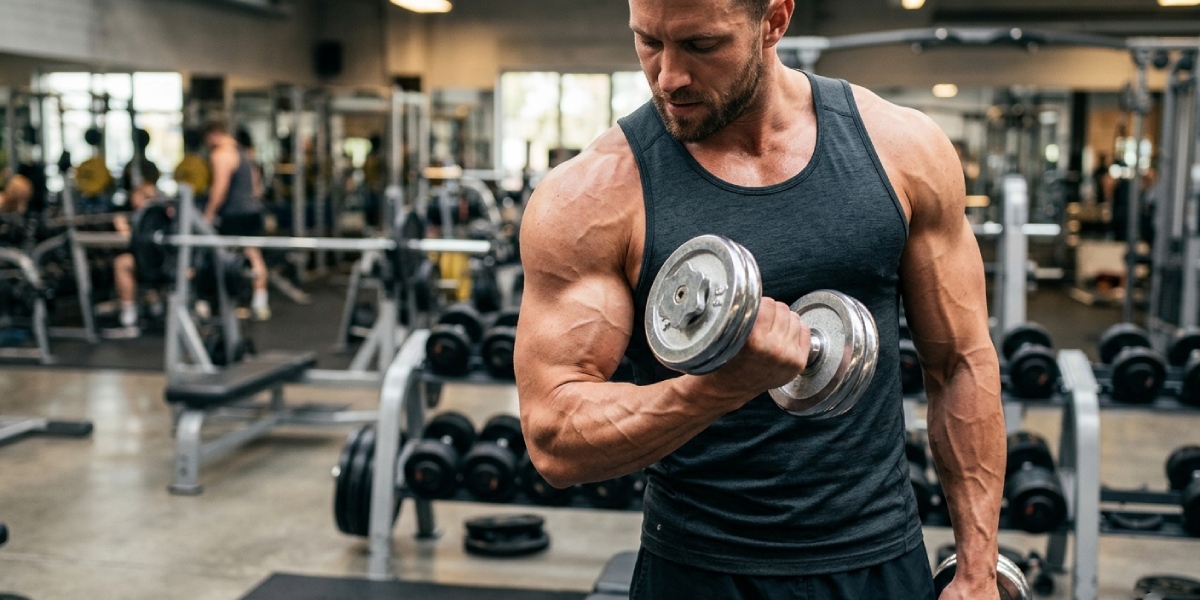
If you want noticeably bigger arms, the best bicep exercises combine compound pulling movements with targeted isolation work, and most lifters get this balance wrong.
After years of coaching strength training clients and testing dozens of arm-building programs, the pattern is clear: arm growth comes down to consistent tension, proper exercise selection, and progressive overload, not endless curl variations done sloppily.
This guide breaks down the most effective bicep exercises, explains the science behind why they work, and shows you how to structure a workout that actually produces results. Whether you train at home with dumbbells or have full access to a gym, you will find practical, field-tested advice here rather than recycled fitness trends.
Why Bicep Training Matters for Overall Arm Strength
The biceps brachii is a two-headed muscle running along the front of the upper arm, and it plays a far bigger role than just looking good in a t-shirt. Strong biceps support pulling motions in daily life, from carrying groceries to lifting children, and they contribute significantly to performance in rowing, climbing, and pulling-based sports.
Bicep strength also stabilizes the elbow joint, which reduces injury risk during heavier compound lifts like deadlifts and pull-ups.
Beyond function, biceps respond visibly and relatively quickly to focused training compared to some other muscle groups, which makes them a satisfying area to prioritize for anyone serious about strength training as part of a broader health and fitness routine.
Understanding Bicep Anatomy for Smarter Training
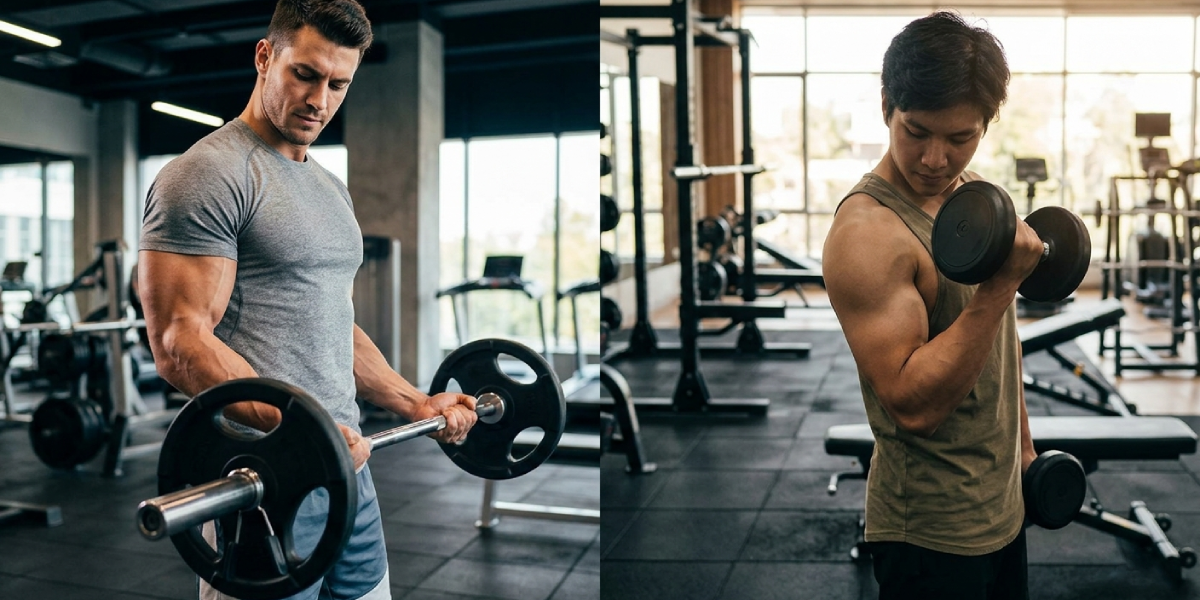
The biceps brachii has a long head and a short head, both of which cross the elbow and shoulder joints. The long head is more active when your arm is positioned behind your torso, such as during incline curls, while the short head responds more to movements where your arm is in front of the body, like preacher curls.
The brachialis, a deeper muscle beneath the biceps, also contributes to arm thickness and is heavily recruited during hammer curls and neutral-grip movements.
Training all three areas with a mix of grips and arm positions is what separates a well-rounded arm-training program from one that simply repeats the same curl every session.
The Best Bicep Exercises for Maximum Growth
The exercises below are selected based on electromyography research, practical coaching experience, and their ability to build both size and strength when performed with proper form.
Barbell Bicep Curl
The barbell curl remains a foundational movement because it allows you to load heavier weight than most isolation exercises. Stand with feet shoulder-width apart, grip the bar with palms facing forward, and curl without swinging your hips or leaning back. Control the descent just as carefully as the lift; the eccentric portion is where a significant amount of muscle damage and growth stimulus occurs.
Dumbbell Curl
Dumbbells allow each arm to work independently, which helps correct strength imbalances and improves mind-muscle connection. Keep your elbows pinned to your sides throughout the movement, and avoid letting momentum take over near the top of the rep.
Hammer Curl
Performed with a neutral grip, palms facing each other, the hammer curl emphasizes the brachialis and brachioradialis, contributing to overall arm thickness and forearm strength. It also tends to be easier on the wrists, making it a useful option for lifters dealing with elbow or wrist discomfort.
Incline Dumbbell Curl
Sitting on an incline bench places the shoulder in extension, which puts the long head of the biceps under greater stretch and tension. This variation is particularly effective for building the peak associated with well-developed arms, and it requires lighter weight than standing curls to maintain proper form.
Cable Curl
Cable machines provide constant tension throughout the entire range of motion, unlike free weights where tension naturally decreases at certain points. This makes cable curls excellent for finishing a workout and maximizing time under tension in the final sets.
Chin-Up
Often overlooked as a bicep exercise, the chin-up, performed with palms facing you, recruits the biceps heavily alongside the back muscles. As a compound movement, it builds functional pulling strength while also contributing meaningfully to arm size, and it pairs well with broader programs found in our exercises library.
Concentration Curl
Seated with your elbow braced against your inner thigh, the concentration curl removes momentum almost entirely, forcing strict, controlled reps. It is one of the best exercises for isolating the biceps and improving the squeeze at the top of the contraction.
Preacher Curl
Using a preacher bench keeps the upper arm fixed in place, eliminating shoulder involvement and placing nearly all the work on the biceps, particularly the short head. Because the bottom position is more challenging here than in standing curls, lighter loads with strict form produce better results than heavy, jerky reps.
Quick Reference: Bicep Exercise Sets and Reps
| Exercise | Primary Focus | Recommended Sets x Reps |
|---|---|---|
| Barbell Curl | Overall bicep mass | 3 to 4 sets x 8 to 10 reps |
| Dumbbell Curl | Balanced arm development | 3 sets x 10 to 12 reps |
| Hammer Curl | Brachialis and forearm | 3 sets x 10 to 12 reps |
| Incline Dumbbell Curl | Long head and peak | 3 sets x 12 to 15 reps |
| Cable Curl | Constant tension | 3 sets x 12 to 15 reps |
| Chin-Up | Compound pulling strength | 3 sets x 6 to 10 reps |
| Concentration Curl | Mind-muscle connection | 2 to 3 sets x 12 to 15 reps |
| Preacher Curl | Short head isolation | 3 sets x 10 to 12 reps |
How to Structure a Bicep Workout for Best Results
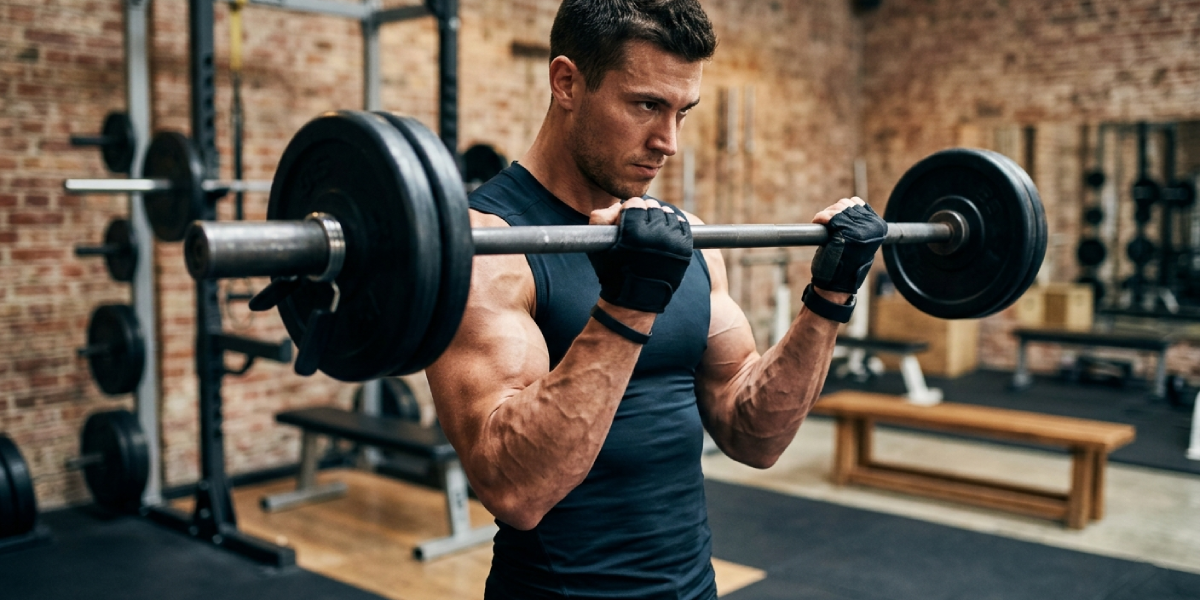
A well-designed arm workout does not need to be long to be effective. Start with a heavier compound movement like the barbell curl or chin-up while your energy is highest, then move into dumbbell or hammer curl variations, and finish with a high-tension isolation exercise like the cable curl or concentration curl. This sequencing allows you to lift heavier weight early while still fully exhausting the muscle by the end of the session.
Training biceps directly two to three times per week is generally sufficient for most lifters, with at least 48 hours of recovery between sessions targeting the same muscle group. Beginners often see strength gains within four to six weeks, while visible size changes typically take longer and depend on consistent training, adequate protein intake, and overall progressive overload.
Common Mistakes to Avoid When Training Biceps
Many people limit their progress without realizing it. Swinging the weight using momentum from the hips or back reduces the actual workload placed on the biceps and increases injury risk. Using a weight that is too heavy to control through the full range of motion is another frequent issue, as is neglecting the eccentric, or lowering, phase of each rep.
Training the same curl variation every session without variation can also lead to plateaus, since each grip and angle targets the muscle slightly differently. Finally, skipping warm-up sets before heavier lifting increases the risk of strain, particularly around the elbow and wrist joints.
Nutrition and Recovery Tips for Bigger Arms
Muscle growth depends on more than just the exercises themselves. Adequate protein intake, generally around 1.6 to 2.2 grams per kilogram of bodyweight daily for those strength training regularly, supports muscle repair and growth.
Sleep quality also plays a major role in recovery, since most of the hormonal processes responsible for muscle repair occur during deep sleep.
Tracking your overall body composition alongside strength gains can help you understand whether you are building muscle efficiently. Tools like our BMI calculator can offer a general reference point as part of a broader picture that should also include strength progress and how your clothing fits over time.
Frequently Asked Questions
What is the single best bicep exercise?
There is no single best exercise for everyone, but the barbell curl is often considered the most effective for building overall bicep mass due to the heavier loads it allows.
How often should I train my biceps each week?
Most lifters see good results training biceps directly two to three times per week, allowing at least 48 hours of recovery between sessions.
Can I build bigger biceps without weights?
Yes. Chin-ups, resistance band curls, and bodyweight isometric holds can all stimulate bicep growth, especially for beginners or intermediate lifters.
How long does it take to see visible bicep growth?
Strength improvements often appear within four to six weeks, while noticeable size changes typically take eight to twelve weeks of consistent training and proper nutrition.
Should I train biceps before or after back exercises?
Training back exercises first is generally recommended since pulling movements like rows already engage the biceps, allowing you to fatigue them fully afterward with direct curls.
Is it bad to curl every day?
Training biceps every single day without rest can hinder recovery and increase injury risk. Most muscle groups, including biceps, benefit from rest days between targeted sessions.
What is the difference between hammer curls and regular curls?
Hammer curls use a neutral grip and emphasize the brachialis and forearm muscles, while regular curls use a supinated grip and target the biceps brachii more directly.
Do bicep exercises help with overall arm strength for daily activities?
Yes. Strong biceps improve performance in everyday pulling and lifting tasks and also support joint stability during heavier compound exercises.