

Learning how to do the deadlift exercise safely for beginners is one of the most rewarding decisions you can make for your fitness journey. The deadlift is a foundational compound movement that builds full-body strength, improves posture, and develops real-world functional power.
Yet many beginners shy away from it, intimidated by its reputation or afraid of getting injured. The truth is, with the right technique and a patient approach, the deadlift is not only safe but essential for anyone serious about their exercise routine.
What Is the Deadlift and Why Should Beginners Learn It?
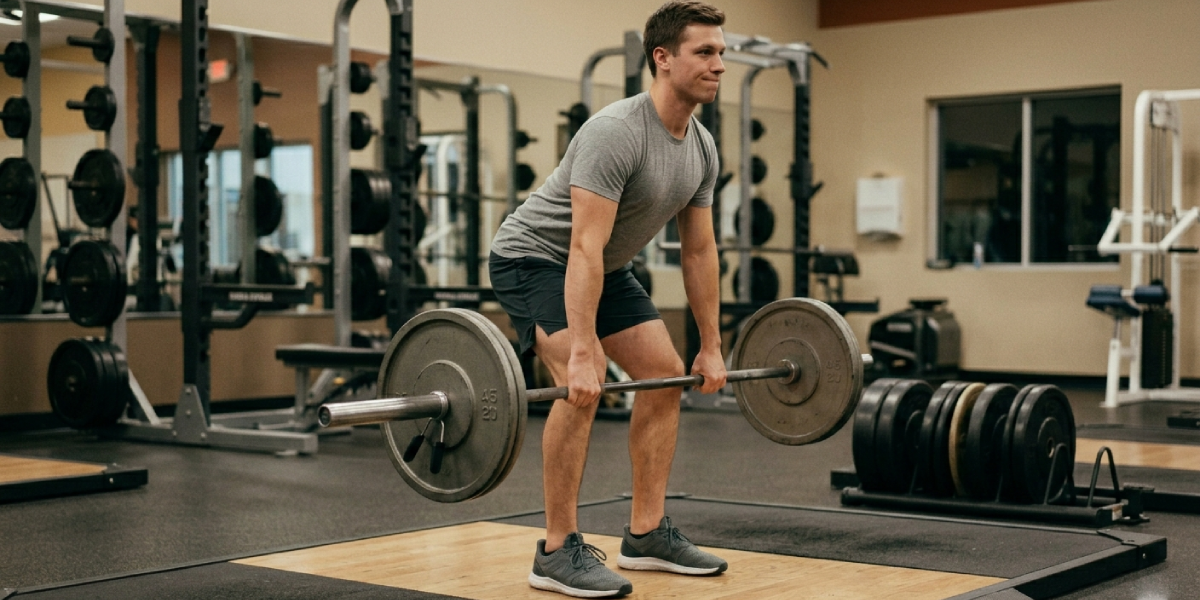
The deadlift is a resistance exercise in which you lift a loaded barbell or set of weights from the floor to a standing position. It targets nearly every major muscle group in the body, including the hamstrings, glutes, erector spinae, quadriceps, lats, traps, core, and forearms. Few exercises offer this level of full-body engagement in a single movement.
Beyond aesthetics and strength, the deadlift has significant functional benefits. It mimics the natural hip-hinge pattern used when picking objects up from the ground, making it directly applicable to daily life. Research consistently supports heavy compound lifting for improving bone density, metabolic rate, and hormonal health.
For beginners, mastering this movement early creates a strong athletic foundation for virtually every other exercise you will encounter.
Essential Equipment You Need Before You Start
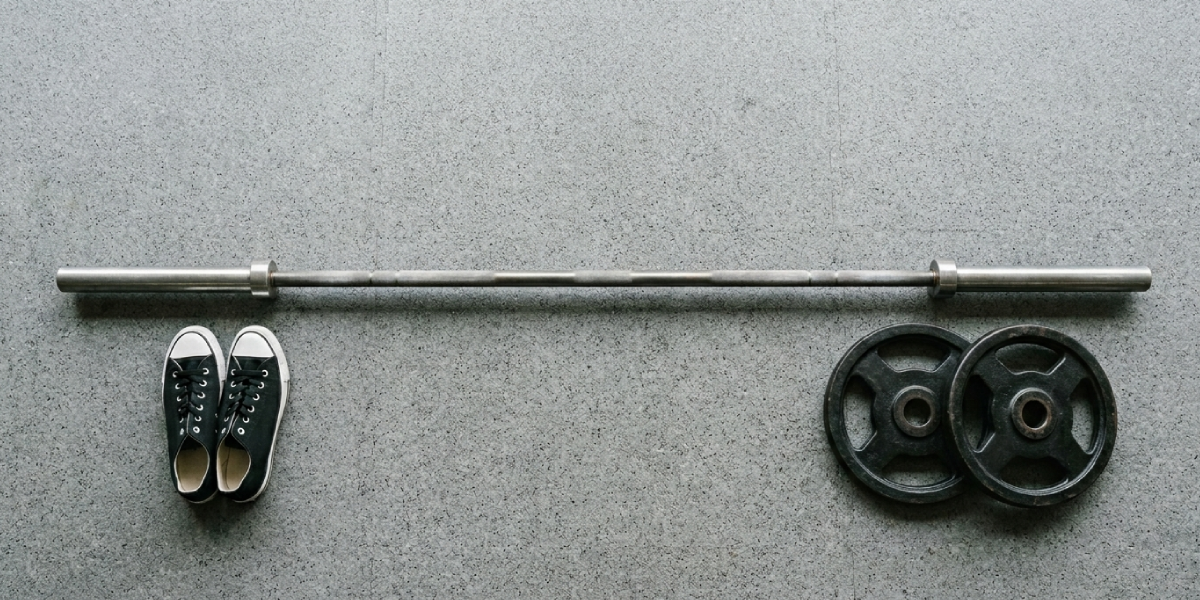
Before attempting your first deadlift, having the right setup matters. You do not need a fully equipped gym, but a few key items will protect you and improve your performance.
- A standard or Olympic barbell: A 45-pound Olympic bar is ideal, but lighter training bars are available for absolute beginners.
- Weight plates: Start light. Even an empty bar is sufficient when learning form.
- Flat-soled shoes: Running shoes with thick, cushioned soles are unstable for deadlifting. Use flat shoes such as Converse, deadlift slippers, or go barefoot if your gym allows.
- A lifting belt (optional): Not necessary for beginners, but a belt can add core support once you start lifting heavier loads.
- Chalk or lifting straps (optional): These help with grip as weights increase, though beginners rarely need them initially.
Understanding the Hip Hinge: The Foundation of Safe Deadlifting
The single most important concept a beginner must understand before deadlifting is the hip hinge. This movement pattern involves pushing the hips back while keeping a neutral spine, allowing you to lower and raise your torso without bending excessively through the lower back.
A simple drill to practice the hip hinge: stand about six inches from a wall, push your hips backward until they touch the wall, and return to standing. Over time, move farther from the wall to increase the range of motion. Once this pattern becomes intuitive, your deadlift form will naturally improve.
Many beginners treat the deadlift like a squat, allowing the knees to bend deeply and the torso to become too upright. This is incorrect. The deadlift is a hip-dominant movement, not a quad-dominant one. The hips initiate the pull from the floor, and the legs assist as the bar passes the knees.
Step-by-Step Guide to the Conventional Deadlift
Step 1: Set Up Your Starting Position
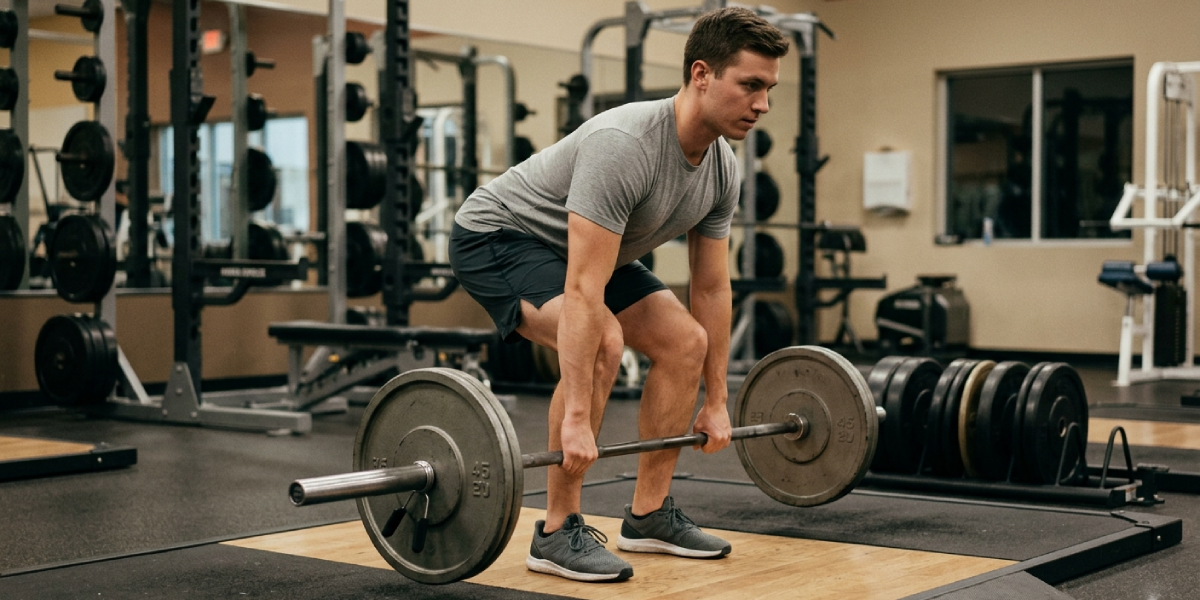
Stand with your feet approximately hip-width apart, with the barbell over your mid-foot — not touching your shins yet. Your toes can point slightly outward. Approach the bar and position your shins about an inch away from it. When you look down, the bar should bisect your foot from above.
Step 2: Grip the Bar
Hinge at the hips and bend your knees to reach down to the bar. Place your hands just outside your knees, using a double overhand grip (both palms facing you). Many beginners eventually switch to a mixed grip (one palm facing in, one facing out) for heavier loads, but start with double overhand to build grip strength evenly. Your grip should be firm but not strained.
Step 3: Set Your Back and Brace Your Core
This step is critical for injury prevention. Before the bar leaves the ground, take a deep breath into your belly and brace your core hard, as if you are about to take a punch to the stomach. Simultaneously, pull your chest up, squeeze your lats (imagine tucking your shoulder blades into your back pockets), and ensure your spine is in a neutral position — not rounded forward and not hyperextended backward.
Your hips should be above your knees, and your shoulders should be slightly in front of or directly above the bar.
Step 4: Initiate the Pull
Drive through your entire foot — not just your heels — and think of pushing the floor away from you rather than pulling the bar up. As the bar rises to knee height, begin driving your hips forward. The bar should stay as close to your legs as possible throughout the entire lift. Dragging the bar up your shins is normal and expected at heavier weights.
Step 5: Lock Out at the Top
Stand tall at the top of the movement with your hips fully extended, knees locked, shoulders back, and chest up. Do not hyperextend your lower back or lean excessively backward. A slight backward lean with a proud chest is acceptable; jamming your lumbar spine is not.
Step 6: Lower the Bar With Control
Hinge at the hips first, then bend the knees as the bar passes below them. Maintain your brace and neutral spine on the way down. Lower the bar in a controlled manner — do not drop it unless you are in a facility with bumper plates and explicit permission to do so.
Common Deadlift Mistakes Beginners Must Avoid
Even with proper instruction, beginners consistently fall into several technique traps. Recognizing these early will save you from injury and wasted time in the gym.
- Rounding the lower back: This is the most dangerous and most common error. It places compressive and shear forces on the lumbar discs. Always maintain a neutral spine.
- Jerking the bar off the floor: Treat the initial pull as gradual tension-building, not a sudden yank. Take the slack out of the bar slowly before driving hard.
- Bar drifting away from the body: A bar that swings forward dramatically increases the lever arm and stress on your lower back. Keep it close.
- Looking up too aggressively: Extreme neck hyperextension can strain the cervical spine. Keep your gaze neutral, looking a few feet ahead on the floor.
- Going too heavy too soon: Ego lifting is the fastest road to injury. Start with a weight that allows you to complete three sets of five reps with perfect form before progressing.
- Skipping the warm-up: Cold muscles are far more vulnerable to strains. Always perform a thorough warm-up before any heavy lifting session.
Deadlift Variations Suitable for Beginners
Romanian Deadlift (RDL)
The Romanian deadlift begins at the top of the movement rather than from the floor. You hinge the hips back while keeping a slight bend in the knees, lowering the bar along your legs until you feel a deep stretch in the hamstrings. This variation is excellent for learning the hip hinge pattern and building hamstring and glute strength without the complexity of the full pull from the floor.
Trap Bar Deadlift
The trap bar, also called a hex bar, allows you to stand inside the bar and grip handles on each side. This variation reduces stress on the lower back by allowing a more upright torso position and is widely recommended for beginners, older adults, or anyone with pre-existing back concerns. It also feels more intuitive for those who struggle with standard bar positioning.
Sumo Deadlift
In the sumo variation, your feet are placed wide apart with toes pointed outward, and your grip is inside your knees. This stance reduces the range of motion and is easier on the lower back for many lifters. It is particularly effective for individuals with shorter torsos or longer legs.
How to Program the Deadlift Into Your Routine
For beginners, deadlifting once or twice per week is sufficient. The movement is extremely taxing on the central nervous system and posterior chain, and adequate recovery is essential for progress and injury prevention.
A practical beginner template might look like this: perform three to five sets of three to five reps at a moderate load, resting at least two to three minutes between sets. Focus on adding small amounts of weight — as little as five pounds — each session as long as your form remains intact.
This linear progression model works remarkably well for beginners and should be followed until it stalls naturally.
Pair your deadlift sessions with complementary exercises such as hip thrusts, Romanian deadlifts, planks, and rows to build the supporting muscles and prevent imbalances. Tracking your progress in a training log will help you stay accountable and identify when plateaus occur.
Warming Up Properly Before Deadlifting
A thorough warm-up reduces injury risk and primes the nervous system for heavy work. Start with five to ten minutes of light cardio to increase core body temperature. Follow this with dynamic stretching targeting the hips, hamstrings, and thoracic spine. Hip circles, leg swings, cat-cow movements, and thoracic rotations are all excellent choices.
Then perform warm-up sets on the deadlift itself. Begin with an empty bar and gradually work up to your working weight in three to five incremental sets. Never jump straight to your heaviest load without progressive warm-up sets.
The Role of Nutrition and Recovery in Deadlift Progress
Strength gains do not happen during training — they happen during recovery. Your muscles repair and grow stronger in the 24 to 72 hours following a training session, provided you give them the fuel and rest they need. Adequate protein intake (typically 0.7 to 1 gram per pound of bodyweight), sufficient caloric intake, quality sleep, and stress management are all non-negotiable for consistent progress.
Understanding your overall health and body composition can also guide how aggressively you should train and recover. If you are uncertain about your current fitness baseline, using a BMI calculator as a starting reference point can help contextualize your goals, though it should always be paired with a full picture of your health markers.
When to Seek Professional Guidance
While this guide provides a comprehensive foundation, working with a certified strength and conditioning coach or personal trainer for even a few sessions can dramatically accelerate your learning curve and reduce the risk of developing bad habits that are hard to break later.
This is particularly important if you have a history of back pain, hip issues, or other musculoskeletal concerns.
If you experience sharp pain — especially in the lower back, knees, or hips — during or after deadlifting, stop immediately and consult a sports medicine physician or physiotherapist before continuing. Mild muscle soreness in the hamstrings, glutes, and upper back is normal and expected. Sharp or joint pain is not.
Tracking Your Progress Safely
One of the most effective tools for beginner deadlifters is video feedback. Recording your sets from the side allows you to review your form objectively and identify issues that are difficult to feel in the moment, such as bar drift, back rounding, or premature hip rise. Many professional coaches use video review as a standard part of their programming.
Keep a training journal that records the date, weight lifted, sets, reps, and any notes on how the session felt. Over months, you will develop a clear picture of your progress, recovery patterns, and the conditions under which you perform best.
Frequently Asked Questions
Is the deadlift safe for absolute beginners?
Yes, the deadlift is safe for beginners when performed with proper technique and appropriate loading. Starting with lighter weights and focusing on form before adding load is the most responsible approach. Many strength coaches consider it one of the best exercises for building a strong foundation.
How much weight should a beginner start with on the deadlift?
Most beginners should start with just the barbell, which weighs 45 pounds. Some may benefit from starting even lighter using a training bar. The goal at the start is to learn movement patterns, not to lift heavy. Add weight only when your form is consistently solid across multiple sessions.
How often should beginners deadlift per week?
Once or twice per week is ideal for most beginners. The deadlift is a high-demand exercise that requires significant recovery time. Training it more frequently without adequate rest can increase injury risk and impair progress.
What muscles does the deadlift work?
The deadlift is a full-body compound movement. Primary movers include the hamstrings, glutes, and lower back (erector spinae). Secondary muscles include the quadriceps, core, lats, traps, rhomboids, and forearms. No other single exercise recruits as many muscles simultaneously.
Should beginners use a belt when deadlifting?
Beginners generally do not need a lifting belt. Building core strength through unassisted lifting first is recommended. A belt becomes more useful as you approach heavier loads, typically once you are lifting well above your bodyweight. Using a belt too early can create a dependency that hinders core development.
What is the difference between a conventional and sumo deadlift?
In the conventional deadlift, feet are hip-width apart and hands grip outside the knees. In the sumo deadlift, feet are placed wide and the grip is inside the knees. The sumo stance reduces lower back stress and is beneficial for lifters with longer legs or pre-existing back discomfort. Both are effective, and choosing between them often comes down to individual anatomy and comfort.
Can I deadlift if I have lower back pain?
It depends on the nature and severity of your back pain. Mild, general muscular discomfort may actually improve with carefully loaded deadlifting under professional supervision. However, if you have a herniated disc, sciatica, or acute injury, you should consult a sports medicine physician or physiotherapist before attempting any heavy loading. Self-diagnosing and continuing to train through sharp pain is never advisable.
What is the most common deadlift mistake beginners make?
Rounding the lower back is the most common and most dangerous mistake. This typically occurs when the weight is too heavy, the core is not properly braced, or the lifter lacks the hip flexor and hamstring flexibility to maintain a neutral spine in the starting position. Addressing these issues through mobility work and appropriate loading resolves most cases.
How long does it take to see results from deadlifting?
Most beginners notice strength improvements within two to four weeks of consistent training, as initial gains are largely neurological. Visible changes in muscle size and body composition typically require eight to twelve weeks of consistent training combined with adequate nutrition and recovery.
Is it normal for the bar to scrape my shins during the deadlift?
Yes, shin contact or light scraping is a sign that the bar is staying close to your body, which is correct technique. Many experienced lifters wear long socks or shin sleeves to protect the skin. If the bar is not touching your legs at all, it may be drifting forward, which increases lower back strain.