

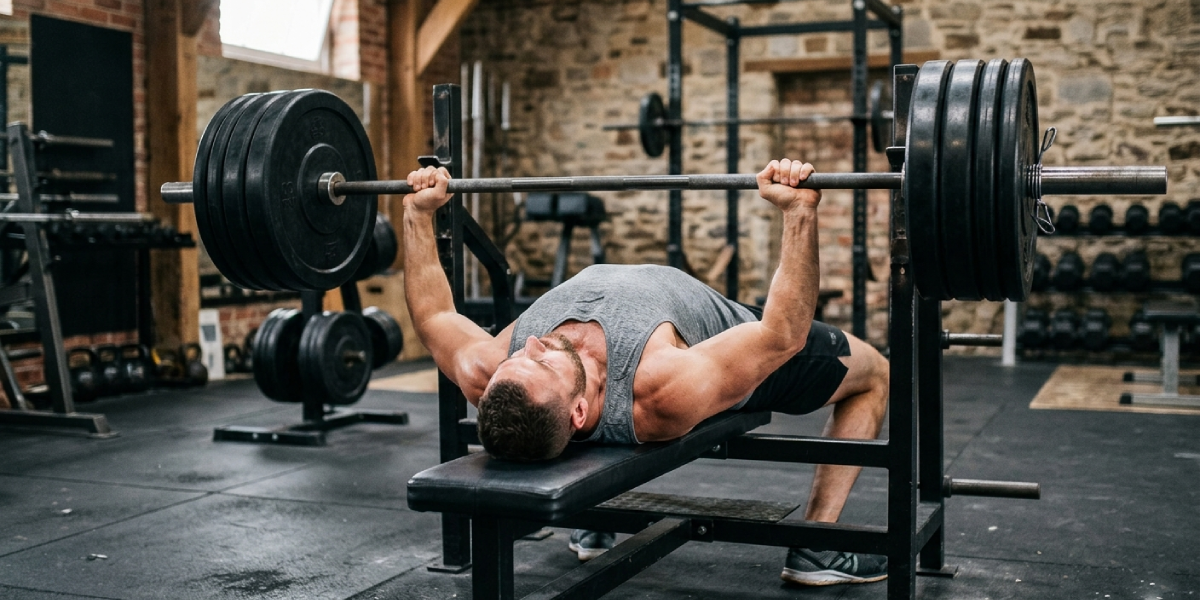
The bench press exercise is one of the most effective and widely performed movements for building upper body strength. Whether you are a beginner stepping into the gym for the first time or a seasoned lifter looking to refine your technique, mastering the bench press is a milestone that pays dividends across nearly every fitness goal.
In this guide, you will learn everything you need to know — from setting up your equipment correctly to executing each repetition with precision, avoiding injury, and progressively overloading the movement for lasting results.
What Is the Bench Press Exercise and Why Does It Matter?
The bench press is a compound, free-weight pushing movement performed on a flat, incline, or decline bench using a barbell or dumbbells. It primarily targets the pectoralis major — the large muscle of the chest — while also engaging the anterior deltoids (front shoulders) and the triceps brachii.
Because it trains multiple muscle groups simultaneously through a natural pressing pattern, it is classified as a fundamental strength exercise and is one of the three lifts tested in powerlifting competitions worldwide.
Beyond aesthetics, the bench press builds functional pushing strength that carries over into everyday activities such as pushing heavy doors, moving furniture, and performing athletic movements like throwing. It also contributes to improved bone density and joint stability in the shoulder and elbow when performed with correct technique.
For anyone serious about structured exercise programming, the bench press is an essential cornerstone.
Muscles Worked During the Bench Press
Understanding which muscles the bench press activates helps you train intentionally and identify weaknesses. Here is a breakdown of the primary and secondary muscles involved:
| Muscle Group | Role in the Bench Press |
|---|---|
| Pectoralis Major (Chest) | Primary mover; responsible for horizontal adduction of the arm |
| Anterior Deltoid (Front Shoulder) | Assists in shoulder flexion during the pressing motion |
| Triceps Brachii | Extends the elbow to lock out the bar at the top |
| Serratus Anterior | Stabilizes and protracts the scapula during the press |
| Biceps Brachii | Acts as a stabilizer during the eccentric (lowering) phase |
| Core and Lats | Provide a stable base and transfer force from legs to upper body |
Equipment You Need for the Bench Press Exercise
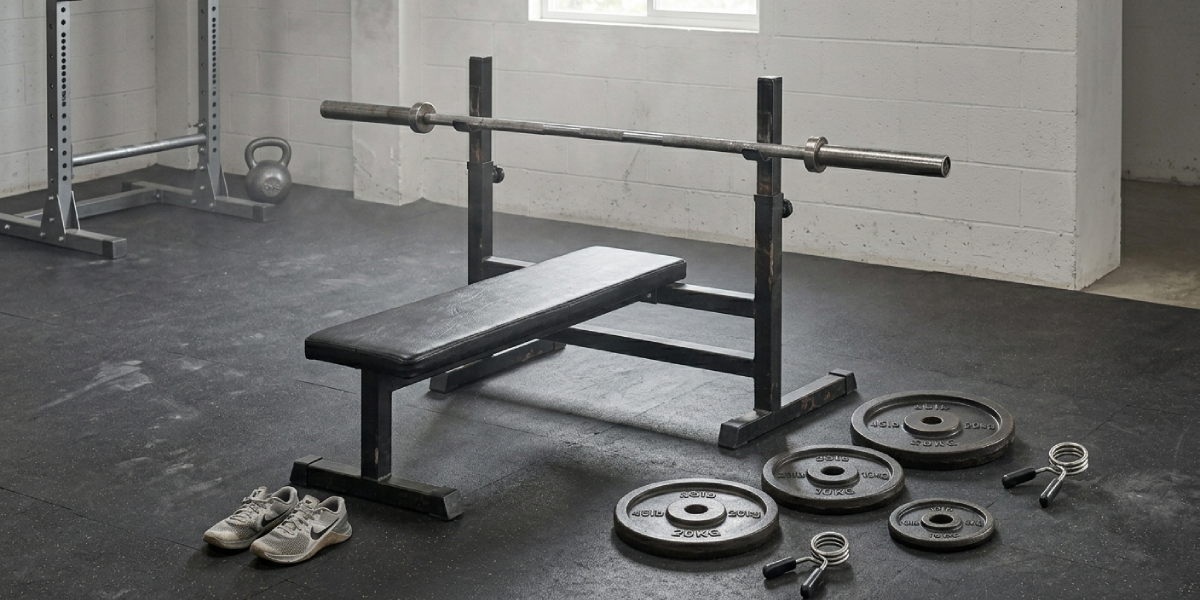
Before you begin, gather the right equipment to ensure safety and performance. You do not need anything exotic — most commercial gyms are fully equipped for bench pressing.
- A flat bench with a rack: A sturdy bench with uprights or a power rack is essential. Never bench press without a rack or a spotter when lifting heavy.
- An Olympic barbell: A standard 20 kg (45 lb) Olympic barbell is the most common choice. It offers consistent grip diameter and a slight flex that aids performance.
- Weight plates: Begin with lighter plates and gradually increase load. Collars or clips should always be used to secure plates on the bar.
- A spotter or safety arms: A spotter standing behind the bench is strongly recommended for any heavy or maximal effort set. Alternatively, use a power rack with safety arms set just below your chest.
- Flat-soled shoes: Wear shoes with a flat, firm sole to maximize leg drive and prevent your feet from slipping.
How to Set Up for the Bench Press: Step-by-Step
Proper setup is not optional — it is where the lift is won or lost. Rushing into a set without positioning yourself correctly is one of the leading causes of shoulder injury and inefficient pressing. Follow this step-by-step setup guide every time you get under the bar.
Step 1: Adjust the Rack Height
Set the barbell at a height where you can unrack it with a slight bend in your elbows — not fully locked out, and not so low that you have to strain to lift it off. When you lie down, the bar should be roughly at eye level or just above your forehead.
Step 2: Lie Down and Establish Your Back Position
Lie flat on the bench so that your eyes are directly under the bar. Your shoulder blades should be pinched together and pulled down toward your hips — a cue commonly referred to as “packing your shoulders.” This creates a stable, protective position for your shoulder joints and reduces the risk of impingement.
There should be a natural, modest arch in your lower back, with your glutes firmly planted on the bench and your feet flat on the floor.
Step 3: Grip the Bar Correctly
Grip the barbell with your hands slightly wider than shoulder width. The bar should rest in your lower palm — close to the heel of your hand — rather than high in your fingers. This is critical: a high-finger grip puts the wrist in a hyperextended position and risks dropping the bar.
Wrap your thumbs around the bar (never use a thumbless or “suicide” grip for bench pressing). Squeeze the bar hard as if you are trying to bend it into a U shape. This tension activates more upper body musculature and improves stability.
Step 4: Create Full-Body Tension
Before you unrack the bar, take a deep breath into your belly (diaphragmatic breathing), brace your core as if bracing for a punch, and drive your feet hard into the floor. This creates a full-body foundation of tension that supports the lift and allows you to transfer leg drive into the press.
Step 5: Unrack the Bar
Unrack the bar by pressing it straight up to arm’s length directly over your lower chest. Do not unrack at an angle or let the bar drift. Pause briefly with the bar locked out and your body fully tensioned before beginning the descent.
How to Perform the Bench Press: The Repetition
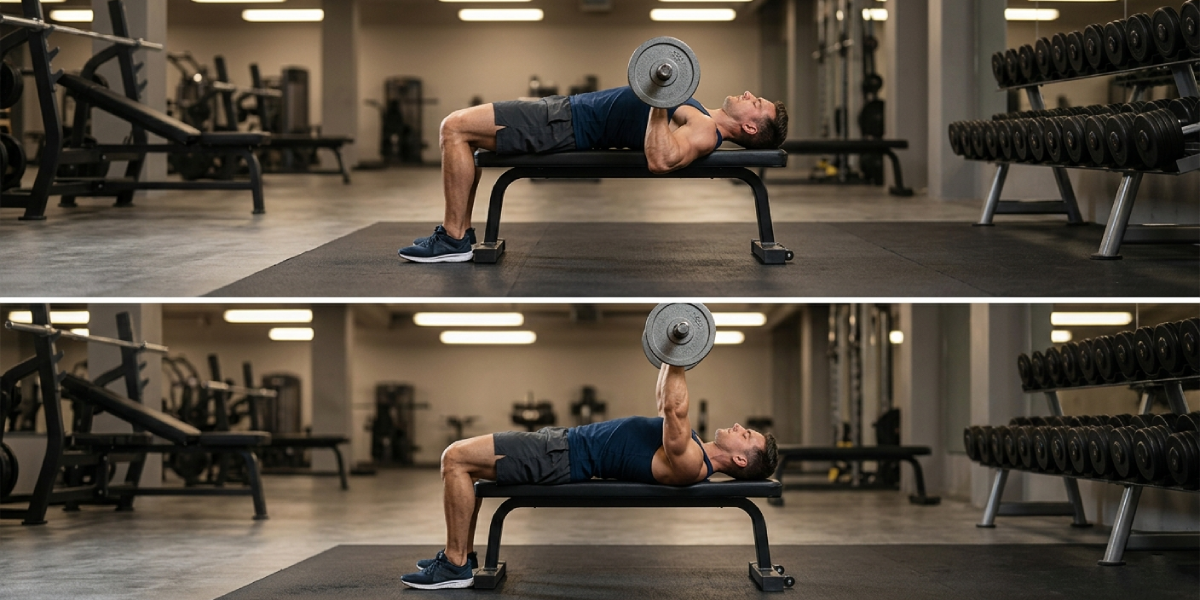
With your setup locked in, the actual repetition follows a precise two-phase sequence: the eccentric (lowering) phase and the concentric (pressing) phase.
The Eccentric Phase: Lowering the Bar
Lower the bar in a controlled, deliberate manner — never let it fall freely. Aim to touch the bar to your chest at approximately the level of your lower pec or nipple line. As you lower, your elbows should track at roughly a 45 to 75 degree angle relative to your torso — not flared out at 90 degrees, which stresses the shoulder, and not tucked completely to your sides, which reduces chest activation.
Keep your wrists stacked over your elbows throughout. The lowering phase should take approximately two to three seconds.
The Concentric Phase: Pressing the Bar
Once the bar touches your chest, press it explosively back to the starting position. Think of it as pushing yourself away from the bar rather than pushing the bar away from you — this mental cue keeps your back tight and your leg drive engaged.
The bar path should move in a very slight arc, not straight up, ending over your lower chest or upper abdomen at the top. Lock your elbows out fully at the top of each rep to fully engage the triceps and complete the movement through its full range of motion.
Common Bench Press Mistakes and How to Fix Them
Even experienced lifters fall into habitual errors that limit performance and raise injury risk. Here are the most common mistakes and how to correct them.
Bouncing the Bar Off the Chest
This is one of the most frequently seen errors in gyms. Bouncing the bar uses momentum rather than muscle and can bruise the sternum or damage the shoulder joint. Fix: pause for a half-second when the bar touches your chest, maintaining tension throughout, then press.
Flaring the Elbows Too Wide
Elbows flared out at 90 degrees places extreme stress on the anterior capsule of the shoulder. Fix: think about pulling the bar apart with your hands as you lower it — this naturally keeps the elbows in a safer position.
Losing the Back Arch and Shoulder Position
As fatigue sets in, lifters often lose their shoulder pack and back arch, reducing stability and increasing shoulder injury risk. Fix: re-establish your back and shoulder position before every set, not just the first one.
Lifting the Hips Off the Bench
If your hips rise off the bench, you are using your entire body to make the movement easier rather than isolating the target muscles. Fix: keep your glutes firmly on the bench throughout every repetition. If you cannot, the weight is likely too heavy.
Uneven Bar Path or Uneven Pressing
One side pressing higher or faster than the other indicates muscular imbalance. Fix: incorporate single-arm dumbbell pressing to correct left-to-right strength discrepancies before returning to the barbell.
Bench Press Variations to Enhance Chest Development
The flat barbell bench press is the foundation, but incorporating variations allows you to train the chest from different angles and address sticking points.
- Incline Bench Press: Performed with the bench set at 30 to 45 degrees, this variation places greater emphasis on the upper chest and anterior deltoids.
- Decline Bench Press: With the bench angled downward, this targets the lower chest and is often easier on the shoulder for those with certain impingements.
- Dumbbell Bench Press: Each arm presses independently, which increases range of motion, corrects imbalances, and demands more stabilizer muscle activation.
- Close-Grip Bench Press: A narrower grip shifts emphasis to the triceps, making it excellent for improving lockout strength.
- Paused Bench Press: Adding a two to three second pause at the bottom eliminates momentum and builds raw strength out of the bottom position.
How to Progress on the Bench Press Safely
Progressive overload is the engine of strength development. To keep making gains, you must systematically increase the demands placed on your muscles over time. However, progression must be smart and sustainable.
For beginners, adding small amounts of weight each session — as little as 2.5 kg (5 lb) per side — is both achievable and safe. A linear progression model, where you add weight every session or week, is appropriate for the first several months.
As you advance, switching to a weekly or bi-weekly progression with variation in volume, intensity, and exercise selection becomes necessary.
Tracking your workouts in a log is non-negotiable. Record the weight used, sets performed, and repetitions completed every session. This data reveals trends, plateaus, and progress over time. Monitoring your overall body composition using tools like a BMI calculator can also help you contextualize your strength and fitness progress as part of a broader health picture.
Warm-Up Protocol Before Bench Pressing
Skipping a warm-up before heavy pressing is a common shortcut that leads to torn pecs, shoulder strains, and elbow tendinopathy. A proper warm-up takes less than ten minutes and dramatically improves both safety and performance.
- Begin with five minutes of light cardiovascular activity to elevate core temperature.
- Perform shoulder circles, arm swings, and thoracic spine mobility drills.
- Complete two to three warm-up sets with progressively increasing weight before your working sets. For example, if your working weight is 100 kg, perform a set with the empty bar, then 60 kg, then 80 kg before reaching 100 kg.
- Never skip warm-up sets regardless of how pressed for time you are.
Bench Press Programming: How Often Should You Train It?
Frequency is one of the most debated variables in strength programming. For most individuals, benching two to three times per week produces the best gains in strength and hypertrophy. Each session can emphasize a different goal — one session for heavy strength work at lower reps, another for moderate weight at higher reps to accumulate volume, and a third for variation work such as incline or dumbbell pressing.
Rest days between sessions are essential. Muscle tissue does not grow during training — it grows during recovery. Ensure you are eating adequate protein and following sound nutrition principles to support tissue repair and growth.
A general guideline is 1.6 to 2.2 grams of protein per kilogram of body weight per day for those engaged in regular resistance training.
Safety Tips Every Bench Presser Should Follow
- Always use collars or clips to secure plates on the bar. Plates can slide off an unsecured bar and cause serious injury.
- Never press to failure without a spotter or safety bars in place.
- If you miss a rep and have no spotter, tilt the bar to one side to slide the plates off, or carefully lower the bar to your hip and roll it down your body to the floor.
- Listen to your body. Sharp pain in the shoulder, elbow, or wrist during pressing is a signal to stop and assess, not push through.
- Keep your feet flat on the floor throughout the lift to maximize stability and leg drive.
Frequently Asked Questions
How much weight should a beginner use for the bench press exercise?
Beginners should start with just the empty barbell (typically 20 kg or 45 lb) to learn proper form before adding any weight. Once technique is solid and comfortable, small plates can be added incrementally. Prioritizing form over load in the first few weeks prevents injury and builds a stronger foundation for long-term progress.
How wide should my grip be on the bench press?
Your grip should be slightly wider than shoulder width, so that when the bar is at chest level, your forearms are vertical or very close to vertical when viewed from the side. This is the most mechanically efficient position for most people. A grip that is too narrow shifts too much work to the triceps, while a grip that is too wide puts excessive stress on the shoulders.
Should my back be arched during the bench press?
A natural arch in the lower back is both normal and beneficial during the bench press. It is part of proper shoulder positioning and allows you to keep your shoulder blades retracted and depressed. An extreme powerlifting arch — where the lower back is dramatically off the bench — is a technique used by competitive powerlifters to shorten the range of motion, but it is not necessary for general fitness training. Keep your glutes on the bench at all times.
Is it safe to bench press without a spotter?
Bench pressing alone carries risk, especially when training near your maximum. If you must train without a spotter, always use a power rack or squat rack with safety arms set just below your chest height. This way, if you fail a rep, you can safely lower the bar to the safety arms without injury. Avoid training to failure without proper safety equipment in place.
How many sets and reps should I do for the bench press?
For strength development, three to five sets of three to six repetitions with heavier loads is effective. For muscle hypertrophy (size), three to four sets of eight to twelve repetitions at moderate weight is well-supported by research. Beginners benefit most from two to three sets of eight to ten reps to build technique and work capacity before adding heavier loading protocols.
Why does my shoulder hurt when I bench press?
Shoulder pain during the bench press is most commonly caused by excessive elbow flare, a grip that is too wide, or poor shoulder packing at setup. It can also stem from pre-existing shoulder impingement or rotator cuff issues. If shoulder pain persists, reduce the load, narrow your grip slightly, focus on keeping your shoulder blades packed throughout the movement, and consult a sports physiotherapist or medical professional if the pain continues.
What is the difference between the flat, incline, and decline bench press?
The flat bench press targets the overall chest with balanced upper and lower pec involvement. The incline bench press, performed at a 30 to 45 degree upward angle, emphasizes the upper chest and front shoulders. The decline bench press, performed at a downward angle, targets the lower chest and is often considered easier on the shoulder joint. A complete chest training program typically incorporates all three angles over time.
How often should I do the bench press exercise to build chest strength?
For most people, two to three bench press sessions per week provides sufficient stimulus for strength and muscle development while allowing adequate recovery between sessions. Beginners may do well with two sessions per week, while more advanced lifters can handle three or more. The total weekly volume — number of sets multiplied by reps — matters more than the frequency alone, so distribute your sets across sessions in a way that allows you to maintain quality and recover fully.
Can I build chest muscle with only the bench press?
The bench press is an excellent chest builder, but relying on it exclusively will leave gaps in your development. Adding complementary exercises such as cable flyes, pec deck, push-ups, and dumbbell pullovers trains the chest through different movement patterns and ranges of motion, leading to more complete and balanced muscle development. Think of the bench press as the anchor of your chest training, not the whole program.